Loading breed
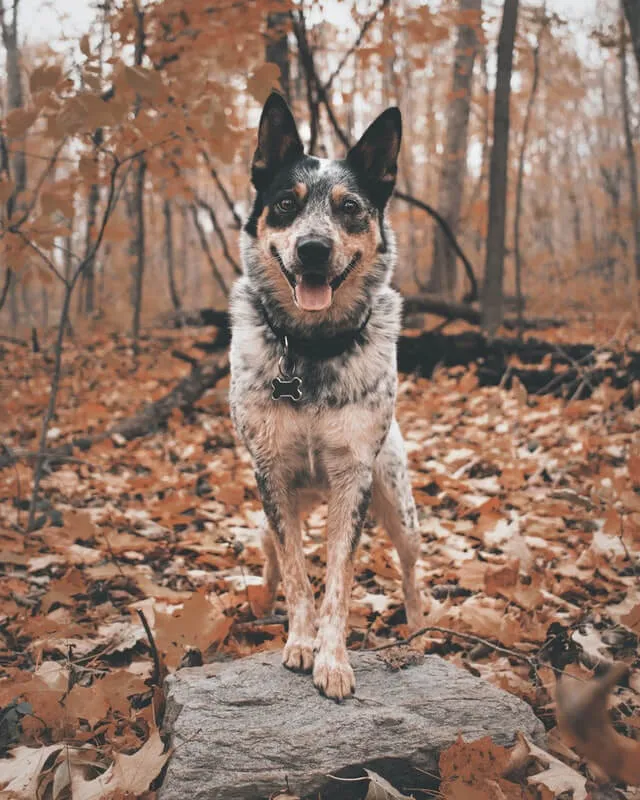
Australian Cattle Dog
Health grade CThe Australian Cattle Dog is a robust, lightning-fast Treibhund (herding dog)—bred to guide stubborn cattle through the harsh Australian outback by nipping at their heels. This uncompromising toughness makes them a workaholic that quickly becomes frustrated without a real job to do.
- Height43–51 cm
- Weight16–22 kg
- Life expectancy12–15 yrs
- Puppy price1,200–2,500 €
- Energy5/5
The Essentials at a Glance
The Australian Cattle Dog is a robust, lightning-fast Treibhund (herding dog)—bred to guide stubborn cattle through the harsh Australian outback by nipping at their heels. This uncompromising toughness makes them a workaholic that quickly becomes frustrated without a real job to do.
- Health grade C: The Australian Cattle Dog is considered a very robust working breed, yet it requires an above-average number of mandatory health tests.
- You are looking for an uncompromising working partner for dog sports or actual farm work—simple walks will never be enough to tire out this Treibhund hardware.
- You have extensive dog experience and can lead an incredibly assertive character with absolute clarity and confidence.
- You have small children whose running movements could trigger his genetically ingrained herding and nipping instinct toward their heels.
Is the Australian Cattle Dog right for you?
At a glance
Australian Cattle Dog overview
The essentials — key facts, traits, and health priorities — before you dive deeper.
Health grade
Relative to other breeds
S
A
B
C
D
E
Very healthyHigher risk
Average — several important tests are expected.
See full health info & tests →
Note: This health overview is AI-assisted and editorially reviewed. It is for orientation only and does not replace veterinary advice.
Lifespan
12–15 yrs
Height
43–51 cm
Weight
16–22 kg
Practical
- Puppy price: 1,200 – 2,500 €
- Coat: dense, short, with undercoat
- Origin: Australia
Temperament
Energy
Trainability
Family fit
With kids
Daily life
Care effort
Shedding
Barking
City-friendly
Guard instinct
What matters most
Especially with a Australian Cattle Dog, choosing the right breeder is the single most important decision you'll make. Serious breeders consistently test the parents for inherited conditions, prioritize healthy early socialization, and stay accountable long after handover. A cheap puppy without health screening tends to become the most expensive dog later on.
See HonestDog breeder standards →Colors & coat
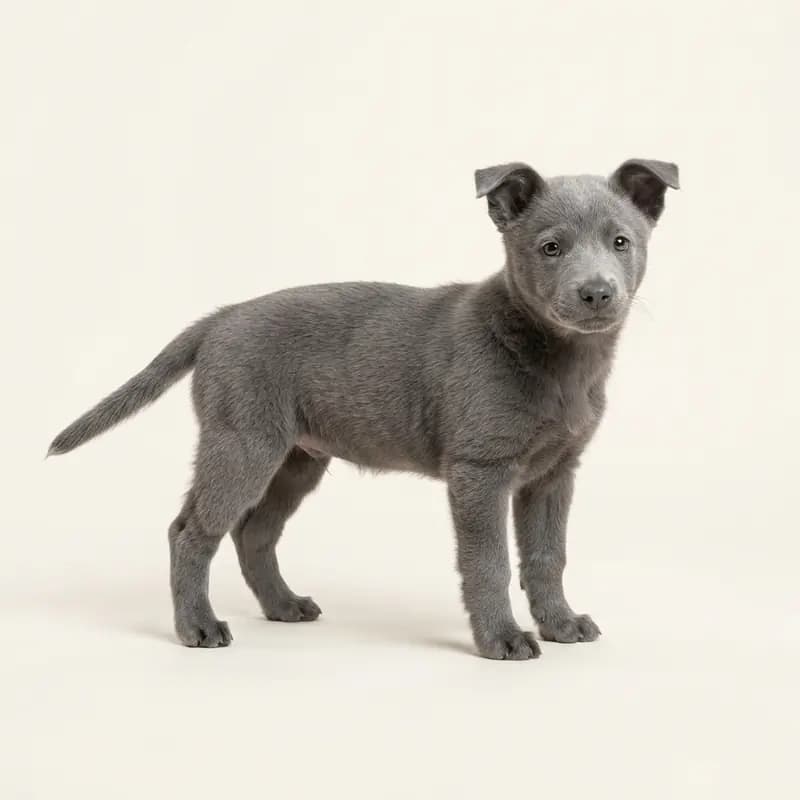
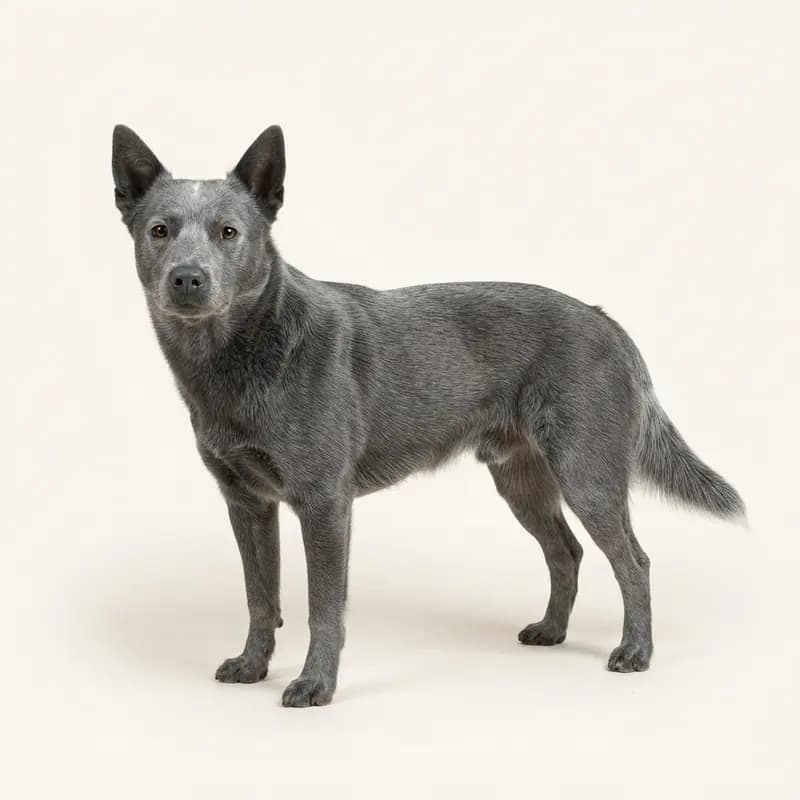
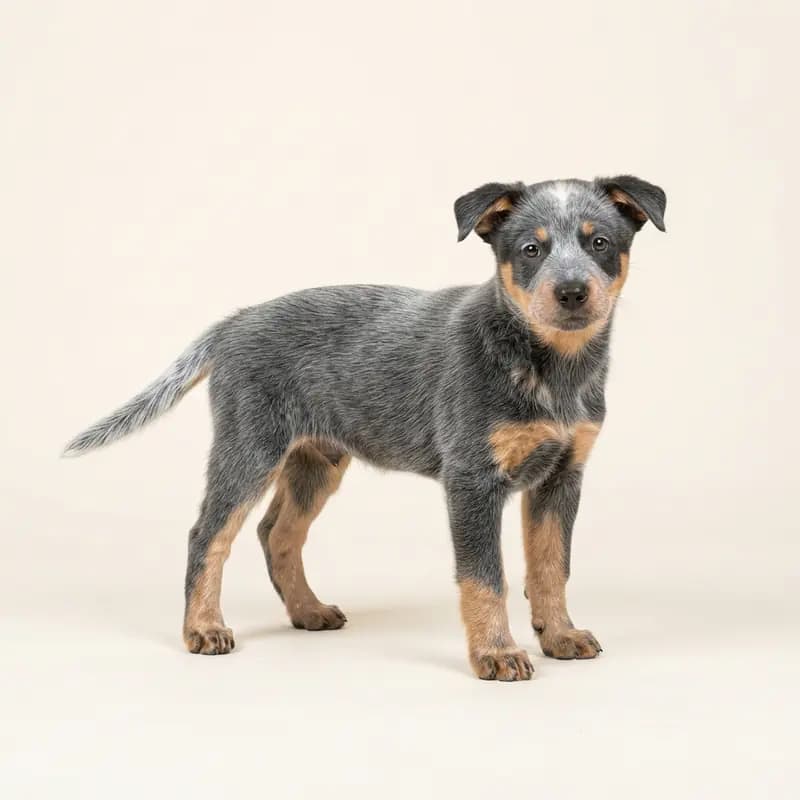
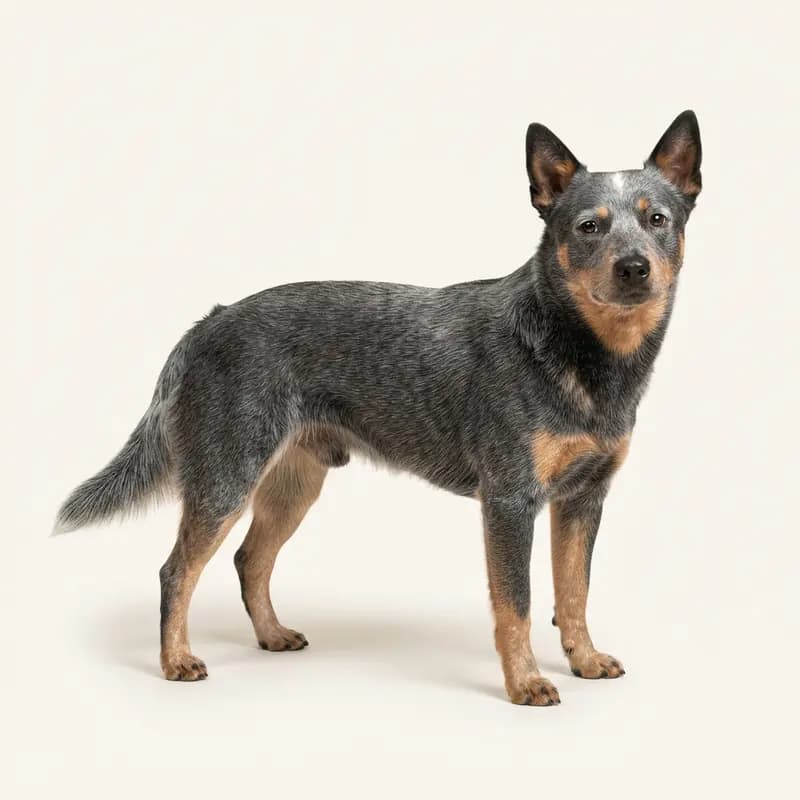
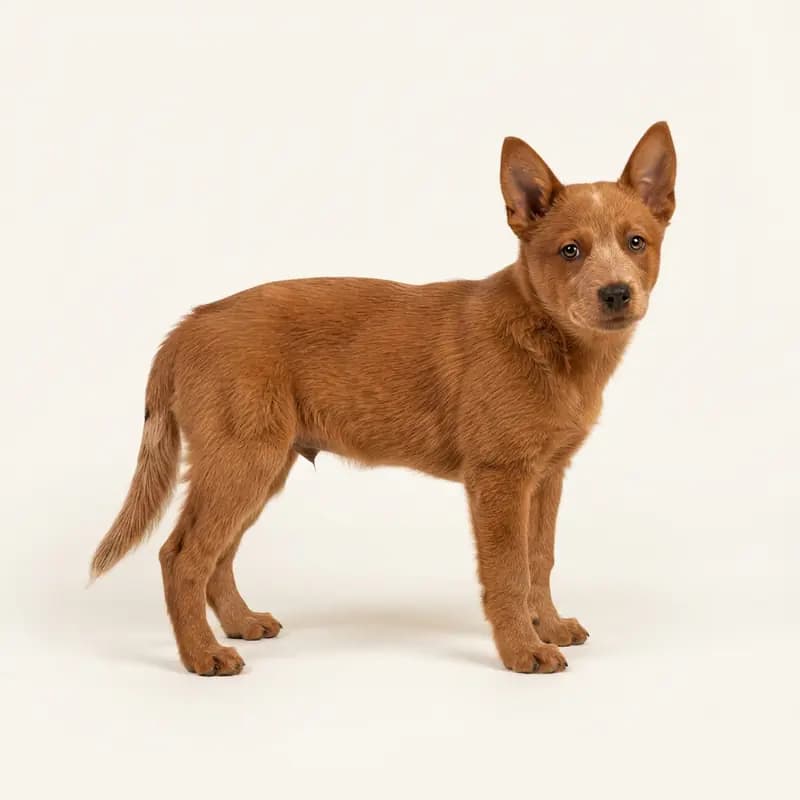
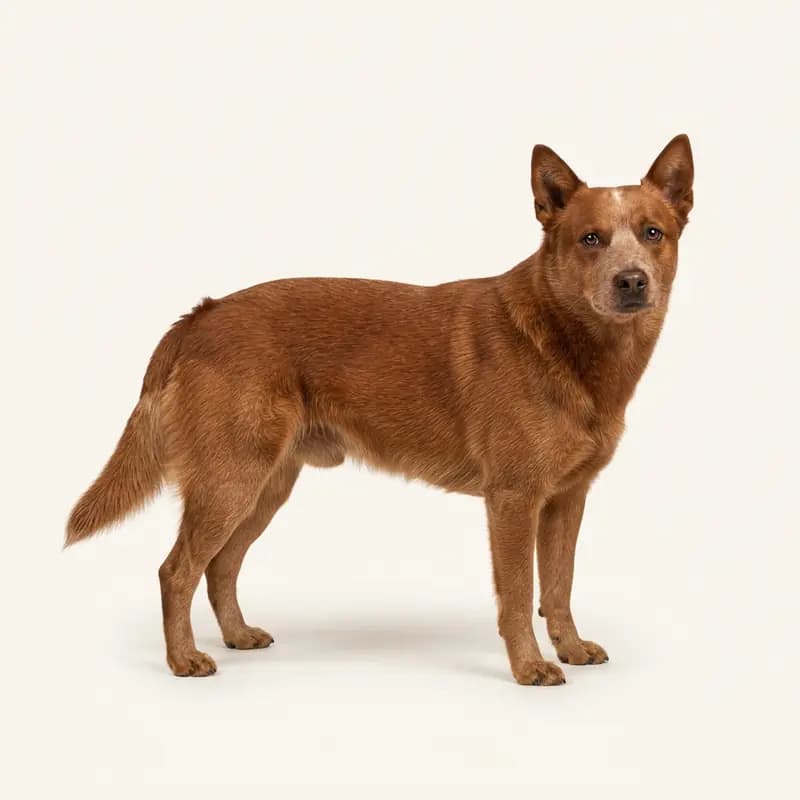
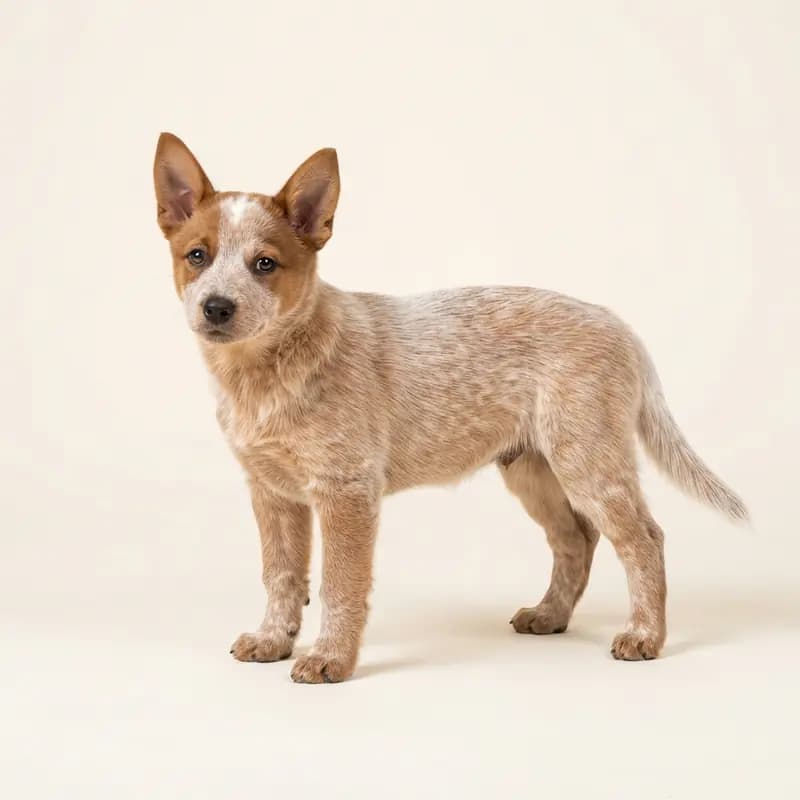
What colors does the Australian Cattle Dog come in?
The coat colors you will see in Australian Cattle Dog litters — including which ones fall outside the breed standard and which carry genetic risk.
Eye colors
 Brown
Brown
Coat type
 Short
Short Smooth
 Double coat
Is the Australian Cattle Dog right for you?
The Australian Cattle Dog is a robust, lightning-fast Treibhund (herding dog)—bred to guide stubborn cattle through the harsh Australian outback by nipping at their heels. This uncompromising toughness makes them a workaholic that quickly becomes frustrated without a real job to do.
Perfect for you if:
- You are looking for an uncompromising working partner for dog sports or actual farm work—simple walks will never be enough to tire out this Treibhund hardware.
- You have extensive dog experience and can lead an incredibly assertive character with absolute clarity and confidence.
- You live in a rural area with plenty of space and don't mind that your dog remains naturally suspicious of strangers.
- You appreciate a loyal 'one-person dog' that bonds closely with you and is capable of making independent decisions when necessary.
Less ideal if:
- You have small children whose running movements could trigger his genetically ingrained herding and nipping instinct toward their heels.
- You live in a busy city where bicycles, joggers, and heavy traffic provide constant sources of frustration or triggers for him to control.
- You are looking for an easy-going dog that greets every visitor with joy and plays with every other dog at the park.
- You have little time—a lack of mental stimulation inevitably leads to destructive behavior or reactivity in this specialist.
The real vibes check
An Australian Cattle Dog won't back down from an 800-kilo steer—and he won't budge an inch if you are unsure in your leadership. He is not a follower, but a highly intelligent specialist in work boots who asks for his shift schedule in the morning. If you give him that job, he will go through fire for you; if you don't, he will herd your family or the mail carrier instead.
Self-check
Would the Australian Cattle Dog really fit your life?
Answer 6 quick questions about your everyday life and see how well the Australian Cattle Dog fits you — including an honest cost estimate per month, per year, and across the dog's lifetime.
Fit checkCost estimateRisk dice
Takes about 1 minute · free & anonymous
Breed Profile
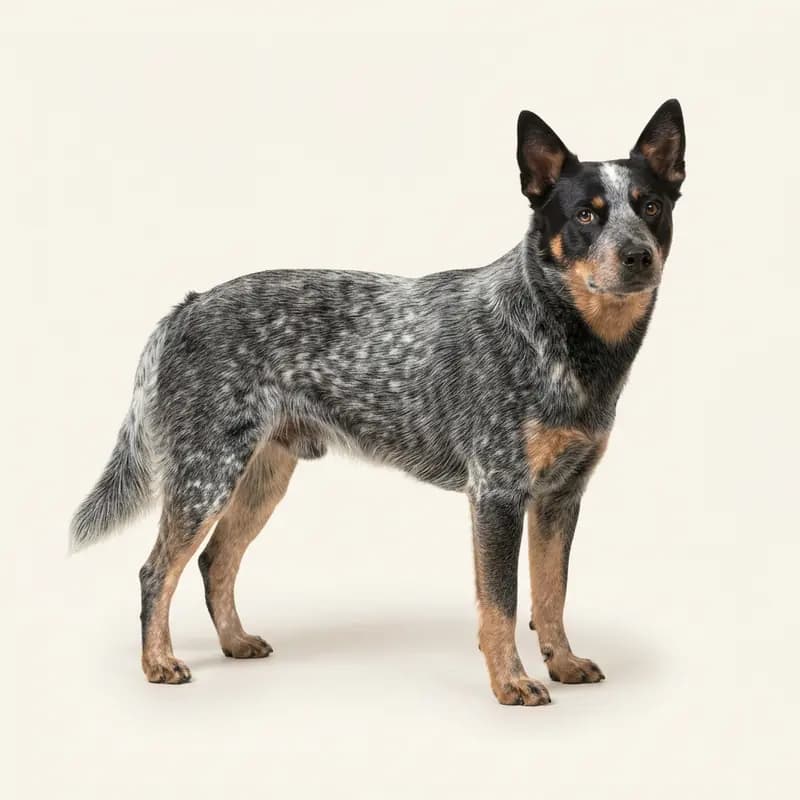
The Australian Cattle Dog, also known as the Blue Heeler or Queensland Heeler, is a medium-sized dog with strong, muscular lines and a short, weatherproof coat. They belong to FCI Group 1, which includes herding dogs and cattle dogs. Their eyes are almond-shaped and always show an intelligent, alert expression. The ears are wide, set high and always stand alertly upright. A distinctive feature of the Australian Cattle Dog is the "Bentley Star", a small patch of white fur on the forehead that is worn by many, but not all, dogs of this breed. There is no distinction between performance and show lines in this breed as it is generally bred for working ability and health.
All measurements in detail
- Height
- 43 - 48 cm (Female), 46 - 51 cm (Male)
- Weight
- 16 - 20 kg (Female), 16 - 22 kg (Male)
- Life Expectancy
- 12 - 15 yrs
- Character
- energetic, intelligent, loyal
- Coat
- dense, short, with undercoat
- Coat Color
- Blue, blue spotted, blue marbled, red spotted
- Price
- 1200 - 2500 €
Character & Temperament
The Australian Cattle Dog is an exceptionally energetic, intelligent and engaging dog. Originally bred for livestock over long distances Driving distances over rugged terrain, they are known for their tireless endurance and willingness to work hard. They are exceptionally loyal to their family and often develop a close bond with a particular person. Due to their herding heritage, Australian Cattle Dogs have a natural alertness and can become alarmed at unfamiliar noises or movements. They are generally reserved towards strangers, but do not show aggression unless they perceive a threat to themselves or their family. However, they are extremely loving with their family and enjoy being part of the daily activities. Although they are not traditional hunting dogs, Australian Cattle Dogs have a strong prey-catching instinct. They are capable hunters of rodents and other small animals when given the opportunity. This can be controlled through training and socialization, but interested parties should be aware of this trait. Australian Cattle Dogs are very intelligent and trainable, but they require consistent and loving training. They tend to have a mind of their own and can be dominant and stubborn without clear leadership. But they are also very capable of learning and responsive to positive reinforcement, especially if the training units are varied and challenging. A special feature of this breed is its ability to get along well on its own. While they love spending time with their family, they are also independent and can keep themselves busy if given enough physical and mental stimulation. However, they should not be left alone for long periods of time as they can quickly become bored and exhibit destructive behavior. The use of the Australian Cattle Dog is based on its nature and history as a working dog. They are ideal for dog sports such as agility, obedience, rally obedience or dog dancing. Their high intelligence and need for activity also make them excellent therapy or assistance dogs. But they are also well suited as active family dogs who enjoy hiking or jogging. If they have sufficient physical and mental exercise, they can also be kept well in the apartment.
| Trainability Bred to work closely alongside humans. | Highly trainable |
| Watchfulness A natural watchdog with real protective instinct. | High |
| Openness to Strangers Neither pushily friendly nor suspicious. | Neutral |
| Hunting or Herding Drive This drive runs deep — no amount of training eliminates it. | Very strong |
Fun Fact!
Did you know that the Australian Cattle Dog is one of the ten most intelligent dog breeds in the world? They are known for their ability to learn and solve complex tasks!
What Awaits You
Australian Cattle Dogs are hard-working, intelligent and independent dogs. They need exercise and activity, but tend to do their own thing. They need dog owners who are familiar with this breed and can handle it. Consistent and clear education is very important.
Housing & Care
Australian Cattle Dogs are very active and intelligent dogs that require lots of exercise and mental stimulation. They are therefore not suitable as city dogs. They are generally good with children, but can be prone to rough play due to their herding instincts. Because of this and their high energy level, they are not typical family dogs. When it comes to other pets, especially cats, their herding instincts can be challenging. However, with early and consistent socialization, they can learn to live peacefully with other pets.
- Family Friendly
Loves family life and thrives in a group.
Family-oriented - Child Friendly
Gets on well with children — with adult supervision.
With supervision - Dog Friendly
Can get on with dogs it knows — strangers are a different story.
With familiar dogs - City Friendly
Can manage in the city, but only with very active owners.
Difficult in cities
Owning a dog is a privilege, but it's also a real responsibility. Before you bring one into your life, be honest with yourself about the commitment it takes.
Training & Education
Australian Cattle Dogs are intelligent and eager to learn, making them excellent candidates for dog sports such as agility, obedience and flyball. They need a lot of exercise and mental stimulation to stay happy and balanced. It is important not to "over-busy" them, otherwise they can become nervous and hyperactive. They also tend to be "ball junkies" so it is important to offer a variety of activities. Training for frustration tolerance and impulse control can be very beneficial as it helps them control their natural herding instincts.
Nutrition & Care
Australian Cattle Dogs have a robust constitution and are generally not picky eaters. However, they need a balanced diet with enough protein and fat to support their high energy and muscle mass. Their fur is short but dense, with a waterproof undercoat. Therefore, they shed moderately and require regular brushing to remove loose hair and keep their skin healthy. They cope well with the climate in Germany, but it is important to note that they may require additional protection in extremely cold temperatures.
| Care Level Regular brushing and occasional professional grooming. | Moderate |
| Exercise Needs Working-dog energy that needs burning off every single day. | High-drive |
| Shedding Hair everywhere, always — no white clothing survives. | Very heavy |
| Trainability Bred to work closely alongside humans. | Highly trainable |
Our experts are still reviewing this information. Spotted something wrong? Email us at info@honestdog.de.
Health & hereditary diseases
Health
C
Solid, watch carefully
Health grade
The Australian Cattle Dog is considered a very robust working breed, yet it requires an above-average number of mandatory health tests. Important hereditary conditions such as Progressive Retinal Atrophy (PRA-PRCD), which leads to blindness, and the MDR1 gene defect (drug sensitivity) can be effectively managed thanks to modern DNA testing. Prospective buyers should also ensure that the parents have official screening results for Elbow Dysplasia (ED) and have been tested for congenital deafness.
Grade is relative to other breeds — AI-assisted and editorially reviewed.
In daily life this can mean
With joint-friendly rearing during the first year and regular eye and hearing check-ups, most dogs remain fit and active well into old age.
The breeder's role
Reputable breeders have the joints and eyes of the parent animals as well as the hearing of the puppies professionally tested to specifically reduce hereditary risks in the bloodline.
Note: This health overview is AI-assisted and editorially reviewed. It is for orientation only and does not replace veterinary advice.
No Health Tests Available
No specific health tests are currently available for this breed.
Costs & where to find one
How much does a Australian Cattle Dog cost?
A Australian Cattle Dog costs around ~€180 per month (€90 – €340, depending on your setup). The first year adds up to roughly ~€4,820 including purchase, equipment and puppy school; across the dog's life (13.5 years) it comes to about ~€31,630.
With surgery cover, running costs come to about ~€180 per month — in return, your share of a major operation drops from several thousand euros to around 20 percent.
Per month
~€180
In the first year
~€4,820
Across the dog's life
~€31,630
Purchase from a breeder: €1,200 – €2,500
Estimate at a mid-range setup (suburban, dry food, 1–2 hours of daily exercise), average German prices, as of July 2026.
Calculate your personal costs1-minute self-check with your own answers
Looking for a Australian Cattle Dog?
Appearance, variants & origin
History
The full history
The roots of the Australian Cattle Dog go back to the mid-19th century in Australia. At this time, settlers were looking for a robust, hardy dog capable of herding and herding cattle across the vast, often inhospitable pastures. The first dogs imported for this purpose were probably collies and other British herding dogs, but these could not withstand the extreme conditions of Australia. To create a more resilient dog, breeders crossed these herding dogs with the native dingo. It is believed that other breeds such as the Dalmatian, the Black and Tan Kelpie and possibly the Bull Terrier were crossed to form the appearance, temperament and working abilities of today's Australian Cattle Dog. The breed was standardized in 1893 by the Australian breeder Robert Kaleski and has been officially recognized as a separate breed since 1903. Although she was originally bred exclusively as a working dog, she has also made a name for herself as a family and companion dog due to her intelligence, loyalty and versatility.
Original Use
The Australian Cattle Dog was bred to herd cattle over long distances in rugged terrain.
Origin
Australia
Date
1800
Owner experiences
What owners say about the Australian Cattle Dog
Zusammengefasst aus öffentlich geteilten Halter-Erfahrungen
Viele Halter beschreiben den Australian Cattle Dog im Alltag als einen extrem treuen Schatten, der sich meist eng an eine bestimmte Bezugsperson bindet. In der Familie zeigt er sich oft verschmust und anhänglich, fordert jedoch auch eine dauerhafte Präsenz ein. Er möchte am liebsten überall dabei sein und verpasst keine Bewegung im Haus.
Gleichzeitig betonen erfahrene Besitzer in Foren, dass der Cattle Dog kein typischer, unkomplizierter Begleithund für jedermann ist. Aufgrund seines Erbes als Treibhund bringt er einen ausgeprägten Schutz- und Territorialtrieb mit. Fremden gegenüber verhalten sich viele Hunde distanziert bis misstrauisch. Auch das typische „Heelen“ – das Zwicken in die Hacken – wird von Haltern immer wieder als Herausforderung genannt, besonders im Umgang mit rennenden Kindern oder Gästen, da die Hunde instinktiv versuchen, Bewegung zu kontrollieren.
Zudem wird in Erfahrungsberichten häufiger erwähnt, dass die Rasse zu Unverträglichkeiten mit anderen Hunden neigt. Sie gelten als sehr rangbewusst und dominant, weshalb Begegnungen beim Spaziergang oder der Besuch von Hundewiesen oft ein vorausschauendes Management und eine gute Sozialisierung erfordern.
Zusammengefasst aus öffentlich geteilten Halter-Erfahrungen
In Erziehungsfragen herrscht unter Cattle-Dog-Besitzern Einigkeit: Diese Rasse ist hochintelligent, lernt blitzschnell, hinterfragt aber auch jede Schwäche ihrer Menschen. Halter berichten, dass eine liebevolle, aber absolut konsequente Führung von Welpenbeinen an unerlässlich ist. Gibt man auch nur einmal nach, registriert der Hund dies sofort und testet seine Grenzen erneut aus.
Eine der größten Herausforderungen in der Praxis ist es, dem extrem energiegeladenen Hund Ruhe beizubringen. Viele Besitzer berichten von anfänglichen Problemen mit völlig überdrehten Junghunden, die schwer abschalten können. Die Devise „weniger ist mehr“ wird in Foren oft betont: Statt den Hund durch stundenlanges Ballspielen oder kilometerlanges Laufen konditionell hochzuputschen, empfehlen erfahrene Halter gezielte Kopfarbeit wie Fährtenarbeit, Agility oder Obedience.
Ohne eine klare Aufgabe und geistige Auslastung neigen die intelligenten Hunde schnell dazu, sich selbst Beschäftigungen zu suchen. Dies äußert sich laut Halterberichten nicht selten in lautstarkem Bellen, dem Hüten von Haushaltsgegenständen oder destruktivem Verhalten in der Wohnung.
Zusammengefasst aus öffentlich geteilten Halter-Erfahrungen
Der Australian Cattle Dog gilt unter Haltern als ausgesprochen robuster, zäher und langlebiger Hund, der für harte Arbeit gezüchtet wurde und nicht selten ein hohes Alter von 13 bis über 15 Jahren erreicht. Sie gelten als wenig wehleidig und zeigen Schmerzen oft erst sehr spät, was von Besitzern Aufmerksamkeit fordert.
Dennoch weisen Rassekenner und Gesundheitsberichte auf spezifische genetische Risiken hin, die beim Kauf eines Welpen beachtet werden sollten. Ein großes Thema in der Zucht ist die erbliche Taubheit (oft einseitig oder beidseitig), weshalb verantwortungsvolle Züchter die Welpen mittels eines BAER-Hörtests untersuchen lassen. Auch Augenerkrankungen wie die Progressive Retinaatrophie (PRA) und die Primäre Linsenluxation (PLL) treten in der Rasse auf.
Durch ihr oft explosives, unerschrockenes Bewegungsverhalten und ihre enorme Wendigkeit berichten Halter zudem immer wieder von Verletzungen des Bewegungsapparates, wie beispielsweise Kreuzbandrissen oder Gelenkproblemen, die durch die hohe körperliche Aktivität begünstigt werden.
Paraphrased from real owner reports
Loading owner stories
Community Posts
FAQ & more
Frequently asked questions about the Australian Cattle Dog
Is a Australian Cattle Dog the right dog for me?
The Australian Cattle Dog is an active dog that needs plenty of exercise and mental stimulation. Research the temperament, grooming needs, and space requirements before deciding.
How long does a Australian Cattle Dog live?
The average life expectancy of a Australian Cattle Dog is 12-15 years. With proper care and regular vet visits, your dog can live a long, healthy life.
How much grooming does a Australian Cattle Dog need?
Australian Cattle Dog grooming requirements include regular brushing, nail trimming, and dental care. HonestDog provides detailed grooming tips for every breed.
Is a Australian Cattle Dog good for families with children?
The Australian Cattle Dog can be a great family dog. Proper training and socialization are key. HonestDog provides family suitability information for every breed.
What colors does the Australian Cattle Dog come in?
The Australian Cattle Dog comes in these colors: Blue, Blue and tan, Red, Roan.
Loading related articles
Are you a Australian Cattle Dog breeder?
Showcase your kennel on HonestDog and reach families searching for a responsibly bred Australian Cattle Dog.
Why HonestDog?
What makes HonestDog different from other platforms
Full transparency
We lay out what we have: who the breeder is, how they work, and any health records they've uploaded. So you can judge for yourself.
Responsible breeding, assured
Every breeder on HonestDog has their identity and documents checked before their profile goes live. Health records they upload are shown on the profile, so you can see exactly what has been tested.
Trust and verification
We verify breeders and buyers alike, so every conversation happens on solid ground. It's a new standard of trust in dog breeding.
Less hassle, more time
We've already checked the breeders' documents and gathered the details, so you can skip the endless research and focus on finding the right puppy for your family.
Our Mission

We connect dog lovers with responsible breeders and shelters to ensure every dog finds the perfect home.
Founded by dog enthusiasts, our platform focuses on ethical dog breeding and adoption.
Why HonestDog?
We connect you with vetted breeders and shelters so you can find your — your new companion — with confidence.
Vetted Partners
Only verified breeders and shelters — for a safe start.
Highest Standards
Every animal's health and wellbeing is our top priority.
Guides & Resources
Guides, checklists, and breed profiles — so you can make a well-informed decision.