Loading breed
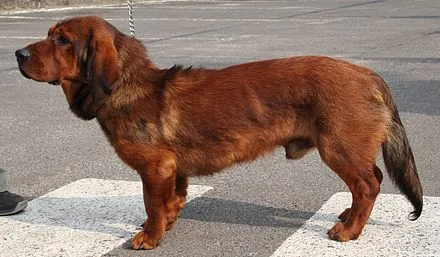
Alpine Dachsbracke
Health grade BThe Alpenländische Dachsbracke is a robust, steady-nerved Schweißhund (scent hound) — bred for the enduring tracking of wounded game in rugged high-mountain terrain. A true thoroughbred worker that lives for the cold trail and will wither away without a real job to do.
- Height36–38 cm
- Weight15–20 kg
- Life expectancy10–14 yrs
- Puppy price1,000–2,500 €
- Energy4/5
The Essentials at a Glance
The Alpenländische Dachsbracke is a robust, steady-nerved Schweißhund (scent hound) — bred for the enduring tracking of wounded game in rugged high-mountain terrain. A true thoroughbred worker that lives for the cold trail and will wither away without a real job to do.
- Health grade B: The Alpenländische Dachsbracke is a robust hunting breed with generally good overall health.
- You are an active hunter or can provide professional-level stimulation through demanding tracking and mantrailing work — this dog needs a real, challenging job.
- You live in a rural area, ideally close to forests and mountains, where it can live out its robust, weather-resistant instincts every day.
- You are looking for an uncomplicated companion dog for casual walks — it was bred to follow a trail with focus for hours, not to trot along beside you in a relaxed manner.
Is the Alpine Dachsbracke right for you?
At a glance
Alpine Dachsbracke overview
The essentials — key facts, traits, and health priorities — before you dive deeper.
Health grade
Relative to other breeds
S
A
B
C
D
E
Very healthyHigher risk
Solid — a handful of items a good breeder watches.
See full health info & tests →
Note: This health overview is AI-assisted and editorially reviewed. It is for orientation only and does not replace veterinary advice.
Lifespan
10–14 yrs
Height
36–38 cm
Weight
15–20 kg
Practical
- Puppy price: 1,000 – 2,500 €
- Coat: Short, dense, shiny
- Origin: Austria
Temperament
Energy
Trainability
Family fit
With kids
Daily life
Care effort
Shedding
Barking
City-friendly
Guard instinct
What matters most
Especially with a Alpine Dachsbracke, choosing the right breeder is the single most important decision you'll make. Serious breeders consistently test the parents for inherited conditions, prioritize healthy early socialization, and stay accountable long after handover. A cheap puppy without health screening tends to become the most expensive dog later on.
See HonestDog breeder standards →Colors & coat
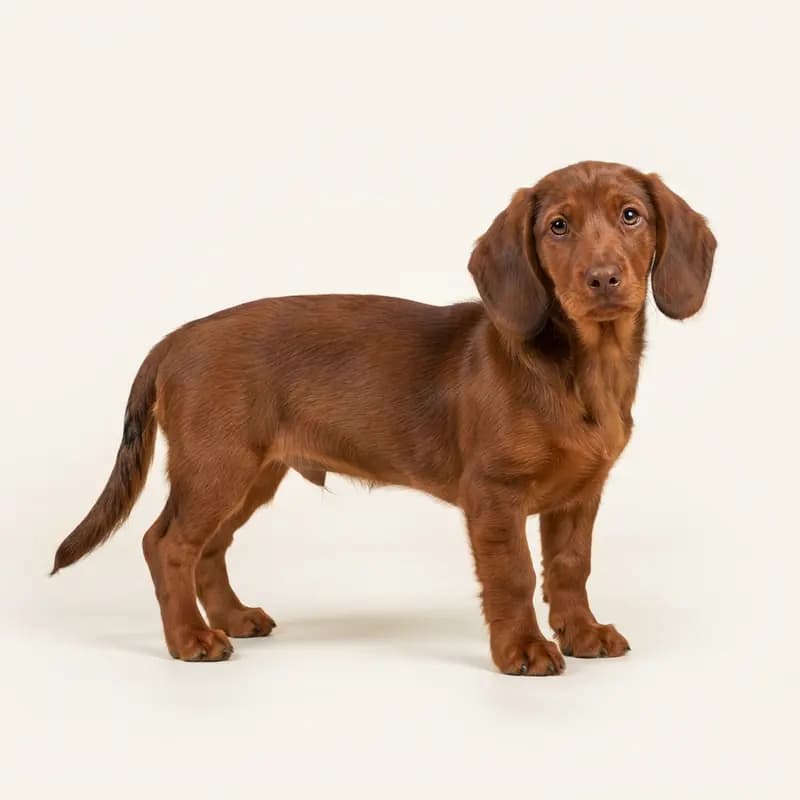
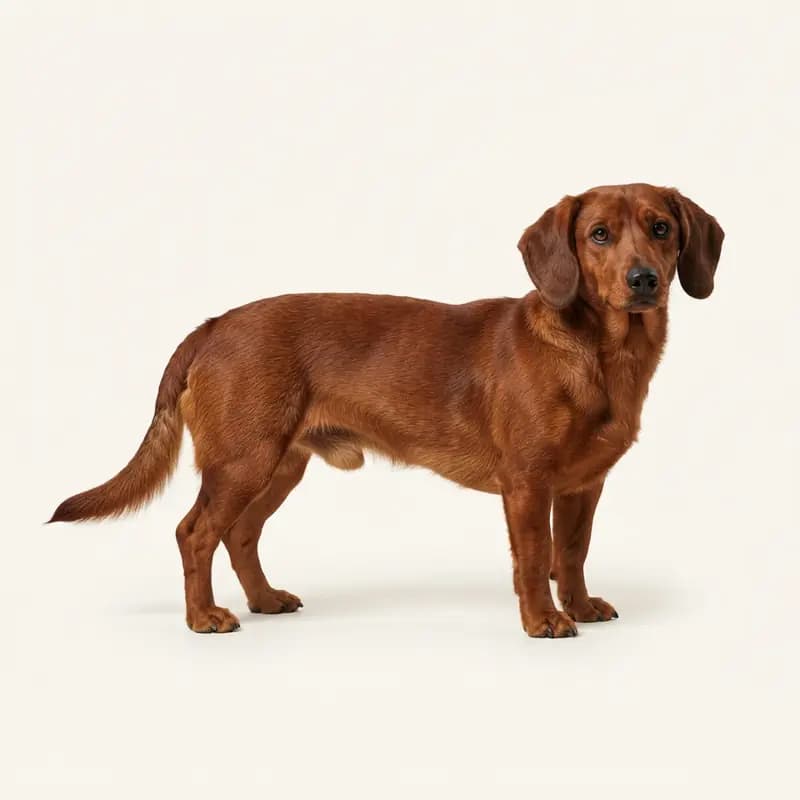
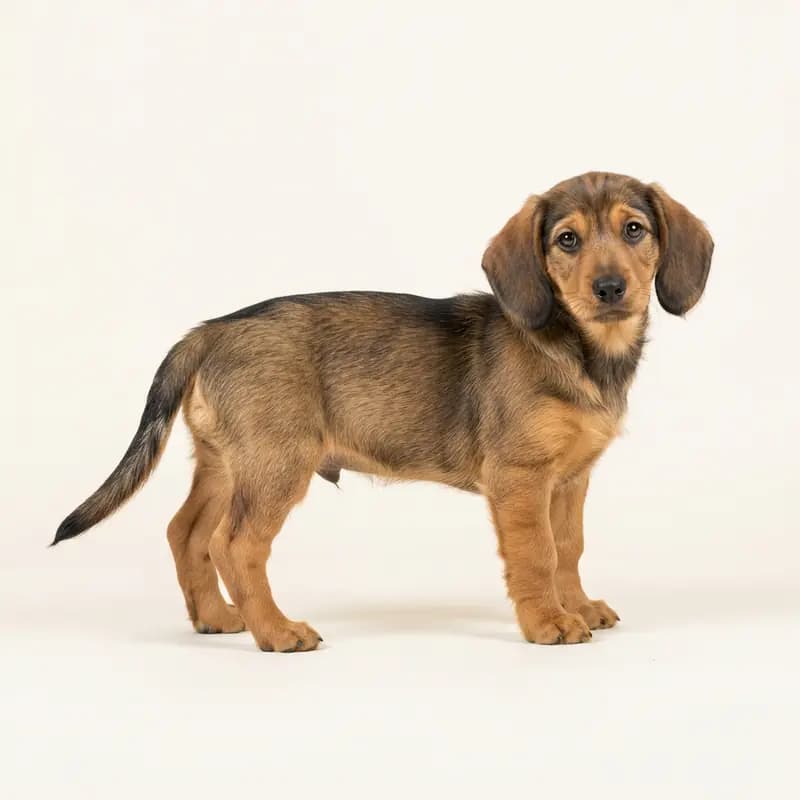
What colors does the Alpine Dachsbracke come in?
The coat colors you will see in Alpine Dachsbracke litters — including which ones fall outside the breed standard and which carry genetic risk.
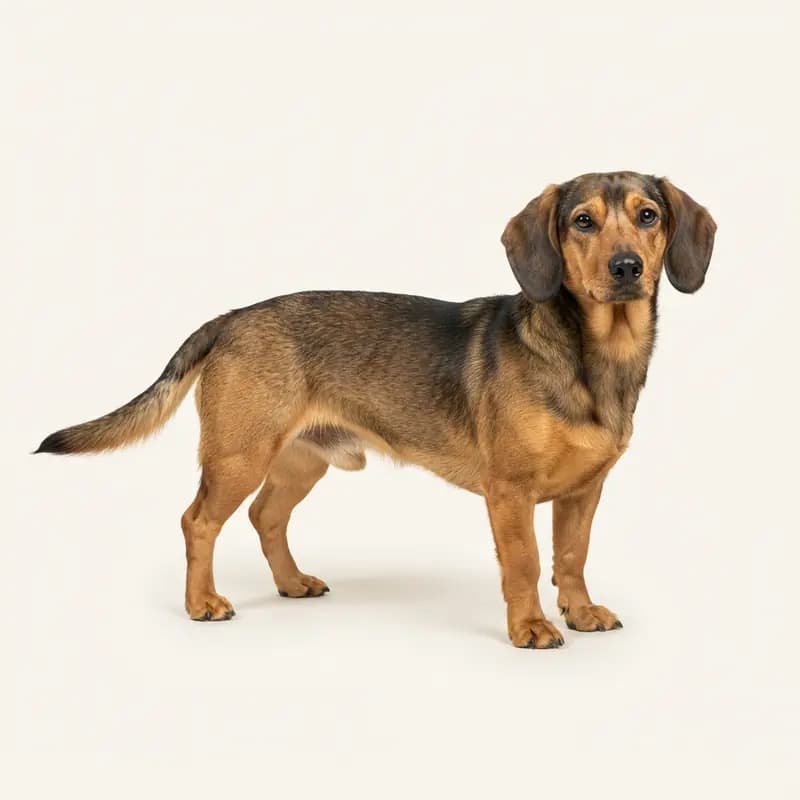
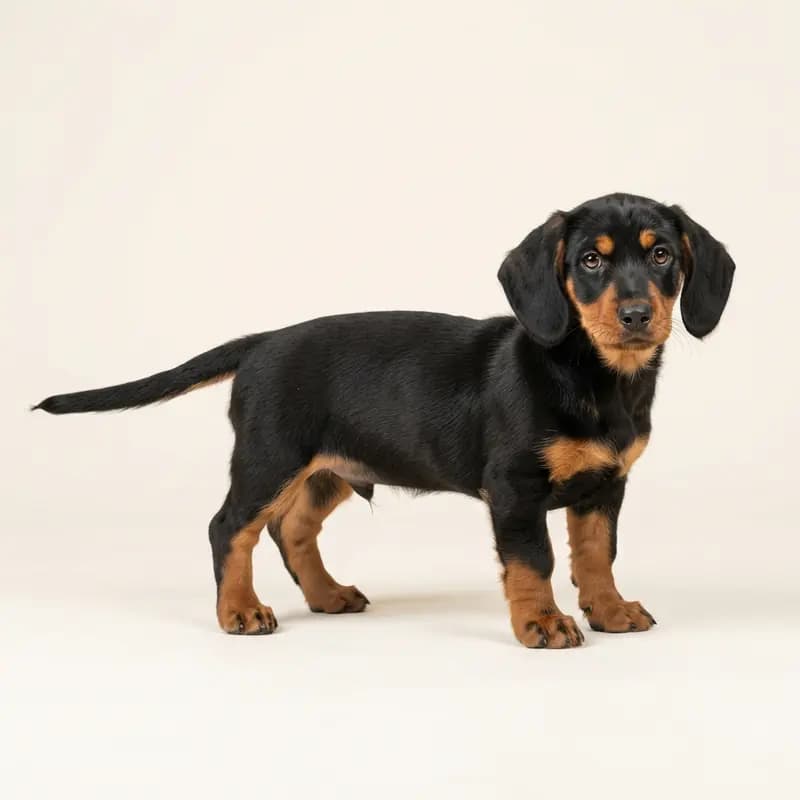
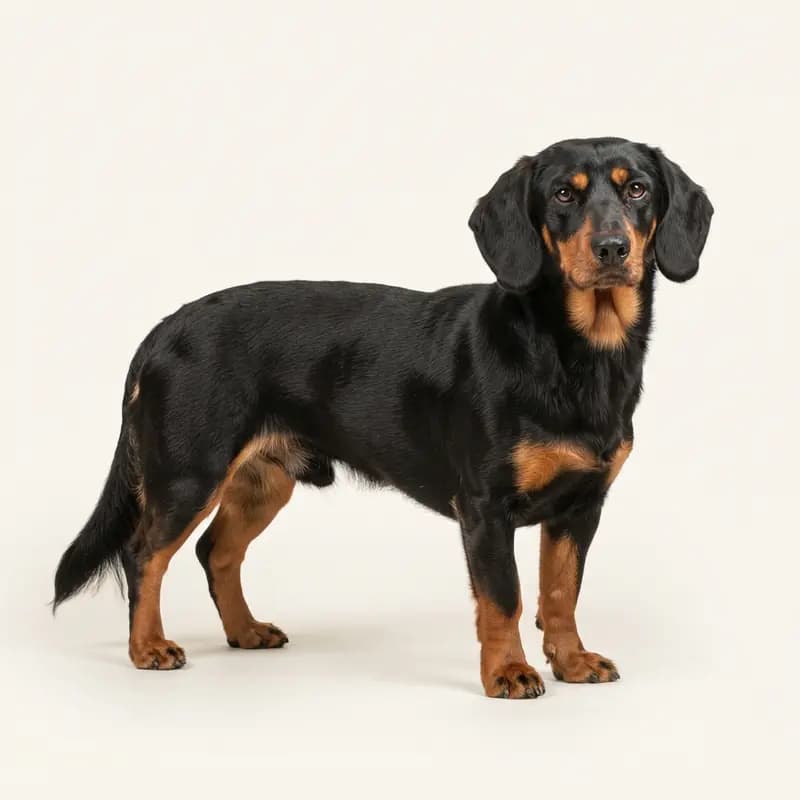
Eye colors
 Brown
Brown
Coat type
 Short
Short Double coat
Is the Alpine Dachsbracke right for you?
The Alpenländische Dachsbracke is a robust, steady-nerved Schweißhund (scent hound) — bred for the enduring tracking of wounded game in rugged high-mountain terrain. A true thoroughbred worker that lives for the cold trail and will wither away without a real job to do.
Perfect for you if:
- You are an active hunter or can provide professional-level stimulation through demanding tracking and mantrailing work — this dog needs a real, challenging job.
- You live in a rural area, ideally close to forests and mountains, where it can live out its robust, weather-resistant instincts every day.
- You appreciate an independent dog that makes its own decisions while focused on a trail, rather than constantly looking to you for commands.
- You are looking for a companion that is extremely calm and unobtrusive at home, releasing its immense energy exclusively outdoors during tracking work.
Less ideal if:
- You are looking for an uncomplicated companion dog for casual walks — it was bred to follow a trail with focus for hours, not to trot along beside you in a relaxed manner.
- You live in the middle of the city or in an apartment without direct access to vast nature and proper training grounds.
- You expect a dog with a strong 'will-to-please' that will immediately drop everything at a whistle when it spots game or a fresh trail in the woods.
- You plan to exercise it primarily with fast ball games or agility — this completely contradicts its deeply ingrained, calm, and enduring way of working.
The real vibes check
An Alpenländische Dachsbracke is like a highly specialized mountaineer: on flat ground or in a purely family-oriented daily life, it often seems out of place, but in rough terrain on an old trail, it shows its true genius. If you cannot offer it this world, you will have a permanently frustrated, stubborn dog on your leash — but if you provide it with species-appropriate work, you will get the most loyal and composed companion you can imagine.
Self-check
Would the Alpine Dachsbracke really fit your life?
Answer 6 quick questions about your everyday life and see how well the Alpine Dachsbracke fits you — including an honest cost estimate per month, per year, and across the dog's lifetime.
Fit checkCost estimateRisk dice
Takes about 1 minute · free & anonymous
Breed Profile
The Alpine Dachsbracke is a small but robust dog. She is characterized by her strong and powerful stature, which is ideal for working in the mountains. The body is slightly longer than it is tall, which is typical of dogs bred to hunt in fox dens and other confined spaces. The head is powerful, with a broad nose and medium-sized eyes that are dark and vivid. The ears are medium-sized, set high and hang close to the head. She belongs to FCI Group 6, which includes running dogs and bloodhounds. This breed has a special ability to track the scent of game, even over long distances and difficult terrain. This makes them a valued hunting companion dog. There are no different lines within this breed as their focus is always on work and not looks.
All measurements in detail
- Height
- 36 - 37 cm (Female), 37 - 38 cm (Male)
- Weight
- 15 - 18 kg (Female), 16 - 20 kg (Male)
- Life Expectancy
- 10 - 14 yrs
- Character
- Loyal, diligent, tireless
- Coat
- Short, dense, shiny
- Coat Color
- Black, red, fawn with a smaller or larger amount of white fur
- Price
- 1000 - 2500 €
Character & Temperament
The Alpine Dachsbracke is known for its tireless work ethic and lively, energetic temperament. They are known as loyal and reliable dogs who are very attached to their caregivers and always strive to please their owners. Although they were bred for hunting, they also have a very loving and people-oriented nature that makes them wonderful companions. They are intelligent and capable of learning and adapt easily to different situations. Therefore, in the right environment and with the right training, they can also be kept as a family dog. However, they are primarily working dogs and need something to do to be happy. Simply living in an apartment without sufficient employment is not in keeping with their nature. The Alpine Dachsbracke shows a strong hunting behavior, which is due to its breeding and its origins as a hunting dog. They have a strong hunting instinct and tend to follow their noses. Therefore, it is important that they receive good training and guidance to channel this behavior. They are not particularly alert dogs as they react more to smells than sounds or movements. They rarely bark unless they are hunting or they notice something unusual. They can stay alone well as long as they get enough physical and mental exercise.
| Trainability Has its own ideas and will test limits. | Strong-willed |
| Watchfulness A natural watchdog with real protective instinct. | High |
| Openness to Strangers Neither pushily friendly nor suspicious. | Neutral |
| Hunting or Herding Drive This drive runs deep — no amount of training eliminates it. | Very strong |
Fun Fact!
Did you know that the Alpine Dachsbracke is one of the few dog breeds used for hunting in both flat and mountainous areas? Their versatility and adaptability are truly remarkable!
What Awaits You
The Alpine Dachsbracke is a persistent and hunting-passionate dog, especially used in the mountains. It is characterized by its excellent sense of smell and strong hunting instinct. Despite its strong work drive, it is friendly and easy to train, but requires consistent leadership and sufficient exercise. The Alpine Dachsbracke is well suited for active families and hunters looking for a reliable companion.
Housing & Care
The Alpine Dachsbracke is a very active dog and needs a lot of exercise and activity, which is why it is not necessarily suitable as a pure city dog. She feels most comfortable in a rural environment with plenty of space to explore and run around. They can be kept in a household with children, but a supervisor should always be present as they can be a bit boisterous due to their hunting instincts. Their compatibility with other pets, especially cats, can vary and depends largely on individual characteristics and socialization. In some federal states, this breed is considered a listed dog and special requirements must be observed.
- Family Friendly
Loves family life and thrives in a group.
Family-oriented - Child Friendly
Gets on well with children — with adult supervision.
With supervision - Dog Friendly
Actively enjoys the company of other dogs.
Dog-friendly - City Friendly
Can manage in the city, but only with very active owners.
Difficult in cities
Owning a dog is a privilege, but it's also a real responsibility. Before you bring one into your life, be honest with yourself about the commitment it takes.
Training & Education
The Alpine Dachsbracke is an intelligent and willing to learn animal that is easy to train. She benefits from consistent but loving training and positive reinforcement. It's important to accommodate her hunting instincts so she doesn't feel bored or frustrated. Therefore, activities such as tracking or games of fetch that use their natural instincts are ideal. It is important that the dog learns to tolerate frustration and develop impulse control. They can learn quickly and respond well to positive reinforcement. However, it is important to note that they can have strong wills of their own and therefore require consistent leadership. The Alpine Dachsbracke can quickly become a “ball junkie” due to its natural hunting behavior. become. It is therefore important to offer her a balanced mix of physical and mental stimulation to keep her busy without overwhelming her.
Nutrition & Care
The diet of the Alpine Dachsbracke should be tailored to its high energy requirements, especially if it is kept as a working dog. A balanced diet with a good mix of proteins, carbohydrates, fats, vitamins and minerals is essential. Overfeeding should be avoided as being overweight can affect their health and lead to further problems. When it comes to grooming, this breed is relatively easy to care for. It has short, dense fur with an undercoat that requires easy maintenance. Regular brushing helps to remove loose hair and keep the coat clean and healthy. Despite the undercoat, the Alpine Dachsbracke copes well with the climate in Germany and does not shed excessively.
| Care Level Minimal effort — occasional brushing and bathing. | Low-maintenance |
| Exercise Needs Needs several hours of serious exercise every day. | Very active |
| Shedding Regular shedding — dog hair on clothes is now normal. | Moderate |
| Trainability Has its own ideas and will test limits. | Strong-willed |
Our experts are still reviewing this information. Spotted something wrong? Email us at info@honestdog.de.
Health & hereditary diseases
Health
B
Solid
Health grade
The Alpenländische Dachsbracke is a robust hunting breed with generally good overall health. Nevertheless, breeders must keep a close eye on hip dysplasia (HD) and specific sacral issues that can affect the musculoskeletal system. Since mandatory health tests exist for these conditions, you can effectively minimize the risk when buying a puppy by checking the health status of the parents.
Grade is relative to other breeds — AI-assisted and editorially reviewed.
In daily life this can mean
You should strictly monitor your dog's weight and ensure that you avoid frequent jumping in daily life to protect its long back.
The breeder's role
Reputable breeders have the parents' spines, hips, elbows, and eyes checked and pay attention to a healthy bite to reduce risks in the bloodline.
Note: This health overview is AI-assisted and editorially reviewed. It is for orientation only and does not replace veterinary advice.
No Health Tests Available
No specific health tests are currently available for this breed.
Costs & where to find one
How much does a Alpine Dachsbracke cost?
A Alpine Dachsbracke costs around ~€170 per month (€90 – €320, depending on your setup). The first year adds up to roughly ~€4,610 including purchase, equipment and puppy school; across the dog's life (12 years) it comes to about ~€26,970.
With surgery cover, running costs come to about ~€160 per month — in return, your share of a major operation drops from several thousand euros to around 20 percent.
Per month
~€170
In the first year
~€4,610
Across the dog's life
~€26,970
Purchase from a breeder: €1,000 – €2,500
Estimate at a mid-range setup (suburban, dry food, 1–2 hours of daily exercise), average German prices, as of July 2026.
Calculate your personal costs1-minute self-check with your own answers
Looking for a Alpine Dachsbracke?
HonestDog Concierge
No verified Alpine Dachsbracke breeders on HonestDog yet
We currently have no breeders for this breed who have passed our verification. Create your short buyer profile: we'll set up your search alert, review a possible source and email you within 28 days.
Appearance, variants & origin
History
The full history
The Alpenländische Dachsbracke is a traditional Austrian hunting dog breed with roots deeply embedded in the history of alpine hunting culture. Short-legged hunting dogs were highly valued in the Alpine regions as far back as antiquity and the Middle Ages. Targeted breeding of the modern breed began in the 19th century, specifically developed for the demanding work in high-altitude terrain. As a robust and weather-hardy scenthound, it is primarily used for tracking wounded game as well as for hunting hare and fox. Contrary to some misconceptions, it is used exclusively for surface hunting as a scenthound and is not suitable for earthdog work. In the 1880s, Crown Prince Rudolf of Habsburg explicitly requested Dachsbracken for his hunting expeditions, which testifies to the high esteem the breed held among the Austrian nobility. Cynological registration began at the end of the 19th century. In 1932, the breed was officially recognized by the Austrian Kennel Club as the third scenthound breed under the name 'Alpenländisch-Erzgebirgler Dachsbracke'. The Fédération Cynologique Internationale (FCI) confirmed this recognition and finally changed the name in 1975 to the current designation 'Alpenländische Dachsbracke'. To this day, it remains an indispensable companion for professional hunters in alpine territories.
Original Use
The Alpenländische Dachsbracke was bred for tracking wounded game and for hunting in mountainous terrain.
Origin
Austria
Date
1800
Owner experiences
What owners say about the Alpine Dachsbracke
Zusammengefasst aus öffentlich geteilten Halter-Erfahrungen
Viele Halter beschreiben die Alpenländische Dachsbracke im häuslichen Alltag als ein bemerkenswert ruhiges, fast schon gemütliches Tier. Im Kreise ihrer Familie gilt sie als extrem anhänglich, kinderfreundlich und anschmiegsam. Sie baut eine sehr enge Bindung zu ihren Bezugspersonen auf und blüht im engen Familienanschluss regelrecht auf.
Die idyllische Ruhe zu Hause täuscht jedoch leicht über ihr zweites Gesicht hinweg: Sobald es nach draußen geht, erwacht die passionierte Jägerin. Halter berichten übereinstimmend, dass diese Rasse im Alltag eine enorme Portion Energie, Ausdauer und einen unermüdlichen Finderwillen an den Tag legt. Ein einfacher Spaziergang an der Leine reicht ihr bei Weitem nicht aus, um ausgelastet zu sein.
Zudem betonen erfahrene Besitzer, dass die Dachsbracke im Alltag ein sehr ernsthafter Hund sein kann. Einige Halter berichten von einer rassetypischen Wachsamkeit und einer gewissen Schärfe, die sich beispielsweise darin äußert, dass das eigene Auto oder Territorium vehement verteidigt wird. Auch eine Verträglichkeit mit anderen Haustieren wie Katzen ist aufgrund des extremen Beutetriebs im Alltag oft nur schwer oder gar nicht zu realisieren.
Zusammengefasst aus öffentlich geteilten Halter-Erfahrungen
In Erziehungsfragen beschreiben Halter die Alpenländische Dachsbracke als hochintelligent, aber auch als ausgesprochene Herausforderung. Da sie für das selbstständige Arbeiten auf der Fährte gezüchtet wurde, hinterfragt sie Befehle gerne und zeigt oft eine rassetypische Sturheit. Immer wieder berichten Besitzer von einer gewissen „Bedenkzeit“, die sich der Hund nimmt, bevor er ein Kommando ausführt.
Ein zentraler Punkt in den Erfahrungsberichten ist die Sensibilität der Rasse. Im Gegensatz zu klassischen Gebrauchshunden reagiert die Dachsbracke äußerst empfindlich auf Druck oder Härte. Mit autoritärem Gehorsam erreicht man bei ihr meist das Gegenteil; sie benötigt stattdessen eine sehr feinfühlige, aber absolut konsequente und klare Führung.
Besonders die Leinenführigkeit und der zuverlässige Rückruf erfordern laut Halterberichten viel Geduld und List. Da die Hunde permanent mit der Nase am Boden arbeiten, lassen sie sich leicht ablenken. Ohne eine gezielte jagdliche Ausbildung oder adäquate Ersatzbeschäftigungen (wie intensive Fährtenarbeit) neigen sie dazu, eigene Wege zu gehen und im Garten oder beim Freilauf eigenständig auf Jagd zu gehen.
Paraphrased from real owner reports
Loading owner stories
FAQ & more
Frequently asked questions about the Alpine Dachsbracke
Is a Alpine Dachsbracke the right dog for me?
The Alpine Dachsbracke is an active dog that needs plenty of exercise and mental stimulation. Research the temperament, grooming needs, and space requirements before deciding.
How long does a Alpine Dachsbracke live?
The average life expectancy of a Alpine Dachsbracke is 10-14 years. With proper care and regular vet visits, your dog can live a long, healthy life.
How much grooming does a Alpine Dachsbracke need?
Alpine Dachsbracke grooming requirements include regular brushing, nail trimming, and dental care. HonestDog provides detailed grooming tips for every breed.
Is a Alpine Dachsbracke good for families with children?
The Alpine Dachsbracke can be a great family dog. Proper training and socialization are key. HonestDog provides family suitability information for every breed.
What colors does the Alpine Dachsbracke come in?
The Alpine Dachsbracke comes in these colors: Red, Sable, Black and tan.
Loading related articles
Are you a Alpine Dachsbracke breeder?
Showcase your kennel on HonestDog and reach families searching for a responsibly bred Alpine Dachsbracke.
Why HonestDog?
What makes HonestDog different from other platforms
Full transparency
We lay out what we have: who the breeder is, how they work, and any health records they've uploaded. So you can judge for yourself.
Responsible breeding, assured
Every breeder on HonestDog has their identity and documents checked before their profile goes live. Health records they upload are shown on the profile, so you can see exactly what has been tested.
Trust and verification
We verify breeders and buyers alike, so every conversation happens on solid ground. It's a new standard of trust in dog breeding.
Less hassle, more time
We've already checked the breeders' documents and gathered the details, so you can skip the endless research and focus on finding the right puppy for your family.
Our Mission

We connect dog lovers with responsible breeders and shelters to ensure every dog finds the perfect home.
Founded by dog enthusiasts, our platform focuses on ethical dog breeding and adoption.
Why HonestDog?
We connect you with vetted breeders and shelters so you can find your — your new companion — with confidence.
Vetted Partners
Only verified breeders and shelters — for a safe start.
Highest Standards
Every animal's health and wellbeing is our top priority.
Guides & Resources
Guides, checklists, and breed profiles — so you can make a well-informed decision.