Loading breed
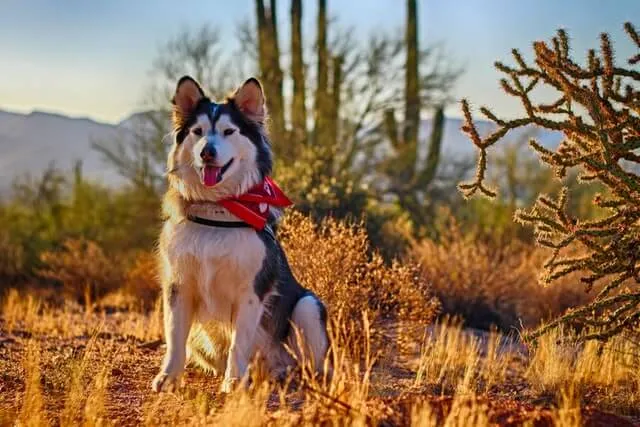
Alaskan Malamute
Health grade BThe Alaskan Malamute is a powerful, incredibly resilient sled dog—bred to pull the heaviest loads through Arctic ice, driven by enormous independence and an iron will.
- Height56–65 cm
- Weight34–43 kg
- Life expectancy10–14 yrs
- Puppy price1,200–2,500 €
- Energy5/5
The Essentials at a Glance
The Alaskan Malamute is a powerful, incredibly resilient sled dog—bred to pull the heaviest loads through Arctic ice, driven by enormous independence and an iron will.
- Health grade B: The Alaskan Malamute has an average health profile, which is well-managed through mandatory breeding health tests.
- You aren't looking for a ball-obsessed dog, but a true athlete for sled dog sports, canicross, or hours of hiking in cold weather.
- You lead with confident composure and humor rather than expecting blind, unquestioning obedience.
- You expect your dog to have perfect recall when spotting wildlife—he was bred as an independent hunter and runner, so off-leash freedom is often an illusion.
Is the Alaskan Malamute right for you?
At a glance
Alaskan Malamute overview
The essentials — key facts, traits, and health priorities — before you dive deeper.
Health grade
Relative to other breeds
S
A
B
C
D
E
Very healthyHigher risk
Solid — a handful of items a good breeder watches.
See full health info & tests →
Note: This health overview is AI-assisted and editorially reviewed. It is for orientation only and does not replace veterinary advice.
Lifespan
10–14 yrs
Height
56–65 cm
Weight
34–43 kg
Practical
- Puppy price: 1,200 – 2,500 €
- Coat: Dense, rough, medium length with a dense undercoat
- Origin: USA (Alaska)
Temperament
Energy
Trainability
Family fit
With kids
Daily life
Care effort
Shedding
Barking
City-friendly
Guard instinct
What matters most
Especially with a Alaskan Malamute, choosing the right breeder is the single most important decision you'll make. Serious breeders consistently test the parents for inherited conditions, prioritize healthy early socialization, and stay accountable long after handover. A cheap puppy without health screening tends to become the most expensive dog later on.
See HonestDog breeder standards →Colors & coat
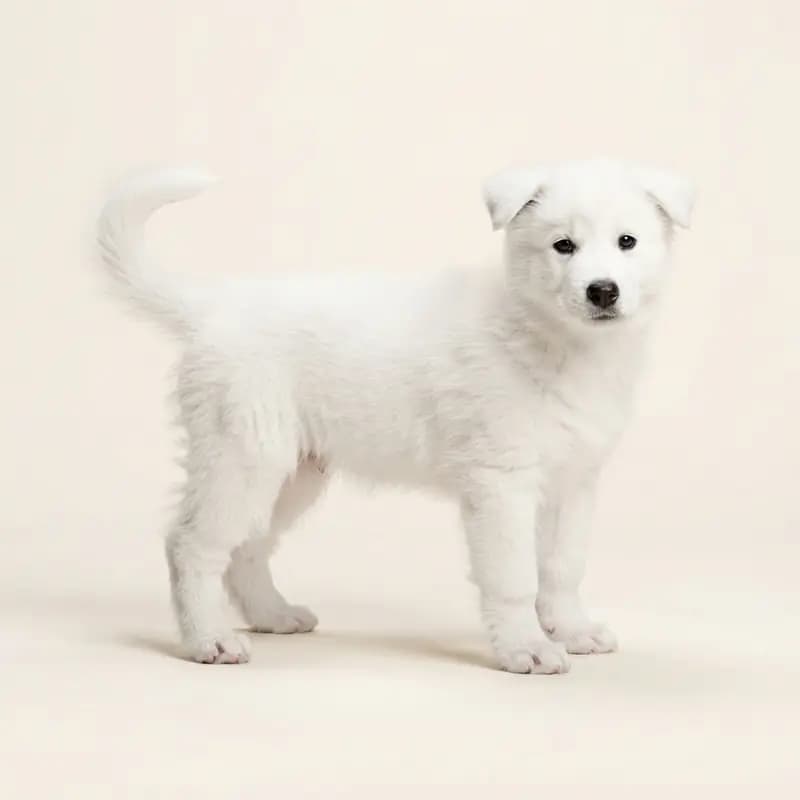
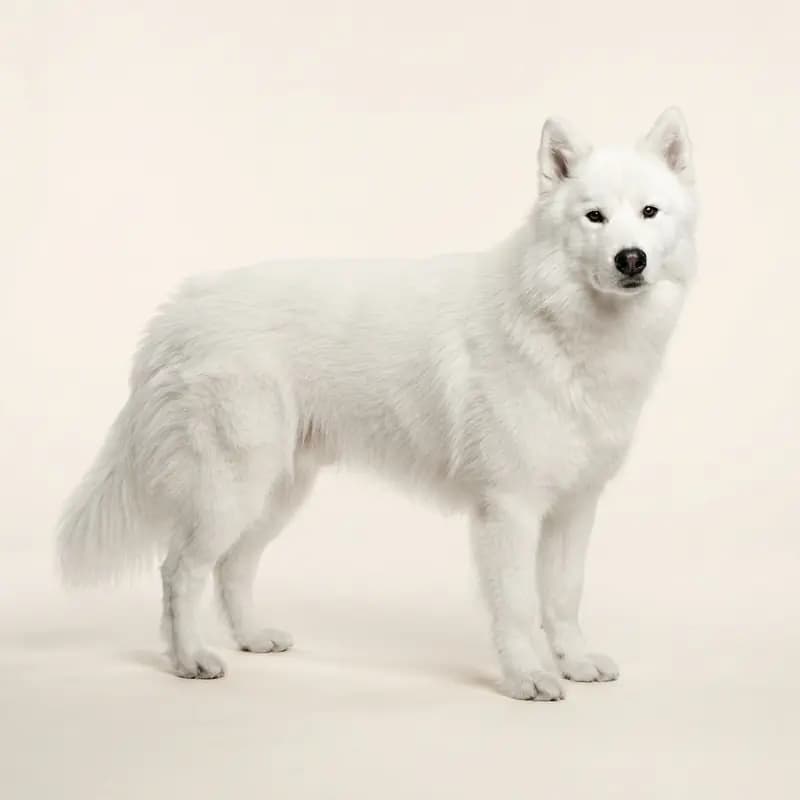
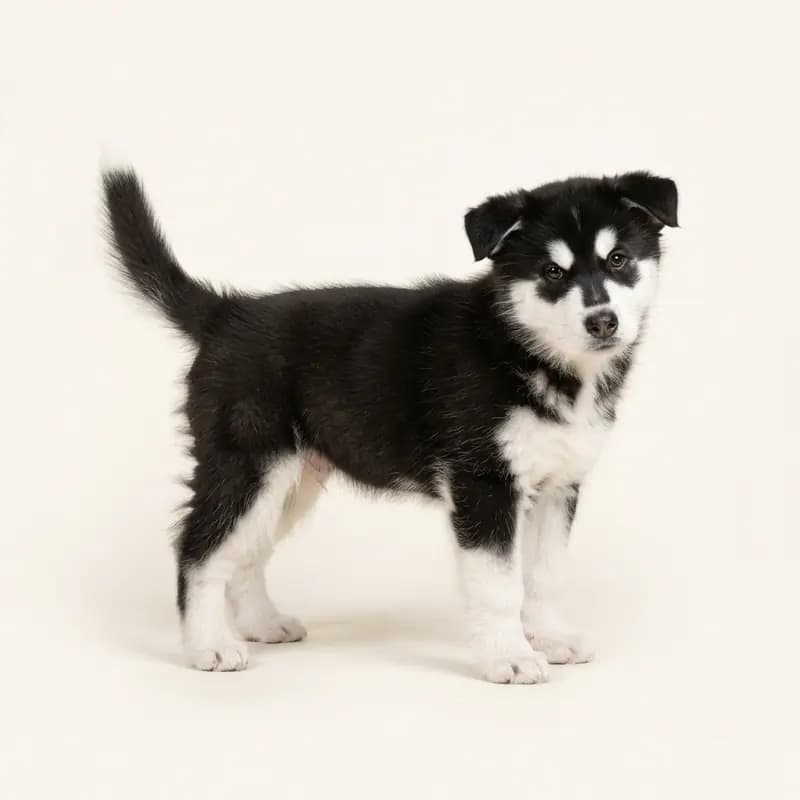
What colors does the Alaskan Malamute come in?
The coat colors you will see in Alaskan Malamute litters — including which ones fall outside the breed standard and which carry genetic risk.
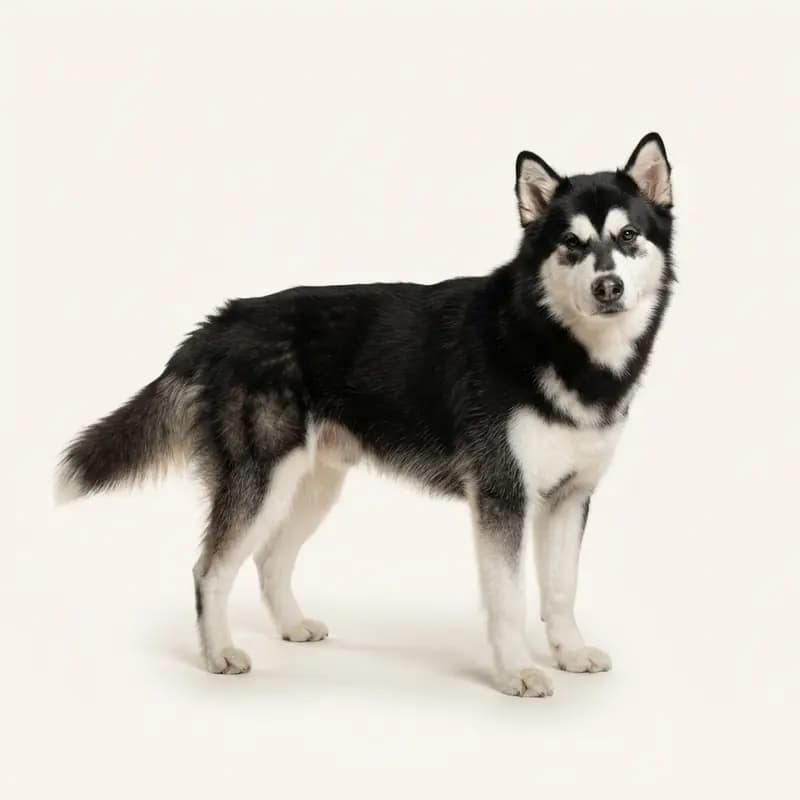
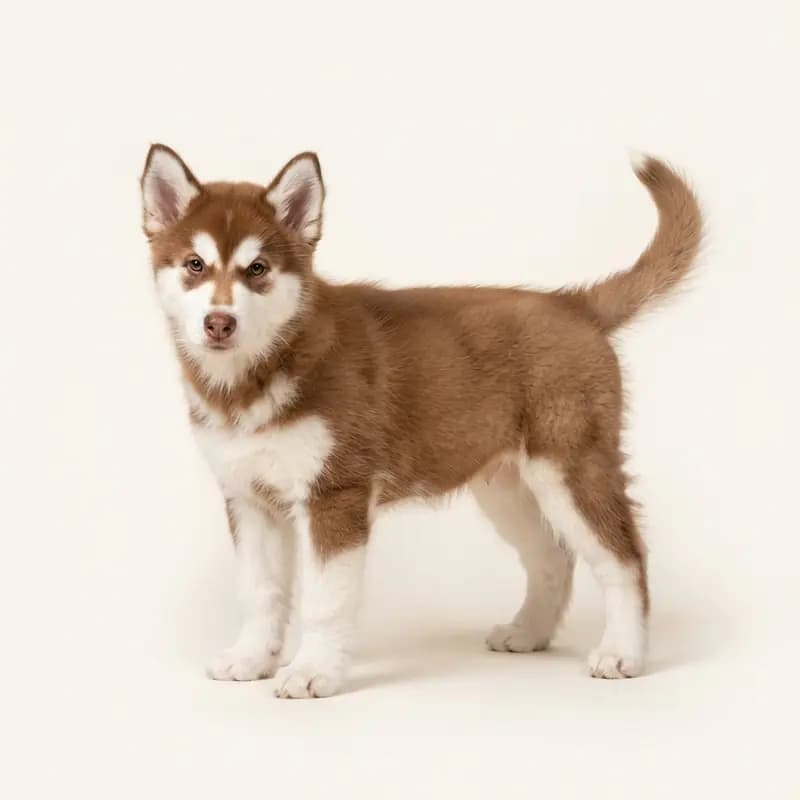
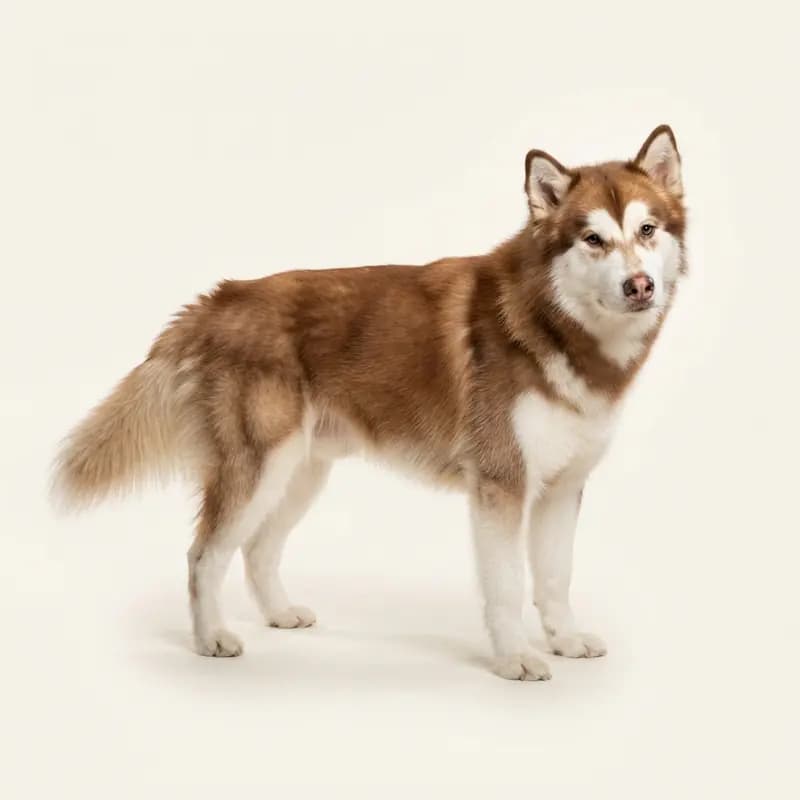
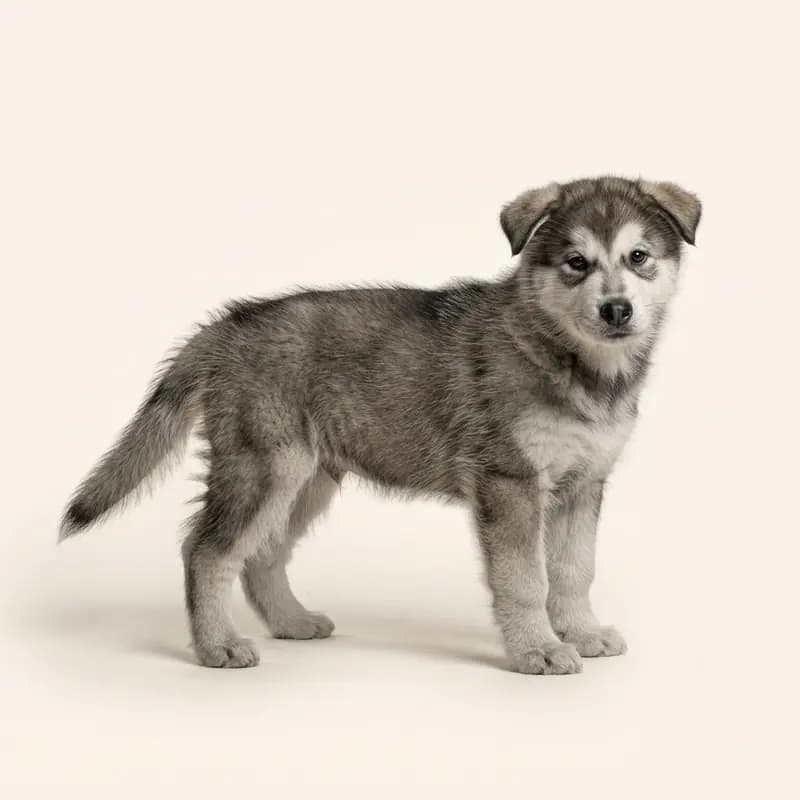
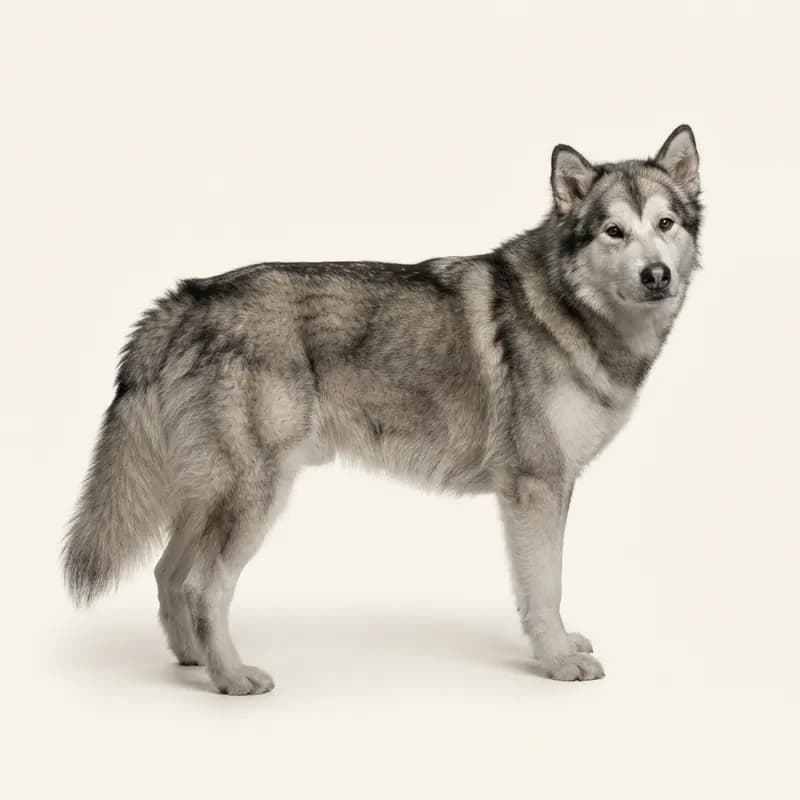
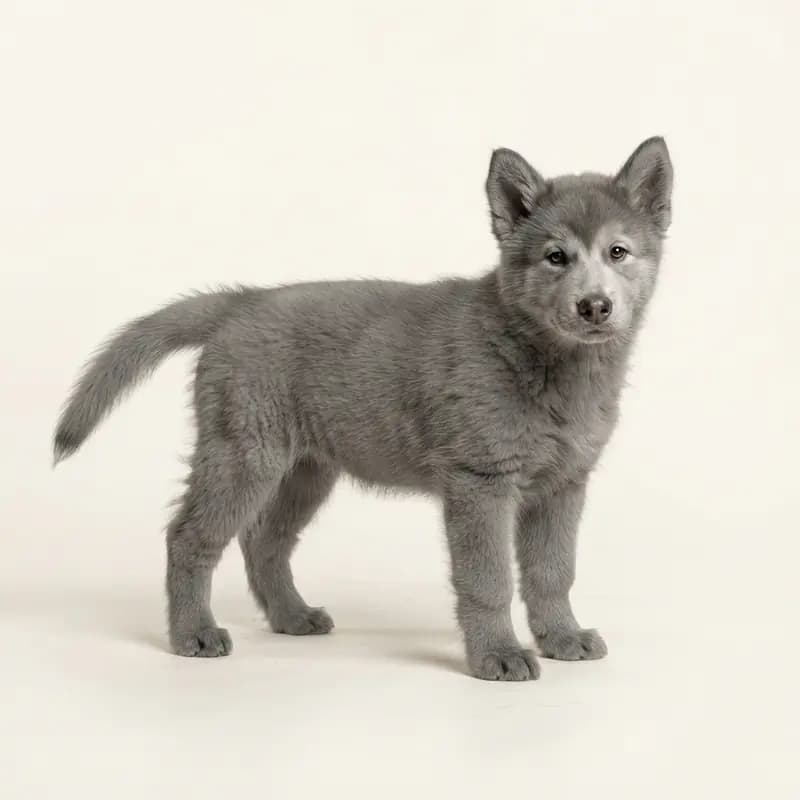
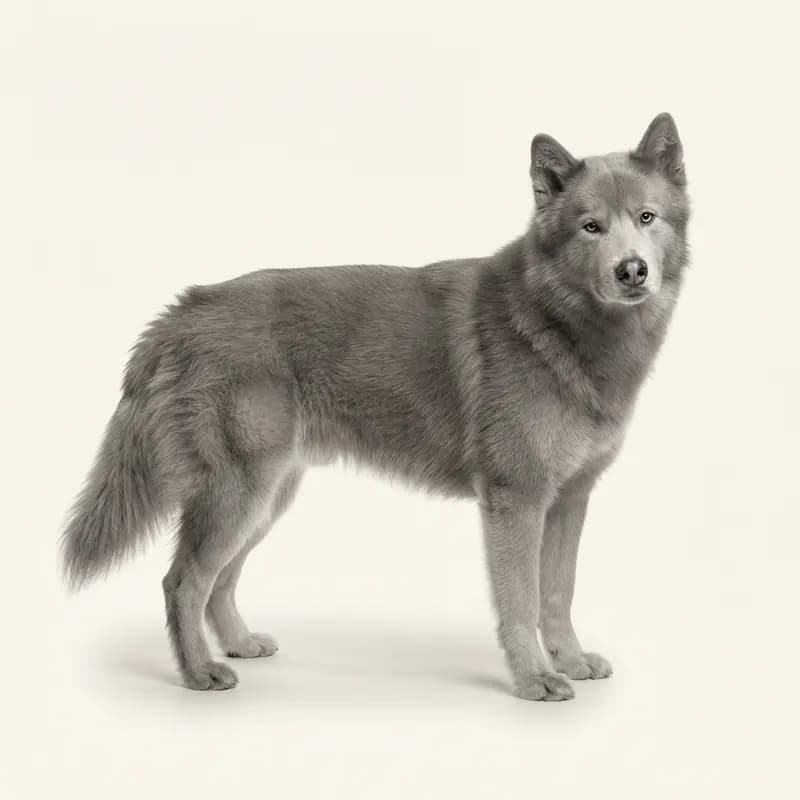
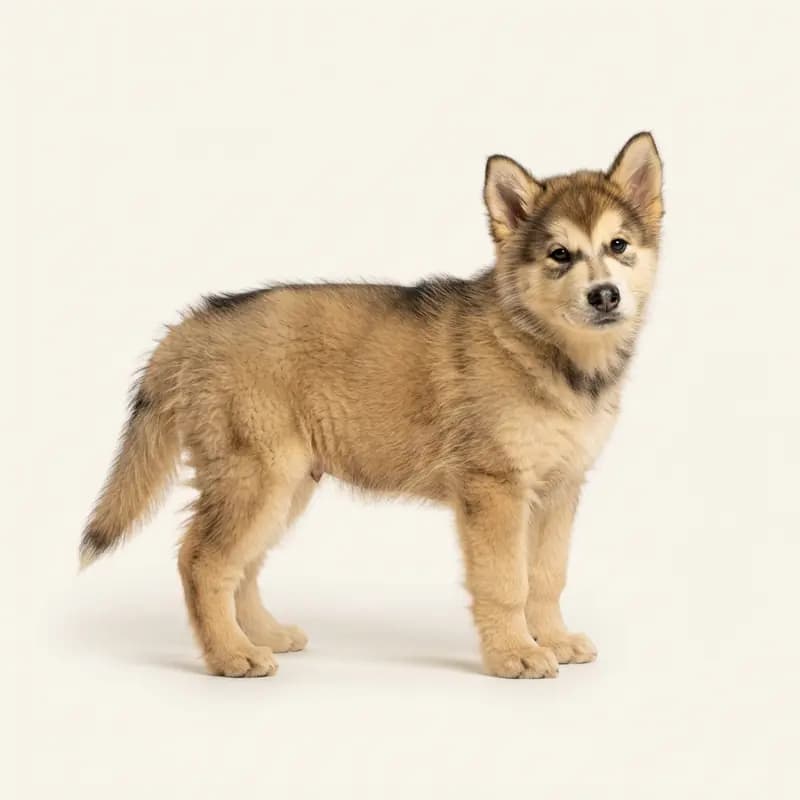
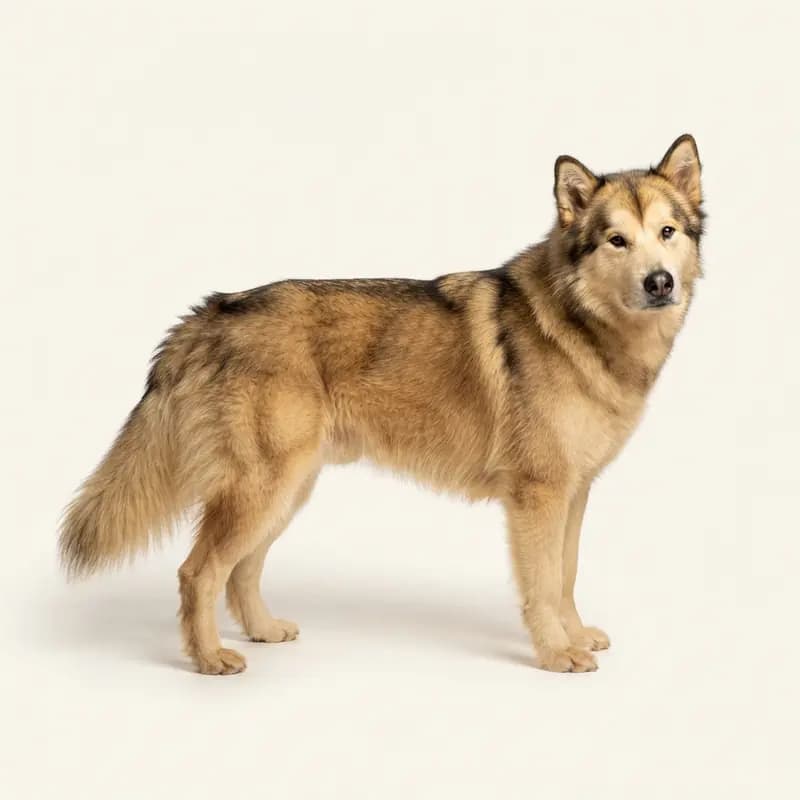
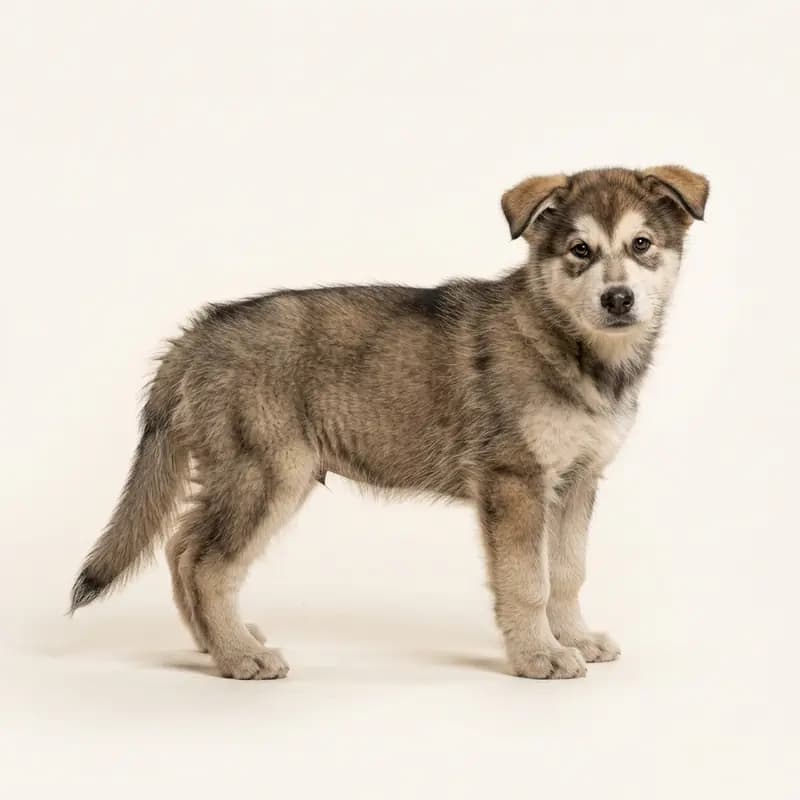
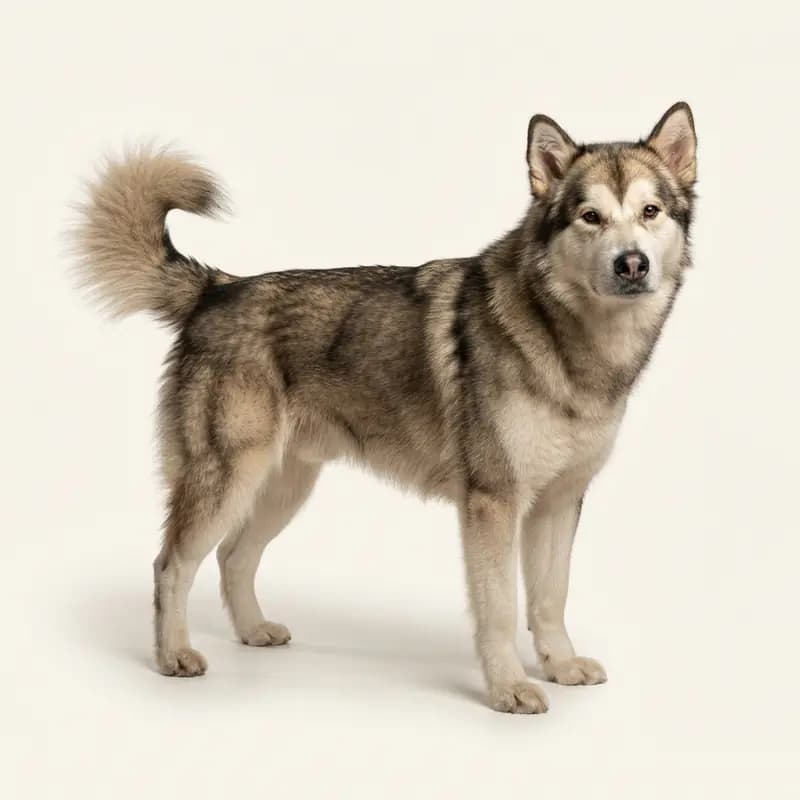
Eye colors
 Brown
Brown Amber
Amber
Coat type
 Medium
 Double coat
Is the Alaskan Malamute right for you?
The Alaskan Malamute is a powerful, incredibly resilient sled dog—bred to pull the heaviest loads through Arctic ice, driven by enormous independence and an iron will.
Perfect for you if:
- You aren't looking for a ball-obsessed dog, but a true athlete for sled dog sports, canicross, or hours of hiking in cold weather.
- You lead with confident composure and humor rather than expecting blind, unquestioning obedience.
- You want a dog that greets every visitor in a friendly manner and lacks a strong guarding instinct.
- Ideally, you have a high-fenced, escape-proof garden where he can lie outside even in the depths of winter.
Less ideal if:
- You expect your dog to have perfect recall when spotting wildlife—he was bred as an independent hunter and runner, so off-leash freedom is often an illusion.
- You are a fair-weather walker and prefer warm summers—this dog only truly thrives when you start to feel the chill.
- You live in an apartment and have to leave him alone for long periods daily—as a pack-oriented Nordic Spitz, he will often respond to this with persistent howling.
- You are looking for a dog that loves every other dog at the park—he can be quite dominant, especially toward dogs of the same sex.
The real vibes check
An Alaskan Malamute is like a four-legged freight locomotive: he brings immense power and stoic calm, but he cannot be steered at the push of a button. You aren't getting a submissive companion, but an archaic partner on equal footing who always thinks for himself—and in case of doubt, decides that his plan is better than yours.
Self-check
Would the Alaskan Malamute really fit your life?
Answer 6 quick questions about your everyday life and see how well the Alaskan Malamute fits you — including an honest cost estimate per month, per year, and across the dog's lifetime.
Fit checkCost estimateRisk dice
Takes about 1 minute · free & anonymous
Breed Profile
The Alaskan Malamute is an impressive dog whose origins lie in the far north and which is closely linked to the history of the Inuit. The breed is part of FCI Group 5: Spitz and Primordial Type Dogs, Section 1: Nordic Sled Dogs. It is characterized by a powerful, robust constitution and a deep chest, which enables it to have a high level of endurance in extreme weather conditions. With its thick, double coat, the Alaskan Malamute is excellently protected against the cold. The top coat is rough and the undercoat is thick and oily to repel snow and ice. The almond-shaped, brown eyes, which radiate a certain alertness and intelligence, are also typical of the breed. A distinguishing feature from the similar breed of Siberian Husky is the Malamute's coarser stature and larger mass. With regard to different lines, it can be seen that there are hardly any differences between show and working lines, as the breed is primarily optimized for its original use as a load carrier.
All measurements in detail
- Height
- 56 - 60 cm (Female), 61 - 65 cm (Male)
- Weight
- 34 - 38 kg (Female), 36 - 43 kg (Male)
- Life Expectancy
- 10 - 14 yrs
- Character
- Loyal, intelligent, confident
- Coat
- Dense, rough, medium length with a dense undercoat
- Coat Color
- From white to various shades of gray to black, often with a face mask
- Price
- 1200 - 2500 €
Character & Temperament
The Alaskan Malamute is a balanced, calm and loyal companion. His original role as a working dog in close contact with people has led to him developing a very close bond with his caregiver. He is people-oriented and friendly, but can also act independently and confidently. His intelligence and willingness to learn make him an interesting partner, but he also brings his challenges. Because the Malamute is known for its own mind and its stubbornness. He needs clear leadership and consistency to integrate into the family. The Alaskan Malamute is an active dog that needs a lot of exercise and activity. Long walks, hikes or sleigh rides are exactly his thing. Since it was originally bred to pull heavy loads, it can still be used as a pulling dog for leisure or sports purposes. The work not only gives him the physical exercise he needs, but also the mental activity he needs to be balanced and satisfied. However, it should be noted that the Alaskan Malamute has a strong hunting instinct. This means that without proper upbringing and training, he may tend to prey on small animals. Therefore, it is particularly important to start recall training early and ensure that he can run freely in a safe environment. When dealing with other dogs, the Alaskan Malamute is usually friendly and open-minded. His original way of life in a pack has made him a social creature. He gets along well with other dogs as long as they are respectful towards him and not too intrusive. However, it may happen that he reacts accordingly when other dogs behave unsafely or aggressively. It is therefore advisable to keep interactions with other dogs under supervision. Despite its friendly and open nature, the Alaskan Malamute also has a watchful side. He is attentive and quickly notices when something is wrong in his surroundings. He doesn't bark unnecessarily, but only when he sees a reason to. Therefore, he is not suitable as a watchdog in the classic sense, but rather as an attentive observer who alerts his family if necessary. Even though the Alaskan Malamute is an independent breed, he enjoys the company of his people very much. He likes to be part of family life and should not be left alone for too long. However, with the right training and appropriate exercise, he can learn to stay alone sometimes.
| Trainability Has its own ideas and will test limits. | Strong-willed |
| Watchfulness Reports unusual activity but stays controlled. | Moderate |
| Openness to Strangers Warms up quickly and is generally welcoming. | Friendly |
| Hunting or Herding Drive Mild interest in movement and small animals — easily managed. | Low |
Fun Fact!
A fun fact about the Alaskan Malamute: He hardly barks! Instead, it communicates with a variety of sounds, including yelps, howls, and even "speaking." An Alaskan Malamute can sometimes be a real chatterbox!
What Awaits You
Alaskan Malamutes are considered calm, stubborn dogs that are rather difficult to train. They are passionate hunters and love to run. Malamutes need mental and physical activity and, due to their hunting motivation, a well-trained recall from the start.
Housing & Care
The Alaskan Malamute is a dog for active people. His size and energy make him less suitable for keeping in the city, although he can be happy in a townhouse with enough exercise and activity. However, he needs sufficient exercise and mental stimulation every day. He is friendly and patient with children, but due to his size and strength he should always be supervised when interacting with small children. It has a strong prey instinct, so it may view smaller pets as prey. He usually gets along well with other dogs if they are respectful and not too intrusive.
- Family Friendly
Loves family life and thrives in a group.
Family-oriented - Child Friendly
Takes boisterous and affectionate children in its stride.
Patient with children - Dog Friendly
Usually gets on fine with other dogs.
Generally tolerant - City Friendly
Can manage in the city, but only with very active owners.
Difficult in cities
Owning a dog is a privilege, but it's also a real responsibility. Before you bring one into your life, be honest with yourself about the commitment it takes.
Training & Education
Malamutes are intelligent dogs that enjoy working and having a purpose. They love learning and working, but need clear and consistent leadership. Due to their stubbornness, they can be challenging at times, so patience and consistency in parenting is very important. Malamutes are not ball junkies, but they do love to pull. Pull dog sports such as canicross, bikejoring or skijoring are perfect for them. They can also enjoy searching and nose work, agility or obedience. It is important that Malamutes learn to develop frustration tolerance and impulse control. They tend to act out their strong hunting instincts when they are bored or under-challenged. Therefore, you should make sure that you have enough mental and physical activity, but that you can also take rest periods.
Nutrition & Care
Malamutes are active and vigorous dogs that require a balanced diet. A mix of high-quality dry or wet food with regular portions of fresh meat, vegetables and whole grains is ideal. As with all breeds, you should avoid being overweight with Malamutes, as this puts strain on the joints and can lead to health problems. The Malamute has a thick double coat that protects it from extreme weather conditions. It requires regular care, especially during shedding in spring and fall when they shed heavily. Brush thoroughly once a week is usually enough to keep the coat clean and healthy. The malamutes' fur is perfectly adapted to cold temperatures, but they also cope well with the German climate. In summer, however, you should make sure that they do not overheat and always have access to fresh water.
| Care Level Regular brushing and occasional professional grooming. | Moderate |
| Exercise Needs Working-dog energy that needs burning off every single day. | High-drive |
| Shedding Hair everywhere, always — no white clothing survives. | Very heavy |
| Trainability Has its own ideas and will test limits. | Strong-willed |
Our experts are still reviewing this information. Spotted something wrong? Email us at info@honestdog.de.
Health & hereditary diseases
Health
B
Solid
Health grade
The Alaskan Malamute has an average health profile, which is well-managed through mandatory breeding health tests. It is particularly important to screen for hip dysplasia (HD) as well as the breed-specific polyneuropathy (AMPN), a serious neurological condition for which a reliable DNA test is available. Additionally, potential eye issues must be regularly checked by a veterinarian to ensure the continued fitness of these robust working dogs.
Grade is relative to other breeds — AI-assisted and editorially reviewed.
In daily life this can mean
You should focus on healthy growth, joint-friendly exercise, and regular eye exams to ensure your dog stays fit and active for a long time.
The breeder's role
Reputable breeders have the parents' hips, elbows, and eyes checked and specifically test for hereditary neurological conditions to minimize risks.
Note: This health overview is AI-assisted and editorially reviewed. It is for orientation only and does not replace veterinary advice.
No Health Tests Available
No specific health tests are currently available for this breed.
Costs & where to find one
How much does a Alaskan Malamute cost?
A Alaskan Malamute costs around ~€210 per month (€110 – €400, depending on your setup). The first year adds up to roughly ~€5,150 including purchase, equipment and puppy school; across the dog's life (12 years) it comes to about ~€32,320.
With surgery cover, running costs come to about ~€210 per month — in return, your share of a major operation drops from several thousand euros to around 20 percent.
Per month
~€210
In the first year
~€5,150
Across the dog's life
~€32,320
Purchase from a breeder: €1,200 – €2,500
Estimate at a mid-range setup (suburban, dry food, 1–2 hours of daily exercise), average German prices, as of July 2026.
Calculate your personal costs1-minute self-check with your own answers
Looking for a Alaskan Malamute?
Appearance, variants & origin
History
The full history
The Alaskan Malamutes are one of the oldest dog breeds and their history goes back at least 4,000 years. They were bred by the Mahlemiut Inuit of northwest Alaska and used to pull heavy loads over long distances. The Mahlemiut were known for their excellent dog teams and bred their dogs for working ability and endurance. The name "Malamute" derives from "Mahlemiut" ab, which means something like "People of Mahle" means. With the gold rush at the end of the 19th century, many people came to the north and with them many other dog breeds with which the Malamutes were crossed. The breed was therefore almost extinct at the end of the 19th century. In the 1920s, enthusiasts of the breed made efforts to revive the original Alaskan Malamute, which ultimately led to the breed's recognition by the American Kennel Club in 1935. Over time, malamutes became popular outside of Alaska and can now be found in many parts of the world.
Original Use
The Alaskan Malamute was bred by the Mahlemiut Inuit as a sled dog for transporting heavy loads over long distances in Arctic regions.
Origin
USA (Alaska)
Date
1800
Owner experiences
What owners say about the Alaskan Malamute
Zusammengefasst aus öffentlich geteilten Halter-Erfahrungen
In Erfahrungsberichten betonen Halter immer wieder die große Menschenfreundlichkeit und Sanftmut des Alaskan Malamute. Besonders im Umgang mit Kindern wird ihm im familiären Umfeld oft eine Engelsgeduld nachgesagt. Er gilt im Haus als ruhiger, angenehmer Mitbewohner, der kaum bellt, sondern sich stattdessen eher durch Heulen oder melodisches „Singen“ mitteilt.
Allerdings weisen erfahrene Besitzer auf handfeste Herausforderungen im Alltag hin. Der Malamute ist ein leidenschaftlicher Buddler – viele Halter berichten scherzhaft, dass ihr Garten regelmäßig ungefragt „umgestaltet“ wird. Zudem sind die Hunde geschickte Ausbrecherkönige, weshalb Zäune hoch und tief im Boden verankert sein müssen.
Ein weiteres großes Thema ist das Fell: Zweimal im Jahr steht ein extrem starker Fellwechsel an, bei dem bergeweise Unterwolle ausfällt. Zudem vertragen Malamutes Wärme sehr schlecht. Viele Halter berichten, dass den Hunden schon Temperaturen ab 15 bis 20 Grad zu schaffen machen und sie dann schattige, kühle Plätze im Haus oder im Freien einfordern.
Zusammengefasst aus öffentlich geteilten Halter-Erfahrungen
Der Alaskan Malamute ist kein Hund, der Befehle blind befolgt, um seinem Besitzer zu gefallen. In Foren wird sein Verhalten oft als „berechnender Ungehorsam“ beschrieben: Er lernt zwar schnell, kooperiert aber meist nur, wenn er einen Sinn darin sieht oder eine besonders hochwertige Belohnung winkt. Ohne konsequente, liebevolle Führung neigt er dazu, eigene Entscheidungen zu treffen.
Aufgrund seiner enormen körperlichen Kraft ist die Leinenführigkeit von Welpenbeinen an das wichtigste Erziehungsziel. Ein ausgewachsener Malamute kann problemlos das Vielfache seines Körpergewichts ziehen. Wenn er nicht gelernt hat, entspannt an der Leine zu laufen, wird der Spaziergang für den Halter schnell zum anstrengenden Kraftakt.
Einig sind sich fast alle Besitzer beim Thema Jagdtrieb: Dieser ist genetisch tief verankert. Ein Freilauf ohne Leine ist in den meisten Fällen selbst bei gutem Training kaum möglich, da die Hunde beim Anblick von Wild, Katzen oder Eichhörnchen sofort in den Jagdmodus schalten und den Rückruf ignorieren.
Zusammengefasst aus öffentlich geteilten Halter-Erfahrungen
Als klassischer Arbeitshund benötigt der Alaskan Malamute eine echte Aufgabe. Einfache Spaziergänge reichen ihm nicht aus. Viele Halter nutzen seine ursprüngliche Passion und lasten ihn im Zughundesport aus – sei es vor dem Schlitten, dem Trainingswagen oder beim Canicross. Erst durch diese körperliche und geistige Arbeit wird er im Haus zu dem ausgeglichenen Begleiter, den man sich wünscht.
Im Sozialverhalten zeigt sich der Malamute Menschen gegenüber zwar äußerst aufgeschlossen, bei Artgenossen sieht das jedoch oft anders aus. Erfahrene Halter berichten häufig von einer ausgeprägten gleichgeschlechtlichen Aggression, die sich mit dem Erwachsenwerden entwickeln kann. Begegnungen mit fremden Hunden des gleichen Geschlechts erfordern daher oft erhöhte Aufmerksamkeit.
Auch das Zusammenleben mit anderen Haustieren wie Katzen oder Kaninchen ist ein sensibles Thema. Aufgrund des extremen Beutetriebs der Rasse raten Halter dringend zur Vorsicht, es sei denn, der Hund wurde von klein auf sehr sorgfältig an die jeweiligen Tiere gewöhnt.
Paraphrased from real owner reports
Loading owner stories
Community Posts
FAQ & more
Frequently asked questions about the Alaskan Malamute
Is a Alaskan Malamute the right dog for me?
The Alaskan Malamute is an active dog that needs plenty of exercise and mental stimulation. Research the temperament, grooming needs, and space requirements before deciding.
How long does a Alaskan Malamute live?
The average life expectancy of a Alaskan Malamute is 10-14 years. With proper care and regular vet visits, your dog can live a long, healthy life.
How much grooming does a Alaskan Malamute need?
Alaskan Malamute grooming requirements include regular brushing, nail trimming, and dental care. HonestDog provides detailed grooming tips for every breed.
Is a Alaskan Malamute good for families with children?
The Alaskan Malamute can be a great family dog. Proper training and socialization are key. HonestDog provides family suitability information for every breed.
What colors does the Alaskan Malamute come in?
The Alaskan Malamute comes in these colors: White, Black and white, Red and white, Wolf grey, Grey, Sable, Agouti.
Loading related articles
Are you a Alaskan Malamute breeder?
Showcase your kennel on HonestDog and reach families searching for a responsibly bred Alaskan Malamute.
Why HonestDog?
What makes HonestDog different from other platforms
Full transparency
We lay out what we have: who the breeder is, how they work, and any health records they've uploaded. So you can judge for yourself.
Responsible breeding, assured
Every breeder on HonestDog has their identity and documents checked before their profile goes live. Health records they upload are shown on the profile, so you can see exactly what has been tested.
Trust and verification
We verify breeders and buyers alike, so every conversation happens on solid ground. It's a new standard of trust in dog breeding.
Less hassle, more time
We've already checked the breeders' documents and gathered the details, so you can skip the endless research and focus on finding the right puppy for your family.
Our Mission

We connect dog lovers with responsible breeders and shelters to ensure every dog finds the perfect home.
Founded by dog enthusiasts, our platform focuses on ethical dog breeding and adoption.
Why HonestDog?
We connect you with vetted breeders and shelters so you can find your — your new companion — with confidence.
Vetted Partners
Only verified breeders and shelters — for a safe start.
Highest Standards
Every animal's health and wellbeing is our top priority.
Guides & Resources
Guides, checklists, and breed profiles — so you can make a well-informed decision.