Loading breed
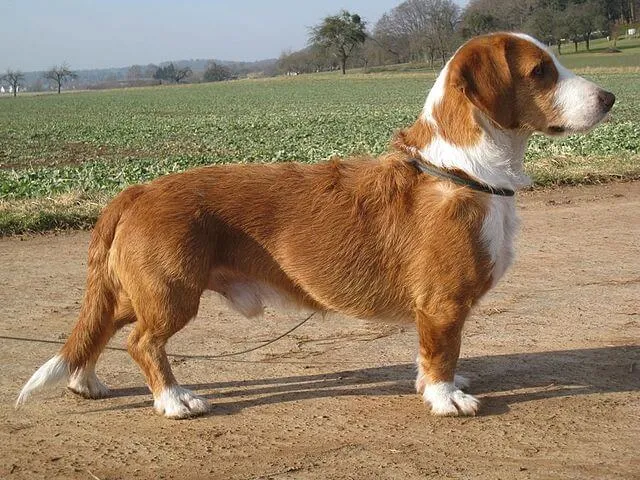
Westphalian Dachsbracke
Health grade BThe Westfälische Dachsbracke is a persistent, keen-nosed Niederlaufhund (low-legged scent hound)—bred as a specialist in tracking with a baying bark, persistently and vocally driving game through dense forests. A compact, serious working dog that lives for the trail, not the sofa.
- Height30–38 cm
- Weight13–18 kg
- Life expectancy12–14 yrs
- Puppy price1,200–2,500 €
- Energy4/5
The Essentials at a Glance
The Westfälische Dachsbracke is a persistent, keen-nosed Niederlaufhund (low-legged scent hound)—bred as a specialist in tracking with a baying bark, persistently and vocally driving game through dense forests. A compact, serious working dog that lives for the trail, not the sofa.
- Health grade B: The Westfälische Dachsbracke receives a grade of C, as it carries an above-average genetic burden with 10 recorded mandatory health tests.
- You are looking for a true working dog and are prepared to engage in demanding scent work like mantrailing or tracking every day.
- You live in a rural area, ideally near a forest, and have a completely escape-proof garden.
- You live in an apartment with thin walls—the baying bark is part of their hardware, meaning this dog will vocally comment on excitement and discoveries.
Is the Westphalian Dachsbracke right for you?
At a glance
Westphalian Dachsbracke overview
The essentials — key facts, traits, and health priorities — before you dive deeper.
Health grade
Relative to other breeds
S
A
B
C
D
E
Very healthyHigher risk
Solid — a handful of items a good breeder watches.
See full health info & tests →
Note: This health overview is AI-assisted and editorially reviewed. It is for orientation only and does not replace veterinary advice.
Lifespan
12–14 yrs
Height
30–38 cm
Weight
13–18 kg
Practical
- Puppy price: 1,200 – 2,500 €
- Coat: Short, smooth, dense; Undercoat present
- Origin: Germany
Temperament
Energy
Trainability
Family fit
With kids
Daily life
Care effort
Shedding
Barking
City-friendly
Guard instinct
What matters most
Especially with a Westphalian Dachsbracke, choosing the right breeder is the single most important decision you'll make. Serious breeders consistently test the parents for inherited conditions, prioritize healthy early socialization, and stay accountable long after handover. A cheap puppy without health screening tends to become the most expensive dog later on.
See HonestDog breeder standards →Colors & coat
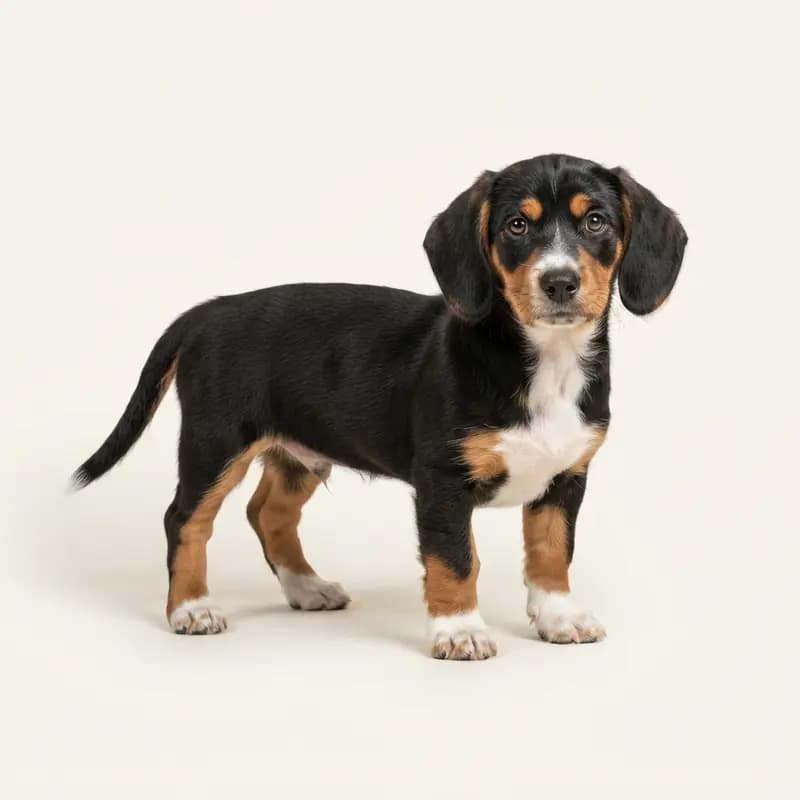
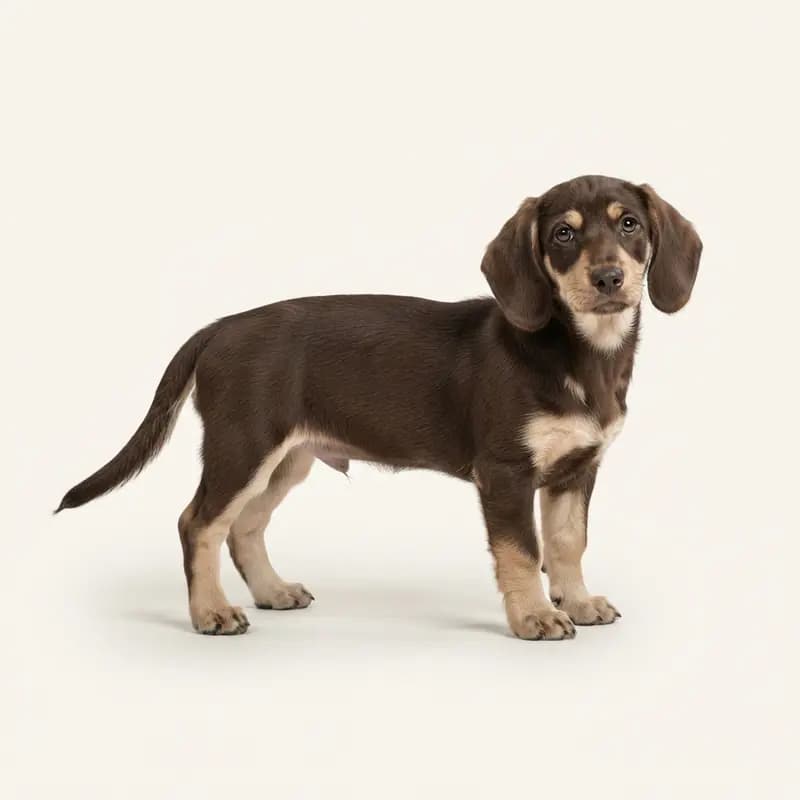
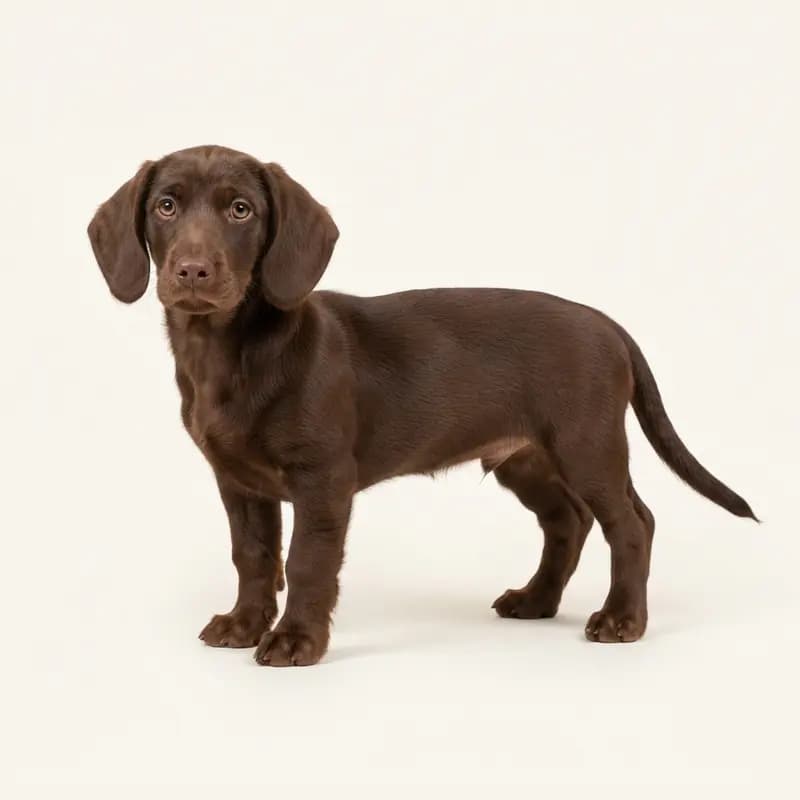
What colors does the Westphalian Dachsbracke come in?
The coat colors you will see in Westphalian Dachsbracke litters — including which ones fall outside the breed standard and which carry genetic risk.
Eye colors
 Brown
Brown
Coat type
 Short
Short Smooth
 Double coat
Is the Westphalian Dachsbracke right for you?
The Westfälische Dachsbracke is a persistent, keen-nosed Niederlaufhund (low-legged scent hound)—bred as a specialist in tracking with a baying bark, persistently and vocally driving game through dense forests. A compact, serious working dog that lives for the trail, not the sofa.
Perfect for you if:
- You are looking for a true working dog and are prepared to engage in demanding scent work like mantrailing or tracking every day.
- You live in a rural area, ideally near a forest, and have a completely escape-proof garden.
- You appreciate a dog that makes independent decisions outdoors and have the patience for years of consistent long-line training.
- You want a calm and balanced companion at home that releases its enormous energy purposefully while on the trail.
Less ideal if:
- You live in an apartment with thin walls—the baying bark is part of their hardware, meaning this dog will vocally comment on excitement and discoveries.
- You expect a dog that reliably trots off-leash beside you during forest walks—when it catches the scent of game, its nose completely switches off its ears.
- You are looking for a pure family dog that is satisfied with normal walks in the park and a few games of fetch.
The real vibes check
Recalling a Westfälische Dachsbracke in the forest is often like trying to stop a moving train with a whisper. When its nose is glued to the ground, nothing exists for this dog but the trail—this isn't stubbornness, but its genetic operating system. However, those who channel this hunting passion into shared activities will find a deeply relaxed, gentle companion at home.
Self-check
Would the Westphalian Dachsbracke really fit your life?
Answer 6 quick questions about your everyday life and see how well the Westphalian Dachsbracke fits you — including an honest cost estimate per month, per year, and across the dog's lifetime.
Fit checkCost estimateRisk dice
Takes about 1 minute · free & anonymous
Breed Profile
The Westphalian Dachsbracke, also known as the Westphalian Dachsbracke, is a medium-sized dog breed classified in FCI Group 6 (hounds, bloodhounds and related breeds). It is characterized by a strong, robust body and short, smooth fur. Their ears are medium length and hang down to the sides, while their eyes are dark and expressive. Their appearance reflects their use as a working dog, particularly as a reliable tracker. She has strong, well-developed muscles that allow her to work over long distances and a broad chest for good endurance. There is no distinction between performance and show lines, keeping the breed overall uniform and focused on its original purpose.
All measurements in detail
- Height
- 30 - 38 cm (Female), 30 - 38 cm (Male)
- Weight
- 13 - 18 kg (Female), 13 - 18 kg (Male)
- Life Expectancy
- 12 - 14 yrs
- Character
- Persistent, friendly, intelligent
- Coat
- Short, smooth, dense; Undercoat present
- Coat Color
- Black-red-yellow to black-red
- Price
- 1200 - 2500 €
Character & Temperament
The Westphalian Dachsbracke is known for its endurance, intelligence and friendliness. She has a natural ability as a tracker and shows high motivation and determination at work. Their strong sense of smell and endurance make them an excellent bloodhound. In addition to its role as a working dog, the Westphalian Dachsbracke also shows excellent qualities as a family dog. She is friendly and balanced and can adapt well to family life. She is a lively and active dog, but also appreciates quiet phases. She generally gets along well with children and is patient and tolerant. Like many hunting dogs, the Westphalian Dachsbracke is very people-oriented and likes to be close to people. She tends to form a strong bond with her caregiver and may have difficulty staying alone. It's important to teach her from the start that it's okay to be alone sometimes and to provide her with a safe, comfortable environment in which she can relax while you're away. Even though the Westphalian Dachsbracke is a hunting dog, it generally does not show strong prey-catching behavior. Their primary role in hunting is to follow the scent of game, not to capture or kill it. Still, their hunting instincts may lead them to pursue interesting smells or movements, so a securely fenced yard is best for them. The Westphalian Dachsbracke is a vigilant dog that reacts attentively to its surroundings. However, she is not an overly loud or aggressive guard dog. Her nature is rather calm and balanced, and although she is attentive, she is usually not a constant barker. The temperament and character of the Westphalian Dachsbracke can of course vary from dog to dog. Therefore, it is important to get to know the specific dog and find out about its individual characteristics and needs before choosing it. But on the whole, Westphalian Dachsbracken are friendly, intelligent and persistent dogs that prove themselves to be both working dogs and family dogs.
| Trainability Has its own ideas and will test limits. | Strong-willed |
| Watchfulness Reports unusual activity but stays controlled. | Moderate |
| Openness to Strangers Warms up quickly and is generally welcoming. | Friendly |
| Hunting or Herding Drive This drive runs deep — no amount of training eliminates it. | Very strong |
Fun Fact!
Although the Westphalian Dachsbracke is very popular in its native Germany, it is relatively unknown outside of it and is considered one of the rarest dog breeds in the world!
What Awaits You
The Westphalian Dachsbracke is a persistent and hunting-passionate dog. It is characterized by its excellent sense of smell and strong hunting instinct. These dogs are friendly and affectionate but require consistent leadership and sufficient exercise. The Westphalian Dachsbracke is especially suitable for active people who enjoy hunting and long walks.
Housing & Care
The Westphalian Dachsbracke is adaptable and can live well in both the city and the country as long as it receives adequate exercise and mental stimulation. She is generally good with children, although, as with all dogs, appropriate supervision is required. She can also get along well with other pets as long as she is properly socialized and introduced.
- Family Friendly
Loves family life and thrives in a group.
Family-oriented - Child Friendly
Gets on well with children — with adult supervision.
With supervision - Dog Friendly
Actively enjoys the company of other dogs.
Dog-friendly - City Friendly
Can manage in the city, but only with very active owners.
Difficult in cities
Owning a dog is a privilege, but it's also a real responsibility. Before you bring one into your life, be honest with yourself about the commitment it takes.
Training & Education
Due to its hunting background and natural intelligence, the Westphalian Dachsbracke is a breed that requires physical and mental exercise. She benefits from a variety of activities including walks, hiking, search games and more. It is important to keep the activity varied and to ensure that the dog is not put under excessive strain. Frustration tolerance and impulse control are also important aspects of parenting and should be encouraged from the start. The Westphalian Dachsbracke can become a “ball junkie” if it is not fully utilized. become. It is therefore important to find a balance between play, training and rest. Hunting dogs like the Westphalian Dachsbracke can benefit from activities that appeal to their natural instincts, such as nose work or tracking. It is also helpful to offer alternatives to hunting, such as games of fetch, to keep the breed happy and social.
Nutrition & Care
The Westphalian Dachsbracke's diet should be balanced and nutritious to support their active lifestyle. High-quality, high-protein dog food is ideal, and the amount should be adjusted according to the dog's weight, age and activity level. Fresh water should be available at all times. When it comes to grooming, the Westphalian Dachsbracke has a short, smooth coat with a dense undercoat. This helps them to cope well with the German climate. They shed moderately, so regular grooming is important to keep their skin and coat healthy. A weekly brush should be enough to remove loose hair and distribute the natural oils throughout the coat.
| Care Level Minimal effort — occasional brushing and bathing. | Low-maintenance |
| Exercise Needs Needs several hours of serious exercise every day. | Very active |
| Shedding Regular shedding — dog hair on clothes is now normal. | Moderate |
| Trainability Has its own ideas and will test limits. | Strong-willed |
Our experts are still reviewing this information. Spotted something wrong? Email us at info@honestdog.de.
Health & hereditary diseases
Health
B
Solid
Health grade
The Westfälische Dachsbracke receives a grade of C, as it carries an above-average genetic burden with 10 recorded mandatory health tests. Prospective buyers should pay close attention to breeding tests for epilepsy as well as eye conditions such as ectropion and entropion. Even though the breed is considered a traditional hunting dog, careful selection of the parent animals is essential due to these risks.
Grade is relative to other breeds — AI-assisted and editorially reviewed.
In daily life this can mean
You should maintain a healthy weight and avoid frequent stair climbing or jumping to specifically protect the long back and joints in everyday life.
The breeder's role
Reputable breeders have the spines, hips, elbows, and knees of the parent animals examined and ensure genetically healthy eyes to reduce risks in the lineage.
Note: This health overview is AI-assisted and editorially reviewed. It is for orientation only and does not replace veterinary advice.
No Health Tests Available
No specific health tests are currently available for this breed.
Costs & where to find one
How much does a Westphalian Dachsbracke cost?
A Westphalian Dachsbracke costs around ~€170 per month (€90 – €310, depending on your setup). The first year adds up to roughly ~€4,670 including purchase, equipment and puppy school; across the dog's life (13 years) it comes to about ~€28,550.
With surgery cover, running costs come to about ~€160 per month — in return, your share of a major operation drops from several thousand euros to around 20 percent.
Per month
~€170
In the first year
~€4,670
Across the dog's life
~€28,550
Purchase from a breeder: €1,200 – €2,500
Estimate at a mid-range setup (suburban, dry food, 1–2 hours of daily exercise), average German prices, as of July 2026.
Calculate your personal costs1-minute self-check with your own answers
Looking for a Westphalian Dachsbracke?
HonestDog Concierge
No verified Westphalian Dachsbracke breeders on HonestDog yet
We currently have no breeders for this breed who have passed our verification. Create your short buyer profile: we'll set up your search alert, review a possible source and email you within 28 days.
Appearance, variants & origin
History
The full history
The Westphalian Dachsbracke is a traditional German hunting breed whose systematic breeding began towards the end of the 19th century, around 1880. During this period, many hunting grounds were shrinking, creating a need for a slower, scent-tracking dog that hunters could easily follow on foot. To achieve this, long-legged local hounds, particularly the Deutsche Bracke, were crossed with short-legged Dachshunds. The name Dachsbracke often leads to the misconception that the breed was developed for badger earthwork. In reality, the term Dachs refers exclusively to the short, dachshund-like legs resulting from the crossbreeding. The Westphalian Dachsbracke is strictly a scent hound and tracking dog, not a terrier. Its original and still primary purpose is the vocal tracking of small game such as hare and fox, as well as the reliable tracking of wounded hoofed game in difficult terrain. The breed was officially recognized by the Fédération Cynologique Internationale in 1935. Although distinguished by an excellent nose, strong tracking instinct, and a balanced temperament, the Westphalian Dachsbracke remains a rare breed today, almost exclusively placed with hunters and rarely found outside its home country.
Original Use
The Westphalian Dachsbracke was bred for hunting small game and for tracking wounded game in difficult terrain.
Origin
Germany
Date
1880
Owner experiences
What owners say about the Westphalian Dachsbracke
Christian M., Jäger aus dem Sauerland (Rüde, seit 2021)
Ich führe meinen Rüden nun schon seit einigen Jahren im Jagdbetrieb und bin von seiner Fährtenarbeit absolut begeistert. Die Westfälische Dachsbracke arbeitet auf der Fährte unheimlich konzentriert und ausdauernd. Durch ihre kürzeren Läufe jagt sie zwar etwas langsamer als hochläufige Bracken, bleibt dafür aber umso hartnäckiger und länger an der Spur dran. Wenn sie erst einmal eine frische Fährte aufgenommen hat, ist sie kaum noch zu bremsen.
Allerdings darf man nicht verschweigen, dass diese Rasse einen ausgeprägten Dickkopf besitzt. Im Vergleich zu anderen Bracken empfinde ich sie als etwas schärfer und eigenwilliger, was die Führung manchmal zu einer echten Herausforderung macht. Man braucht bei der Ausbildung eine sehr konsequente, aber faire Hand. Wer einen leichtführigen Hund sucht, der sofort jeden Befehl stur ausführt, wird mit dieser Rasse vermutlich nicht glücklich werden.
Stefan B., Familienvater aus Hessen (Hündin, seit 2018)
Bei uns lebt unsere Hündin als treues Familienmitglied. Sie ist im Alltag unglaublich anhänglich, fröhlich und liebt es, mit unseren Kindern im Garten zu spielen. Für uns ist sie im Großen und Ganzen ein absolut tauglicher Familienhund, der die Nähe zu seinen Menschen sucht und sich sehr eng an uns bindet.
Dennoch muss man klare Regeln aufstellen, besonders im Umgang mit Kindern. Unsere Hündin hat auch schon mal kurz geschnappt, als es ihr zu viel wurde – etwa als ein Bauklötzchen auf ihrem Kopf landete oder beim Thema Futterneid. Man darf eben nie vergessen, dass es sich um einen passionierten Jagdhund mit Charakter handelt und kein reines Spielzeug ist. Wenn die Kinder die Grenzen des Hundes respektieren, klappt das Zusammenleben aber wunderbar.
Sabine T., Hundeführerin aus Bayern (Hündin, seit 2020)
Bei der Stöberjagd zeigt meine Hündin, was wirklich in ihr steckt. Sobald ich sie vom Stand schnalle, sucht sie das Gelände zügig und völlig selbstständig ab. Ihre Nase ist phänomenal – sie findet selbst dort noch Wild, wo andere Hunde schon längst aufgeben. Das Schönste für mich ist ihr sicherer Spurlaut: Sie gibt erst dann Laut, wenn die Fährte wirklich frisch ist (maximal 10 Minuten alt). Mit der Zeit lernt man als Führer genau am Tonfall zu hören, welches Wild sie jagt und wie weit es weg ist.
Diese extreme Jagdpassion bedeutet im Umkehrschluss aber auch, dass man diesen Hund fordern muss. Eine Dachsbracke, die sich langweilt, ist nicht ausgelastet und wird unzufrieden. Sie braucht eine Aufgabe – sei es die echte Jagd oder zumindest eine sehr anspruchsvolle Fährtenarbeit –, sonst sucht sie sich ihre Beschäftigung selbst, und das meist nicht im Sinne des Halters.
Paraphrased from real owner reports
Loading owner stories
FAQ & more
Frequently asked questions about the Westphalian Dachsbracke
Is a Westphalian Dachsbracke the right dog for me?
The Westphalian Dachsbracke is an active dog that needs plenty of exercise and mental stimulation. Research the temperament, grooming needs, and space requirements before deciding.
How long does a Westphalian Dachsbracke live?
The average life expectancy of a Westphalian Dachsbracke is 12-14 years. With proper care and regular vet visits, your dog can live a long, healthy life.
How much grooming does a Westphalian Dachsbracke need?
Westphalian Dachsbracke grooming requirements include regular brushing, nail trimming, and dental care. HonestDog provides detailed grooming tips for every breed.
Is a Westphalian Dachsbracke good for families with children?
The Westphalian Dachsbracke can be a great family dog. Proper training and socialization are key. HonestDog provides family suitability information for every breed.
What colors does the Westphalian Dachsbracke come in?
The Westphalian Dachsbracke comes in these colors: Tricolor, Bicolor, Chocolate. Colors that fall outside the breed standard are marked as such on the breed page.
Loading related articles
Are you a Westphalian Dachsbracke breeder?
Showcase your kennel on HonestDog and reach families searching for a responsibly bred Westphalian Dachsbracke.
Why HonestDog?
What makes HonestDog different from other platforms
Full transparency
We lay out what we have: who the breeder is, how they work, and any health records they've uploaded. So you can judge for yourself.
Responsible breeding, assured
Every breeder on HonestDog has their identity and documents checked before their profile goes live. Health records they upload are shown on the profile, so you can see exactly what has been tested.
Trust and verification
We verify breeders and buyers alike, so every conversation happens on solid ground. It's a new standard of trust in dog breeding.
Less hassle, more time
We've already checked the breeders' documents and gathered the details, so you can skip the endless research and focus on finding the right puppy for your family.
Our Mission

We connect dog lovers with responsible breeders and shelters to ensure every dog finds the perfect home.
Founded by dog enthusiasts, our platform focuses on ethical dog breeding and adoption.
Why HonestDog?
We connect you with vetted breeders and shelters so you can find your — your new companion — with confidence.
Vetted Partners
Only verified breeders and shelters — for a safe start.
Highest Standards
Every animal's health and wellbeing is our top priority.
Guides & Resources
Guides, checklists, and breed profiles — so you can make a well-informed decision.