Loading breed
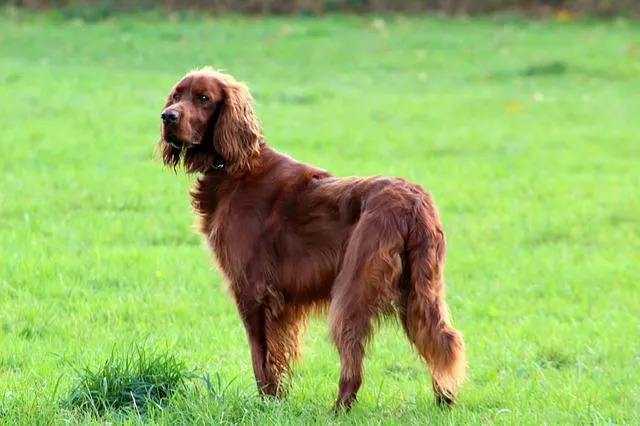
Sussex Spaniel
Health grade CThe Sussex Spaniel is a sturdily built, deliberate Stöberhund (flushing dog)—bred to work noisily through dense undergrowth to flush out game. He is calmer than other spaniels, but has a distinct mind of his own and a nose that leads the way.
- Height38–41 cm
- Weight16–22 kg
- Life expectancy12–15 yrs
- Puppy price1,500–2,500 €
- Energy3/5
The Essentials at a Glance
The Sussex Spaniel is a sturdily built, deliberate Stöberhund (flushing dog)—bred to work noisily through dense undergrowth to flush out game. He is calmer than other spaniels, but has a distinct mind of his own and a nose that leads the way.
- Health grade C: The Sussex Spaniel suffers from a very small breeding pool, which increases genetic risks within the population.
- You enjoy calm, focused scent work or tracking—this dog was bred for persistent flushing and needs a job to do.
- You are looking for a laid-back companion and can handle his charming stubbornness with humor and loving consistency.
- You expect absolute silence on walks—as the only spaniel breed that typically gives voice while tracking (Spurlaut), that is simply his hardware.
Is the Sussex Spaniel right for you?
At a glance
Sussex Spaniel overview
The essentials — key facts, traits, and health priorities — before you dive deeper.
Health grade
Relative to other breeds
S
A
B
C
D
E
Very healthyHigher risk
Average — several important tests are expected.
See full health info & tests →
Note: This health overview is AI-assisted and editorially reviewed. It is for orientation only and does not replace veterinary advice.
Lifespan
12–15 yrs
Height
38–41 cm
Weight
16–22 kg
Practical
- Puppy price: 1,500 – 2,500 €
- Coat: Dense, smooth, medium length, with undercoat
- Origin: Sussex, England
Temperament
Energy
Trainability
Family fit
With kids
Daily life
Care effort
Shedding
Barking
City-friendly
Guard instinct
What matters most
Especially with a Sussex Spaniel, choosing the right breeder is the single most important decision you'll make. Serious breeders consistently test the parents for inherited conditions, prioritize healthy early socialization, and stay accountable long after handover. A cheap puppy without health screening tends to become the most expensive dog later on.
See HonestDog breeder standards →Colors & coat
What colors does the Sussex Spaniel come in?
The coat colors you will see in Sussex Spaniel litters — including which ones fall outside the breed standard and which carry genetic risk.

Eye colors
 Brown
Brown Amber
Amber
Coat type
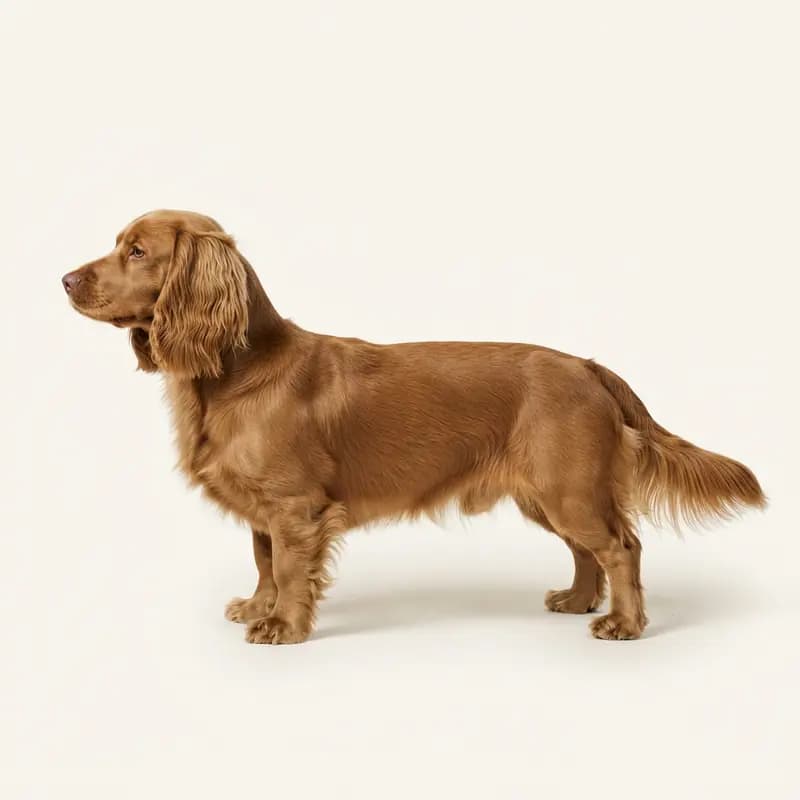 Illustrative image
Medium
 Smooth
 Double coat
Is the Sussex Spaniel right for you?
The Sussex Spaniel is a sturdily built, deliberate Stöberhund (flushing dog)—bred to work noisily through dense undergrowth to flush out game. He is calmer than other spaniels, but has a distinct mind of his own and a nose that leads the way.
Perfect for you if:
- You enjoy calm, focused scent work or tracking—this dog was bred for persistent flushing and needs a job to do.
- You are looking for a laid-back companion and can handle his charming stubbornness with humor and loving consistency.
- You enjoy long, leisurely walks in nature rather than expecting high-performance athletic feats.
- You appreciate that your dog is somewhat reserved with strangers rather than jumping into every visitor's lap.
Less ideal if:
- You expect absolute silence on walks—as the only spaniel breed that typically gives voice while tracking (Spurlaut), that is simply his hardware.
- You expect the lightning-fast 'will-to-please' of a Cocker Spaniel—the Sussex often pauses to consider whether your command is actually worth his while.
- You live in an apartment building without an elevator, as his massive, low-slung build is not designed for constant stair climbing.
The real vibes check
A Sussex Spaniel is not a frantic ball-junkie, but a cozy tank with a high-performance nose. When he finds an interesting scent in the bushes, he switches into his own unwavering work mode—often accompanied by a satisfied bark. You aren't getting a dog that blindly reads your every wish, but a character-filled forest worker who enjoys life at his own pace.
Self-check
Would the Sussex Spaniel really fit your life?
Answer 6 quick questions about your everyday life and see how well the Sussex Spaniel fits you — including an honest cost estimate per month, per year, and across the dog's lifetime.
Fit checkCost estimateRisk dice
Takes about 1 minute · free & anonymous
Breed Profile
The Sussex Spaniel is a strong, stocky dog with a distinctive build that gives it a distinctive look. He belongs to FCI Group 8, the retrieving, searching and water dogs. Its head is broad and square in shape with drooping ears. The tail is carried straight or slightly upward and is of medium length. This breed does not differentiate between performance and show lines.
All measurements in detail
- Height
- 38 - 41 cm (Female), 38 - 41 cm (Male)
- Weight
- 16 - 20 kg (Female), 18 - 22 kg (Male)
- Life Expectancy
- 12 - 15 yrs
- Character
- Friendly, calm, affectionate
- Coat
- Dense, smooth, medium length, with undercoat
- Coat Color
- Golden liver color
- Price
- 1500 - 2500 €
Character & Temperament
The Sussex Spaniel is a wonderful companion who conquers the hearts of dog lovers with his friendly nature and affection. He has a comfortable and relaxed temperament and is calm rather than hyperactive. However, he is not a lazy person and enjoys being out in nature and exploring his surroundings. He's a working dog through and through, and while he's not as energetic as some other spaniels, he still has a working mentality that makes him want to follow a trail or rummage through the undergrowth. His friendly nature makes him a great family dog. He is very people-oriented and enjoys spending time with his family. He is also playful and gets along well with children as long as they treat him respectfully. He is a breed that is rather affectionate and therefore may have difficulty staying alone. It's a good idea to slowly teach him that it's okay to be alone for short periods of time and to provide him with mental activity and chews when you're not home. As a hunting dog, the Sussex Spaniel has a distinctive prey and hunting behavior. It is important to keep him on a leash on walks when he is around wildlife and to teach him to respond reliably to recall signals. Another notable feature of the Sussex Spaniel is its voice. As already mentioned, he was originally bred to announce the game with his voice. This means he can be quite talkative at times. It's good to keep this in mind, especially if you live in an apartment or near neighbors who don't appreciate noise. His alert instincts are less strong than other breeds, but he will still bark if he notices anything unusual, making him an acceptable watchdog. It is important to note that although he is not particularly suspicious of strangers, he can be reserved at times. Early socialization is important to ensure he is a balanced and well-adjusted dog.
| Trainability Has its own ideas and will test limits. | Strong-willed |
| Watchfulness Occasionally alerts but is fundamentally open. | Low |
| Openness to Strangers Warms up quickly and is generally welcoming. | Friendly |
| Hunting or Herding Drive Noticeable drive — needs attention around small animals. | Moderate |
Fun Fact!
The Sussex Spaniel is known for making a unique 'Sussex sound'. to have a barking noise that it makes when it has located prey. This sound is deeper and more melodic than the bark of most other spaniels.
What Awaits You
Calm, affectionate, balanced, faithful, loyal - these are all words that describe the Sussex Spaniel, a slow but steady hunter and friendly domestic dog. His frowning facial expression is an attractive contradiction to his typically cheerful personality.
Housing & Care
The Sussex Spaniel makes a good city dog as long as it gets enough exercise and mental stimulation. He is a calm dog and can adapt well to apartment life if he is taken on regular walks. He generally gets along well with children, although supervision and correct behavior should always be taught to children when dealing with dogs. The Sussex Spaniel can also live with cats and other pets if he is used to them from an early age.
- Family Friendly
Lives for its family — the born family companion.
Ideal family dog - Child Friendly
Extraordinarily patient and loving — a true family dog.
Excellent with children - Dog Friendly
Actively enjoys the company of other dogs.
Dog-friendly - City Friendly
City-appropriate with enough exercise and stimulation.
Manageable in cities
Owning a dog is a privilege, but it's also a real responsibility. Before you bring one into your life, be honest with yourself about the commitment it takes.
Training & Education
Sussex Spaniels are intelligent, but sometimes a little stubborn. It is important to start training early and be consistent but loving. Since they are originally hunting dogs, it is advisable to offer them alternatives to control their hunting instinct and teach them how to use their energy in a way suitable for domestic life. Learning frustration tolerance and impulse control is particularly important for this breed. It is also advisable to ensure that the Sussex Spaniel is not over-employed. While they enjoy physical activity, it's important to find a balance and make sure they get enough rest too. When playing, especially with balls, care should be taken to ensure that it does not become an obsession. Sussex Spaniels can also participate in dog sports such as rally obedience, fetch or nose work, which are a great way to stimulate their mind and body and strengthen their bond with their owner.
Nutrition & Care
A Sussex Spaniel's diet should be balanced and high quality. It is important that you provide him with the right food that contains all the necessary nutrients. Some Sussex Spaniels tend to be overweight, so it's a good idea to keep an eye on the amount of food they eat and make sure he gets enough exercise. When it comes to grooming, the Sussex Spaniel has an undercoat and a medium-length, smooth coat that should be brushed regularly to avoid matting. During shedding, they shed more than usual, but generally their shedding is moderate. In Germany, the Sussex Spaniel copes well with the climate as it originally comes from a similar climate in Great Britain.
| Care Level Regular brushing and occasional professional grooming. | Moderate |
| Exercise Needs Needs 1–2 hours of real exercise daily. | Active |
| Shedding Hair everywhere, always — no white clothing survives. | Very heavy |
| Trainability Has its own ideas and will test limits. | Strong-willed |
Our experts are still reviewing this information. Spotted something wrong? Email us at info@honestdog.de.
Health & hereditary diseases
Health
C
Solid, watch carefully
Health grade
The Sussex Spaniel suffers from a very small breeding pool, which increases genetic risks within the population. Hip dysplasia (HD) and various hereditary eye conditions are the breed's most well-known weaknesses, though mandatory health tests do exist for these. Prospective buyers should be particularly meticulous in checking the test results of the parent dogs to avoid any unpleasant surprises.
Grade is relative to other breeds — AI-assisted and editorially reviewed.
In daily life this can mean
You should focus on maintaining a lean weight and providing joint-friendly exercise, limit jumping, and regularly clean his heavy, hanging ears to prevent infections.
The breeder's role
Reputable breeders have the parents' hips, eyes, and hearts checked and use specific genetic tests for metabolism to reduce risks within the bloodline.
Note: This health overview is AI-assisted and editorially reviewed. It is for orientation only and does not replace veterinary advice.
No Health Tests Available
No specific health tests are currently available for this breed.
Costs & where to find one
How much does a Sussex Spaniel cost?
A Sussex Spaniel costs around ~€180 per month (€90 – €340, depending on your setup). The first year adds up to roughly ~€4,970 including purchase, equipment and puppy school; across the dog's life (13.5 years) it comes to about ~€31,780.
With surgery cover, running costs come to about ~€180 per month — in return, your share of a major operation drops from several thousand euros to around 20 percent.
Per month
~€180
In the first year
~€4,970
Across the dog's life
~€31,780
Purchase from a breeder: €1,500 – €2,500
Estimate at a mid-range setup (suburban, dry food, 1–2 hours of daily exercise), average German prices, as of July 2026.
Calculate your personal costs1-minute self-check with your own answers
Looking for a Sussex Spaniel?
HonestDog Concierge
No verified Sussex Spaniel breeders on HonestDog yet
We currently have no breeders for this breed who have passed our verification. Create your short buyer profile: we'll set up your search alert, review a possible source and email you within 28 days.
Appearance, variants & origin
History
The full history
The history of the Sussex Spaniel dates back to the 19th century. It comes from the county of Sussex in England and was originally used as a working dog for hunting small game, particularly pheasants and hares. The breed was valued for its ability to work in thick undergrowth and announce game with its voice. In the late 1800s, Sussex Spaniels became increasingly popular at dog shows, and in 1884 the breed was recognized by the English Kennel Club. In the United States, the Sussex Spaniel was recognized by the American Kennel Club in 1910. Although the Sussex Spaniel is now primarily kept as a family dog, it is still used as a working hunting dog in some parts of the world.
Original Use
The Sussex Spaniel was bred as a hunting dog for hunting in thick undergrowth to flush out game.
Origin
Sussex, England
Date
1800
Owner experiences
What owners say about the Sussex Spaniel
Simon B., Jäger aus Niedersachsen (Rüde, seit 2021)
Ich führe meinen Rüden Bracken jetzt seit ein paar Jahren im Revier und kann nur sagen: Der Sussex Spaniel ist ein ganz besonderer Schlag Jagdhund. Er ist im Vergleich zu Cockern oder Springern deutlich gemütlicher und läuft eher im Trab, aber im dichten Unterholz ist er unermüdlich. Was man unbedingt wissen muss: Er ist spurlaut, das heißt, er gibt beim Stöbern auf der Fährte laut Laut. Das ist im Wald praktisch, weil ich immer genau weiß, wo er steckt, kann aber in der Nachbarschaft auch mal für Trubel sorgen.
Was mich an ihm jeden Tag fasziniert, ist das typische 'Sussex-Lächeln'. Wenn er sich freut oder mich begrüßt, zieht er die Lefzen hoch – das sieht im ersten Moment fast gefährlich aus, ist aber pure Freude. Beim Apportiertraining brauchte ich allerdings anfangs viel Geduld. Er lernt nicht unbedingt langsam, aber er hinterfragt Kommandos gerne mal. Mit Härte erreicht man bei dieser sensiblen Rasse gar nichts, aber mit einer Handvoll Leckerlis und viel Lob arbeitet er fantastisch mit.
Sabine K., Halterin aus Hessen (Hündin, seit 2018)
Unsere Hündin ist der absolute Ruhepol in unserem Haus – drinnen benimmt sie sich wie ein 'gemütlicher Professor' und liebt es, stundenlang auf dem Sofa zu kuscheln. Man darf sich von dieser Trägheit aber nicht täuschen lassen: Sobald wir draußen sind, erwacht der Stöberhund in ihr und sie muss jede Hecke untersuchen. Sie hat definitiv ihren eigenen Kopf und eine gewisse 'arrogante Erhabenheit'. Wenn sie keine Lust hat, ignoriert sie Befehle einfach charmant, weshalb man bei der Erziehung viel Humor und Konsequenz braucht.
Eine große Herausforderung ist das Alleinbleiben. Sie ist extrem auf uns fixiert und neigt zu Trennungsangst, wenn wir das nicht kleinschrittig üben. Zudem sollte man sich vor dem Kauf mit den gesundheitlichen Aspekten der Rasse auseinandersetzen. Da der Genpool weltweit sehr klein ist, muss man extrem auf die Hüftwerte (HD) der Elterntiere achten. Auch die schweren, tief angesetzten Ohren sind anfällig für Entzündungen und erfordern regelmäßige Pflege.
Christian M., Halter aus dem Rheinland (Hündin, seit 2023)
Als wir unsere Hündin als Welpen bekamen, waren die ersten Nächte wirklich hart, aber sie hat sich unglaublich schnell eingelebt und sogar die Welpenschule als Klassenbeste gemeistert. Sie ist ein kleiner Clown und draußen eine fantastische Botschafterin für diese seltene Rasse. Ständig werden wir beim Spazierengehen auf ihr wunderschönes, golden-leberfarbenes Fell angesprochen. Sie ist extrem freundlich zu Fremden, meldet aber lautstark (und manchmal etwas ausgiebig mit Heulen), wenn es an der Tür klingelt.
Man muss sich jedoch bewusst sein, dass Spaniels zu Ressourcenverteidigung neigen können, wenn man nicht frühzeitig gegensteuert. Da sie sehr anhänglich sind und auch mal eifersüchtig reagieren können, wenn die Aufmerksamkeit auf andere gelenkt wird, war uns eine frühe und gründliche Sozialisierung besonders wichtig. Wer einen leichtführigen 'Will-to-Please'-Hund sucht, ist hier falsch – der Sussex ist ein Charakterkopf, der eine liebevolle, aber klare Führung braucht.
Paraphrased from real owner reports
Loading owner stories
FAQ & more
Frequently asked questions about the Sussex Spaniel
Is a Sussex Spaniel the right dog for me?
The Sussex Spaniel is an adaptable dog that adjusts well to various lifestyles. Research the temperament, grooming needs, and space requirements before deciding.
How long does a Sussex Spaniel live?
The average life expectancy of a Sussex Spaniel is 12-15 years. With proper care and regular vet visits, your dog can live a long, healthy life.
How much grooming does a Sussex Spaniel need?
Sussex Spaniel grooming requirements include regular brushing, nail trimming, and dental care. HonestDog provides detailed grooming tips for every breed.
Is a Sussex Spaniel good for families with children?
The Sussex Spaniel can be a great family dog. Proper training and socialization are key. HonestDog provides family suitability information for every breed.
What colors does the Sussex Spaniel come in?
The Sussex Spaniel comes in these colors: Liver.
Loading related articles
Are you a Sussex Spaniel breeder?
Showcase your kennel on HonestDog and reach families searching for a responsibly bred Sussex Spaniel.
Why HonestDog?
What makes HonestDog different from other platforms
Full transparency
We lay out what we have: who the breeder is, how they work, and any health records they've uploaded. So you can judge for yourself.
Responsible breeding, assured
Every breeder on HonestDog has their identity and documents checked before their profile goes live. Health records they upload are shown on the profile, so you can see exactly what has been tested.
Trust and verification
We verify breeders and buyers alike, so every conversation happens on solid ground. It's a new standard of trust in dog breeding.
Less hassle, more time
We've already checked the breeders' documents and gathered the details, so you can skip the endless research and focus on finding the right puppy for your family.
Our Mission

We connect dog lovers with responsible breeders and shelters to ensure every dog finds the perfect home.
Founded by dog enthusiasts, our platform focuses on ethical dog breeding and adoption.
Why HonestDog?
We connect you with vetted breeders and shelters so you can find your — your new companion — with confidence.
Vetted Partners
Only verified breeders and shelters — for a safe start.
Highest Standards
Every animal's health and wellbeing is our top priority.
Guides & Resources
Guides, checklists, and breed profiles — so you can make a well-informed decision.