Loading breed
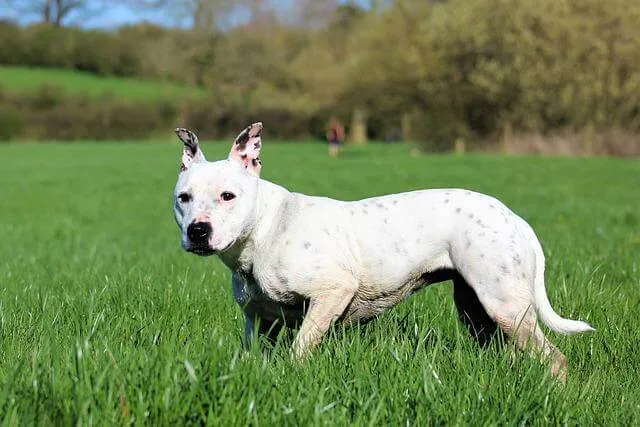
Staffordshire Bull Terrier
Health grade CThe Staffordshire Bull Terrier is an incredibly people-oriented powerhouse—a bull-type terrier whose hardware was bred for uncompromising determination and physical effort. This combination makes him the most affectionate companion, while at the same time bringing an immense physical presence.
- Height35–40 cm
- Weight11–17 kg
- Life expectancy12–14 yrs
- Puppy price1,500–2,500 €
- Energy4/5
The Essentials at a Glance
The Staffordshire Bull Terrier is an incredibly people-oriented powerhouse—a bull-type terrier whose hardware was bred for uncompromising determination and physical effort. This combination makes him the most affectionate companion, while at the same time bringing an immense physical presence.
- Health grade C: The Staffordshire Bull Terrier carries an above-average number of genetic risks, which is why extreme caution is advised when purchasing a puppy.
- You lead with love but absolute consistency—with a dog genetically programmed for unconditional persistence, half-measures won't get you very far.
- You are looking for a robust, physical companion for active days who prefers to curl up right on your lap in the evening.
- You expect daily, relaxed visits to the dog park—his bull-type hardware often comes with a very low tolerance for strange dogs, especially when provoked.
Is the Staffordshire Bull Terrier right for you?
At a glance
Staffordshire Bull Terrier overview
The essentials — key facts, traits, and health priorities — before you dive deeper.
Health grade
Relative to other breeds
S
A
B
C
D
E
Very healthyHigher risk
Average — several important tests are expected.
See full health info & tests →
Note: This health overview is AI-assisted and editorially reviewed. It is for orientation only and does not replace veterinary advice.
Lifespan
12–14 yrs
Height
35–40 cm
Weight
11–17 kg
Practical
- Puppy price: 1,500 – 2,500 €
- Coat: Short, smooth, dense, no undercoat
- Origin: Staffordshire, England
Temperament
Energy
Trainability
Family fit
With kids
Daily life
Care effort
Shedding
Barking
City-friendly
Guard instinct
What matters most
Especially with a Staffordshire Bull Terrier, choosing the right breeder is the single most important decision you'll make. Serious breeders consistently test the parents for inherited conditions, prioritize healthy early socialization, and stay accountable long after handover. A cheap puppy without health screening tends to become the most expensive dog later on.
See HonestDog breeder standards →Colors & coat
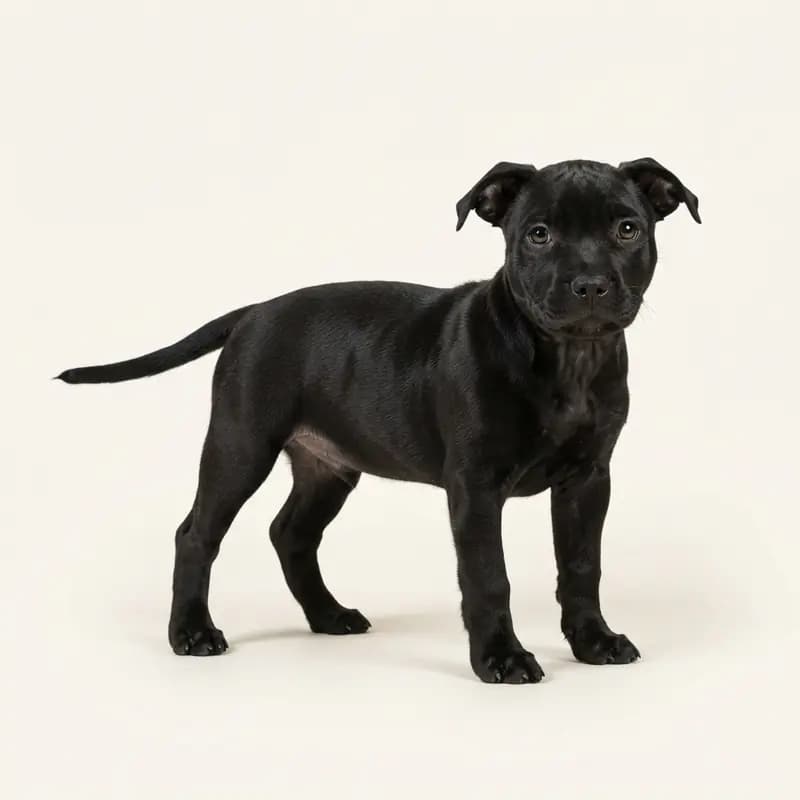
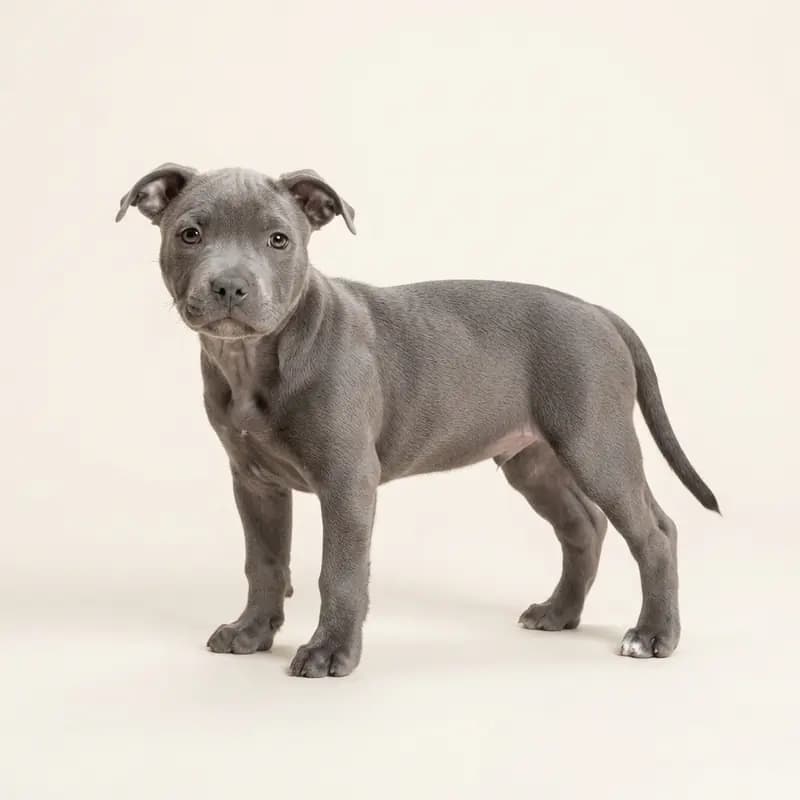
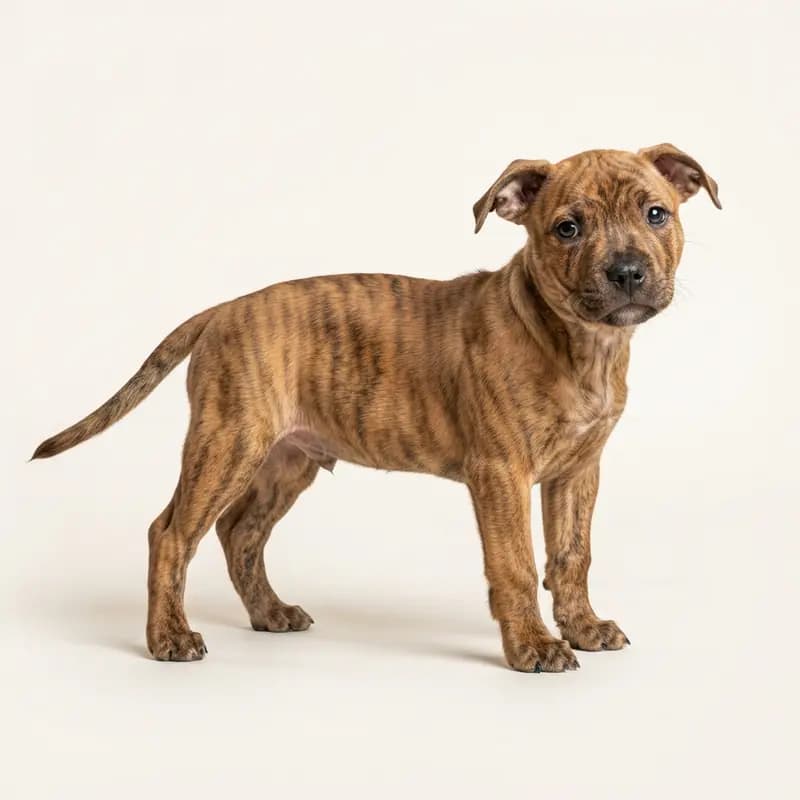
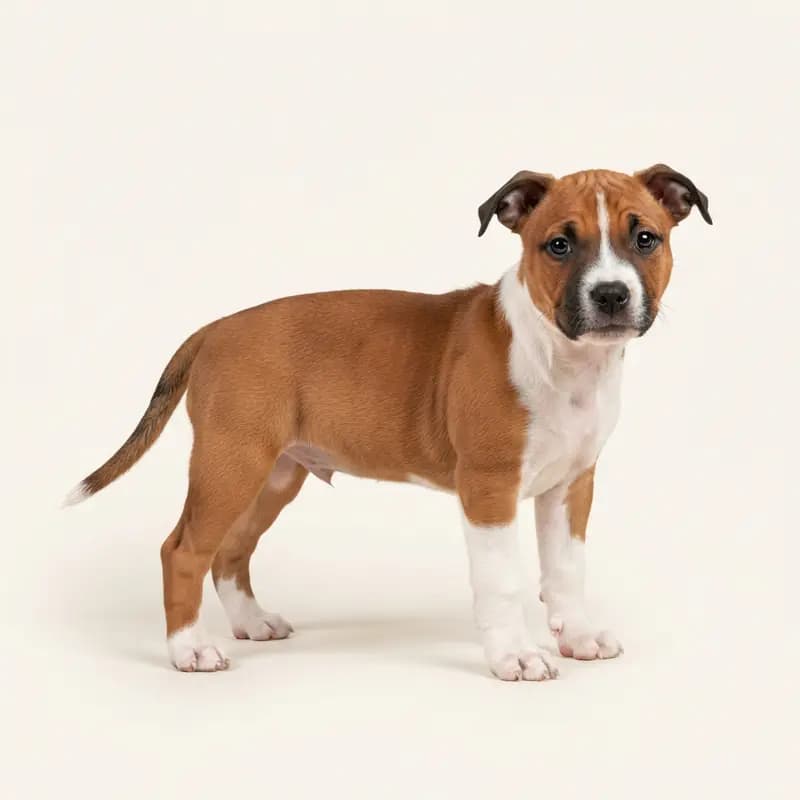
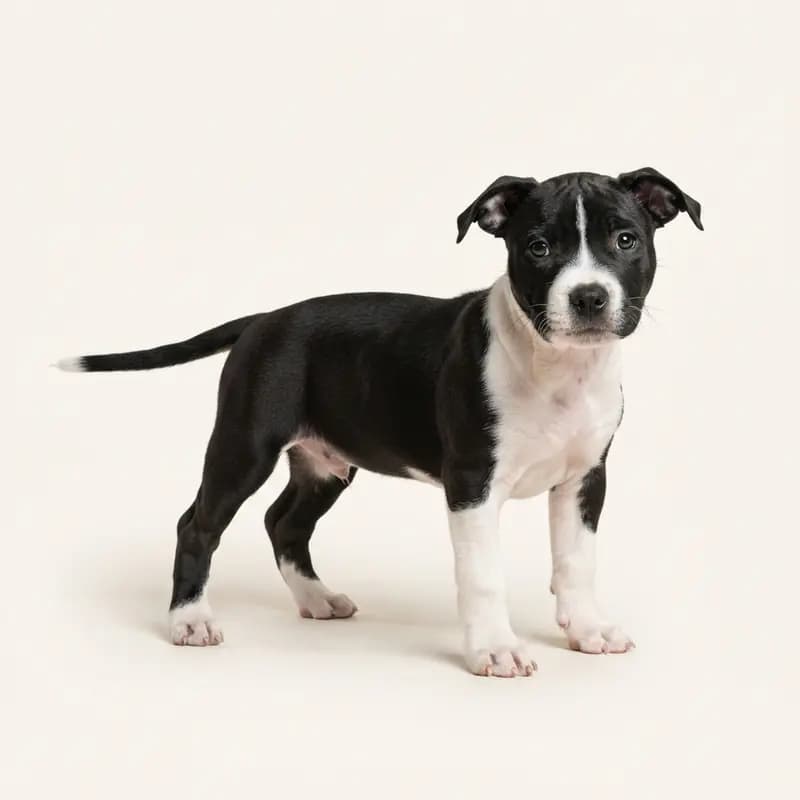
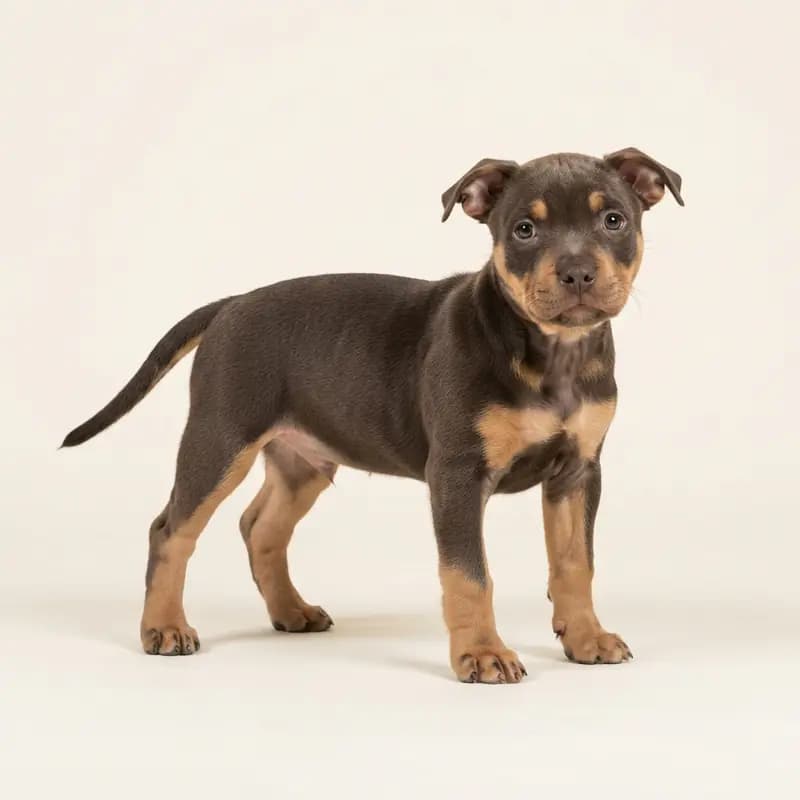
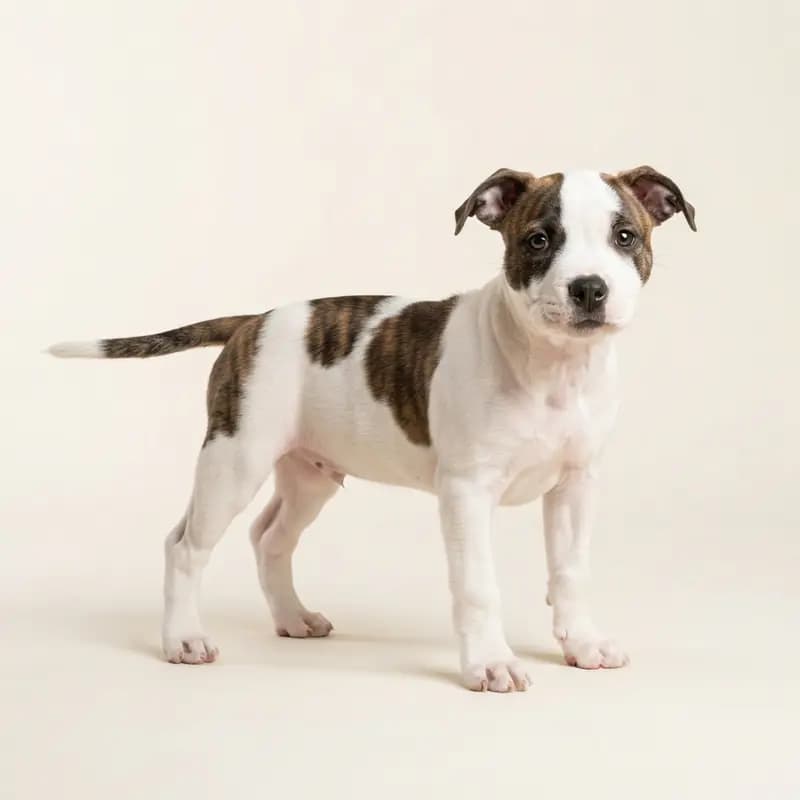
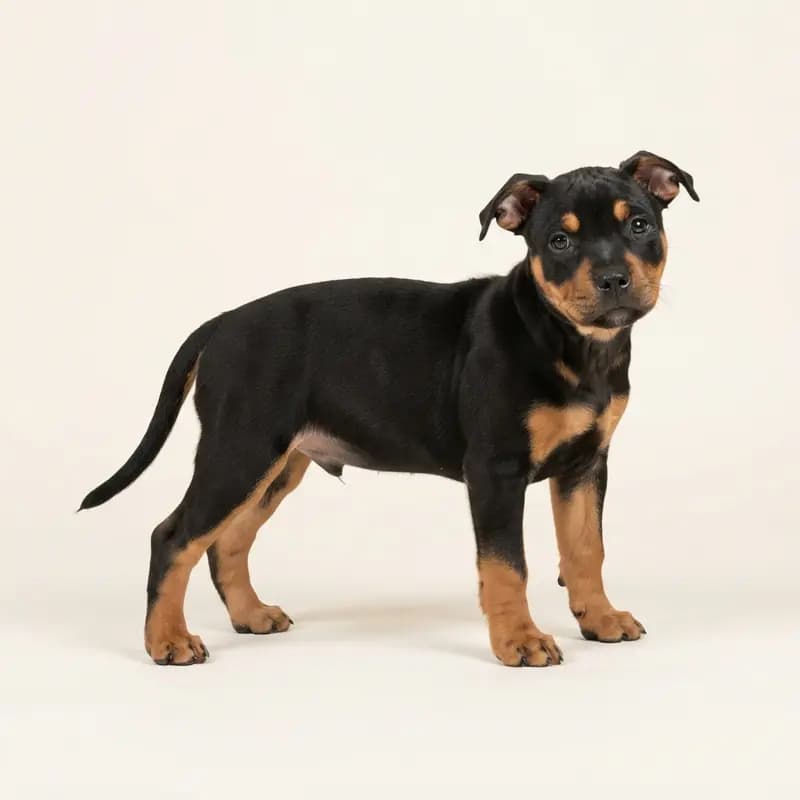
What colors does the Staffordshire Bull Terrier come in?
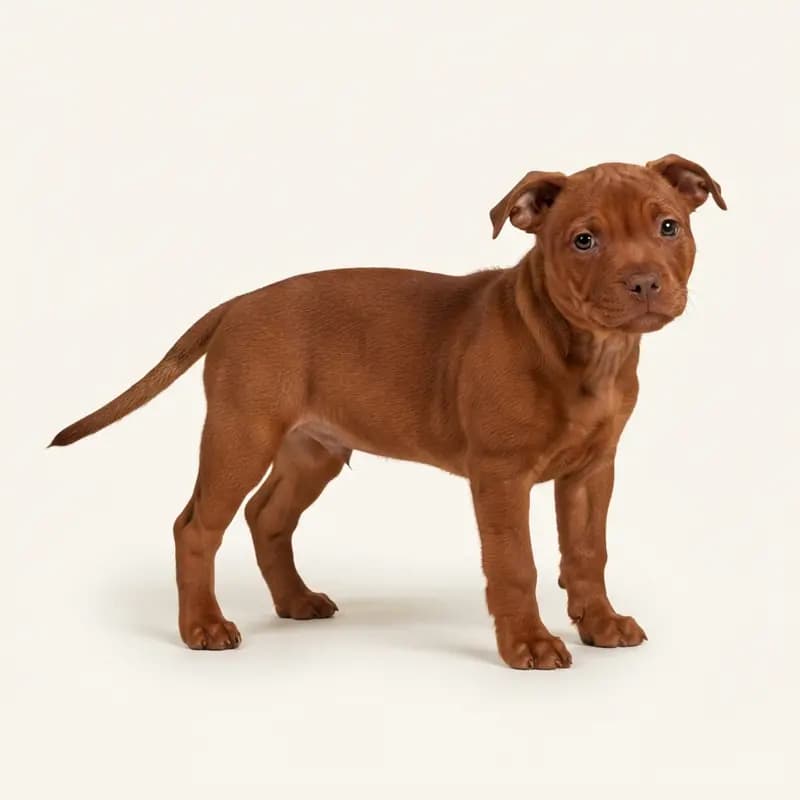
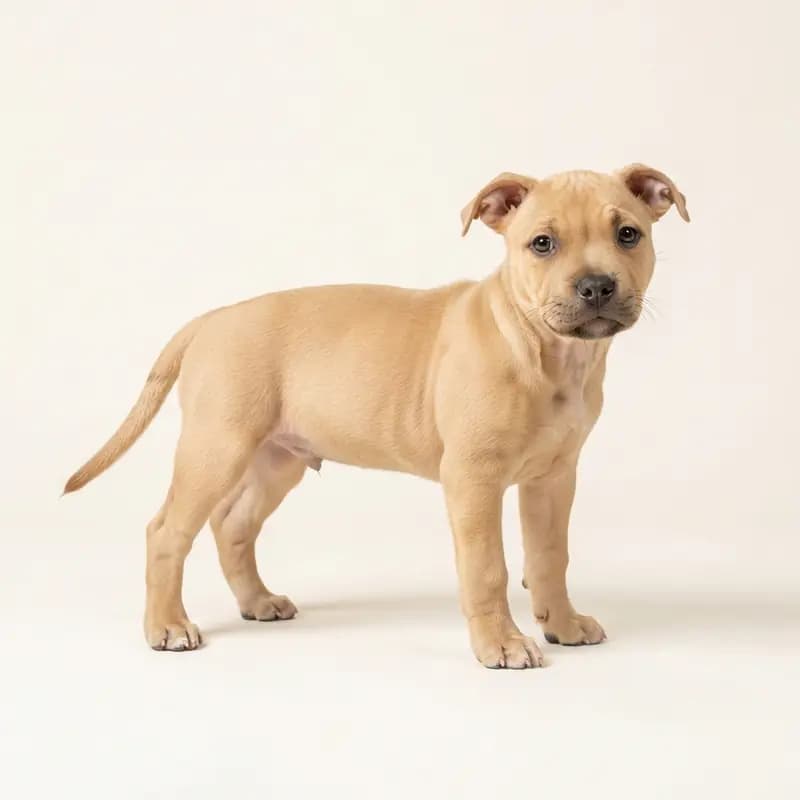
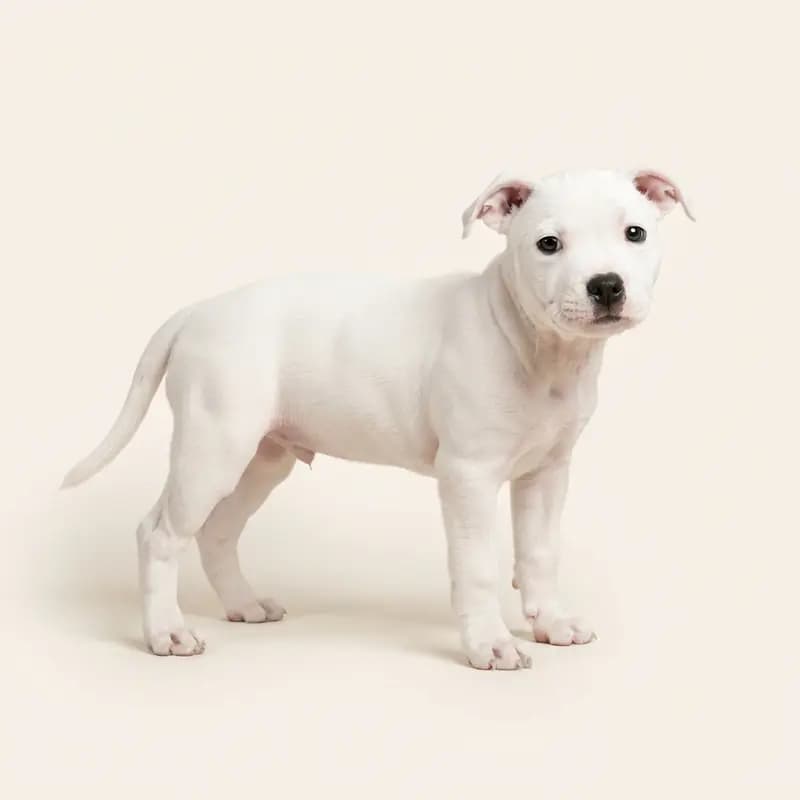
The coat colors you will see in Staffordshire Bull Terrier litters — including which ones fall outside the breed standard and which carry genetic risk.
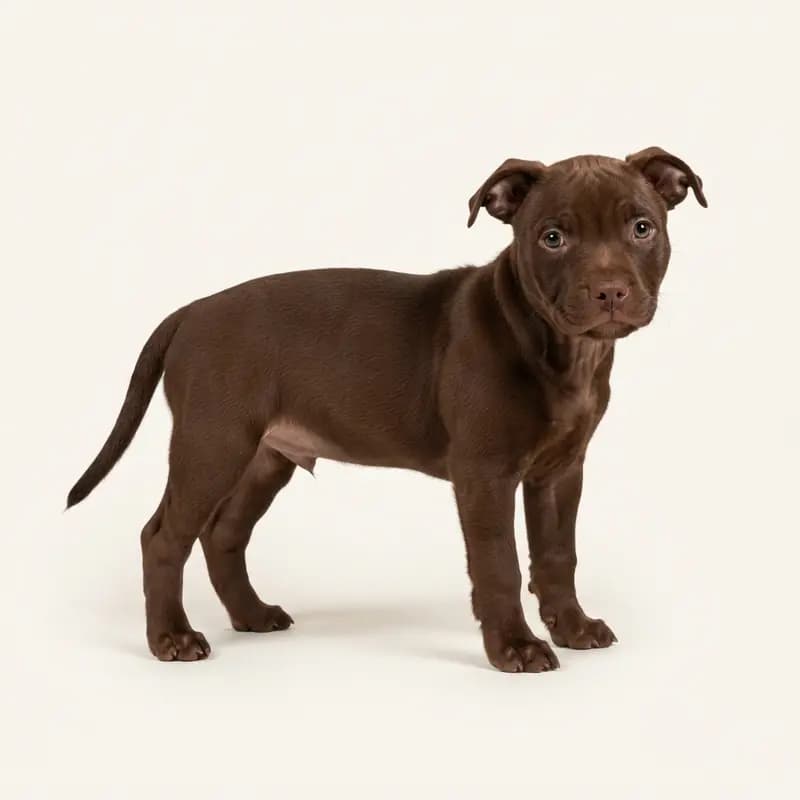
Eye colors
 Brown
Brown Amber
Amber
Coat type
 Short
Short Smooth
Is the Staffordshire Bull Terrier right for you?
The Staffordshire Bull Terrier is an incredibly people-oriented powerhouse—a bull-type terrier whose hardware was bred for uncompromising determination and physical effort. This combination makes him the most affectionate companion, while at the same time bringing an immense physical presence.
Perfect for you if:
- You lead with love but absolute consistency—with a dog genetically programmed for unconditional persistence, half-measures won't get you very far.
- You are looking for a robust, physical companion for active days who prefers to curl up right on your lap in the evening.
- You live in a region without strict breed-specific legislation, or you are fully prepared to navigate the bureaucratic path of temperament tests and owner certification with conviction.
Less ideal if:
- You expect daily, relaxed visits to the dog park—his bull-type hardware often comes with a very low tolerance for strange dogs, especially when provoked.
- You live in a rental apartment where the keeping of so-called 'restricted breeds' is contractually prohibited or where the neighbors are extremely prejudiced.
- You are looking for a delicate dog that can be held on a leash with two fingers—20 kilos of Staffy muscle in forward gear feels like a small freight train.
The real vibes check
A Staffordshire Bull Terrier is like a compact bowling ball with a huge smile—he throws his entire mass into everything, whether it's cuddling on the sofa or a conflict on the leash. You aren't getting a dog that subtly avoids situations, but rather an unconditionally loyal shadow that needs your clear, confident leadership as a daily anchor.
Self-check
Would the Staffordshire Bull Terrier really fit your life?
Answer 6 quick questions about your everyday life and see how well the Staffordshire Bull Terrier fits you — including an honest cost estimate per month, per year, and across the dog's lifetime.
Fit checkCost estimateRisk dice
Takes about 1 minute · free & anonymous
Breed Profile
The Staffordshire Bull Terrier is a medium-sized dog breed with a strong, muscular appearance. The breed is characterized by a short head, a wide snout and a distinctive jaw profile. The ears are usually set halfway up and fall forward, with "rose ears" be preferred. The eyes are round and dark and give the Staffordshire Bull Terrier an intelligent and attentive expression. The body is compact with a straight back and a deep chest. The tail is medium length and set low. The Staffordshire Bull Terrier belongs to FCI Group 3 (Terriers), Section 3 (Bull-like Terriers).
All measurements in detail
- Height
- 35 - 40 cm (Female), 35 - 40 cm (Male)
- Weight
- 11 - 15 kg (Female), 13 - 17 kg (Male)
- Life Expectancy
- 12 - 14 yrs
- Character
- Affectionate, brave, intelligent
- Coat
- Short, smooth, dense, no undercoat
- Coat Color
- Various (Black, Blue, Red, Fawn, White or any of these colors with white)
- Price
- 1500 - 2500 €
Character & Temperament
Despite his fighting past, the Staffordshire Bull Terrier is now known as a loving and affectionate family dog. He is often referred to as a "nanny dog" because he gets along particularly well with children. He is very people-oriented and always wants to be part of the family. Staffordshire Bull Terriers are courageous and have strong self-confidence. They are alert and can develop a good sense of when protection is needed, but they are usually not aggressive. Their intelligence and eagerness to please make them eager learners. The breed has a lot of energy and requires regular exercise. They are often playful and enjoy interactive games like fetch or tug of war. Although they are active, they do not have the tireless personality Energy of some other terrier breeds. With enough exercise, they can also relax well and enjoy cuddling with their humans. When it comes to being alone, keep in mind that Staffordshire Bull Terriers are very people-oriented and may have difficulty staying alone for long periods of time. It's important to teach them how to be alone without becoming anxious or destructive. In terms of hunting behavior, the Staffie usually shows a moderate interest in small animals, but this can vary from dog to dog. It is important to let them run in a safe environment and get them used to other animals early on. Staffordshire Bull Terriers are relatively easy to care for. Their short coat only requires occasional brushing to remove loose hair. They shed moderately, but regular brushing can help minimize this. The climate in Germany does not usually pose a problem for the breed. However, care should be taken in winter as they may require a coat in cold weather as they do not have an undercoat to provide additional warmth.
| Trainability Bred to work closely alongside humans. | Highly trainable |
| Watchfulness Reports unusual activity but stays controlled. | Moderate |
| Openness to Strangers Neither pushily friendly nor suspicious. | Neutral |
| Hunting or Herding Drive Mild interest in movement and small animals — easily managed. | Low |
Fun Fact!
Despite their muscular appearance, Staffies are known for believing they are lap dogs. They love to be as close as possible to their people and like to cuddle extensively.
What Awaits You
Staffordshire Bull Terriers are active dogs that are friendly towards people. This is important for this. Also with this type of dog, a well-structured socialization based on environmental and social stimuli. Depending on the federal state, there may be restrictions on keeping them.
Housing & Care
Staffies can be kept in both cities and rural areas as long as they receive adequate exercise and mental stimulation. They are very family oriented and usually get along well with children. However, a supervisor should always be present when dogs and children are together. Regarding other pets, especially cats, it is important to get the Staffie used to it from an early age so that there are no problems later. In some federal states, this breed is considered a listed dog and special requirements must be observed.
- Family Friendly
Lives for its family — the born family companion.
Ideal family dog - Child Friendly
Takes boisterous and affectionate children in its stride.
Patient with children - Dog Friendly
Usually gets on fine with other dogs.
Generally tolerant - City Friendly
Adapts well to city living and urban environments.
Well-suited to city life
Owning a dog is a privilege, but it's also a real responsibility. Before you bring one into your life, be honest with yourself about the commitment it takes.
Training & Education
Staffordshire Bull Terriers are intelligent, but they can also be stubborn, which is why consistent training is important. It is recommended to start training early. Since they are an athletic breed, they might also be suitable for dog sports such as agility or obedience. It's important to note that Staffies can sometimes become "ball junkies" if they play with balls too obsessively. It is also important to teach them frustration tolerance and impulse control to prevent problem behavior. Due to their original purpose as fighting dogs, it is important to offer them alternatives to burn off their energy and ensure they remain socially acceptable. Positive reinforcement and varied activities are key to having a happy and well-adjusted Staffie.
Nutrition & Care
Staffordshire Bull Terriers require a balanced diet tailored to their activity level. A high-quality food rich in proteins and healthy fats can help keep your Staffie healthy and active. In terms of care, the Staffordshire Bull Terrier is quite easy to care for. He has short fur without an undercoat and sheds moderately. A weekly brush will help remove loose hair and keep the coat clean. The breed copes well with the climate in Germany, but it is advisable to keep a dog blanket handy in the colder months as they do not have a thick coat to keep them warm.
| Care Level Minimal effort — occasional brushing and bathing. | Low-maintenance |
| Exercise Needs Needs several hours of serious exercise every day. | Very active |
| Shedding No or minimal hair loss — suitable for allergy sufferers. | No shedding |
| Trainability Bred to work closely alongside humans. | Highly trainable |
Our experts are still reviewing this information. Spotted something wrong? Email us at info@honestdog.de.
Health & hereditary diseases
Health
C
Solid, watch carefully
Health grade
The Staffordshire Bull Terrier carries an above-average number of genetic risks, which is why extreme caution is advised when purchasing a puppy. Eye conditions such as Hereditary Cataract (HC1) and primary lens luxation, as well as joint issues like hip dysplasia (HD), are highly prevalent in the breed. Without comprehensive and verifiable health tests for the parent dogs, buyers risk facing high veterinary costs and a suffering pet.
Grade is relative to other breeds — AI-assisted and editorially reviewed.
In daily life this can mean
You should focus on joint-friendly development, protection from extreme heat, and regular health check-ups to ensure your dog stays active for a long time.
The breeder's role
Reputable breeders have the parents' knees, eyes, and nervous systems tested and prioritize a moderate head structure with clear airways to minimize risks.
Note: This health overview is AI-assisted and editorially reviewed. It is for orientation only and does not replace veterinary advice.
No Health Tests Available
No specific health tests are currently available for this breed.
Costs & where to find one
How much does a Staffordshire Bull Terrier cost?
A Staffordshire Bull Terrier costs around ~€160 per month (€90 – €300, depending on your setup). The first year adds up to roughly ~€4,790 including purchase, equipment and puppy school; across the dog's life (13 years) it comes to about ~€28,270.
With surgery cover, running costs come to about ~€160 per month — in return, your share of a major operation drops from several thousand euros to around 20 percent.
Per month
~€160
In the first year
~€4,790
Across the dog's life
~€28,270
Purchase from a breeder: €1,500 – €2,500
Estimate at a mid-range setup (suburban, dry food, 1–2 hours of daily exercise), average German prices, as of July 2026.
Calculate your personal costs1-minute self-check with your own answers
Looking for a Staffordshire Bull Terrier?
Legal Notice
In some German federal states, special regulations apply to Staffordshire Bull Terrier as a listed or dangerous dog. Depending on your location, this may include a temperament test, permit or other official requirements, leash and muzzle obligations, and higher insurance or tax costs. Always check with your local authorities.
Full guide to restricted-breed ownership in GermanyAppearance, variants & origin
History
The full history
The Staffordshire Bull Terrier has its roots in 19th century Britain. It was created by crossing the Old English Bulldog and various terrier breeds and was originally used for bull biting and dog fighting. When these cruel sports were banned, the breed became established as a companion dog. The Staffordshire Bull Terrier has become increasingly popular as a family dog due to its friendly and affectionate character. The breed was officially recognized in England in 1935 and was recognized by the American Kennel Club in 1974.
Original Use
The Staffordshire Bull Terrier was originally bred for dog fighting, but was later valued as a family dog.
Origin
Staffordshire, England
Date
1800
Owner experiences
What owners say about the Staffordshire Bull Terrier
Sabine M., Halterin aus Hessen (Rüde, seit 2022)
Mein Rüde ist jetzt vier Jahre alt und im Haus der absolute Traumhund. Er ist unglaublich verschmust, sucht ständig den Körperkontakt und weicht mir kaum von der Seite. Diese Rasse ist wirklich extrem menschenbezogen und anhänglich, er will am liebsten überall dabei sein. Wenn wir auf dem Sofa liegen, drückt er sich so eng an mich, als wäre er ein Schoßhund – dass er eigentlich 17 Kilo pure Muskelmasse hat, vergisst er dabei völlig.
Allerdings gibt es auch rassetypische Herausforderungen, die man nicht unterschätzen darf. Das Alleinsein war von Anfang an ein großes Thema. Da Staffies so extrem an ihren Menschen kleben, leiden sie schnell, wenn sie isoliert werden. Wir mussten das Alleinebleiben in winzigen Schritten trainieren, und selbst heute merkt man ihm an, dass er lieber jede Sekunde mit uns verbringen würde. Zudem ist er draußen manchmal ein echtes Kraftpaket und neigt dazu, Menschen extrem stürmisch zu begrüßen, weshalb eine konsequente Erziehung von Tag eins an unerlässlich ist.
Christian B., Halter aus Nordrhein-Westfalen (Hündin, seit 2018)
Ich habe mittlerweile meine zweite Staffie-Hündin und liebe diese Rasse für ihren unkomplizierten, fröhlichen Charakter. In der Wohnung sind sie erstaunlich ruhig und die Fellpflege ist dank des kurzen Haarkleids ein Witz. Im Winter merkt man allerdings schnell, dass ihnen das Unterfell fehlt – bei eisigen Temperaturen fängt meine Hündin schnell an zu zittern, weshalb sie draußen definitiv einen Mantel tragen muss.
Was man vor der Anschaffung unbedingt wissen muss, ist die rechtliche und gesellschaftliche Situation in Deutschland. Der Staffie gilt in fast allen Bundesländern als Listenhund der Kategorie 1. Das bedeutet nicht nur strenge Auflagen wie Wesenstests, Sachkundenachweise und Maulkorbpflicht bis zur Befreiung, sondern auch eine extrem hohe Hundesteuer und teils große Probleme, überhaupt eine Haftpflichtversicherung zu finden. Man muss sich im Alltag leider auf skeptische Blicke und Vorurteile einstellen, obwohl die Hunde bei richtiger Sozialisierung absolut großartige und freundliche Begleiter sind.
Melanie K., Halterin aus Bayern (Hündin, seit 2021)
Wer glaubt, ein Staffbull sei nur ein gemütlicher Couchhund, der irrt sich gewaltig. Meine Hündin hat ordentlich Power und will sowohl körperlich als auch geistig gefordert werden. Wir machen viel Apportiertraining und Suchspiele, um sie auszulasten. Was man bei dieser Rasse auch auf dem Schirm haben muss, ist der Terrier-Dickkopf und ein durchaus vorhandener Jagdtrieb. Wenn draußen ein Kaninchen oder ein Vogel aufspringt, schaltet sie sofort auf stur und die Ohren auf Durchzug.
Ein weiterer wichtiger Punkt ist die Verträglichkeit mit anderen Hunden. Während sie Menschen über alles liebt, ist sie bei fremden Artgenossen sehr selektiv. Sie neigt rassebedingt dazu, bei Provokationen nicht zurückzuweichen. Eine sehr frühe, konsequente Sozialisierung und der Besuch einer guten Hundeschule sind absolut notwendig, damit man die Kraftpakete in jeder Situation unter Kontrolle hat. Man muss als Halter einfach mental immer einen Schritt schneller sein als der Hund.
Paraphrased from real owner reports
Loading owner stories
Community Posts
FAQ & more
Frequently asked questions about the Staffordshire Bull Terrier
Is a Staffordshire Bullterrier the right dog for me?
The Staffordshire Bullterrier is an active dog that needs plenty of exercise and mental stimulation. Research the temperament, grooming needs, and space requirements before deciding.
How long does a Staffordshire Bullterrier live?
The average life expectancy of a Staffordshire Bullterrier is 12-14 years. With proper care and regular vet visits, your dog can live a long, healthy life.
How much grooming does a Staffordshire Bullterrier need?
Staffordshire Bullterrier grooming requirements include regular brushing, nail trimming, and dental care. HonestDog provides detailed grooming tips for every breed.
Is a Staffordshire Bullterrier good for families with children?
The Staffordshire Bullterrier can be a great family dog. Proper training and socialization are key. HonestDog provides family suitability information for every breed.
What colors does the Staffordshire Bullterrier come in?
The Staffordshire Bullterrier comes in these colors: Red, Fawn, White, Black, Blue, Brindle, Red and white, Black and white, Bicolor, Piebald, Black and tan, Liver. Colors that fall outside the breed standard are marked as such on the breed page.
Loading related articles
Are you a Staffordshire Bull Terrier breeder?
Showcase your kennel on HonestDog and reach families searching for a responsibly bred Staffordshire Bull Terrier.
Why HonestDog?
What makes HonestDog different from other platforms
Full transparency
We lay out what we have: who the breeder is, how they work, and any health records they've uploaded. So you can judge for yourself.
Responsible breeding, assured
Every breeder on HonestDog has their identity and documents checked before their profile goes live. Health records they upload are shown on the profile, so you can see exactly what has been tested.
Trust and verification
We verify breeders and buyers alike, so every conversation happens on solid ground. It's a new standard of trust in dog breeding.
Less hassle, more time
We've already checked the breeders' documents and gathered the details, so you can skip the endless research and focus on finding the right puppy for your family.
Our Mission

We connect dog lovers with responsible breeders and shelters to ensure every dog finds the perfect home.
Founded by dog enthusiasts, our platform focuses on ethical dog breeding and adoption.
Why HonestDog?
We connect you with vetted breeders and shelters so you can find your — your new companion — with confidence.
Vetted Partners
Only verified breeders and shelters — for a safe start.
Highest Standards
Every animal's health and wellbeing is our top priority.
Guides & Resources
Guides, checklists, and breed profiles — so you can make a well-informed decision.