Loading breed
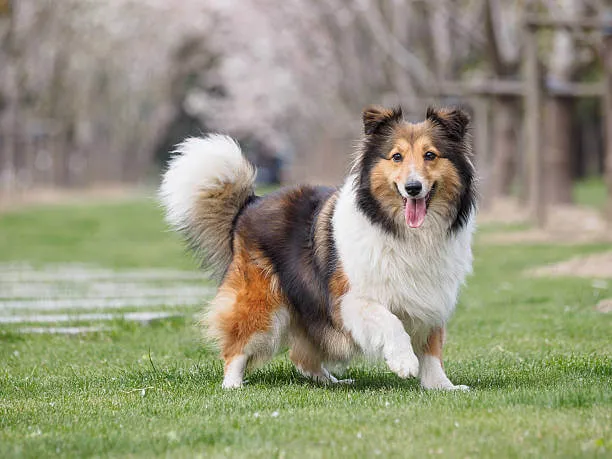
Shetland Sheepdog
Health grade CThe Shetland Sheepdog is a sensitive, incredibly clever Hütehund (herding dog) — bred to guide sheep on the rugged Shetland Islands using both its voice and nimble movements. It is precisely this sensitivity that makes them extremely cooperative, but also prone to sensory overload.
- Height34–39 cm
- Weight6–12 kg
- Life expectancy12–14 yrs
- Puppy price1,200–2,500 €
- Energy4/5
The Essentials at a Glance
The Shetland Sheepdog is a sensitive, incredibly clever Hütehund (herding dog) — bred to guide sheep on the rugged Shetland Islands using both its voice and nimble movements. It is precisely this sensitivity that makes them extremely cooperative, but also prone to sensory overload.
- Health grade C: The Shetland Sheepdog is classified as healthy because typical risks are well-managed through targeted breeding practices.
- You are keen on active mental stimulation, trick training, or dog sports — as an agile herding dog, they will mentally wither if they are just expected to tag along aimlessly in everyday life.
- You lead with a soft voice, patience, and plenty of positive reinforcement, as this sensitive dog will immediately shut down under harshness or loud pressure.
- You live in a thin-walled city apartment and want absolute silence — they were bred to work with their voice and will often comment on visual stimuli quite loudly.
Is the Shetland Sheepdog right for you?
At a glance
Shetland Sheepdog overview
The essentials — key facts, traits, and health priorities — before you dive deeper.
Health grade
Relative to other breeds
S
A
B
C
D
E
Very healthyHigher risk
Average — several important tests are expected.
See full health info & tests →
Note: This health overview is AI-assisted and editorially reviewed. It is for orientation only and does not replace veterinary advice.
Lifespan
12–14 yrs
Height
34–39 cm
Weight
6–12 kg
Practical
- Puppy price: 1,200 – 2,500 €
- Coat: Dense, double-layered, long with an undercoat
- Origin: Scotland
Temperament
Energy
Trainability
Family fit
With kids
Daily life
Care effort
Shedding
Barking
City-friendly
Guard instinct
What matters most
Especially with a Shetland Sheepdog, choosing the right breeder is the single most important decision you'll make. Serious breeders consistently test the parents for inherited conditions, prioritize healthy early socialization, and stay accountable long after handover. A cheap puppy without health screening tends to become the most expensive dog later on.
See HonestDog breeder standards →Colors & coat
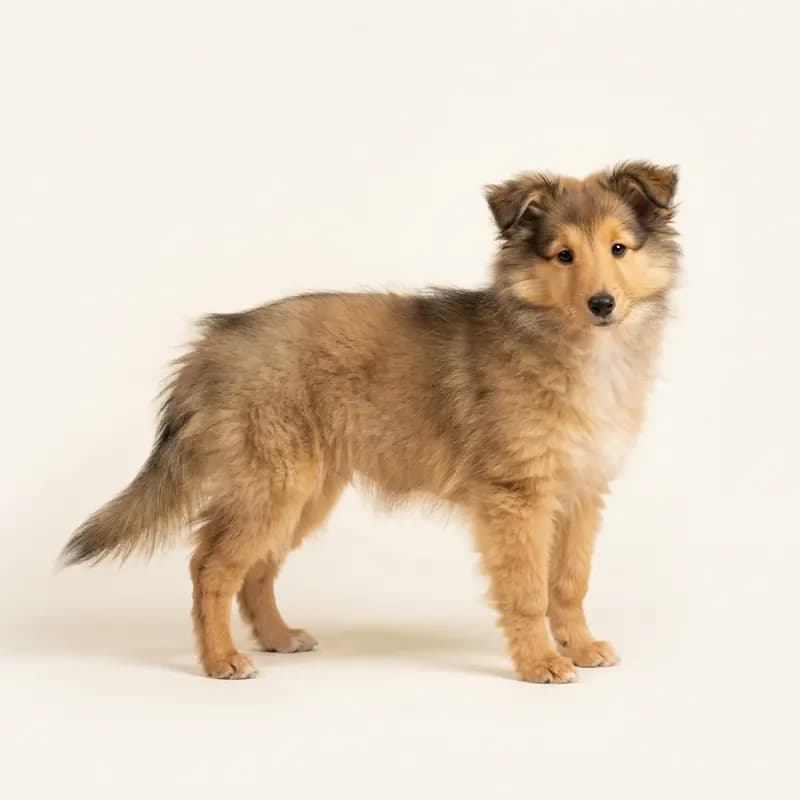
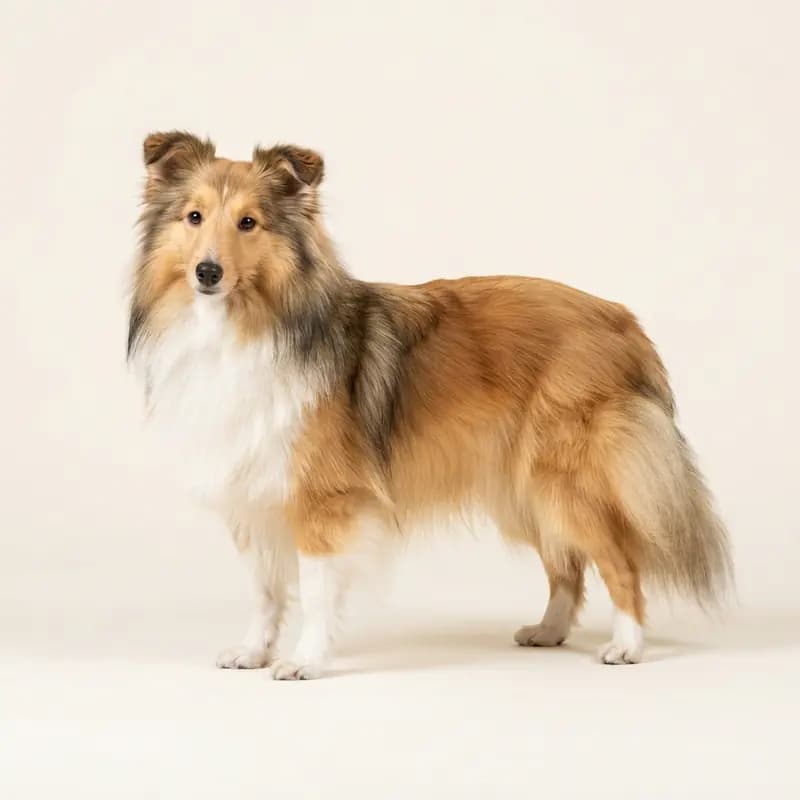
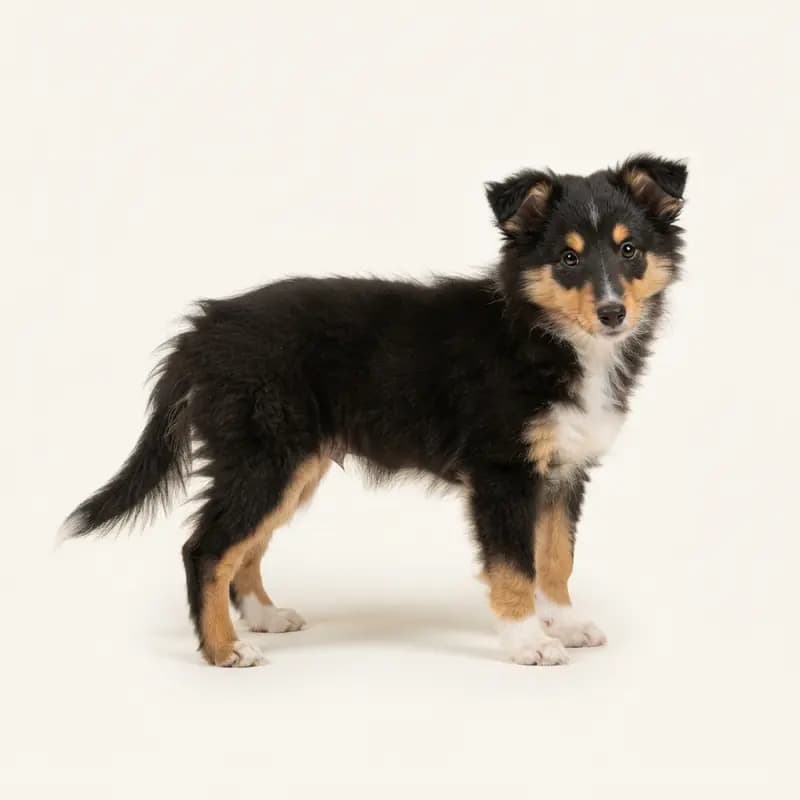
What colors does the Shetland Sheepdog come in?
The coat colors you will see in Shetland Sheepdog litters — including which ones fall outside the breed standard and which carry genetic risk.
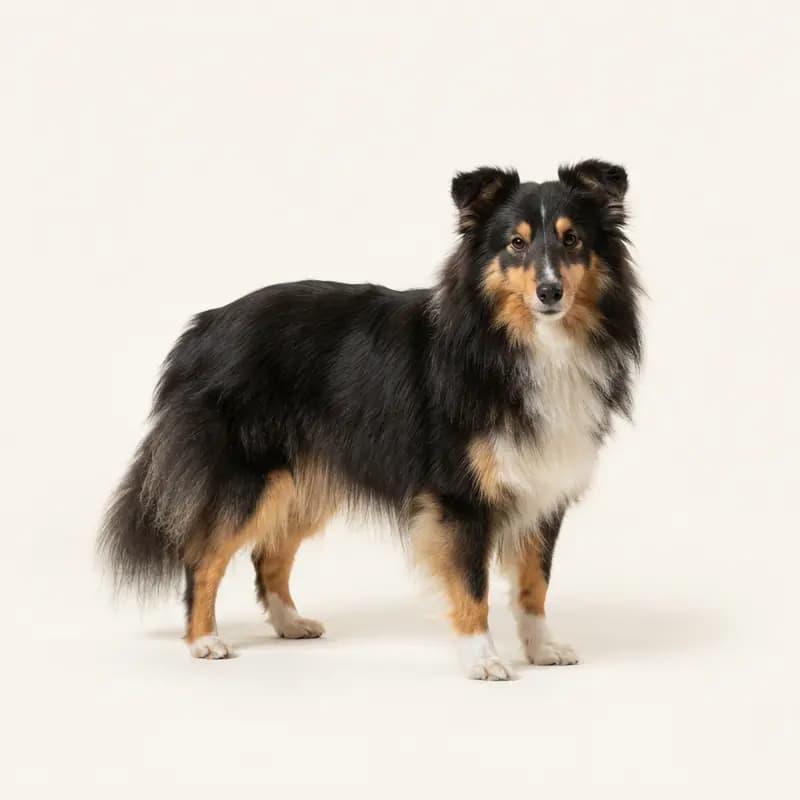
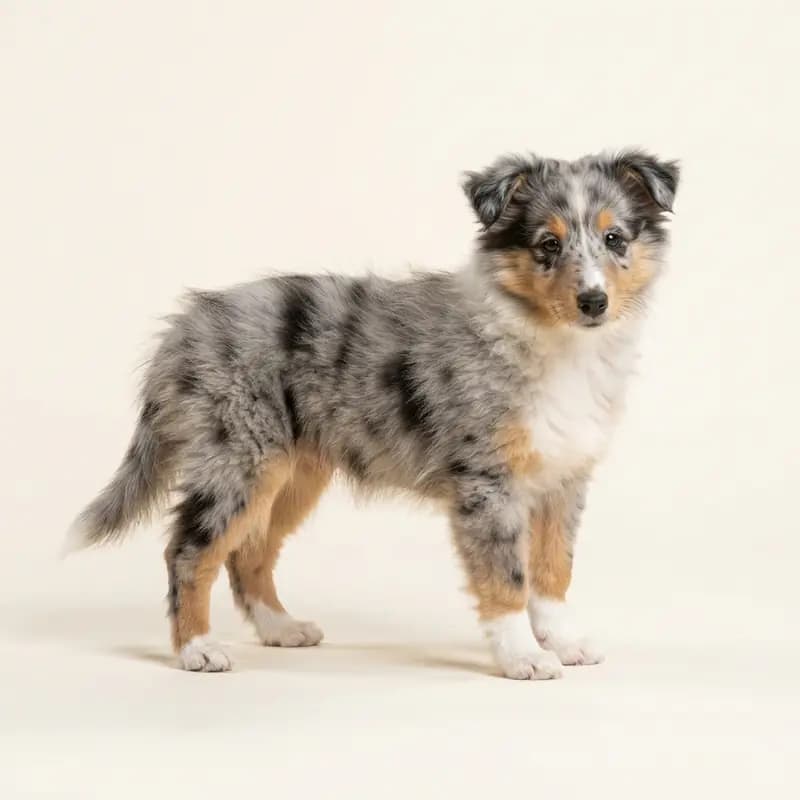
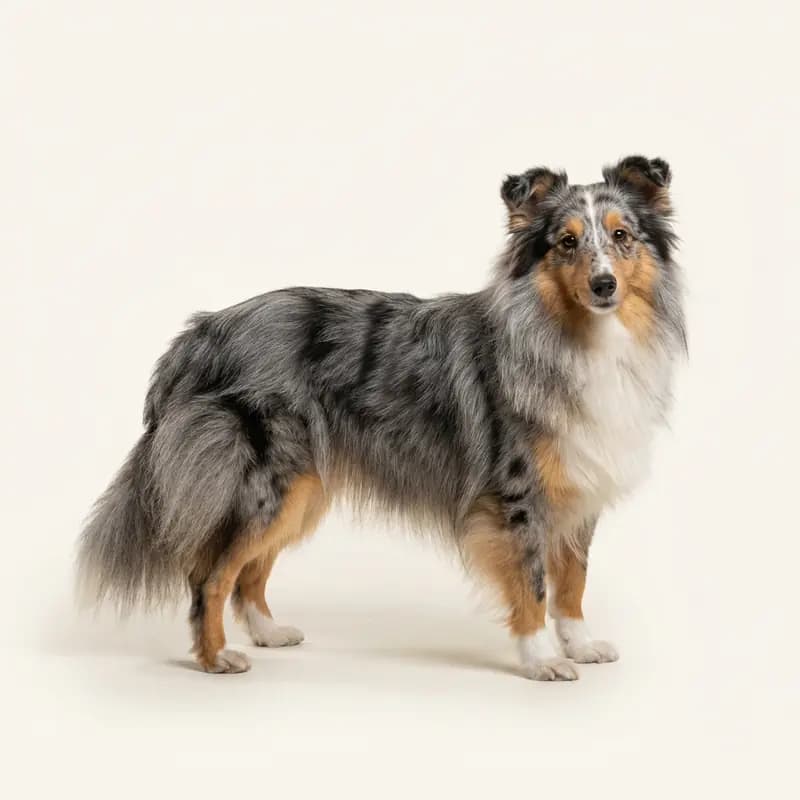
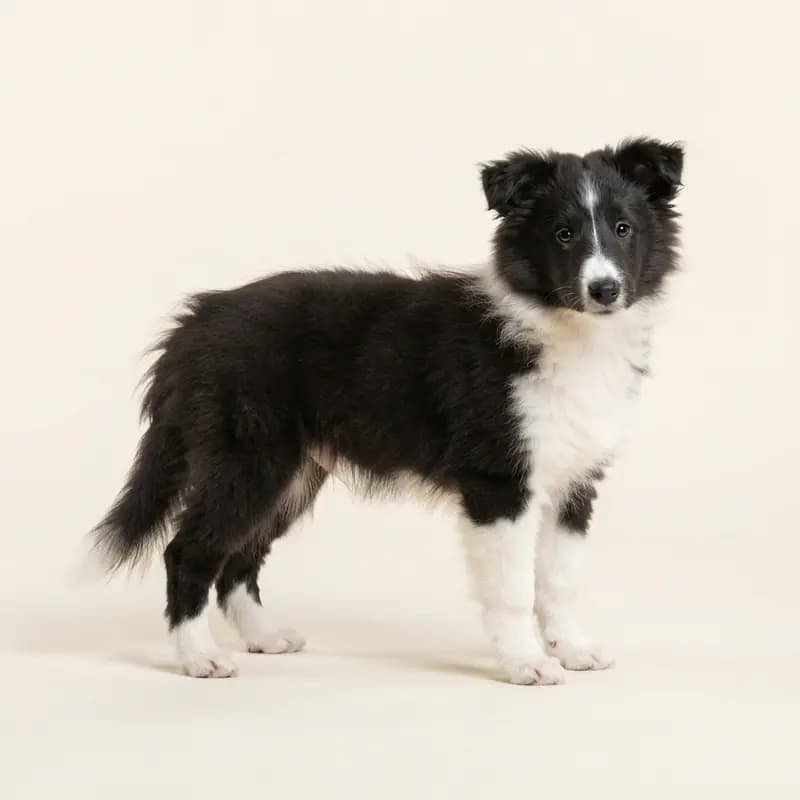
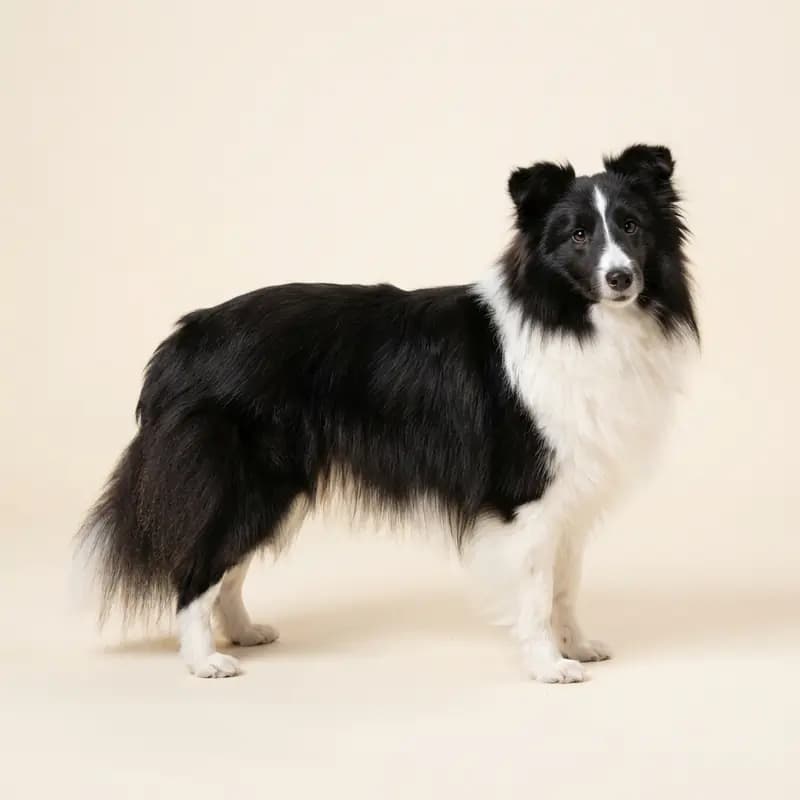
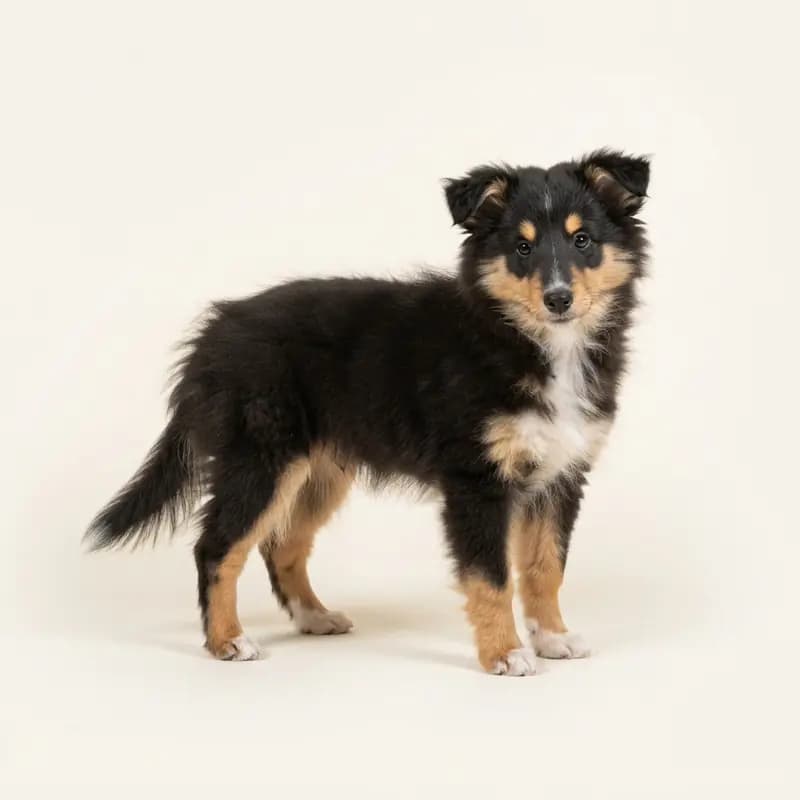
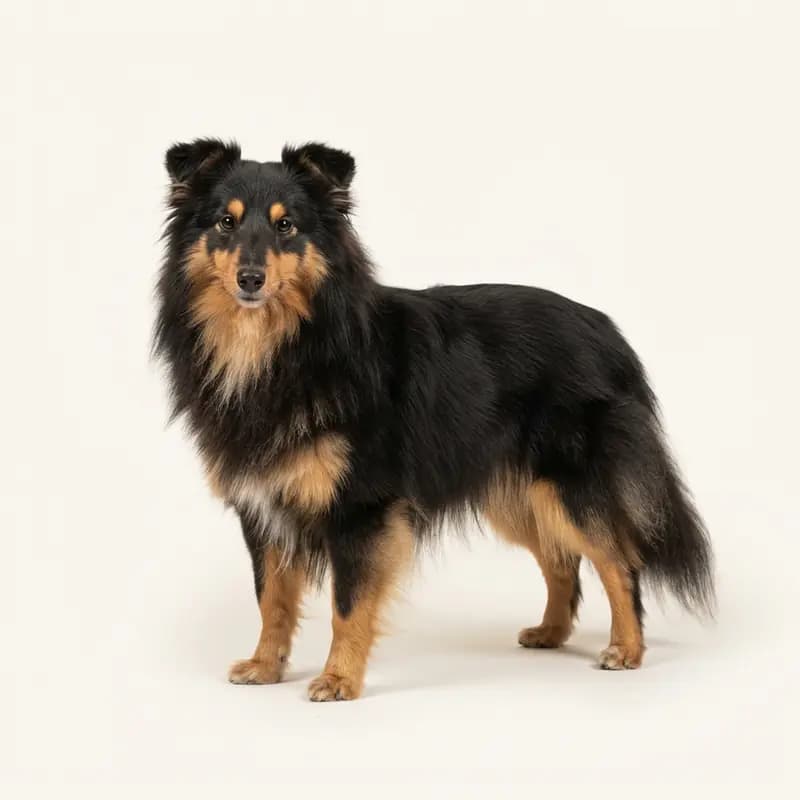
Eye colors
 Brown
Brown Blue
Blue Odd-eyed
 Partial (split eye)
Coat type
 Long
Long Double coat
Is the Shetland Sheepdog right for you?
The Shetland Sheepdog is a sensitive, incredibly clever Hütehund (herding dog) — bred to guide sheep on the rugged Shetland Islands using both its voice and nimble movements. It is precisely this sensitivity that makes them extremely cooperative, but also prone to sensory overload.
Perfect for you if:
- You are keen on active mental stimulation, trick training, or dog sports — as an agile herding dog, they will mentally wither if they are just expected to tag along aimlessly in everyday life.
- You lead with a soft voice, patience, and plenty of positive reinforcement, as this sensitive dog will immediately shut down under harshness or loud pressure.
- You are looking for a biddable companion who forms a close bond with you and naturally stays within a small radius when off-leash.
- You live in a rural or quiet area where their vigilant barking at the garden fence won't cause neighborhood disputes.
Less ideal if:
- You live in a thin-walled city apartment and want absolute silence — they were bred to work with their voice and will often comment on visual stimuli quite loudly.
- You have a turbulent home with many loud children and constantly changing visitors, which quickly leads to pure, chronic stress for them.
- You expect a dog that is immediately open and friendly with strangers — Shelties are typically reserved by nature and prefer to observe from the sidelines at first.
The real vibes check
A Sheltie is like a highly sensitive seismograph on four paws — they register every change in your mood and every movement in the room before you even notice it yourself. You aren't getting a robust daredevil, but a refined, almost telepathic colleague who will do anything for you, as long as you confidently guide them through the loud world.
Self-check
Would the Shetland Sheepdog really fit your life?
Answer 6 quick questions about your everyday life and see how well the Shetland Sheepdog fits you — including an honest cost estimate per month, per year, and across the dog's lifetime.
Fit checkCost estimateRisk dice
Takes about 1 minute · free & anonymous
Breed Profile
The Shetland Sheepdog, often affectionately called the Sheltie, is a small to medium-sized dog that is similar in appearance to a rough collie, but smaller. This dog is a member of FCI Group 1, which means that it belongs to the herding and driving dogs category. The Sheltie has a very distinctive appearance with a long, thick coat, a distinctive mane around the neck and shoulders, and a bushy tail. It has erect ears that are often slightly bent at the tip and an intelligent, alert face. There is no distinction between show and performance lines, but there can be individual differences in terms of work ability and temperament.
All measurements in detail
- Height
- 34 - 38 cm (Female), 35 - 39 cm (Male)
- Weight
- 6 - 12 kg (Female), 6 - 12 kg (Male)
- Life Expectancy
- 12 - 14 yrs
- Character
- Intelligent, loyal, lively
- Coat
- Dense, double-layered, long with an undercoat
- Coat Color
- Various including Sable, Blue Merle, and Black & White
- Price
- 1200 - 2500 €
Character & Temperament
When you bring a Sheltie into your life, you get a dog with an amazing combination of intelligence, loyalty and liveliness. They are known for their strong bonds with their people and are often very fond of one person in the family in particular. As a former herding dog, the Sheltie has a strong instinct to protect and guard. He is often alert and will alert you if someone is approaching the house. This makes him an effective guard dog, although his size means he is not suitable as a protection dog. However, note that some Shelties also tend to herd children and other pets, which can lead to unwanted behavior such as barking. Shelties are intelligent dogs that enjoy taking on tasks and working. They are often successful in dog sports such as agility, obedience and flyball. Since they are very people-oriented, they enjoy activities that they can do together with their people. They are generally good with children and other pets, but they can sometimes be a bit reserved around strangers. Their sensitivity also means that they can sometimes be prone to anxiety if they are not well socialized from an early age. Although they have high energy, Shelties can also live quite well in apartments as long as they get enough exercise and mental stimulation. They require daily walks and activities to manage their energy levels. Shelties are also known to be good at learning to stay alone as long as they are properly trained. It is important to teach them that being alone is not scary and to give them plenty of activity when they are alone. Some Shelties exhibit hunting or prey-catching behavior, so it is important to begin retrieval training early and ensure they are in a safe environment when running off-leash. When it comes to training, Shelties are often very eager to learn and respond well to positive reinforcement. Their intelligence and desire to please make them a joy to train. Overall, the Shetland Sheepdog is a wonderful breed for someone looking for an intelligent, active and loyal dog. With adequate exercise, mental stimulation and a loving environment, a Sheltie will become a loyal and happy member of the family.
| Trainability Picks up commands quickly and wants to please. | Eager to learn |
| Watchfulness Reports unusual activity but stays controlled. | Moderate |
| Openness to Strangers Neither pushily friendly nor suspicious. | Neutral |
| Hunting or Herding Drive This drive runs deep — no amount of training eliminates it. | Very strong |
Fun Fact!
Did you know that the Shetland Sheepdog is often referred to as a “miniature collie?” even though they are actually a separate breed and not simply a smaller version of the Rough Collie?
What Awaits You
Shelties are small, very active and smart dogs. The right amount of exercise and rest is very important. They need active, sporty owners who have the time to exercise this dog mentally.
Housing & Care
Shelties are flexible about where they live and can live in both the city and the country as long as they get enough exercise and mental stimulation. They are generally good with children and other pets, but can be a bit standoffish around strangers. It is important to socialize Shelties well from an early age. They also typically get along well with cats and other pets as long as they are properly introduced.
- Family Friendly
Loves family life and thrives in a group.
Family-oriented - Child Friendly
Takes boisterous and affectionate children in its stride.
Patient with children - Dog Friendly
Actively enjoys the company of other dogs.
Dog-friendly - City Friendly
City-appropriate with enough exercise and stimulation.
Manageable in cities
Owning a dog is a privilege, but it's also a real responsibility. Before you bring one into your life, be honest with yourself about the commitment it takes.
Training & Education
Shelties are intelligent and docile dogs that enjoy working and learning. They are ideal for various dog sports such as agility, obedience and flyball. When training, it is important to use positive reinforcement methods as they can be sensitive to harsh treatment. Shelties have high energy and a strong work drive, but care must be taken not to "over-work" the dog. It is important to find a balance between physical activity and rest time. Ball games should be used with caution as Shelties can tend to be "ball junkies." to become. It is also important to teach them frustration tolerance and impulse control to avoid problem behavior. For Shelties, who may have a stronger herding instinct, it is important to provide them with alternatives and outlets for that energy to keep them happy and balanced.
Nutrition & Care
Shelties have a fairly active lifestyle and require a balanced diet that meets their energy requirements. A high-quality dog food that is high in protein and fat can help them stay in top shape. It is also important to pay attention to their weight as Shelties can sometimes be prone to gaining weight. In terms of grooming, the Sheltie has a long, dense coat with an undercoat. This means that regular brushing is necessary to prevent tangles and keep the coat in good condition. Shelties shed quite heavily, especially during shedding. The Sheltie's fur is well suited to the climate in Germany as it protects it from both cold and wet conditions.
| Care Level Needs regular professional grooming — time-consuming and costly. | High-maintenance |
| Exercise Needs Needs several hours of serious exercise every day. | Very active |
| Shedding Hair everywhere, always — no white clothing survives. | Very heavy |
| Trainability Picks up commands quickly and wants to please. | Eager to learn |
Our experts are still reviewing this information. Spotted something wrong? Email us at info@honestdog.de.
Health & hereditary diseases
Health
C
Solid, watch carefully
Health grade
The Shetland Sheepdog is classified as healthy because typical risks are well-managed through targeted breeding practices. Hip dysplasia (HD) is monitored via mandatory health tests, while M-locus issues (merle inheritance) require careful pairing to prevent health defects in puppies. Buyers should specifically ask to see the test results of the parent dogs.
Grade is relative to other breeds — AI-assisted and editorially reviewed.
In daily life this can mean
You should inform veterinarians early on about their medication sensitivity, ensure they are raised in a way that protects their joints, and schedule regular eye exams.
The breeder's role
Reputable breeders have the parents' eyes, knees, and hips checked and pay attention to genetic risks for blood clotting disorders and medication sensitivities in order to reduce these within the bloodline.
Note: This health overview is AI-assisted and editorially reviewed. It is for orientation only and does not replace veterinary advice.
No Health Tests Available
No specific health tests are currently available for this breed.
Costs & where to find one
How much does a Shetland Sheepdog cost?
A Shetland Sheepdog costs around ~€180 per month (€90 – €330, depending on your setup). The first year adds up to roughly ~€4,820 including purchase, equipment and puppy school; across the dog's life (13 years) it comes to about ~€30,490.
With surgery cover, running costs come to about ~€170 per month — in return, your share of a major operation drops from several thousand euros to around 20 percent.
Per month
~€180
In the first year
~€4,820
Across the dog's life
~€30,490
Purchase from a breeder: €1,200 – €2,500
Estimate at a mid-range setup (suburban, dry food, 1–2 hours of daily exercise), average German prices, as of July 2026.
Calculate your personal costs1-minute self-check with your own answers
Looking for a Shetland Sheepdog?
Appearance, variants & origin
History
The full history
The Shetland Sheepdog comes from the Shetland Islands, which lie north of Scotland. The exact origin of the breed is not fully documented, but they are believed to be descended from dogs of Scandinavian fishermen and Scottish collies brought to the islands in the 19th century. These dogs were used to herd and protect sheep and were valued for their ability to work in harsh climatic conditions. The breed was first recognized in Britain in the 1900s and later in the United States in the 1910s.
Original Use
The Shetland Sheepdog was bred as a sheep herding dog on the Shetland Islands, valued for its intelligence and friendly nature.
Origin
Scotland
Date
1800
Owner experiences
What owners say about the Shetland Sheepdog
Sabine M., Halterin aus Hessen (Hündin, seit 2015)
Meine Hündin ist ein absoluter Traum im Alltag. Sie ist extrem begeisterungsfähig, aktiv, anhänglich und unglaublich sensibel. Sie geht jedem Ärger mit anderen Hunden höflich aus dem Weg und findet mich als ihre Bezugsperson grundsätzlich interessanter als alles andere auf der Welt. Ein Jagdtrieb ist bei ihr so gut wie gar nicht vorhanden, und sie ist extrem hoftreu.
Die einzige echte Herausforderung bei ihr – und das ist eine rassetypische Baustelle – ist ihre Bellfreudigkeit. Sie ist einfach unglaublich mitteilsam. Sobald Aufregung im Spiel ist oder wir aktiv arbeiten, fängt sie an zu 'plappern' und gibt zu allem ihren Senf dazu. Man kann daran arbeiten und es kontrollieren, aber einen von Natur aus so gesprächigen Sheltie komplett stummzuerziehen, ist fast unmöglich. Man muss diese lebhafte, kommunikative Art einfach ein Stück weit lieben.
Claudia S., Halterin aus Bayern (Rüde, seit 2008)
Wir haben uns damals für einen Sheltie-Rüden entschieden und er bereichert unser Familienleben mit vier Kindern ungemein. Er liebt die Kinder über alles und weicht uns eigentlich nie von der Seite. Entgegen vieler Befürchtungen ist die Fellpflege bei seinem langen Haarkleid überraschend unkompliziert: Zweimal pro Woche gründlich bürsten reicht bei uns völlig aus, und er haart im Alltag deutlich weniger als unser früherer stockhaariger Schäferhund.
Man darf den Sheltie aber keinesfalls unterschätzen. Er ist ein echtes Energiebündel mit einem enormen Bewegungsdrang. Zwei Stunden Auslauf am Tag sind bei uns das Minimum, und er fordert auch geistige Beschäftigung ein. Wir spielen viel Such- und Versteckspiele, wobei er so schlau ist, dass ich mir ständig neue Verstecke ausdenken muss, weil er die alten sofort durchschaut. Zudem schlägt er recht zuverlässig an, sobald es an der Tür schellt oder er draußen ungewohnte Geräusche hört – das Bellen muss man von Anfang an konsequent in geordnete Bahnen lenken.
Stefan B., Halter aus Niedersachsen (Rüde, seit 2018)
Über den Sheltie liest man oft, er habe kaum Jagdtrieb. Bei unserem Rüden sah das allerdings ganz anders aus. Gegen Ende der Pubertät hat er einen sehr deutlichen Jagdtrieb entwickelt. Er ging leidenschaftlich gern Vögeln und sogar Rehen hinterher, wenn man nicht aufpasste. Der Rückruf war bei uns ein extrem hartes Stück Arbeit, und wir mussten lange Zeit mit der Schleppleine trainieren, um das Verhalten in den Griff zu bekommen.
Zudem ist er, wie viele Rassevertreter, ein extremes Sensibelchen mit einer gewissen Tendenz zur Schreckhaftigkeit. Wenn man zu grob oder laut wird, zieht er sich sofort verängstigt zurück. Man braucht in der Erziehung eine extrem feinfühlige, aber dennoch konsequente Hand. Wer einen robusten, unerschütterlichen 'Hudrauf-Hund' sucht, wird mit der sensiblen Art des Shelties wahrscheinlich nicht glücklich.
Paraphrased from real owner reports
Loading owner stories
Community Posts
FAQ & more
Frequently asked questions about the Shetland Sheepdog
Is a Sheltie the right dog for me?
The Sheltie is an active dog that needs plenty of exercise and mental stimulation. Research the temperament, grooming needs, and space requirements before deciding.
How long does a Sheltie live?
The average life expectancy of a Sheltie is 12-14 years. With proper care and regular vet visits, your dog can live a long, healthy life.
How much grooming does a Sheltie need?
Sheltie grooming requirements include regular brushing, nail trimming, and dental care. HonestDog provides detailed grooming tips for every breed.
Is a Sheltie good for families with children?
The Sheltie can be a great family dog. Proper training and socialization are key. HonestDog provides family suitability information for every breed.
What colors does the Sheltie come in?
The Sheltie comes in these colors: Sable, Tricolor, Blue merle, Black and white, Black and tan.
Loading related articles
Are you a Shetland Sheepdog breeder?
Showcase your kennel on HonestDog and reach families searching for a responsibly bred Shetland Sheepdog.
Why HonestDog?
What makes HonestDog different from other platforms
Full transparency
We lay out what we have: who the breeder is, how they work, and any health records they've uploaded. So you can judge for yourself.
Responsible breeding, assured
Every breeder on HonestDog has their identity and documents checked before their profile goes live. Health records they upload are shown on the profile, so you can see exactly what has been tested.
Trust and verification
We verify breeders and buyers alike, so every conversation happens on solid ground. It's a new standard of trust in dog breeding.
Less hassle, more time
We've already checked the breeders' documents and gathered the details, so you can skip the endless research and focus on finding the right puppy for your family.
Our Mission

We connect dog lovers with responsible breeders and shelters to ensure every dog finds the perfect home.
Founded by dog enthusiasts, our platform focuses on ethical dog breeding and adoption.
Why HonestDog?
We connect you with vetted breeders and shelters so you can find your — your new companion — with confidence.
Vetted Partners
Only verified breeders and shelters — for a safe start.
Highest Standards
Every animal's health and wellbeing is our top priority.
Guides & Resources
Guides, checklists, and breed profiles — so you can make a well-informed decision.