Loading breed
Rhodesian Ridgeback
Health grade BThe Rhodesian Ridgeback is a highly sensitive powerhouse—an athletic hunting and guard dog bred in Africa to track game with endurance, bay at large prey, and independently guard farms.
- Height61–69 cm
- Weight29–41 kg
- Life expectancy10–12 yrs
- Puppy price1,800–3,500 €
- Energy5/5
The Essentials at a Glance
The Rhodesian Ridgeback is a highly sensitive powerhouse—an athletic hunting and guard dog bred in Africa to track game with endurance, bay at large prey, and independently guard farms.
- Health grade B: The Rhodesian Ridgeback carries an above-average genetic burden with 18 mandatory health tests, though these are strictly monitored by reputable breed clubs.
- You already have experience with dogs and know how to lead a 40-kilo powerhouse with quiet confidence rather than harsh pressure.
- You are looking for a tireless companion for long distances while cycling or riding—as a running dog, he needs physical exercise to stay calm in his head.
- You expect blind obedience at the push of a button—he was bred to make his own decisions in the savanna and will question commands that seem pointless to him.
Is the Rhodesian Ridgeback right for you?
At a glance
Rhodesian Ridgeback overview
The essentials — key facts, traits, and health priorities — before you dive deeper.
Health grade
Relative to other breeds
S
A
B
C
D
E
Very healthyHigher risk
Solid — a handful of items a good breeder watches.
See full health info & tests →
Note: This health overview is AI-assisted and editorially reviewed. It is for orientation only and does not replace veterinary advice.
Lifespan
10–12 yrs
Height
61–69 cm
Weight
29–41 kg
Practical
- Puppy price: 1,800 – 3,500 €
- Coat: Short, smooth, dense, no undercoat
- Origin: Zimbabwe
Temperament
Energy
Trainability
Family fit
With kids
Daily life
Care effort
Shedding
Barking
City-friendly
Guard instinct
What matters most
Especially with a Rhodesian Ridgeback, choosing the right breeder is the single most important decision you'll make. Serious breeders consistently test the parents for inherited conditions, prioritize healthy early socialization, and stay accountable long after handover. A cheap puppy without health screening tends to become the most expensive dog later on.
See HonestDog breeder standards →Colors & coat
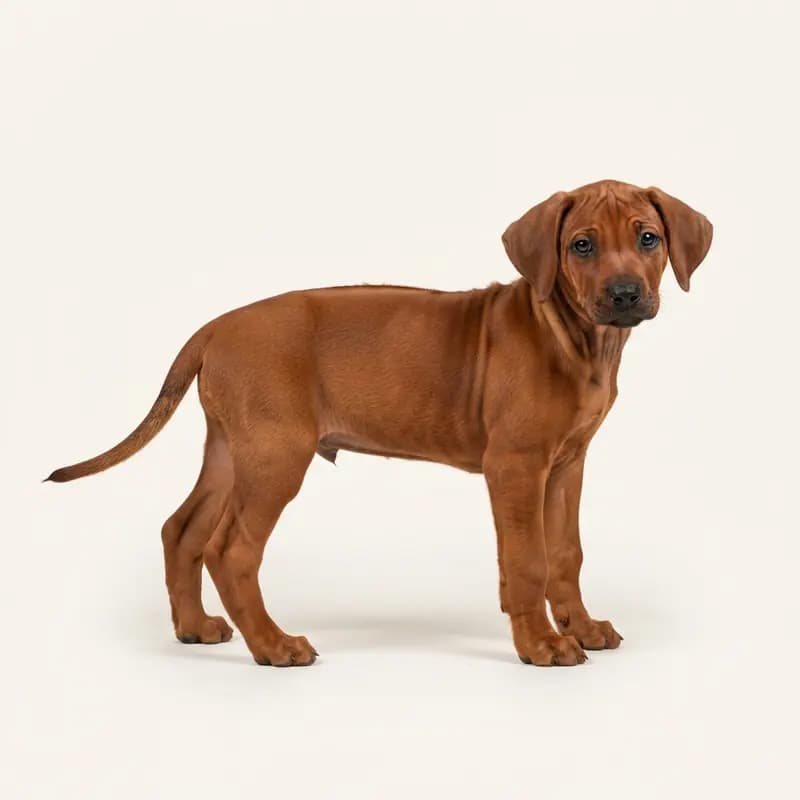
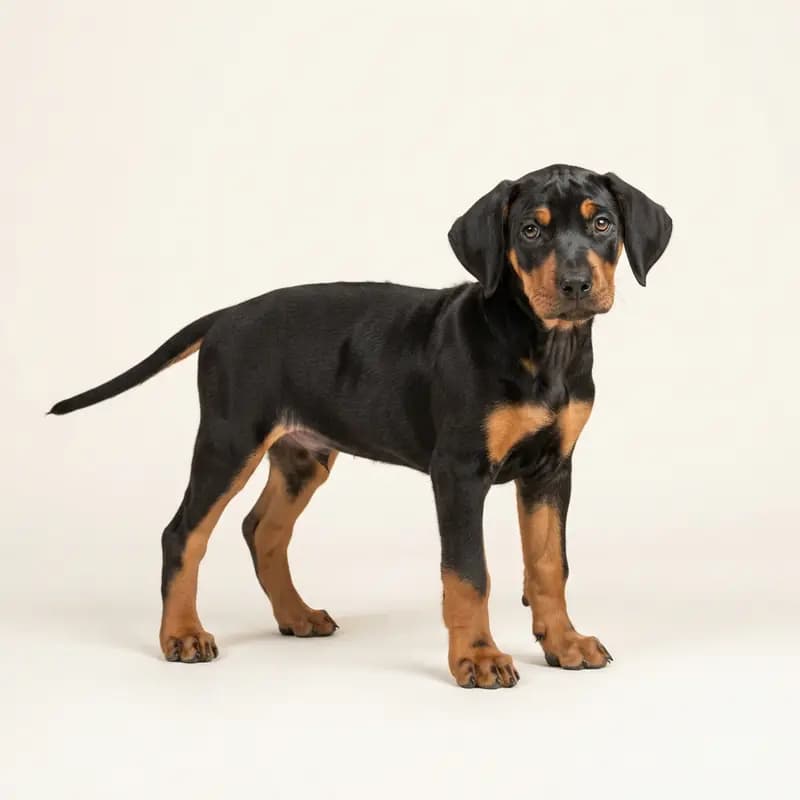
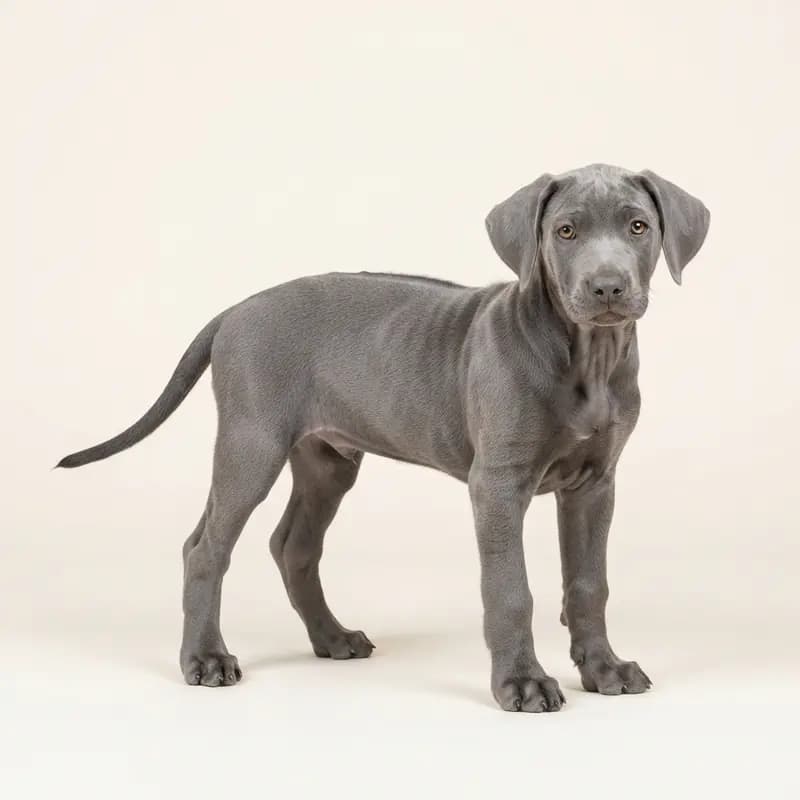
What colors does the Rhodesian Ridgeback come in?
The coat colors you will see in Rhodesian Ridgeback litters — including which ones fall outside the breed standard and which carry genetic risk.

Eye colors
 Brown
Brown Amber
Amber
Coat type
 Short
Short Smooth
Is the Rhodesian Ridgeback right for you?
The Rhodesian Ridgeback is a highly sensitive powerhouse—an athletic hunting and guard dog bred in Africa to track game with endurance, bay at large prey, and independently guard farms.
Perfect for you if:
- You already have experience with dogs and know how to lead a 40-kilo powerhouse with quiet confidence rather than harsh pressure.
- You are looking for a tireless companion for long distances while cycling or riding—as a running dog, he needs physical exercise to stay calm in his head.
- You live in a rural area or have a house with a garden where his territorial instinct has space without disturbing neighbors in a hallway.
- You have plenty of patience for a late bloomer who grows quickly in size but often doesn't truly mature mentally until the age of three.
Less ideal if:
- You expect blind obedience at the push of a button—he was bred to make his own decisions in the savanna and will question commands that seem pointless to him.
- You want a dog that greets every visitor joyfully and plays with everyone at the dog park—Ridgebacks are often aloof toward strangers.
- You live in the middle of the city, where constant overstimulation and his deeply rooted protective instinct can quickly become a massive stress issue.
The real vibes check
A Rhodesian Ridgeback may look like an indestructible lion hunter, but he has the soul of a sensitive dog who will immediately shut down if treated with unfair harshness. You aren't getting a soldier who blindly follows orders, but an independent thinker who carefully evaluates whether you possess true leadership qualities. If you bring that quiet consistency to the table, this imposing bodyguard will never leave your side.
Self-check
Would the Rhodesian Ridgeback really fit your life?
Answer 6 quick questions about your everyday life and see how well the Rhodesian Ridgeback fits you — including an honest cost estimate per month, per year, and across the dog's lifetime.
Fit checkCost estimateRisk dice
Takes about 1 minute · free & anonymous
Breed Profile
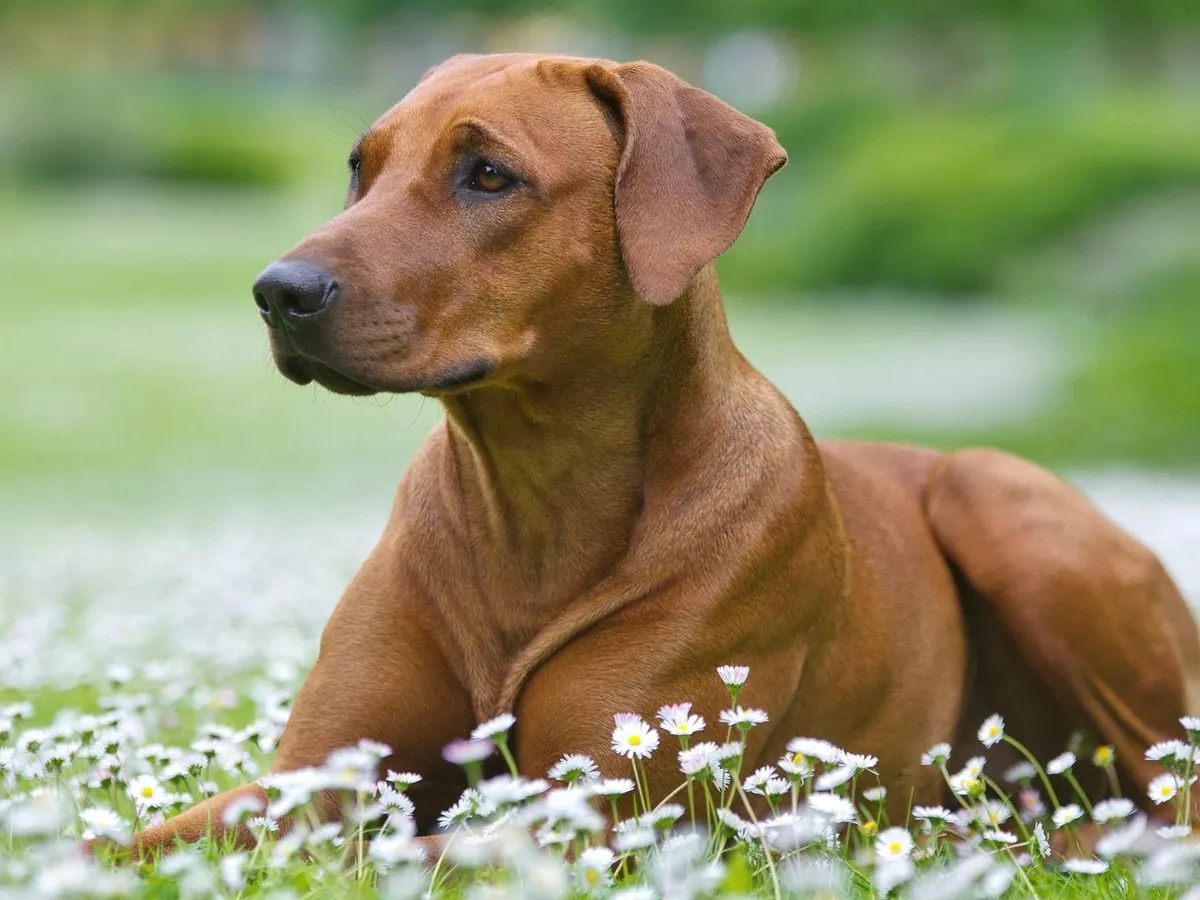
The Rhodesian Ridgeback is an impressive sight. This medium-sized dog has a strong and muscular build that highlights its athletic abilities and endurance. Its most distinctive feature is the 'ridge' or 'crest' on its back, formed by hairs growing in the opposite direction. He is the only registered dog with this unique trait. The Rhodesian Ridgeback belongs to FCI Group 6 of running and bloodhounds and is divided into Section 3 of related breeds. No distinction is made between performance and show lines; all Ridgebacks are equally suitable for sporting activities as well as beauty competitions. Her strong yet elegant appearance coupled with her intelligent and expressive facial expression makes her an impressive presence.
All measurements in detail
- Height
- 61 - 66 cm (Female), 63 - 69 cm (Male)
- Weight
- 29 - 34 kg (Female), 36 - 41 kg (Male)
- Life Expectancy
- 10 - 12 yrs
- Character
- Loyal, intelligent, confident
- Coat
- Short, smooth, dense, no undercoat
- Coat Color
- Light wheat color to red wheat color, only the ears can be darker
- Price
- 1800 - 3500 €
Character & Temperament
The Rhodesian Ridgeback is a versatile and complex dog that can be an exceptional companion in the right environment and with proper training. He is highly intelligent and has a strong sense of independence, meaning he can sometimes have a mind of his own and needs a consistent but loving hand in raising him. Ridgebacks are very people-oriented and build close bonds with their family. They are extremely loyal and can be very protective, making them good guard dogs. However, they are not barkers; they prefer to observe quietly and only intervene when they perceive a real threat. They are generally friendly and calm towards strangers, but still cautious. They rarely show aggression and prefer to avoid situations that they perceive as threatening. Despite their 'lion hunter' heritage, they do not have the strong hunting instincts of other breeds, although they can still hunt prey if not properly trained and exercised. Ridgebacks are high-energy dogs that require daily exercise and mental stimulation. They love long walks, running, playing and can also do well in dog sports such as agility or tracking. Despite their energy, they are usually calm and content indoors as long as they get enough exercise. It is important to note that the Rhodesian Ridgeback is not a beginner dog. His intelligence, energy level and sometimes stubborn nature require an experienced dog owner who understands the breed's needs and temperament. But with the right upbringing and training, the Rhodesian Ridgeback can be a loyal, loving and loyal companion that fits well into family life and makes an excellent companion for active people.
| Trainability Willing to learn with clear rules and regular training. | Balanced |
| Watchfulness A natural watchdog with real protective instinct. | High |
| Openness to Strangers Careful around unfamiliar people — thaws slowly. | Cautious |
| Hunting or Herding Drive Powerful instinct that can override recall when triggered. | Strong |
Fun Fact!
The striking "Ridge" on the back of the Rhodesian Ridgeback consists of hair that grows in the opposite direction to the direction of growth of the rest of the fur and is the characteristic feature of this impressive breed. Unfortunately, this characteristic causes major health problems for some Ridgebacks.
What Awaits You
Ridgebacks are intelligent and spirited dogs. Their hunting motivation is definitely high. They are often considered stubborn or less trainable than other working breeds and are not suitable for beginners.
Housing & Care
Rhodesian Ridgebacks are active and energetic dogs, so they are better suited to living in the country or in a house with a garden. They are good with children as long as they are treated respectfully and calmly. They usually get along well with other pets if they have been used to them from an early age.
- Family Friendly
Loves family life and thrives in a group.
Family-oriented - Child Friendly
Gets on well with children — with adult supervision.
With supervision - Dog Friendly
Usually gets on fine with other dogs.
Generally tolerant - City Friendly
Can manage in the city, but only with very active owners.
Difficult in cities
Owning a dog is a privilege, but it's also a real responsibility. Before you bring one into your life, be honest with yourself about the commitment it takes.
Training & Education
Rhodesian Ridgebacks are intelligent and independent dogs that require consistent and loving training. They learn quickly and respond well to positive reinforcement. It is important that they receive mental and physical stimulation as they were originally bred as hunting dogs. Some Ridgebacks can be "ball junkies." It is therefore advisable to vary the game with balls and incorporate other activities such as nose work, agility or obedience training. Learning frustration tolerance and impulse control is particularly important because they naturally have a strong hunting instinct. A happy Rhodesian Ridgeback is a busy dog. Promoting your natural hunting instinct through controlled search games can be a good alternative to wild hunting. It is important to offer alternatives and limits so that the dog can participate happily in social life.
Nutrition & Care
The Rhodesian Ridgeback's diet should be balanced and nutritious to meet its high energy needs. Being overweight can lead to health problems in this breed, so regular weight checks are recommended. Rhodesian Ridgebacks have short and dense fur with a fine undercoat. They cope well with the climatic conditions in Germany, but shed moderately. Regular grooming with a soft brush keeps the coat healthy and shiny.
| Care Level Minimal effort — occasional brushing and bathing. | Low-maintenance |
| Exercise Needs Working-dog energy that needs burning off every single day. | High-drive |
| Shedding Hair everywhere, always — no white clothing survives. | Very heavy |
| Trainability Willing to learn with clear rules and regular training. | Balanced |
Our experts are still reviewing this information. Spotted something wrong? Email us at info@honestdog.de.
Health & hereditary diseases
Health
B
Solid
Health grade
The Rhodesian Ridgeback carries an above-average genetic burden with 18 mandatory health tests, though these are strictly monitored by reputable breed clubs. Particular focus is placed on breed-specific risks such as painful dermoid sinuses and Juvenile Myoclonic Epilepsy (JME). Buyers must also ensure they see official hip dysplasia (HD) X-ray evaluations to prevent severe mobility issues later in the dog's life.
Grade is relative to other breeds — AI-assisted and editorially reviewed.
In daily life this can mean
You should ensure a healthy weight and joint-friendly rearing during his growth phase, as well as regularly checking his back for any skin changes.
The breeder's role
Reputable breeders have hips and elbows screened, genetically test the parent animals for neurological and blood clotting disorders, and have the puppies carefully examined for skin defects.
Note: This health overview is AI-assisted and editorially reviewed. It is for orientation only and does not replace veterinary advice.
No Health Tests Available
No specific health tests are currently available for this breed.
Costs & where to find one
How much does a Rhodesian Ridgeback cost?
A Rhodesian Ridgeback costs around ~€200 per month (€100 – €370, depending on your setup). The first year adds up to roughly ~€5,820 including purchase, equipment and puppy school; across the dog's life (11 years) it comes to about ~€29,270.
With surgery cover, running costs come to about ~€200 per month — in return, your share of a major operation drops from several thousand euros to around 20 percent.
Per month
~€200
In the first year
~€5,820
Across the dog's life
~€29,270
Purchase from a breeder: €1,800 – €3,500
Estimate at a mid-range setup (suburban, dry food, 1–2 hours of daily exercise), average German prices, as of July 2026.
Calculate your personal costs1-minute self-check with your own answers
Looking for a Rhodesian Ridgeback?
Appearance, variants & origin
History
The full history
The origins of the Rhodesian Ridgeback take us to South Africa. In the mid-17th century, European settlers brought their dogs with them to South Africa. These dogs mated with the semi-wild, ridgeback-like dogs of the native Hottentots. The Rhodesian Ridgeback ultimately emerged from this connection. This breed was primarily used for hunting large game such as lions, which is where the nickname 'lion dog' comes from. However, they were not used to kill the lions, but rather to keep them at bay through clever maneuvers and distractions until the hunters arrived. Her courage, endurance and intelligence made her perfect for this task. The breed was standardized in 1922 by Francis Richard Barnes, who lived on his farm in Bulawayo in southern Rhodesia. The Rhodesian Ridgeback was recognized as a separate breed by the FCI in 1955.
Original Use
The Rhodesian Ridgeback was bred to hunt large game, particularly lions, and as a guard dog.
Origin
Zimbabwe
Date
1920
Owner experiences
What owners say about the Rhodesian Ridgeback
Lilli S., Halterin aus Hessen (Rüde, Ersthund-Erfahrung)
Als wir unseren ersten Ridgeback bekamen, dachte ich, ich sei durch die ganze Fachliteratur bestens vorbereitet. Doch im echten Leben merkt man schnell, dass die Erziehung eines so sensiblen, aber gleichzeitig willensstarken Hundes ganz anders abläuft. Man liest oft von dem 'speziellen' und extrem empfindsamen Ridgeback, der eine völlig andere Behandlung braucht. Am Anfang habe ich mich dadurch so sehr verunsichern lassen, dass ich jeden Schritt dreifach hinterfragt habe – was die Erziehung eher blockiert hat. Erst als ich wieder auf mein Bauchgefühl gehört habe und mit klarer, liebevoller Konsequenz an die Sache herangegangen bin, lief es.
Was man wirklich nicht unterschätzen darf, ist das 'elefantöse' Gedächtnis dieser Hunde. Ein Ridgeback vergisst nichts – weder ungerechte Härte, auf die er sofort bockig reagiert, noch Inkonsequenz. Er ist extrem intelligent und hinterfragt Befehle gerne mal, wenn er keinen Sinn darin sieht. Mit Druck oder gar Schärfe erreicht man bei ihm absolut gar nichts. Wer einen Hund sucht, der wie ein Schäferhund oder Retriever bedingungslos 'funktioniert', wird mit einem Ridgeback nicht glücklich werden. Man braucht einfach eine riesige Portion Geduld, Humor und freundliche Motivation.
Sabine M., Halterin aus Bayern (Hündin, seit 2021)
Ich muss ja ein bisschen schmunzeln, wenn ich lese, wie aktiv und fordernd Ridgebacks angeblich rund um die Uhr sein sollen. Meine Hündin ist im Haus die absolute Ruhe in Person – um ehrlich zu sein, ist sie manchmal sogar richtig faul! Wenn es draußen regnet oder richtig kalt ist, weigert sie sich zeitweise komplett, auch nur einen Fuß vor die Tür zu setzen. Da wird das Gassigehen zum echten Überredungskampf.
Trotz ihrer gemütlichen Phasen im Haus darf man die enorme Kraft dieser Rasse nicht unterschätzen. Ridgebacks wachsen oft weit über das im Standard angegebene Gewicht hinaus, und wenn so ein 40- oder 50-Kilo-Paket plötzlich in die Leine springt, muss man körperlich absolut dagegenhalten können. Zudem ist die Gesundheit ein wichtiges Thema: Man sollte den Hund wirklich nur bei einem seriösen, kontrollierten Züchter kaufen. Rassetypische Probleme wie Schilddrüsenunterunterfunktion, Gelenkprobleme oder die Erbkrankheit Dermoid Sinus (DS) sind leider real, besonders wenn man an dubiose Vermehrer gerät.
Christian K., Halter aus Baden-Württemberg (Mehrere Hunde, seit 15 Jahren)
Wir haben mittlerweile unseren dritten Ridgeback und jeder einzelne hatte einen völlig anderen Charakter. Was jedoch alle gemeinsam hatten, ist die lange Entwicklungsphase: Ridgebacks sind extreme Spätentwickler. Es dauert gut drei bis vier Jahre, bis sie nicht nur körperlich, sondern auch geistig wirklich erwachsen und ausgereift sind. In den ersten zwei Jahren muss man sich auf eine ordentliche Portion rüpelhaftes Verhalten und Überschwänglichkeit einstellen.
Ein großes Thema bei uns ist der Jagdtrieb. Man muss von Anfang an extrem hinterher sein und intensiv am Rückruf arbeiten, sonst ist der Hund beim kleinsten Wildsichtkontakt über alle Berge. Auch die Sozialisierung mit anderen Hunden erfordert viel Fingerspitzengefühl. Wenn man sie von klein auf gut sozialisiert, klappt das Zusammenleben und Spielen meist wunderbar, aber man muss wegen ihrer enormen Größe und Dynamik im Spiel mit kleineren Hunden immer ein Auge auf sie haben, damit nichts passiert.
Paraphrased from real owner reports
Loading owner stories
Community Posts
FAQ & more
Frequently asked questions about the Rhodesian Ridgeback
Is a Rhodesian Ridgeback the right dog for me?
The Rhodesian Ridgeback is an active dog that needs plenty of exercise and mental stimulation. Research the temperament, grooming needs, and space requirements before deciding.
How long does a Rhodesian Ridgeback live?
The average life expectancy of a Rhodesian Ridgeback is 10-12 years. With proper care and regular vet visits, your dog can live a long, healthy life.
How much grooming does a Rhodesian Ridgeback need?
Rhodesian Ridgeback grooming requirements include regular brushing, nail trimming, and dental care. HonestDog provides detailed grooming tips for every breed.
Is a Rhodesian Ridgeback good for families with children?
The Rhodesian Ridgeback can be a great family dog. Proper training and socialization are key. HonestDog provides family suitability information for every breed.
What colors does the Rhodesian Ridgeback come in?
The Rhodesian Ridgeback comes in these colors: Wheaten, Red, Black and tan, Blue. Colors that fall outside the breed standard are marked as such on the breed page.
Loading related articles
Are you a Rhodesian Ridgeback breeder?
Showcase your kennel on HonestDog and reach families searching for a responsibly bred Rhodesian Ridgeback.
Why HonestDog?
What makes HonestDog different from other platforms
Full transparency
We lay out what we have: who the breeder is, how they work, and any health records they've uploaded. So you can judge for yourself.
Responsible breeding, assured
Every breeder on HonestDog has their identity and documents checked before their profile goes live. Health records they upload are shown on the profile, so you can see exactly what has been tested.
Trust and verification
We verify breeders and buyers alike, so every conversation happens on solid ground. It's a new standard of trust in dog breeding.
Less hassle, more time
We've already checked the breeders' documents and gathered the details, so you can skip the endless research and focus on finding the right puppy for your family.
Our Mission

We connect dog lovers with responsible breeders and shelters to ensure every dog finds the perfect home.
Founded by dog enthusiasts, our platform focuses on ethical dog breeding and adoption.
Why HonestDog?
We connect you with vetted breeders and shelters so you can find your — your new companion — with confidence.
Vetted Partners
Only verified breeders and shelters — for a safe start.
Highest Standards
Every animal's health and wellbeing is our top priority.
Guides & Resources
Guides, checklists, and breed profiles — so you can make a well-informed decision.