Loading breed
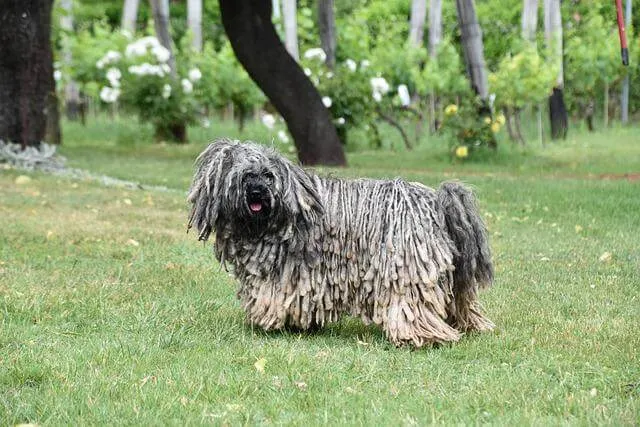
Puli
Health grade CThe Puli is a vigilant, extremely agile Hütehund (herding dog) — bred to guide Hungarian sheep flocks independently and vocally. Beneath those distinctive dreadlocks lies an athletic, brilliant worker who demands a close bond and remains wary of strangers.
- Height37–44 cm
- Weight10–15 kg
- Life expectancy12–15 yrs
- Puppy price1,800–3,000 €
- Energy4/5
The Essentials at a Glance
The Puli is a vigilant, extremely agile Hütehund (herding dog) — bred to guide Hungarian sheep flocks independently and vocally. Beneath those distinctive dreadlocks lies an athletic, brilliant worker who demands a close bond and remains wary of strangers.
- Health grade C: The Puli is a rugged working dog that nevertheless requires an above-average number of mandatory health tests, particularly regarding the eyes.
- You are keen on daily mental stimulation or dog sports like agility — this lightning-fast herding dog will wither away as a pure couch potato.
- You are prepared to commit to the special coat care (cords) instead of simply shearing him.
- You live in an apartment with thin walls — he was bred to vocally report changes, which is deeply ingrained hardware.
Is the Puli right for you?
At a glance
Puli overview
The essentials — key facts, traits, and health priorities — before you dive deeper.
Health grade
Relative to other breeds
S
A
B
C
D
E
Very healthyHigher risk
Average — several important tests are expected.
See full health info & tests →
Note: This health overview is AI-assisted and editorially reviewed. It is for orientation only and does not replace veterinary advice.
Lifespan
12–15 yrs
Height
37–44 cm
Weight
10–15 kg
Practical
- Puppy price: 1,800 – 3,000 €
- Coat: Dense, curly, cord-like
- Origin: Hungary
Temperament
Energy
Trainability
Family fit
With kids
Daily life
Care effort
Shedding
Barking
City-friendly
Guard instinct
What matters most
Especially with a Puli, choosing the right breeder is the single most important decision you'll make. Serious breeders consistently test the parents for inherited conditions, prioritize healthy early socialization, and stay accountable long after handover. A cheap puppy without health screening tends to become the most expensive dog later on.
See HonestDog breeder standards →Colors & coat
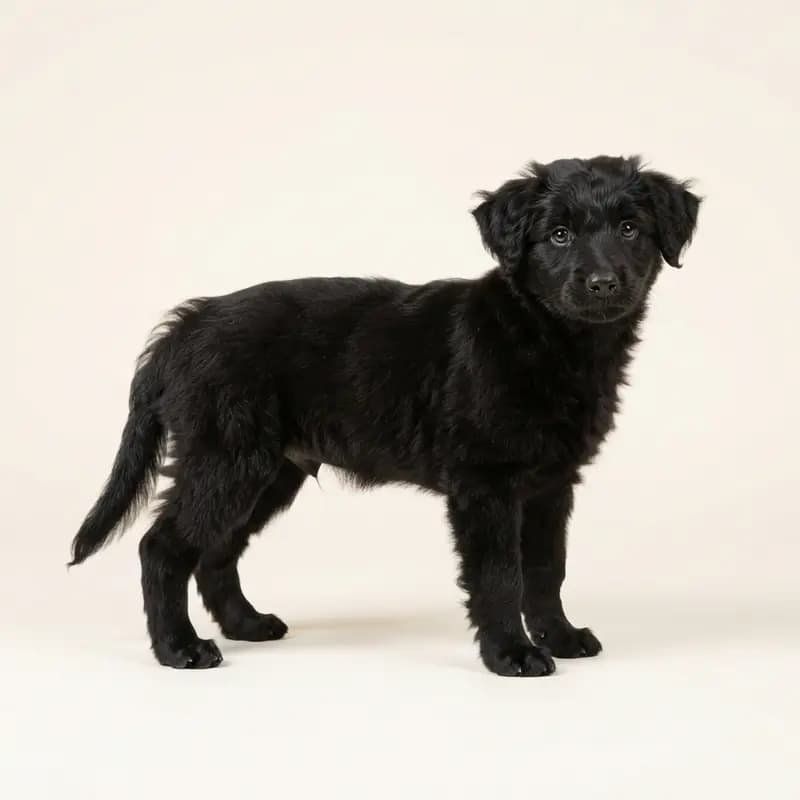
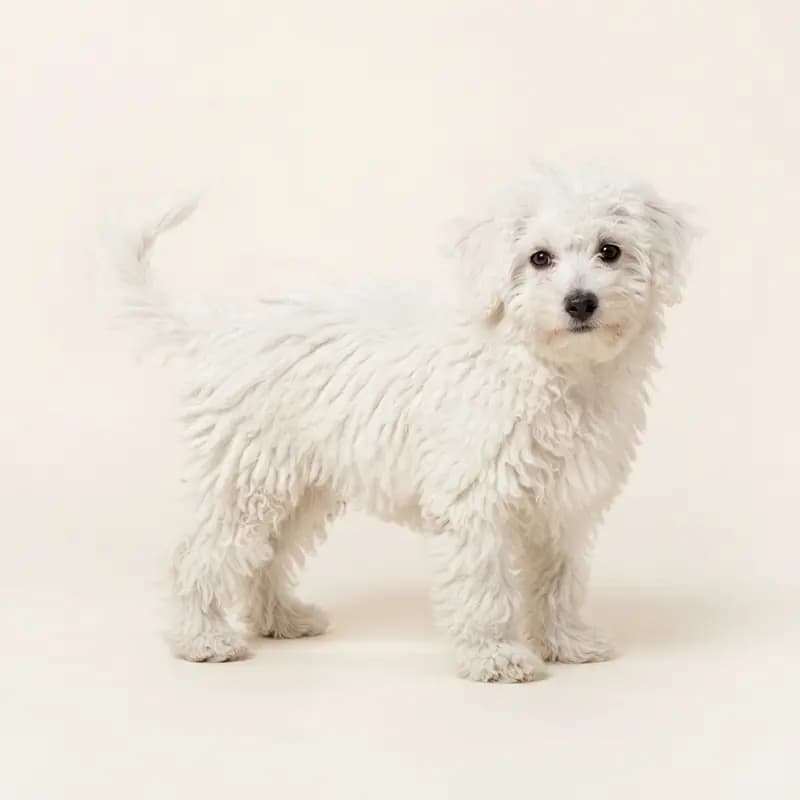
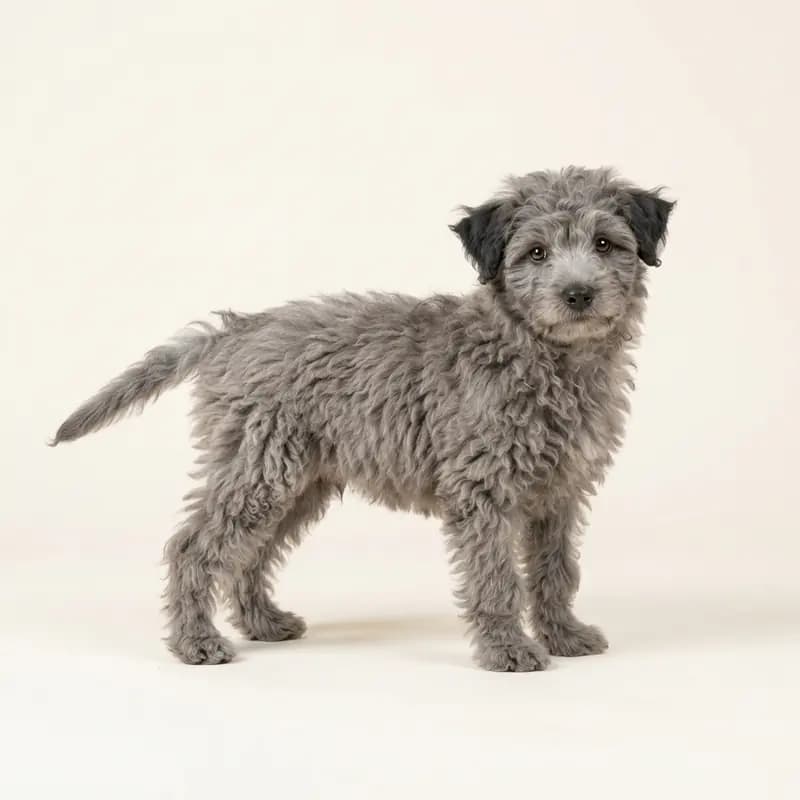
What colors does the Puli come in?
The coat colors you will see in Puli litters — including which ones fall outside the breed standard and which carry genetic risk.
Eye colors
 Brown
Brown
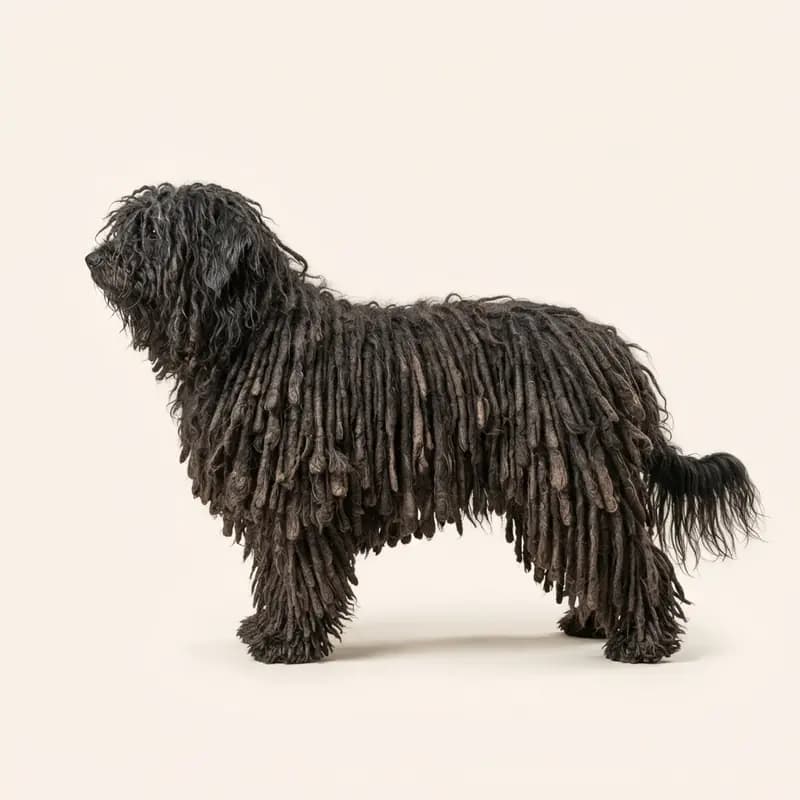
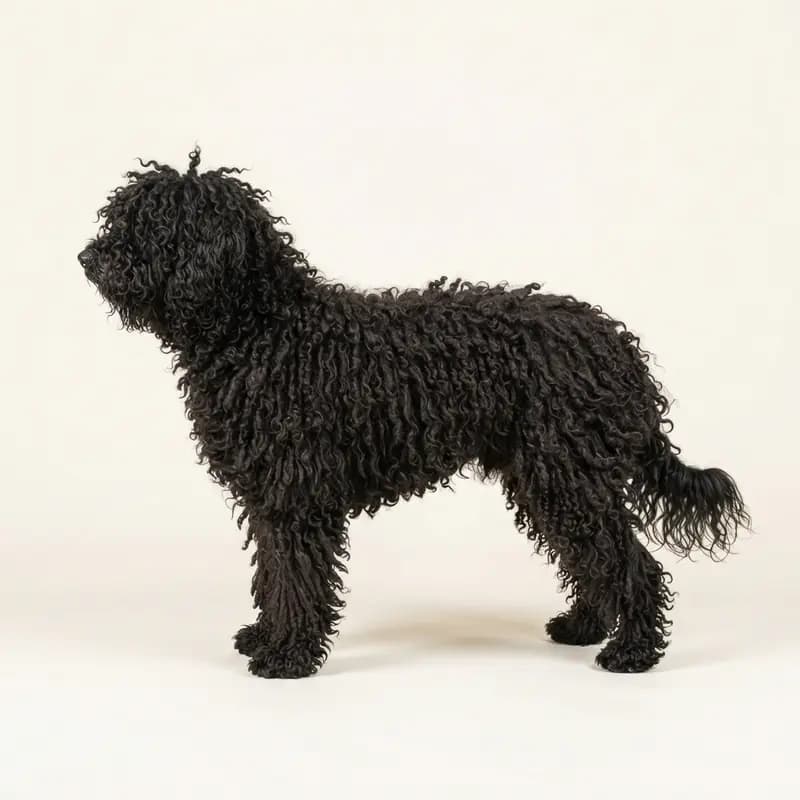
Coat type
 Illustrative image
Corded
 Illustrative image
Curly
 Double coat
 Long
Long
Is the Puli right for you?
The Puli is a vigilant, extremely agile Hütehund (herding dog) — bred to guide Hungarian sheep flocks independently and vocally. Beneath those distinctive dreadlocks lies an athletic, brilliant worker who demands a close bond and remains wary of strangers.
Perfect for you if:
- You are keen on daily mental stimulation or dog sports like agility — this lightning-fast herding dog will wither away as a pure couch potato.
- You are prepared to commit to the special coat care (cords) instead of simply shearing him.
- You live in the countryside or have a house with a garden where his vigilant barking won't bother anyone.
- You lead with confident composure and humor, as his independent character tolerates neither pressure nor stubborn repetition.
Less ideal if:
- You live in an apartment with thin walls — he was bred to vocally report changes, which is deeply ingrained hardware.
- You are looking for a dog that greets every visitor with joy — Pulis are aloof and decide for themselves who belongs to the family.
- You keep a meticulously clean household — those floor-length cords act like a magnet for forest debris, mud, and snow after a walk.
The real vibes check
A Puli is not a cozy stuffed animal with a Bob Marley look — he is a serious, vigilant herd manager who wants to control everything around him. If you channel his intelligence in the right direction, you will have an inseparable shadow; if you leave the leadership to him, he will soon be herding your children, your guests, and the mail carrier.
Self-check
Would the Puli really fit your life?
Answer 6 quick questions about your everyday life and see how well the Puli fits you — including an honest cost estimate per month, per year, and across the dog's lifetime.
Fit checkCost estimateRisk dice
Takes about 1 minute · free & anonymous
Breed Profile
The Puli is a small but sturdy dog with a distinctive, curly coat that hangs in cords or strands, giving it the appearance of a fluffy mop. This unique fur not only gives him a distinctive look but also protects him from extreme weather conditions. The Puli belongs to FCI Group 1, which also includes herding and driving dogs. There are no specific distinctions between show and performance lines within the breed. The Puli has a square stature, with the length of the body approximately equal to the height. He possesses an athletic build that allows him to jump and run with amazing agility and speed.
All measurements in detail
- Height
- 37 - 41 cm (Female), 40 - 44 cm (Male)
- Weight
- 10 - 13 kg (Female), 13 - 15 kg (Male)
- Life Expectancy
- 12 - 15 yrs
- Character
- Intelligent, Alert, Loyal
- Coat
- Dense, curly, cord-like
- Coat Color
- Black, white, various shades of gray
- Price
- 1800 - 3000 €
Character & Temperament
This little bundle of energy has a heart full of loyalty and intelligence. Originally bred as a herding dog, the Puli brings a natural work ethic and alertness that it enjoys bringing to activities and tasks. A typical Puli is alert and has strong protective behavior, making him an excellent watchdog. However, he is also people-oriented and often develops a deep bond with his family. His loyalty means he is often reserved around strangers, but with proper socialization he can learn to be friendly and even-tempered. The Puli is a fairly active dog with a happy and often playful temperament. He loves being part of family life and enjoys being the center of attention. When he's not busy, he tends to divert his energy into unwanted behaviors, so it's important to provide him with enough mental and physical stimulation. Despite its small size, the Puli is not a dog that wants to sit around the house all day. He loves being outside and exercising, whether through games, walks or herding exercises. His intelligent and attentive nature also makes him a skilled learner, quickly picking up new commands and tricks with positive reinforcement. The Puli does not typically exhibit strong hunting behavior, but it can sometimes be somewhat independent, likely due to its history as an independent herding dog. This means that he sometimes makes his own decisions, especially when he is underemployed. When it comes to being alone, the Puli often shows a certain tolerance as long as he is sufficiently occupied when the family is at home. However, he should not be left alone for too long as he develops a close bond with his people and values their company.
| Trainability Bred to work closely alongside humans. | Highly trainable |
| Watchfulness Reports unusual activity but stays controlled. | Moderate |
| Openness to Strangers Warms up quickly and is generally welcoming. | Friendly |
| Hunting or Herding Drive Noticeable drive — needs attention around small animals. | Moderate |
Fun Fact!
Pulis are so agile that they are often referred to as "acrobatic dogs." and are able to make a sudden 180 degree turn while running without losing speed!
What Awaits You
Pulis are dogs with a lot of energy. Their original use as herd guards makes them alert and barking dogs. Furthermore, Pulis are self-confident and docile dogs that work independently. Pulis are also repeatedly described as dogs with a pronounced willingness to be aggressive. Due to the properties mentioned, they are not suitable for beginners.
Housing & Care
The Puli can be kept in the city as long as it receives enough exercise and mental stimulation. He is an active dog and needs daily walks and playtime. Pulis are generally good with children, but as with all dogs, interaction should be supervised. They can also get along well with other pets, including cats, if properly socialized.
- Family Friendly
Lives for its family — the born family companion.
Ideal family dog - Child Friendly
Takes boisterous and affectionate children in its stride.
Patient with children - Dog Friendly
Usually gets on fine with other dogs.
Generally tolerant - City Friendly
City-appropriate with enough exercise and stimulation.
Manageable in cities
Owning a dog is a privilege, but it's also a real responsibility. Before you bring one into your life, be honest with yourself about the commitment it takes.
Training & Education
The Puli is intelligent and capable of learning, but sometimes a little stubborn. He can enjoy a variety of activities and sports, including agility and obedience. Because of his herding instinct, it's also a good idea to involve him in herding exercises when possible. It is important to note that the Puli may have a tendency to become overly obsessed with balls or toys. This can lead to behavior described as "ball junkie" is referred to. Therefore, it is important to keep play in moderation and offer a variety of activities. Training a Puli should start early and be consistent. It is especially important to teach him frustration tolerance and impulse control since he can be impatient at times. Positive reinforcement and rewards work best for this breed.
Nutrition & Care
The Puli benefits from a balanced diet with high-quality proteins, fats, vitamins and minerals. It is important to pay attention to the amount of food to avoid becoming overweight, as the Puli is a rather small dog and can be prone to weight problems. In terms of care, the Puli has a unique coat that requires special attention. The fur consists of dense, curly hairs that grow in cords or strands. It has an undercoat that protects it from extreme weather conditions. The climate in Germany is usually not a problem for the Puli. He sheds little, but caring for his cords requires time and patience. It is important to groom the coat regularly to avoid matting.
| Care Level Needs regular professional grooming — time-consuming and costly. | High-maintenance |
| Exercise Needs Needs several hours of serious exercise every day. | Very active |
| Shedding No or minimal hair loss — suitable for allergy sufferers. | No shedding |
| Trainability Bred to work closely alongside humans. | Highly trainable |
Our experts are still reviewing this information. Spotted something wrong? Email us at info@honestdog.de.
Health & hereditary diseases
Health
C
Solid, watch carefully
Health grade
The Puli is a rugged working dog that nevertheless requires an above-average number of mandatory health tests, particularly regarding the eyes. Significant conditions such as cataracts, glaucoma, and hip dysplasia (HD) are prevalent in the breed and must be actively managed through breeding tests. Prospective buyers should be especially meticulous in ensuring that the parents have comprehensive and complete health screening results.
Grade is relative to other breeds — AI-assisted and editorially reviewed.
In daily life this can mean
You should maintain the special corded coat very carefully to prevent skin infections and ensure joint-friendly exercise in everyday life.
The breeder's role
Reputable breeders have the hips, knees, eyes, and nervous systems of the parent animals tested and pay attention to a genetically healthy coat structure.
Note: This health overview is AI-assisted and editorially reviewed. It is for orientation only and does not replace veterinary advice.
No Health Tests Available
No specific health tests are currently available for this breed.
Costs & where to find one
How much does a Puli cost?
A Puli costs around ~€170 per month (€90 – €320, depending on your setup). The first year adds up to roughly ~€5,310 including purchase, equipment and puppy school; across the dog's life (13.5 years) it comes to about ~€31,350.
With surgery cover, running costs come to about ~€170 per month — in return, your share of a major operation drops from several thousand euros to around 20 percent.
Per month
~€170
In the first year
~€5,310
Across the dog's life
~€31,350
Purchase from a breeder: €1,800 – €3,000
Estimate at a mid-range setup (suburban, dry food, 1–2 hours of daily exercise), average German prices, as of July 2026.
Calculate your personal costs1-minute self-check with your own answers
Looking for a Puli?
HonestDog Concierge
No verified Puli breeders on HonestDog yet
We currently have no breeders for this breed who have passed our verification. Create your short buyer profile: we'll set up your search alert, review a possible source and email you within 28 days.
Appearance, variants & origin
History
The full history
The Puli has its roots in Hungary, where it has been valued as a herding dog for over a thousand years. It is believed that the Magyars, the ancestors of modern Hungarians, brought the Puli with them from Central Asia in the 9th century. These dogs were bred specifically to herd sheep and were known for their ability to move and protect flocks. The Puli's unique coat developed as a natural adaptation to Hungary's climate, which is characterized by cold winters and hot summers. The breed was first mentioned in writing in the 17th century, and since then it has had a long history as a working dog. The Puli was recognized as a separate breed by the American Kennel Club in 1935. In Europe, particularly in its native Hungary, the Puli remains a popular breed and is often featured in dog shows and herding dog competitions.
Original Use
The Puli was bred as a sheep herding dog in Hungary and is known for its distinctive shaggy coat.
Origin
Hungary
Date
Antike
Owner experiences
What owners say about the Puli
Sabine M., Halterin aus Hessen (Rüde, seit 2020)
Als wir unseren Puli-Mix aus dem ungarischen Tierschutz adoptiert haben, dachten wir, wir wären auf das Thema Fellpflege vorbereitet. Aber die Realität hat uns schnell eingeholt. Sein Fell wächst unaufhörlich und verfilzt rassetypisch extrem schnell. Wenn man da nicht von Anfang an konsequent hinterher ist, entstehen statt der schönen, typischen Rastas (Zotten) ganz schnell dicke, undurchdringbare Filzplatten, die die Haut nicht mehr atmen lassen. Bürsten oder Kämmen ist bei dem Fell absolut unmöglich – man muss die Zotten wirklich einzeln mit den Fingern bis zur Haut auseinanderreißen.
Weil uns das auf Dauer zu extrem war und der Hund im Sommer sichtlich unter der Hitze litt, haben wir uns letztendlich dazu entschieden, ihn komplett scheren zu lassen. Das kurze, gelockte Fell steht ihm super und ist im Alltag viel pflegeleichter, auch wenn wir damit natürlich den klassischen Puli-Look aufgegeben haben. Wer sich einen Puli anschafft, sollte diesen enormen Pflegeaufwand und die Schmutz-Anfälligkeit des Fells wirklich nicht unterschätzen.
Tanja S., Halterin aus Bayern (Rüde, seit 2023)
Unser Puli ist ein absolut loyaler und intelligenter Begleiter, aber er bringt auch eine gehörige Portion Wach- und Schutztrieb mit. Fremden gegenüber ist er extrem skeptisch. Zu Hause meldet er jeden Besucher lautstark und würde am liebsten jeden Fremden sofort verbellen und stellen, wenn wir nicht konsequent eingreifen. Auch draußen neigt er dazu, fremde Menschen anzuspringen oder zurückzuweisen, wenn man nicht aufpasst. Das erfordert in der Erziehung unheimlich viel Fingerspitzengefühl und absolute Konsequenz.
Man darf nicht vergessen, dass diese Hunde in Ungarn dafür gezüchtet wurden, völlig selbstständig Herden zu bewachen und zu treiben. Wenn man ihnen keine klare Führung bietet, treffen sie ihre eigenen Entscheidungen – und das äußert sich dann oft in übermäßigem Bellen und Kontrollverhalten. Wir arbeiten sehr viel in der Hundeschule daran, aber es ist ein kontinuierlicher Prozess. Für Anfänger ist die Rasse meiner Meinung nach definitiv nichts.
Nils P., Halter aus Baden-Württemberg (Rüde, seit 2018)
Was mich am Puli fasziniert, ist seine unglaubliche Energie und Wendigkeit. Er ist ein echtes Arbeitstier im Kleinformat. Wenn wir draußen sind, merkt man sofort das Erbe des ungarischen Hütehundes: Er ist blitzschnell, springt mühelos über Hindernisse und hat eine enorme Ausdauer. Einen ausgeprägten Jagdtrieb im Sinne von Wild hinterherhetzen hat er zum Glück nicht, aber er will alles, was sich bewegt (wie Fahrräder oder rennende Tiere), durch Umkreisen und Bellen wieder 'zurückholen'.
Man muss ihn geistig und körperlich wirklich fordern, sonst sucht er sich selbst eine Beschäftigung. Gleichzeitig ist er im Haus aber unglaublich anhänglich und weicht mir nicht von der Seite. Er liebt sein 'Rudel' über alles und möchte am liebsten überall dabei sein. Wenn man sich auf sein aktives Wesen einlässt und ihm eine Aufgabe gibt, bekommt man einen unfassbar klugen und treuen Partner an seiner Seite.
Paraphrased from real owner reports
Loading owner stories
FAQ & more
Frequently asked questions about the Puli
Is a Puli the right dog for me?
The Puli is an active dog that needs plenty of exercise and mental stimulation. Research the temperament, grooming needs, and space requirements before deciding.
How long does a Puli live?
The average life expectancy of a Puli is 12-15 years. With proper care and regular vet visits, your dog can live a long, healthy life.
How much grooming does a Puli need?
Puli grooming requirements include regular brushing, nail trimming, and dental care. HonestDog provides detailed grooming tips for every breed.
Is a Puli good for families with children?
The Puli can be a great family dog. Proper training and socialization are key. HonestDog provides family suitability information for every breed.
What colors does the Puli come in?
The Puli comes in these colors: Black, White, Fawn, Grey.
Loading related articles
Are you a Puli breeder?
Showcase your kennel on HonestDog and reach families searching for a responsibly bred Puli.
Why HonestDog?
What makes HonestDog different from other platforms
Full transparency
We lay out what we have: who the breeder is, how they work, and any health records they've uploaded. So you can judge for yourself.
Responsible breeding, assured
Every breeder on HonestDog has their identity and documents checked before their profile goes live. Health records they upload are shown on the profile, so you can see exactly what has been tested.
Trust and verification
We verify breeders and buyers alike, so every conversation happens on solid ground. It's a new standard of trust in dog breeding.
Less hassle, more time
We've already checked the breeders' documents and gathered the details, so you can skip the endless research and focus on finding the right puppy for your family.
Our Mission

We connect dog lovers with responsible breeders and shelters to ensure every dog finds the perfect home.
Founded by dog enthusiasts, our platform focuses on ethical dog breeding and adoption.
Why HonestDog?
We connect you with vetted breeders and shelters so you can find your — your new companion — with confidence.
Vetted Partners
Only verified breeders and shelters — for a safe start.
Highest Standards
Every animal's health and wellbeing is our top priority.
Guides & Resources
Guides, checklists, and breed profiles — so you can make a well-informed decision.