Loading breed
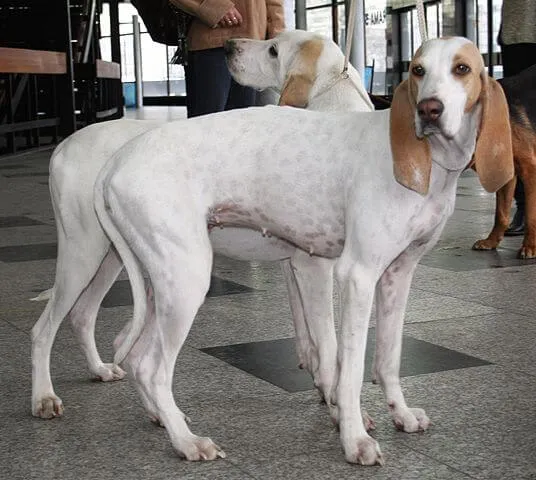
Porcelaine
Health grade AThe Porcelaine is an elegant, gentle, yet tireless pack hound in the forest—bred to track scents with endurance and vocalize while on the trail. His delicate appearance completely belies the fact that he is a tough, passionate scenthound.
- Height53–58 cm
- Weight25–32 kg
- Life expectancy12–13 yrs
- Puppy price1,500–2,500 €
- Energy4/5
The Essentials at a Glance
The Porcelaine is an elegant, gentle, yet tireless pack hound in the forest—bred to track scents with endurance and vocalize while on the trail. His delicate appearance completely belies the fact that he is a tough, passionate scenthound.
- Health grade A: The Porcelaine is a very primitive and robust French scenthound breed with a refreshingly low genetic disease burden.
- You enjoy intensive scent work, tracking, or mantrailing—a simple walk will never be enough to tire out this scenthound.
- You ideally already have a confident dog, as this classic pack hound truly thrives when in the company of other dogs.
- You expect him to come when called while on a fresh scent—he has been selectively bred for centuries to stick to the trail and hunt vocally.
Is the Porcelaine right for you?
At a glance
Porcelaine overview
The essentials — key facts, traits, and health priorities — before you dive deeper.
Health grade
Relative to other breeds
S
A
B
C
D
E
Very healthyHigher risk
Very healthy — limited common concerns.
See full health info & tests →
Note: This health overview is AI-assisted and editorially reviewed. It is for orientation only and does not replace veterinary advice.
Lifespan
12–13 yrs
Height
53–58 cm
Weight
25–32 kg
Practical
- Puppy price: 1,500 – 2,500 €
- Coat: Short, smooth, dense
- Origin: France
Temperament
Energy
Trainability
Family fit
With kids
Daily life
Care effort
Shedding
Barking
City-friendly
Guard instinct
What matters most
Especially with a Porcelaine, choosing the right breeder is the single most important decision you'll make. Serious breeders consistently test the parents for inherited conditions, prioritize healthy early socialization, and stay accountable long after handover. A cheap puppy without health screening tends to become the most expensive dog later on.
See HonestDog breeder standards →Colors & coat
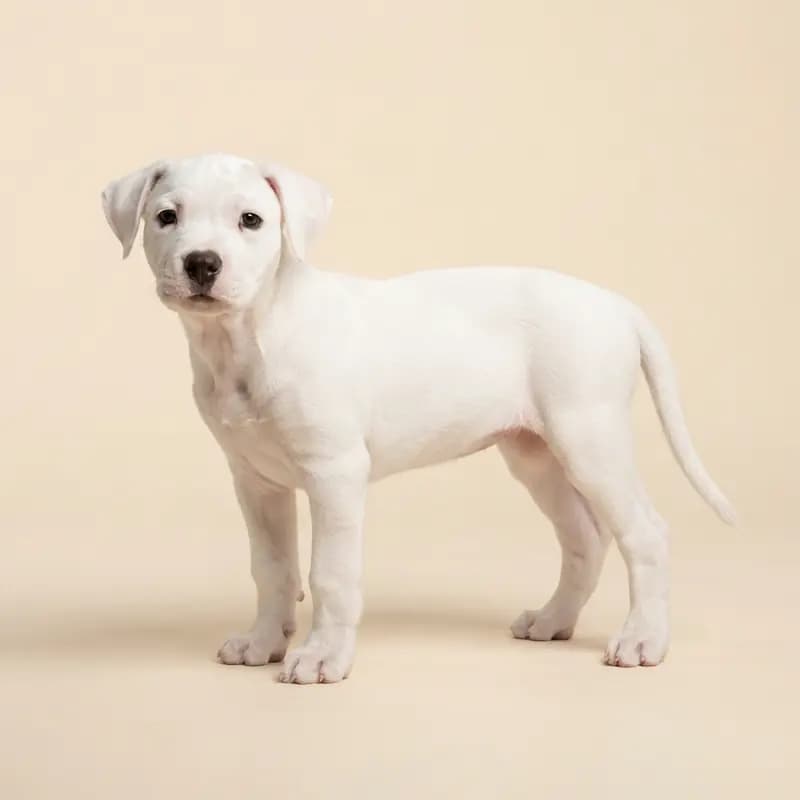
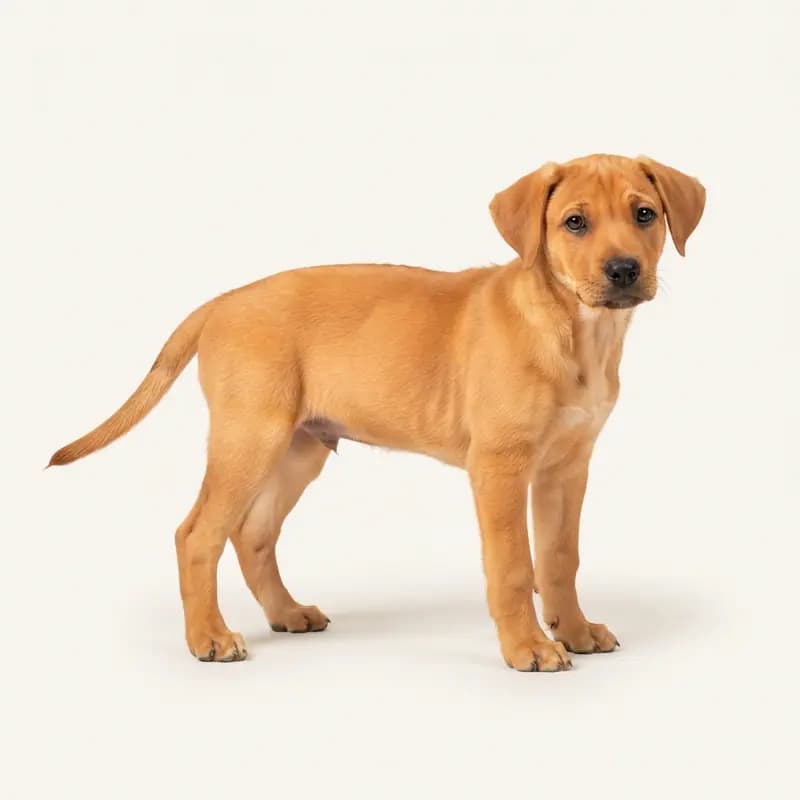
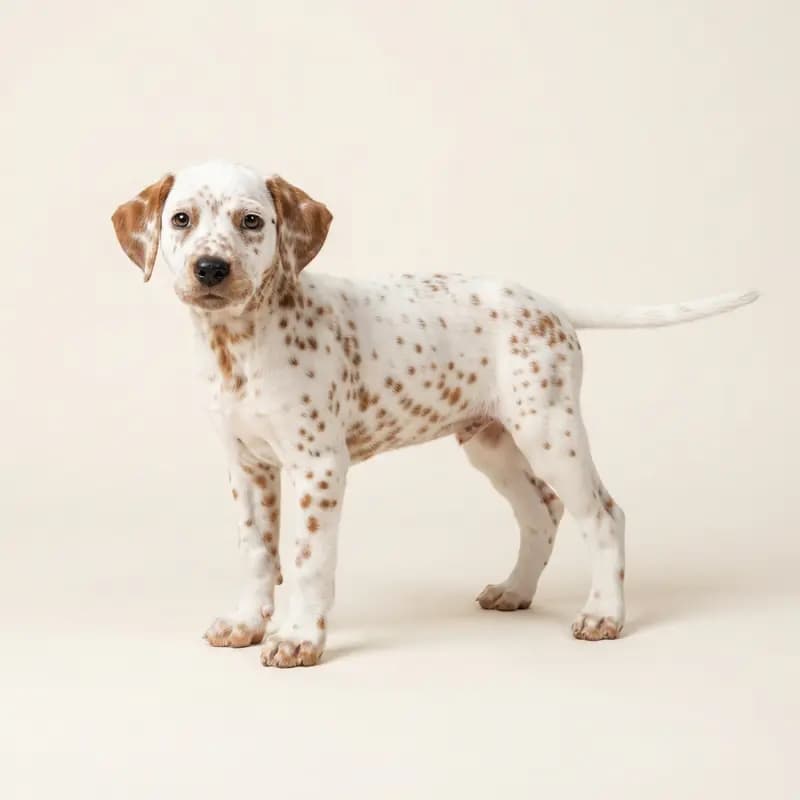
What colors does the Porcelaine come in?
The coat colors you will see in Porcelaine litters — including which ones fall outside the breed standard and which carry genetic risk.
Eye colors
 Brown
Brown
Coat type
 Short
Short Smooth
Is the Porcelaine right for you?
The Porcelaine is an elegant, gentle, yet tireless pack hound in the forest—bred to track scents with endurance and vocalize while on the trail. His delicate appearance completely belies the fact that he is a tough, passionate scenthound.
Perfect for you if:
- You enjoy intensive scent work, tracking, or mantrailing—a simple walk will never be enough to tire out this scenthound.
- You ideally already have a confident dog, as this classic pack hound truly thrives when in the company of other dogs.
- You live in a rural area and have a securely fenced garden where he can move freely between his outings.
- You provide gentle, patient leadership, as he is sensitive to harshness but will immediately follow his own hunting instincts if you are inconsistent.
Less ideal if:
- You expect him to come when called while on a fresh scent—he has been selectively bred for centuries to stick to the trail and hunt vocally.
- You need to leave him alone for several hours on weekdays, which causes massive stress for the operating system of a highly social pack hound.
- You are looking for a dog that maintains constant eye contact during walks instead of completely immersing himself in his world of scents.
The real vibes check
At home, the Porcelaine curls up on the sofa like a fragile, gentle stuffed animal—but as soon as he catches a scent in the forest, he turns into an unstoppable machine. You aren't buying a classic companion dog, but a highly specialized hunter in a tailored suit. If you share and channel his passion for the trail, you will get an incredibly loyal companion; if not, you will be living with a frustrated escape artist.
Self-check
Would the Porcelaine really fit your life?
Answer 6 quick questions about your everyday life and see how well the Porcelaine fits you — including an honest cost estimate per month, per year, and across the dog's lifetime.
Fit checkCost estimateRisk dice
Takes about 1 minute · free & anonymous
Breed Profile
The Porcelaine, also known as the "Chien de Franche-Comt", is a proud and elegant dog with a remarkable white color that gave it its name - the porcelain white. It belongs to FCI Group 6, running and bloodhounds. Its stature is athletic and well proportioned, making it an efficient and persistent working dog. Its ears are medium sized and drooping, and its eyes have a friendly and intelligent expression. The Porcelaine has a short, smooth and dense coat that protects him from the elements. There are no distinctions between performance and show lines in this breed, all Porcelaines are of the same standard.
All measurements in detail
- Height
- 53 - 56 cm (Female), 55 - 58 cm (Male)
- Weight
- 25 - 28 kg (Female), 28 - 32 kg (Male)
- Life Expectancy
- 12 - 13 yrs
- Character
- Energetic, Friendly, Alert
- Coat
- Short, smooth, dense
- Coat Color
- White, sometimes with orange spots
- Price
- 1500 - 2500 €
Character & Temperament
The Porcelaine is known for his energy and enthusiasm, especially when it comes to his work. He is a passionate and tireless hunter, characterized by his ability to run long distances while maintaining a constant speed. His strong sense of smell and his ability to work both alone and in a pack make him an excellent hunting dog for various types of game, especially rabbits and deer. Despite his energy and willingness to work, the Porcelaine is a calm and balanced dog at home. He is friendly and sociable, both towards people and other dogs, and he greatly values the company of his family. The Porcelaine can adapt well to life in an active family that offers him plenty of exercise and activity. But be careful, the Porcelaine is also a very alert dog. His strong sense of territory and his distrust of strangers make him an effective guard dog. However, this can also mean that he has a tendency to bark, especially when he is left alone or when he feels bored. Like most hunting dogs, the Porcelaine has a strong hunting instinct. This can cause problems if he lives in an area where there are many small animals or if he is not properly trained to resist his instincts. Therefore, it is important that you socialize him from an early age and teach him to listen to your commands, especially when he is outside. The Porcelaine is an intelligent and eager-to-learn animal that quickly learns new commands and enjoys being challenged. He values positive reinforcement and is willing to work hard to accomplish his tasks. This also makes him a good candidate for various dog sports, such as agility or obedience. But although the Porcelaine is an active and energetic dog, he is also able to relax and enjoy quiet moments. He enjoys being part of family activities and likes to be included in everything that happens. But that doesn't mean that he likes to be left alone - on the contrary, the Porcelaine needs a lot of company and doesn't like being alone for long periods of time. All in all, the Porcelaine is a versatile and adaptable dog that can be happy in both the city and the country as long as it gets enough exercise and mental stimulation. With his friendly and balanced nature and his love of work, he is a great companion for active families and dog sports lovers.
| Trainability Has its own ideas and will test limits. | Strong-willed |
| Watchfulness Reports unusual activity but stays controlled. | Moderate |
| Openness to Strangers Warms up quickly and is generally welcoming. | Friendly |
| Hunting or Herding Drive Noticeable drive — needs attention around small animals. | Moderate |
Fun Fact!
The Porcelaine is so named because its shiny, white fur is reminiscent of fine porcelain!
What Awaits You
The Porcelaine is elegant, energetic and a passionate hunter; It is used for small game and drives it to the waiting guns. He is very affectionate towards his owners, family, friends and children and enjoys participating in all family activities. He makes an excellent pet and is easily housetrained and housetrained.
Housing & Care
Porcelaines are high-energy dogs that require plenty of exercise to stay happy and healthy. Therefore, they are better suited to living in a house with a large, safe garden than an apartment in the city. They love being outside and will take any opportunity to run and play. Porcelaines are friendly and social dogs that get along well with children. They are gentle and patient and can make a great playmate for older children. However, with younger children, a supervisor should always be present to ensure that neither the child nor the dog is playing too rough. As for other pets, the Porcelaine can live with cats and other dogs provided he is properly socialized and trained. However, you should keep in mind that he has a strong hunting instinct, which can be a problem with small pets.
- Family Friendly
Loves family life and thrives in a group.
Family-oriented - Child Friendly
Takes boisterous and affectionate children in its stride.
Patient with children - Dog Friendly
Usually gets on fine with other dogs.
Generally tolerant - City Friendly
City-appropriate with enough exercise and stimulation.
Manageable in cities
Owning a dog is a privilege, but it's also a real responsibility. Before you bring one into your life, be honest with yourself about the commitment it takes.
Training & Education
Porcelaines are intelligent dogs with a high ability to learn. They are obedient and want to please their owner, which makes training easier. However, their hunting instinct can be challenging. They should learn from the start that they are not allowed to chase every animal they see. Early and consistent socialization and education are therefore very important. Porcelaines can enjoy various dog sports such as agility, obedience or search games. They are also excellent sniffer dogs and can be used in rescue or tracking. However, they should not be overwhelmed. Although they are eager to work, they also need rest periods and should not be subjected to long-term high demands. Porcelaines can tend to be "ball junkies." to become. It is therefore important to play with the ball in a controlled manner and to offer alternatives. A balanced training that also includes exercises for impulse control and frustration tolerance is therefore essential.
Nutrition & Care
The Porcelaine's diet should be balanced and high quality. It is important to choose a diet that is tailored to the dog's age, weight, activity level and health status. The Porcelaine is an active dog and therefore requires an adequate amount of proteins and carbohydrates to meet its energy needs. Omega-3 fatty acids are also important for his skin and coat health. Caring for the Porcelaine's coat is relatively easy. Since he doesn't have an undercoat, he doesn't shed heavily. Its coat is short and dense and should be brushed regularly to remove dead hair and maintain skin health support financially. A weekly brushing is usually enough to keep the coat clean and shiny. Only bathe the Porcelaine when he is really dirty to preserve the natural oils in his skin and fur. The Porcelaine is well adapted to the climate in Germany thanks to its short coat. However, he should wear a coat in extremely cold temperatures as he does not have a thick undercoat to keep him warm.
| Care Level Minimal effort — occasional brushing and bathing. | Low-maintenance |
| Exercise Needs Needs several hours of serious exercise every day. | Very active |
| Shedding Hair everywhere, always — no white clothing survives. | Very heavy |
| Trainability Has its own ideas and will test limits. | Strong-willed |
Our experts are still reviewing this information. Spotted something wrong? Email us at info@honestdog.de.
Health & hereditary diseases
Health
A
Robust
Health grade
The Porcelaine is a very primitive and robust French scenthound breed with a refreshingly low genetic disease burden. Nevertheless, buyers should look out for hip dysplasia (HD), which can occur in dogs of this size, as well as a susceptibility to ear infections due to their long, hanging ears. The risk of gastric dilatation-volvulus (GDV) should also be kept in mind, as is the case with many larger hunting breeds.
Grade is relative to other breeds — AI-assisted and editorially reviewed.
In daily life this can mean
You should ensure the puppy is raised in a way that is gentle on the joints to protect his musculoskeletal system, and check for perfect hearing early on.
The breeder's role
Reputable breeders have the parents' hearing, joints, eyes, and heart tested and pay special attention to diverse bloodlines due to the rarity of the breed.
Note: This health overview is AI-assisted and editorially reviewed. It is for orientation only and does not replace veterinary advice.
No Health Tests Available
No specific health tests are currently available for this breed.
Costs & where to find one
How much does a Porcelaine cost?
A Porcelaine costs around ~€190 per month (€100 – €350, depending on your setup). The first year adds up to roughly ~€5,060 including purchase, equipment and puppy school; across the dog's life (12.5 years) it comes to about ~€30,660.
With surgery cover, running costs come to about ~€190 per month — in return, your share of a major operation drops from several thousand euros to around 20 percent.
Per month
~€190
In the first year
~€5,060
Across the dog's life
~€30,660
Purchase from a breeder: €1,500 – €2,500
Estimate at a mid-range setup (suburban, dry food, 1–2 hours of daily exercise), average German prices, as of July 2026.
Calculate your personal costs1-minute self-check with your own answers
Looking for a Porcelaine?
HonestDog Concierge
No verified Porcelaine breeders on HonestDog yet
We currently have no breeders for this breed who have passed our verification. Create your short buyer profile: we'll set up your search alert, review a possible source and email you within 28 days.
Appearance, variants & origin
History
The full history
The breed originally comes from France and is probably one of the oldest French hound breeds. Its ancestors are believed to have existed in ancient times and were known for their ability to track game by scent. During the French Revolution the breed was almost wiped out, but thanks to the efforts of some dedicated breeders in the Franche-Comt region, the Porcelaine was revived. The breed was officially recognized by the FCI in 1971.
Original Use
Bred to hunt rabbits and other small game, the Porcelaine is known for its elegant appearance and fine nose.
Origin
France
Date
1700
Owner experiences
What owners say about the Porcelaine
Natalie S., Halterin aus dem Ruhrgebiet (Rüde, seit 2021)
Als wir unseren Porcelaine-Rüden aus dem Tierschutz übernommen haben, waren wir sofort von seiner eleganten, fast majestätischen Erscheinung verzaubert. Zu Hause ist er die Ruhe selbst – ein echter Genießer, der am liebsten stundenlang zusammengerollt auf dem Sofa schläft und unglaublich anschmiegsam und menschenfreundlich ist. Er zeigt keinerlei Nervosität im Haus und ist einfach ein sanfter, treuer Begleiter.
Sobald wir allerdings die Haustür hinter uns lassen, verwandelt er sich. Seine Nase klebt förmlich am Boden und man merkt sofort, dass in ihm ein leidenschaftlicher Jäger steckt. Wegen seines ausgeprägten Jagdtriebes läuft er im Gelände ausschließlich an der Schleppe, da er sonst beim kleinsten Wildgeruch weg wäre. Um ihn geistig auszulasten, machen wir jetzt regelmäßig Mantrailing und Suchspiele, was ihm unglaublich viel Spaß macht und seine feine Nase perfekt fordert.
Ursula K., Halterin aus Hessen (Rüde, seit 2015)
Da wir bereits eine kleine Hundegruppe bei uns zu Hause hatten, war uns die Sozialverträglichkeit bei unserem Neuzugang besonders wichtig. Unser Porcelaine-Rüde Artie hat sich dank seiner Vergangenheit als Meutehund absolut problemlos in unser Rudel integriert. Er ist unglaublich sozial, verträgt sich einfach mit jedem Hund – egal ob Rüde oder Hündin – und geht Konflikten eher defensiv aus dem Weg.
Eine rassetypische Eigenheit, an die wir uns anfangs gewöhnen mussten, ist allerdings sein lautstarkes Heulen – der typische Spurlaut der Laufhunde. Wenn er aufgeregt ist oder im Garten etwas Spannendes wittert, schlägt er gerne mal laut an. Wer also sehr lärmempfindliche Nachbarn hat, sollte sich das gut überlegen. Für uns ist er in der Mehrhundehaltung aber ein absoluter Traumhund.
Paraphrased from real owner reports
Loading owner stories
FAQ & more
Frequently asked questions about the Porcelaine
Is a Porcelaine the right dog for me?
The Porcelaine is an active dog that needs plenty of exercise and mental stimulation. Research the temperament, grooming needs, and space requirements before deciding.
How long does a Porcelaine live?
The average life expectancy of a Porcelaine is 12-13 years. With proper care and regular vet visits, your dog can live a long, healthy life.
How much grooming does a Porcelaine need?
Porcelaine grooming requirements include regular brushing, nail trimming, and dental care. HonestDog provides detailed grooming tips for every breed.
Is a Porcelaine good for families with children?
The Porcelaine can be a great family dog. Proper training and socialization are key. HonestDog provides family suitability information for every breed.
What colors does the Porcelaine come in?
The Porcelaine comes in these colors: White, Orange, Spotted.
Loading related articles
Are you a Porcelaine breeder?
Showcase your kennel on HonestDog and reach families searching for a responsibly bred Porcelaine.
Why HonestDog?
What makes HonestDog different from other platforms
Full transparency
We lay out what we have: who the breeder is, how they work, and any health records they've uploaded. So you can judge for yourself.
Responsible breeding, assured
Every breeder on HonestDog has their identity and documents checked before their profile goes live. Health records they upload are shown on the profile, so you can see exactly what has been tested.
Trust and verification
We verify breeders and buyers alike, so every conversation happens on solid ground. It's a new standard of trust in dog breeding.
Less hassle, more time
We've already checked the breeders' documents and gathered the details, so you can skip the endless research and focus on finding the right puppy for your family.
Our Mission

We connect dog lovers with responsible breeders and shelters to ensure every dog finds the perfect home.
Founded by dog enthusiasts, our platform focuses on ethical dog breeding and adoption.
Why HonestDog?
We connect you with vetted breeders and shelters so you can find your — your new companion — with confidence.
Vetted Partners
Only verified breeders and shelters — for a safe start.
Highest Standards
Every animal's health and wellbeing is our top priority.
Guides & Resources
Guides, checklists, and breed profiles — so you can make a well-informed decision.