Loading breed
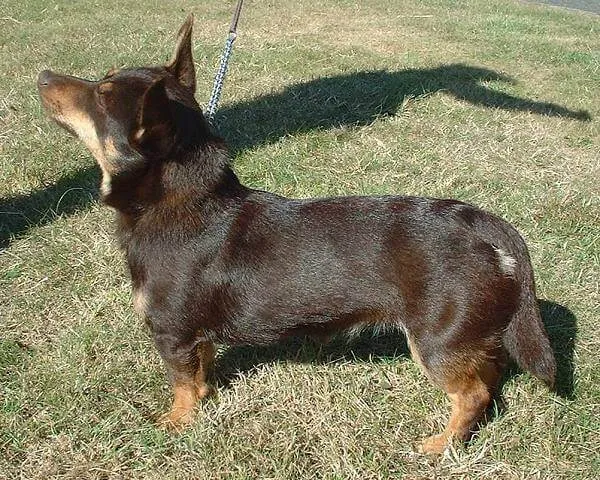
Lancashire Heeler
Health grade BThe Lancashire Heeler is a compact, incredibly clever, and robust Treibhund (herding dog) — bred to guide cattle herds by nipping at their heels. Don't let his short legs fool you: he has the heart of a tireless worker.
- Height23–32 cm
- Weight6–8 kg
- Life expectancy12–15 yrs
- Puppy price1,800–3,000 €
- Energy3/5
The Essentials at a Glance
The Lancashire Heeler is a compact, incredibly clever, and robust Treibhund (herding dog) — bred to guide cattle herds by nipping at their heels. Don't let his short legs fool you: he has the heart of a tireless worker.
- Health grade B: Although there are currently no mandatory health tests listed for the Lancashire Heeler in our database, the breed is known to be predisposed to Primary Lens Luxation (PLL) and Collie Eye Anomaly (CEA).
- You are up for challenging mental stimulation or agility training every day — this tiny herding dog will wither away with just simple walks.
- You can channel his watchful tendencies into calm behavior from the start and provide clear leadership.
- You expect an inconspicuous lap dog who is satisfied with short walks around the block — his genetics demand real work.
Is the Lancashire Heeler right for you?
At a glance
Lancashire Heeler overview
The essentials — key facts, traits, and health priorities — before you dive deeper.
Health grade
Relative to other breeds
S
A
B
C
D
E
Very healthyHigher risk
Solid — a handful of items a good breeder watches.
See full health info & tests →
Note: This health overview is AI-assisted and editorially reviewed. It is for orientation only and does not replace veterinary advice.
Lifespan
12–15 yrs
Height
23–32 cm
Weight
6–8 kg
Practical
- Puppy price: 1,800 – 3,000 €
- Coat: Short, smooth, undercoat present
- Origin: England
Temperament
Energy
Trainability
Family fit
With kids
Daily life
Care effort
Shedding
Barking
City-friendly
Guard instinct
What matters most
Especially with a Lancashire Heeler, choosing the right breeder is the single most important decision you'll make. Serious breeders consistently test the parents for inherited conditions, prioritize healthy early socialization, and stay accountable long after handover. A cheap puppy without health screening tends to become the most expensive dog later on.
See HonestDog breeder standards →Colors & coat
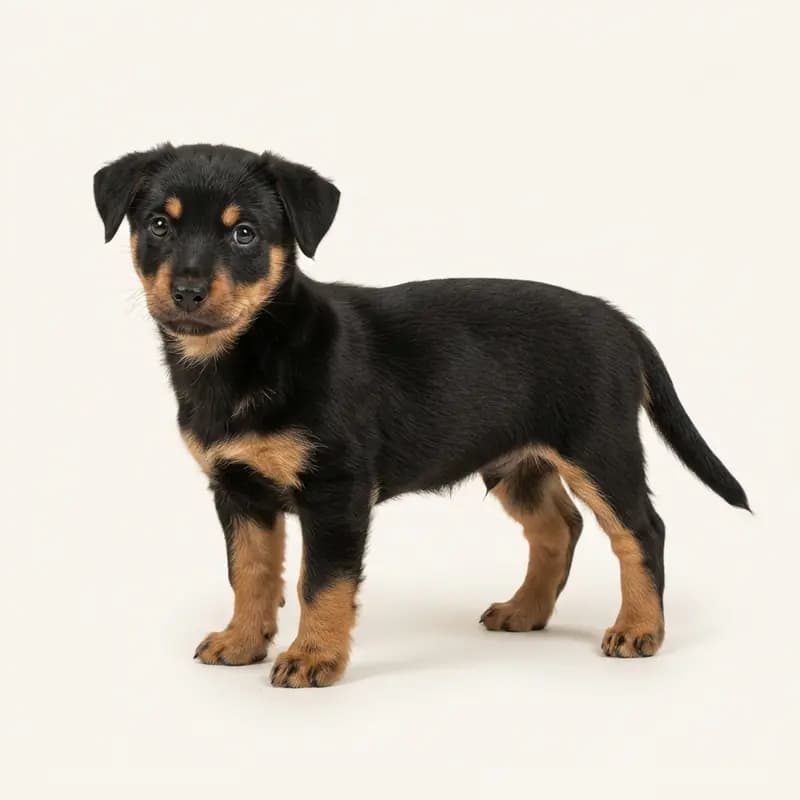
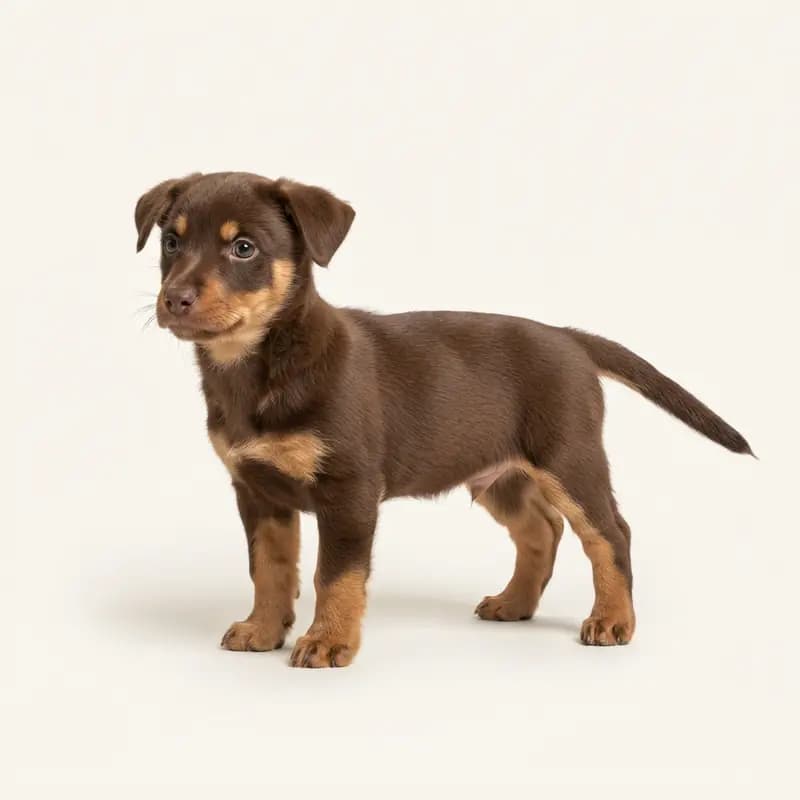
What colors does the Lancashire Heeler come in?
The coat colors you will see in Lancashire Heeler litters — including which ones fall outside the breed standard and which carry genetic risk.
Eye colors
 Brown
Brown Amber
Amber
Coat type
 Short
Short Smooth
 Double coat
Is the Lancashire Heeler right for you?
The Lancashire Heeler is a compact, incredibly clever, and robust Treibhund (herding dog) — bred to guide cattle herds by nipping at their heels. Don't let his short legs fool you: he has the heart of a tireless worker.
Perfect for you if:
- You are up for challenging mental stimulation or agility training every day — this tiny herding dog will wither away with just simple walks.
- You can channel his watchful tendencies into calm behavior from the start and provide clear leadership.
- You are looking for a weather-resistant companion who, despite his small size, doesn't shy away from rough conditions.
- You have older children who understand dog body language and respect his need for personal space.
Less ideal if:
- You expect an inconspicuous lap dog who is satisfied with short walks around the block — his genetics demand real work.
- You have small, fast-running children in the household — his instinct to stop moving objects by nipping at heels is deeply ingrained.
- You live in an apartment with thin walls, as he is an attentive guardian who likes to bark persistently when he hears something moving outside.
The real vibes check
A Lancashire Heeler is not a cute toy dog, but a full-fledged cattle driver on short legs. If you don't keep him busy, he will find a job for himself — and that usually means he starts herding your guests or your family. However, if you give his lightning-fast mind a task, you will get an indestructible, loyal partner.
Self-check
Would the Lancashire Heeler really fit your life?
Answer 6 quick questions about your everyday life and see how well the Lancashire Heeler fits you — including an honest cost estimate per month, per year, and across the dog's lifetime.
Fit checkCost estimateRisk dice
Takes about 1 minute · free & anonymous
Breed Profile
The Lancashire Heeler is a small but powerful dog with a striking appearance. Its physique is strong and compact, with well-developed muscles that give it strength and agility. The FCI classifies the Lancashire Heeler in Group 1 of herding dogs and cattle dogs (excluding Swiss Mountain Dogs). What is striking is his cheerful expression and his striking dark eyes, which sparkle with energy and intelligence. With its short, smooth fur and the typical "tan" (coloring) in black or liver, it is well protected against weather influences. The Lancashire Heeler does not differentiate between performance and show lines, meaning you won't find much of a difference in appearance and temperament when looking for a puppy.
All measurements in detail
- Height
- 23 - 27 cm (Female), 28 - 32 cm (Male)
- Weight
- 6 - 8 kg (Female), 6 - 8 kg (Male)
- Life Expectancy
- 12 - 15 yrs
- Character
- Intelligent, alert, cheerful
- Coat
- Short, smooth, undercoat present
- Coat Color
- Black tan or liver tan
- Price
- 1800 - 3000 €
Character & Temperament
The Lancashire Heeler is a small dog with a big personality. Its original purpose as a herding dog is still strong in its character and behavior. He is intelligent, quick to learn and has a natural ability to work independently, meaning he can often complete a task on his own. His temperament is lively and energetic, but he is by no means hyperactive. He needs regular mental and physical stimulation to be happy and balanced. The Lancashire Heeler is very people-oriented and develops a close bond with his family. He loves to play and is always ready for a game whether with balls, Frisbees or just a happy race around the garden. Despite his affectionate nature, the Lancashire Heeler can learn to stay alone for short periods of time as long as this is trained gradually and positively. He has a strong guarding instinct and is always alert, making him an excellent watchdog for the home. His hunting instinct is not as strong as some other herding dogs, but he can still follow the urge to chase after small animals if the opportunity arises. For all his playfulness and energy, the Lancashire Heeler is also a very adaptable dog. He can do well in a variety of environments and lifestyles as long as his needs are met. Whether you live in the city or the country, as long as you can provide the Lancashire Heeler with enough exercise, playtime and mental stimulation, he will be a happy and contented dog.
| Trainability Picks up commands quickly and wants to please. | Eager to learn |
| Watchfulness Occasionally alerts but is fundamentally open. | Low |
| Openness to Strangers Warms up quickly and is generally welcoming. | Friendly |
| Hunting or Herding Drive Powerful instinct that can override recall when triggered. | Strong |
Fun Fact!
The Lancashire Heeler is also known as the 'Ormskirk Heeler'. known, named after the town of Ormskirk in Lancashire, England, where the breed originated.
What Awaits You
The Lancashire Heeler is a medium to high energy dog. He is intelligent, alert and friendly and quickly learns new tasks. He is a robust small dog with short, weatherproof fur in the colors black and tan or liver and tan. He is affectionate, always happy, talkative and always ready for a walk. Their small size adds to their charm.
Housing & Care
The Lancashire Heeler can be kept in both the city and the country as long as it receives adequate exercise and mental stimulation. Due to its small size and adaptability to different habitats, it can thrive in a city apartment provided it is exercised regularly and has access to a safe outdoor area. In terms of family compatibility, the Lancashire Heeler is generally a good companion for adults and older children. However, small children should be supervised as the dog may become overwhelmed by their energy. With proper socialization, the Lancashire Heeler can also get along well with other pets, including cats.
- Family Friendly
Loves family life and thrives in a group.
Family-oriented - Child Friendly
Gets on well with children — with adult supervision.
With supervision - Dog Friendly
Usually gets on fine with other dogs.
Generally tolerant - City Friendly
City-appropriate with enough exercise and stimulation.
Manageable in cities
Owning a dog is a privilege, but it's also a real responsibility. Before you bring one into your life, be honest with yourself about the commitment it takes.
Training & Education
The Lancashire Heeler is intelligent, eager to learn, and responds well to positive, reward-based training. He is a versatile dog that can be successful in obedience training as well as various dog sports such as agility, flyball and obedience. It is important to provide him with clear guidance and encourage his mental and physical stimulation to avoid boredom and unwanted behavior. There is a risk that the Lancashire Heeler will become a ball junkie, i.e. he may develop an excessive fixation on balls or toys. It is important to control this behavior and ensure that the dog is happy in other activities and interactions. The breed has a natural guarding instinct and can be a good watchdog, alerting to unusual noises or intruders.
Nutrition & Care
The Lancashire Heeler is an active and energetic dog that requires a high quality, balanced diet to meet its energy needs. A mix of high-quality dry and wet food that is rich in proteins and healthy fats can be a good choice. In terms of grooming, the Lancashire Heeler has short, smooth fur with a dense undercoat. This means that he sheds more during the coat change phases in spring and autumn and needs regular brushing during this time. Otherwise, his grooming needs are quite minimal and a weekly brushing should be enough to keep his coat clean and healthy. The Lancashire Heeler also copes well with the German climate right. Thanks to its thick fur, it offers sufficient protection from the cold and is adaptable enough to adapt to warmer temperatures.
| Care Level Minimal effort — occasional brushing and bathing. | Low-maintenance |
| Exercise Needs Needs 1–2 hours of real exercise daily. | Active |
| Shedding Hair everywhere, always — no white clothing survives. | Very heavy |
| Trainability Picks up commands quickly and wants to please. | Eager to learn |
Our experts are still reviewing this information. Spotted something wrong? Email us at info@honestdog.de.
Health & hereditary diseases
Health
B
Solid
Health grade
Although there are currently no mandatory health tests listed for the Lancashire Heeler in our database, the breed is known to be predisposed to Primary Lens Luxation (PLL) and Collie Eye Anomaly (CEA). Additionally, the kneecaps should be examined for patellar luxation to rule out lameness. Overall, however, this small working dog is considered very robust and has a relatively low genetic disease burden.
Grade is relative to other breeds — AI-assisted and editorially reviewed.
In daily life this can mean
You should ensure he maintains a healthy weight and gets joint-friendly exercise, as well as schedule regular veterinary eye exams to detect any changes early on.
The breeder's role
Reputable breeders have the parents' knees and eyes checked by specialists and pay particularly close attention to healthy bloodlines due to the small gene pool.
Note: This health overview is AI-assisted and editorially reviewed. It is for orientation only and does not replace veterinary advice.
No Health Tests Available
No specific health tests are currently available for this breed.
Costs & where to find one
How much does a Lancashire Heeler cost?
A Lancashire Heeler costs around ~€150 per month (€80 – €280, depending on your setup). The first year adds up to roughly ~€5,080 including purchase, equipment and puppy school; across the dog's life (13.5 years) it comes to about ~€28,180.
With surgery cover, running costs come to about ~€140 per month — in return, your share of a major operation drops from several thousand euros to around 20 percent.
Per month
~€150
In the first year
~€5,080
Across the dog's life
~€28,180
Purchase from a breeder: €1,800 – €3,000
Estimate at a mid-range setup (suburban, dry food, 1–2 hours of daily exercise), average German prices, as of July 2026.
Calculate your personal costs1-minute self-check with your own answers
Looking for a Lancashire Heeler?
HonestDog Concierge
No verified Lancashire Heeler breeders on HonestDog yet
We currently have no breeders for this breed who have passed our verification. Create your short buyer profile: we'll set up your search alert, review a possible source and email you within 28 days.
Appearance, variants & origin
History
The full history
The Lancashire Heeler comes from England and its history dates back to the 17th century. Originally it was used as a herding and driving dog to drive livestock from pastures to market. It is believed that the breed was created by crossing the Welsh Corgi with a small black and tan terrier. The Lancashire Heeler has long been bred and used primarily in the county of Lancashire, hence its name. Organized breeding of this breed only began in the 1960s. The breed was recognized by the Kennel Club in Great Britain in 1981 and registered as a separate breed by the FCI in 2016.
Original Use
The Lancashire Heeler was used as a herding dog for cattle and sheep and for pest control.
Origin
England
Date
1700
Owner experiences
What owners say about the Lancashire Heeler
Sabine R., Halterin aus Nordrhein-Westfalen (zwei Heeler, seit 2012)
Wenn ich mit meinen beiden Lancashire Heelern draußen unterwegs bin, werde ich ständig gefragt, was das eigentlich für eine Mischung ist. Meistens tippen die Leute auf einen Pinscher-Dackel-Mix oder einen Corgi-Mischling. Kaum jemand glaubt mir, dass diese kleinen, kurzbeinigen „Zwerge“ eigentlich dazu gezüchtet wurden, riesige Kühe zu hüten und zu treiben!
Man darf sich von ihrer Größe wirklich nicht täuschen lassen: Es sind im Grunde große Hunde in einem kleinen Körper. Sie sind unglaublich gelehrig, ausdauernd und für jeden Spaß zu haben. Bei uns stehen Schnüffelspiele ganz hoch im Kurs, was besonders im Winter eine tolle Beschäftigung für drinnen ist. Neben viel Auslauf ist diese Kopfarbeit für sie absolut unverzichtbar.
Wer überlegt, sich einen Heeler anzuschaffen, sollte unbedingt von Anfang an auf eine konsequente Erziehung achten. Sie machen zwar alles mit, haben aber eben auch den typischen, arbeitswilligen Hütehund-Charakter, der eine klare Führung braucht.
Andreas K., Halter aus dem Raum Düsseldorf (Hündin, seit 2010)
Als wir auf der Suche nach einem passenden Hund waren, war mir schnell klar, dass es ein Lancashire Heeler sein soll. Die Suche nach einem Züchter gestaltete sich allerdings als echte Geduldsprobe. In Deutschland gibt es kaum Anlaufstellen, weshalb ich mich intensiv im Ausland – vor allem beim offiziellen Breed Club in England und bei Züchtern in Schweden – umsehen musste. Alle waren super freundlich und hilfsbereit, aber man muss sich auf lange Wartezeiten und weite Wege einstellen.
Unsere Hündin hat sich bei uns schnell eingelebt, zeigt aber auch eine sehr lebhafte, manchmal fast „divenhafte“ Seite. Wenn sie mit befreundeten Hunden unterwegs ist, merkt man sofort, wie stark und selbstbewusst sie sich fühlt. Sie ist extrem wachsam und hat ordentlich Pfeffer im Hintern.
Man unterschätzt leicht, wie viel Beschäftigung diese Rasse trotz ihrer kompakten Größe fordert. Sie ist kein reiner Schoßhund, sondern will arbeiten und geistig gefordert werden. Wer einen unkomplizierten „Nebenbei-Hund“ sucht, wird mit dem Heeler vermutlich nicht glücklich.
Paraphrased from real owner reports
Loading owner stories
FAQ & more
Frequently asked questions about the Lancashire Heeler
Is a Lancashire Heeler the right dog for me?
The Lancashire Heeler is an adaptable dog that adjusts well to various lifestyles. Research the temperament, grooming needs, and space requirements before deciding.
How long does a Lancashire Heeler live?
The average life expectancy of a Lancashire Heeler is 12-15 years. With proper care and regular vet visits, your dog can live a long, healthy life.
How much grooming does a Lancashire Heeler need?
Lancashire Heeler grooming requirements include regular brushing, nail trimming, and dental care. HonestDog provides detailed grooming tips for every breed.
Is a Lancashire Heeler good for families with children?
The Lancashire Heeler can be a great family dog. Proper training and socialization are key. HonestDog provides family suitability information for every breed.
What colors does the Lancashire Heeler come in?
The Lancashire Heeler comes in these colors: Black and tan, Brown and tan.
Loading related articles
Are you a Lancashire Heeler breeder?
Showcase your kennel on HonestDog and reach families searching for a responsibly bred Lancashire Heeler.
Why HonestDog?
What makes HonestDog different from other platforms
Full transparency
We lay out what we have: who the breeder is, how they work, and any health records they've uploaded. So you can judge for yourself.
Responsible breeding, assured
Every breeder on HonestDog has their identity and documents checked before their profile goes live. Health records they upload are shown on the profile, so you can see exactly what has been tested.
Trust and verification
We verify breeders and buyers alike, so every conversation happens on solid ground. It's a new standard of trust in dog breeding.
Less hassle, more time
We've already checked the breeders' documents and gathered the details, so you can skip the endless research and focus on finding the right puppy for your family.
Our Mission

We connect dog lovers with responsible breeders and shelters to ensure every dog finds the perfect home.
Founded by dog enthusiasts, our platform focuses on ethical dog breeding and adoption.
Why HonestDog?
We connect you with vetted breeders and shelters so you can find your — your new companion — with confidence.
Vetted Partners
Only verified breeders and shelters — for a safe start.
Highest Standards
Every animal's health and wellbeing is our top priority.
Guides & Resources
Guides, checklists, and breed profiles — so you can make a well-informed decision.