Loading breed
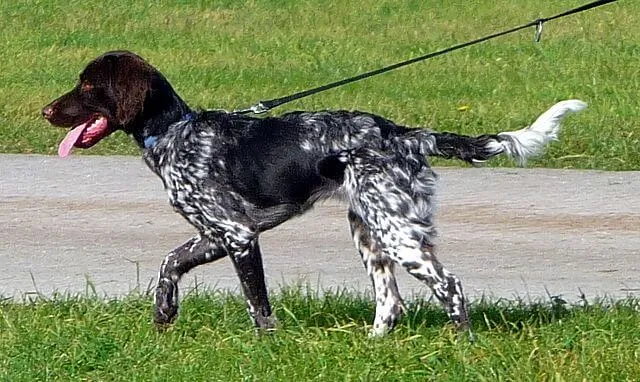
Small Munsterlander
Health grade BThe Kleiner Münsterländer is an intelligent, extremely water-loving, and passionate Vorstehhund (pointing dog)—bred for versatile hunting, where it tracks game, points, and retrieves tirelessly from any terrain.
- Height50–56 cm
- Weight18–28 kg
- Life expectancy12–14 yrs
- Puppy price1,500–2,500 €
- Energy4/5
The Essentials at a Glance
The Kleiner Münsterländer is an intelligent, extremely water-loving, and passionate Vorstehhund (pointing dog)—bred for versatile hunting, where it tracks game, points, and retrieves tirelessly from any terrain.
- Health grade B: The Kleiner Münsterländer is a robust hunting breed with a generally low genetic disease burden.
- You want to engage in demanding nose work or Apportierhund (retrieving dog) tasks daily—dummy training or tracking are not just hobbies for this dog, but a fundamental genetic need.
- You are outdoors in all weather conditions and ideally provide regular access to water, meadows, and vast forests.
- You expect it to gently turn away at the sight of flushing game—it was bred to switch into work mode explosively at exactly that moment.
Is the Small Munsterlander right for you?
At a glance
Small Munsterlander overview
The essentials — key facts, traits, and health priorities — before you dive deeper.
Health grade
Relative to other breeds
S
A
B
C
D
E
Very healthyHigher risk
Solid — a handful of items a good breeder watches.
See full health info & tests →
Note: This health overview is AI-assisted and editorially reviewed. It is for orientation only and does not replace veterinary advice.
Lifespan
12–14 yrs
Height
50–56 cm
Weight
18–28 kg
Practical
- Puppy price: 1,500 – 2,500 €
- Coat: Medium length, dense, weatherproof, with a dense undercoat
- Origin: Germany
Temperament
Energy
Trainability
Family fit
With kids
Daily life
Care effort
Shedding
Barking
City-friendly
Guard instinct
What matters most
Especially with a Small Munsterlander, choosing the right breeder is the single most important decision you'll make. Serious breeders consistently test the parents for inherited conditions, prioritize healthy early socialization, and stay accountable long after handover. A cheap puppy without health screening tends to become the most expensive dog later on.
See HonestDog breeder standards →Colors & coat
What colors does the Small Munsterlander come in?
The coat colors you will see in Small Munsterlander litters — including which ones fall outside the breed standard and which carry genetic risk.
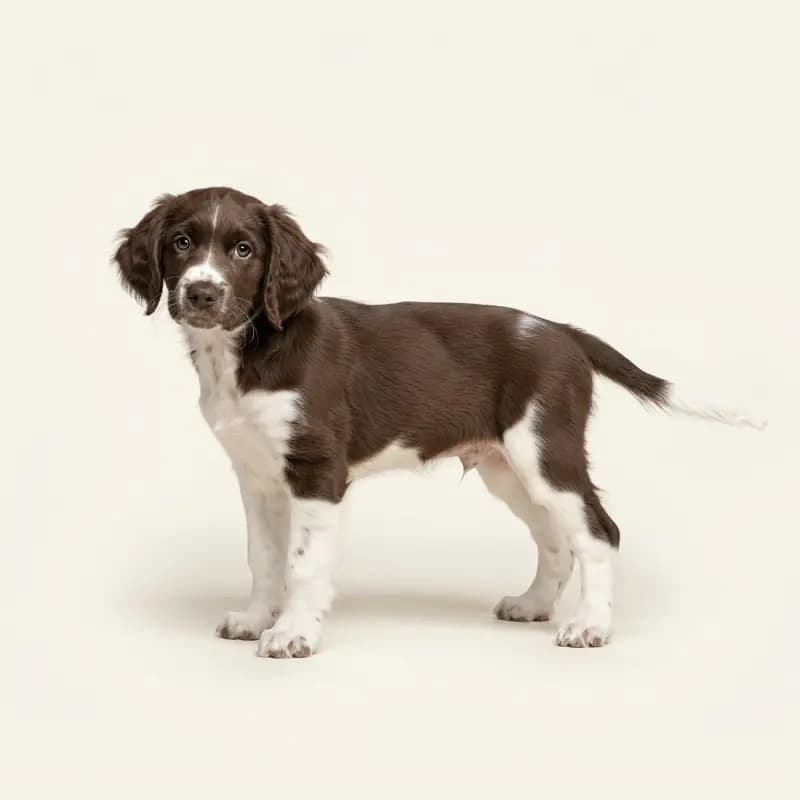
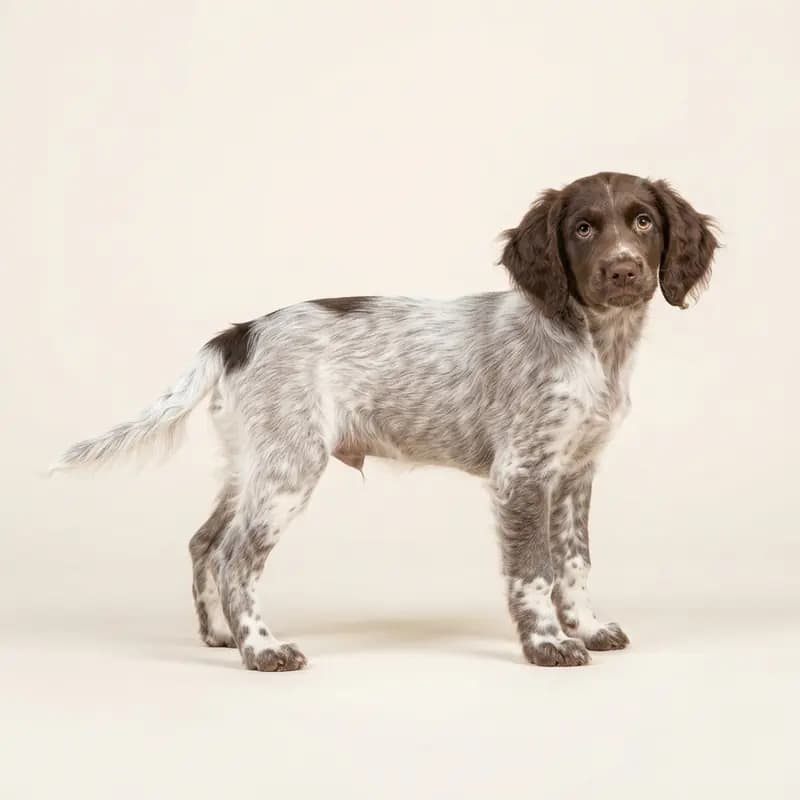
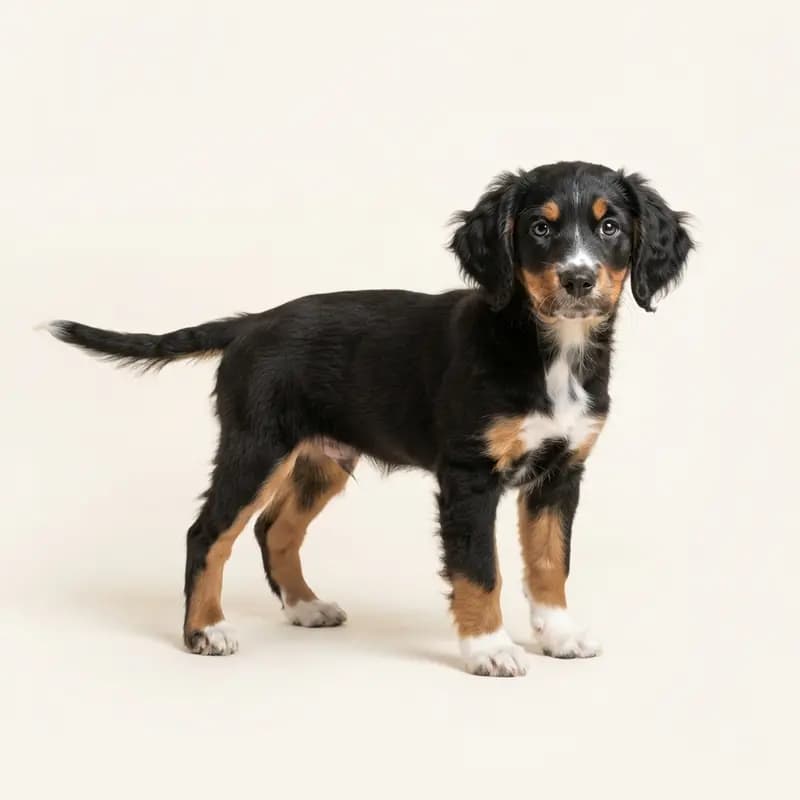
Eye colors
 Brown
Brown
Coat type
 Medium
 Double coat
Is the Small Munsterlander right for you?
The Kleiner Münsterländer is an intelligent, extremely water-loving, and passionate Vorstehhund (pointing dog)—bred for versatile hunting, where it tracks game, points, and retrieves tirelessly from any terrain.
Perfect for you if:
- You want to engage in demanding nose work or Apportierhund (retrieving dog) tasks daily—dummy training or tracking are not just hobbies for this dog, but a fundamental genetic need.
- You are outdoors in all weather conditions and ideally provide regular access to water, meadows, and vast forests.
- You lead with love, but with absolute consistency and patience, to channel its enormous hunting instinct into controllable paths from an early age.
- You are looking for a loyal, affectionate companion who relaxes closely with its family at home once it has finished its job outside.
Less ideal if:
- You expect it to gently turn away at the sight of flushing game—it was bred to switch into work mode explosively at exactly that moment.
- You are just looking for a companion for jogging or cycling—pure physical exercise does not even begin to tire out this highly specialized mind.
- You want to leave it alone for hours often, because without its humans and without a task, it quickly finds its own, often destructive, occupations.
The real vibes check
A Kleiner Münsterländer in the water or on a trail is pure magic—but in everyday life, it means constant attention. It is not a dog that strolls dreamily beside you on walks, but a highly sensitive scanner that permanently searches the environment for stimuli. If you are ready to work with it outdoors instead of just taking it for a walk, you will get an unbeatable team partner.
Self-check
Would the Small Munsterlander really fit your life?
Answer 6 quick questions about your everyday life and see how well the Small Munsterlander fits you — including an honest cost estimate per month, per year, and across the dog's lifetime.
Fit checkCost estimateRisk dice
Takes about 1 minute · free & anonymous
Breed Profile
The Small Münsterländer is a medium to large hunting dog and belongs to FCI Group 7 (pointing dogs). There is no distinction between performance and show lines as this breed is bred primarily for its hunting abilities. The Small Münsterländer is a versatile dog that can act as both a hunting companion and a loving family dog. He is known for his energy, endurance and enthusiasm for work.
All measurements in detail
- Height
- 50 - 54 cm (Female), 52 - 56 cm (Male)
- Weight
- 18 - 25 kg (Female), 20 - 28 kg (Male)
- Life Expectancy
- 12 - 14 yrs
- Character
- Intelligent, eager to work, friendly
- Coat
- Medium length, dense, weatherproof, with a dense undercoat
- Coat Color
- Brown mold or brown-white, where the basic color is brown
- Price
- 1500 - 2500 €
Character & Temperament
The Small Münsterländer is a balanced dog with a friendly and lovable character. He is intelligent, alert and eager to work, making him an excellent hunting partner. This breed is very people-oriented and shows a strong bond with their family. They are loving, patient, and child-friendly, making them a good choice for families with children. The Small Münsterländer is a versatile dog that is happy both as a hunting companion and as a family dog. He has a strong passion for hunting and shows strong hunting and prey-catching behavior. It is important to channel this instinct and provide the dog with sufficient mental and physical activity. This breed can easily learn to stay alone if it is trained to do so early on. The Small Münsterländer is a vigilant breed and tends to be protective of its family. He barks to alert you to unusual noises or potential dangers. However, with proper socialization, he can be friendly towards strangers.
| Trainability Bred to work closely alongside humans. | Highly trainable |
| Watchfulness Reports unusual activity but stays controlled. | Moderate |
| Openness to Strangers Warms up quickly and is generally welcoming. | Friendly |
| Hunting or Herding Drive This drive runs deep — no amount of training eliminates it. | Very strong |
Fun Fact!
The Small Münsterländer is one of the oldest German hunting dog breeds and has a long tradition as a reliable companion for hunters.
What Awaits You
The little Münsterländer is a passionate hunter who needs appropriate exercise and activity.
Housing & Care
The Small Münsterländer can thrive in both rural and urban areas. It is important that he receives sufficient exercise and mental stimulation. This breed needs a lot of exercise ection and space to release their energy. Ideally, the Small Münsterländer should have access to a fenced yard where he can run around and play. The Small Münsterländer is known for its good tolerance with children. With their loving and patient nature, they can be a great companion for families. Nevertheless, children should treat the dog with respect and learn how to handle it properly. Early socialization and positive experiences with children are important to ensure a harmonious relationship. Compatibility with other pets, including cats, may vary. A careful introduction and slow integration into living together can help avoid conflicts. The Small Münsterländer can learn to live peacefully with other pets, especially if he is used to it early on.
- Family Friendly
Lives for its family — the born family companion.
Ideal family dog - Child Friendly
Extraordinarily patient and loving — a true family dog.
Excellent with children - Dog Friendly
Actively enjoys the company of other dogs.
Dog-friendly - City Friendly
City-appropriate with enough exercise and stimulation.
Manageable in cities
Owning a dog is a privilege, but it's also a real responsibility. Before you bring one into your life, be honest with yourself about the commitment it takes.
Training & Education
The Small Münsterländer is intelligent and eager to learn. He has a strong willingness to work and wants to please his people. It is important to keep him mentally and physically occupied to give him something meaningful to do. This breed is well suited to various sports such as agility, mantrailing and retrieving. There is a risk that the Small Münsterländer will become a ball junkie. Ball games should therefore be used carefully to avoid over-occupation or obsession. It is important to offer the dog other activities to keep him mentally and physically occupied. Consistent and positive training is crucial to having a well-behaved Small Münsterländer. It is important to start training early and set clear rules and boundaries. The Small Münsterländer is a hunting dog and can tend to act out his hunting instincts. Solid basic obedience training and the promotion of frustration tolerance and impulse control are important in order to be able to manage him well in everyday life.
Nutrition & Care
The Small Münsterländer's diet should be balanced and tailored to the dog's individual needs. High-quality dog food that contains all the necessary nutrients is recommended. The amount of food should be adjusted according to the dog's age, weight and activity level. The Small Münsterländer has a medium-long, dense and weatherproof coat. It is recommended to brush him regularly to remove loose hair and prevent tangles. This breed has a dense undercoat that protects it from cold and moisture. Increased shedding may occur during shedding. Ears should be checked and cleaned regularly to prevent infections. The Small Münsterländer can adapt well to different climatic conditions. Thanks to its weatherproof fur, it can live well even in colder regions. However, in hot summers it may be necessary to provide it with cooler areas and sufficient water.
| Care Level Minimal effort — occasional brushing and bathing. | Low-maintenance |
| Exercise Needs Needs several hours of serious exercise every day. | Very active |
| Shedding Hair everywhere, always — no white clothing survives. | Very heavy |
| Trainability Bred to work closely alongside humans. | Highly trainable |
Our experts are still reviewing this information. Spotted something wrong? Email us at info@honestdog.de.
Health & hereditary diseases
Health
B
Solid
Health grade
The Kleiner Münsterländer is a robust hunting breed with a generally low genetic disease burden. Hip dysplasia (HD) is successfully managed through mandatory health tests to minimize the risk of joint issues. Additionally, attention should be paid to ectopic ureters (C-ureter), a congenital malformation of the urinary tract, which is increasingly being monitored in controlled breeding programs.
Grade is relative to other breeds — AI-assisted and editorially reviewed.
In daily life this can mean
With joint-friendly rearing, sufficient hydration for healthy urinary tracts, and regular eye check-ups, your dog will usually remain active and fit for a long time.
The breeder's role
Reputable breeders have the hips and eyes of the parent animals checked and pay attention to genetic metabolic tests to reduce avoidable risks in the lineage.
Note: This health overview is AI-assisted and editorially reviewed. It is for orientation only and does not replace veterinary advice.
No Health Tests Available
No specific health tests are currently available for this breed.
Costs & where to find one
How much does a Small Munsterlander cost?
A Small Munsterlander costs around ~€180 per month (€90 – €340, depending on your setup). The first year adds up to roughly ~€4,970 including purchase, equipment and puppy school; across the dog's life (13 years) it comes to about ~€30,710.
With surgery cover, running costs come to about ~€170 per month — in return, your share of a major operation drops from several thousand euros to around 20 percent.
Per month
~€180
In the first year
~€4,970
Across the dog's life
~€30,710
Purchase from a breeder: €1,500 – €2,500
Estimate at a mid-range setup (suburban, dry food, 1–2 hours of daily exercise), average German prices, as of July 2026.
Calculate your personal costs1-minute self-check with your own answers
Looking for a Small Munsterlander?
Appearance, variants & origin
History
The full history
The Small Münsterländer has its origins in western Münsterland in Germany and is an old breed that was already known in the 19th century. It was designed to work when hunting game birds such as pheasants and partridges. The breed was first recognized in 1912 and has since proven itself as a reliable hunting dog.
Original Use
The Small Münsterländer was bred as a versatile hunting dog for field and water hunting.
Origin
Germany
Date
1800
Owner experiences
What owners say about the Small Munsterlander
Joachim B., Jäger aus Niedersachsen (Rüde, seit 2021)
Als aktiver Jäger habe ich mir meinen Rüden bewusst für die Arbeit im Wald- und Feldrevier geholt. Ich kann nur bestätigen: Der Kleine Münsterländer ist ein absolut genialer, leidenschaftlicher Jagdpartner. Er ist extrem intelligent, lernt schnell und zeigt bei der Arbeit einen unbändigen Finderwillen.
Aber man darf die Rasse außerhalb des Jagdbetriebs nicht unterschätzen. Wenn man hier nicht von Anfang an mit eiserner Konsequenz und einem klaren Ausbildungskurs gegensteuert, hat man schnell eine 'Katastrophe' an der Leine, die beim kleinsten Reiz das Weite sucht. Gehorsam ist bei dieser Rasse das A und O, um den Jagdtrieb kontrollierbar zu machen.
Im Haus und bei der Familie ist er dagegen ein absoluter Schatz – anhänglich, verschmust und sehr menschenbezogen. Man muss sich nur im Klaren darüber sein, dass dieser freundliche Charakterzug eine konsequente Führung im Alltag voraussetzt.
Sabine K., Halterin aus Hessen (Hündin, 4 Jahre)
Wir führen unsere Hündin nicht jagdlich, was im Vorfeld für viele Diskussionen gesorgt hat. Mein Fazit nach vier Jahren: Ja, es geht, aber der Kleine Münsterländer ist definitiv kein Hund für die Couch! Sie braucht täglich reichlich Bewegung und vor allem geistige Auslastung. Wir machen intensiv Mantrailing und Apportiertraining, was sie absolut liebt und braucht, um ausgeglichen zu sein.
Ihr Wesen ist traumhaft – sie ist unglaublich treu, anhänglich und versteht sich super mit den Kindern. Allerdings merkt man ihren ausgeprägten Jagdtrieb bei jedem Spaziergang im Wald. Ohne Schleppleine und vorausschauendes Training läuft da gar nichts.
Ein wichtiger Tipp für alle Interessenten: Kauft bitte nur aus einer sehr guten, kontrollierten Zucht. In Foren liest man leider immer wieder von rassetypischen Problemen wie Hüftdysplasie (HD) oder Spondylose, wenn die Elterntiere nicht sauber untersucht wurden. Unsere Hündin ist zum Glück fit, aber das Risiko bei 'Vermehrern' ist einfach zu groß.
Christian M., Halter aus Köln (Rüde, 2 Jahre)
Mein zweijähriger Rüde fordert mich im Alltag ordentlich heraus. Er ist im Haus eigentlich ein sehr lieber und ruhiger Hund, aber er bringt eine enorme Portion Energie und leider auch eine gewisse Ungeduld mit. Vor allem in der Stadt oder beim Warten an roten Ampeln fängt er schnell an zu winseln, zu jaulen und sich vor Stress zu kratzen – er will einfach immer in Bewegung bleiben und arbeiten.
Die Erziehung war bisher deutlich anstrengender als bei meinen vorherigen Hunden. Die Rasse ist zwar extrem gelehrig und will gefallen, aber sie neigen auch dazu, nervös oder hibbelig zu werden, wenn sie nicht von klein auf lernen, Frustration auszuhalten und zur Ruhe zu kommen.
Man muss sehr viel Zeit in die Impulskontrolle stecken. Wer einen unkomplizierten 'Nebenbei-Hund' sucht, wird mit einem Münsterländer wahrscheinlich nicht glücklich. Man bekommt hier ein echtes Arbeitstier, das klare Grenzen und viel Beschäftigung fordert.
Paraphrased from real owner reports
Loading owner stories
Community Posts
FAQ & more
Frequently asked questions about the Small Munsterlander
Is a Small Munsterlander the right dog for me?
The Small Munsterlander is an active dog that needs plenty of exercise and mental stimulation. Research the temperament, grooming needs, and space requirements before deciding.
How long does a Small Munsterlander live?
The average life expectancy of a Small Munsterlander is 12-14 years. With proper care and regular vet visits, your dog can live a long, healthy life.
How much grooming does a Small Munsterlander need?
Small Munsterlander grooming requirements include regular brushing, nail trimming, and dental care. HonestDog provides detailed grooming tips for every breed.
Is a Small Munsterlander good for families with children?
The Small Munsterlander can be a great family dog. Proper training and socialization are key. HonestDog provides family suitability information for every breed.
What colors does the Small Munsterlander come in?
The Small Munsterlander comes in these colors: Brown and white, Roan, Tricolor.
Loading related articles
Are you a Small Munsterlander breeder?
Showcase your kennel on HonestDog and reach families searching for a responsibly bred Small Munsterlander.
Why HonestDog?
What makes HonestDog different from other platforms
Full transparency
We lay out what we have: who the breeder is, how they work, and any health records they've uploaded. So you can judge for yourself.
Responsible breeding, assured
Every breeder on HonestDog has their identity and documents checked before their profile goes live. Health records they upload are shown on the profile, so you can see exactly what has been tested.
Trust and verification
We verify breeders and buyers alike, so every conversation happens on solid ground. It's a new standard of trust in dog breeding.
Less hassle, more time
We've already checked the breeders' documents and gathered the details, so you can skip the endless research and focus on finding the right puppy for your family.
Our Mission

We connect dog lovers with responsible breeders and shelters to ensure every dog finds the perfect home.
Founded by dog enthusiasts, our platform focuses on ethical dog breeding and adoption.
Why HonestDog?
We connect you with vetted breeders and shelters so you can find your — your new companion — with confidence.
Vetted Partners
Only verified breeders and shelters — for a safe start.
Highest Standards
Every animal's health and wellbeing is our top priority.
Guides & Resources
Guides, checklists, and breed profiles — so you can make a well-informed decision.