Loading breed
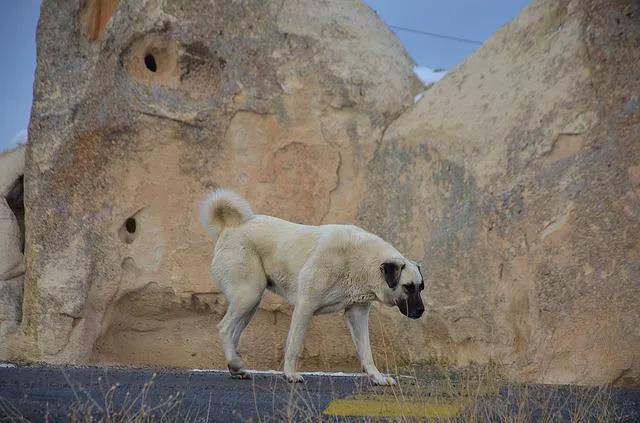
Kangal Shepherd Dog
Health grade BThe Kangal is an imposing, incorruptible, and self-sufficient Herdenschützer (livestock guardian dog) — bred to protect sheep flocks in the vast expanses of Anatolia from predators completely on its own. It decides for itself who poses a threat and does not wait for your command to act.
- Height65–78 cm
- Weight41–66 kg
- Life expectancy12–15 yrs
- Puppy price2,000–3,500 €
- Energy4/5
The Essentials at a Glance
The Kangal is an imposing, incorruptible, and self-sufficient Herdenschützer (livestock guardian dog) — bred to protect sheep flocks in the vast expanses of Anatolia from predators completely on its own. It decides for itself who poses a threat and does not wait for your command to act.
- Health grade B: The Kangal is an extremely robust working breed, but like almost all giant breeds, it faces challenges with hip dysplasia (HD) and elbow dysplasia (ED).
- You live in a rural area on a sprawling, extremely secure, and high-fenced property with no direct neighbors near the fence.
- You appreciate a dog that thinks and acts independently rather than one that executes commands on a loop.
- You live in a densely populated suburb or frequently receive spontaneous visitors — its territory is simply off-limits to strangers.
Is the Kangal Shepherd Dog right for you?
At a glance
Kangal Shepherd Dog overview
The essentials — key facts, traits, and health priorities — before you dive deeper.
Health grade
Relative to other breeds
S
A
B
C
D
E
Very healthyHigher risk
Solid — a handful of items a good breeder watches.
See full health info & tests →
Note: This health overview is AI-assisted and editorially reviewed. It is for orientation only and does not replace veterinary advice.
Lifespan
12–15 yrs
Height
65–78 cm
Weight
41–66 kg
Practical
- Puppy price: 2,000 – 3,500 €
- Coat: Short, dense, with a thick undercoat
- Origin: Türkiye
Temperament
Energy
Trainability
Family fit
With kids
Daily life
Care effort
Shedding
Barking
City-friendly
Guard instinct
What matters most
Especially with a Kangal Shepherd Dog, choosing the right breeder is the single most important decision you'll make. Serious breeders consistently test the parents for inherited conditions, prioritize healthy early socialization, and stay accountable long after handover. A cheap puppy without health screening tends to become the most expensive dog later on.
See HonestDog breeder standards →Colors & coat
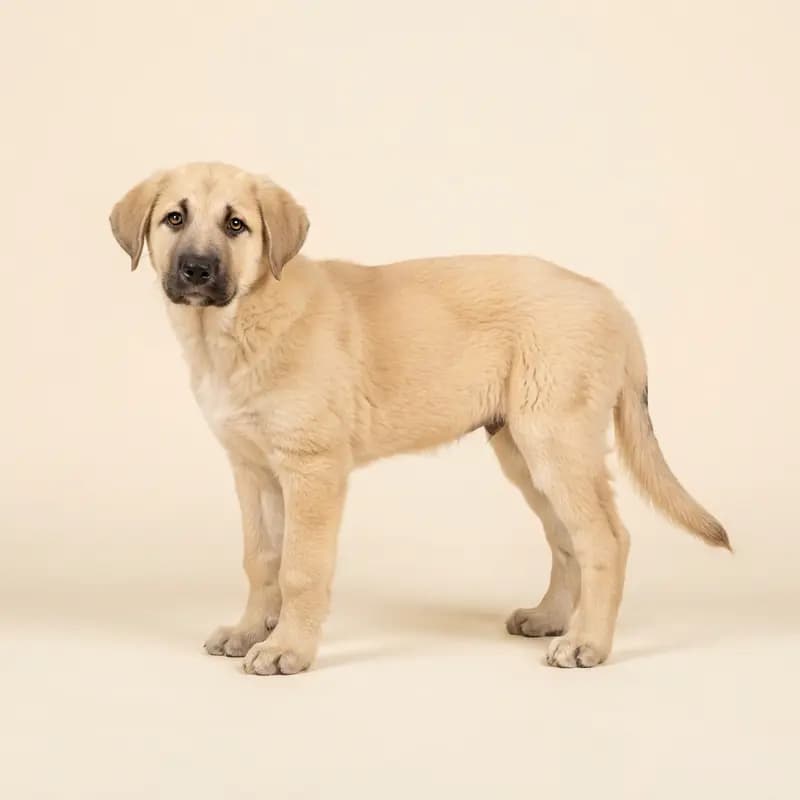
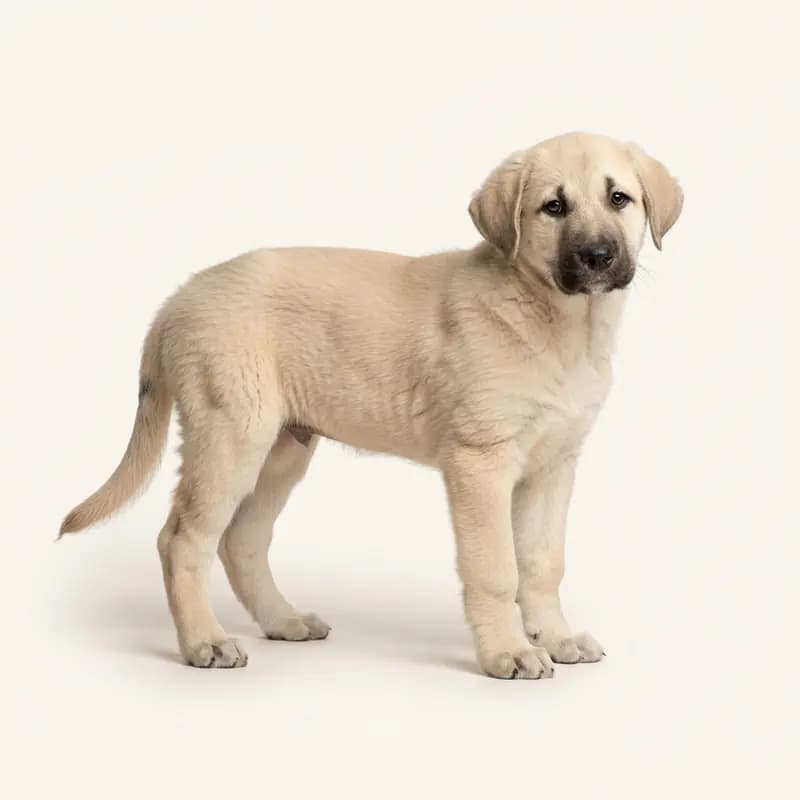
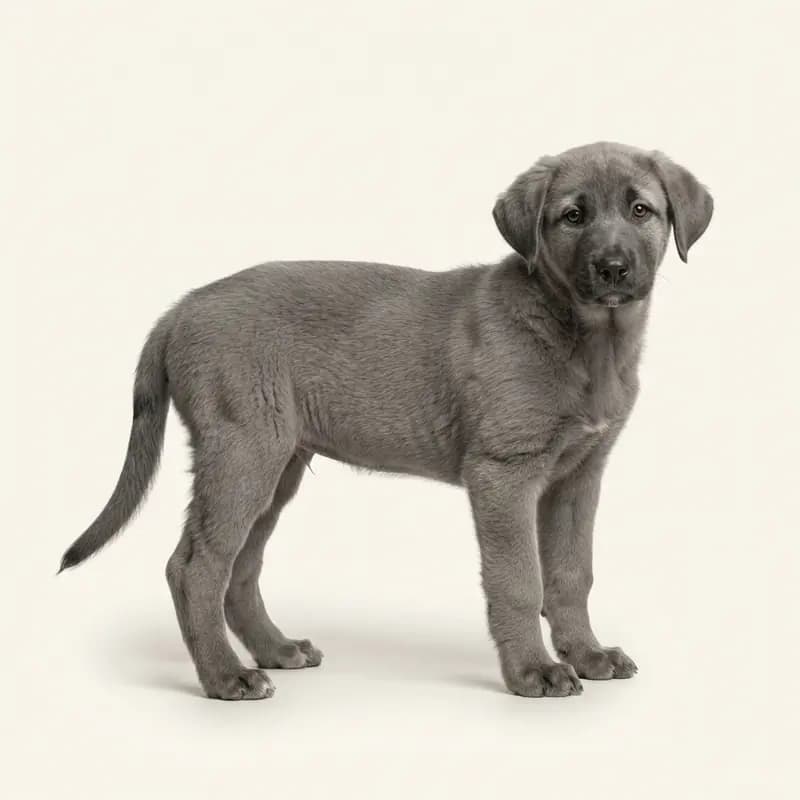
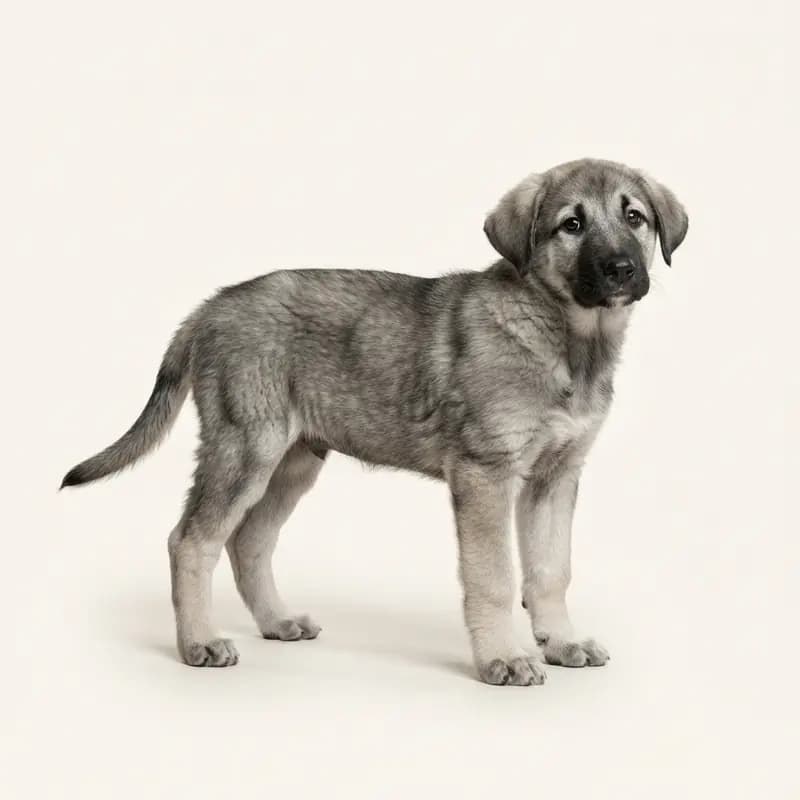
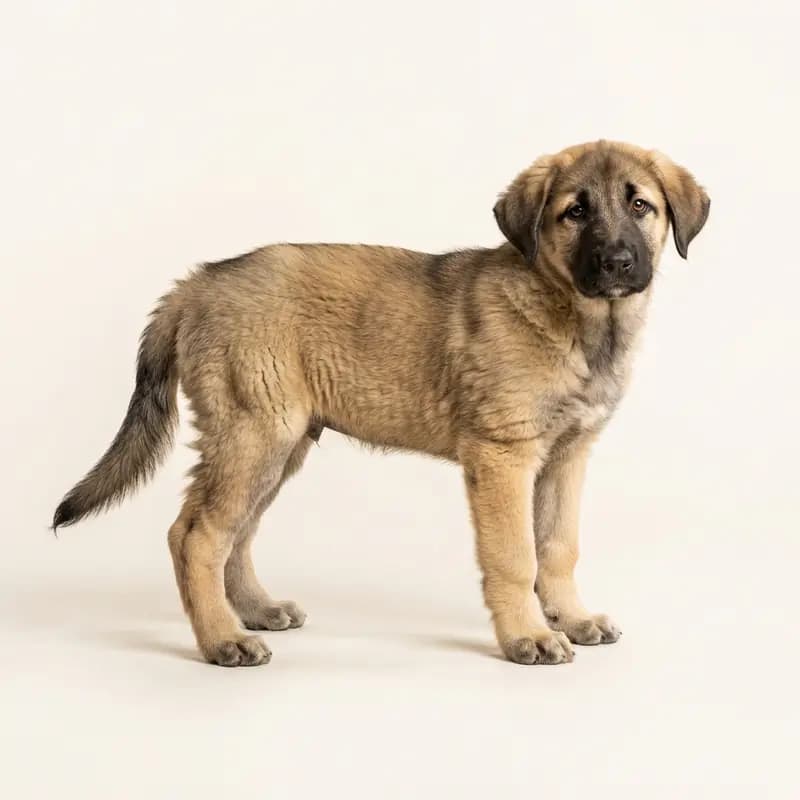
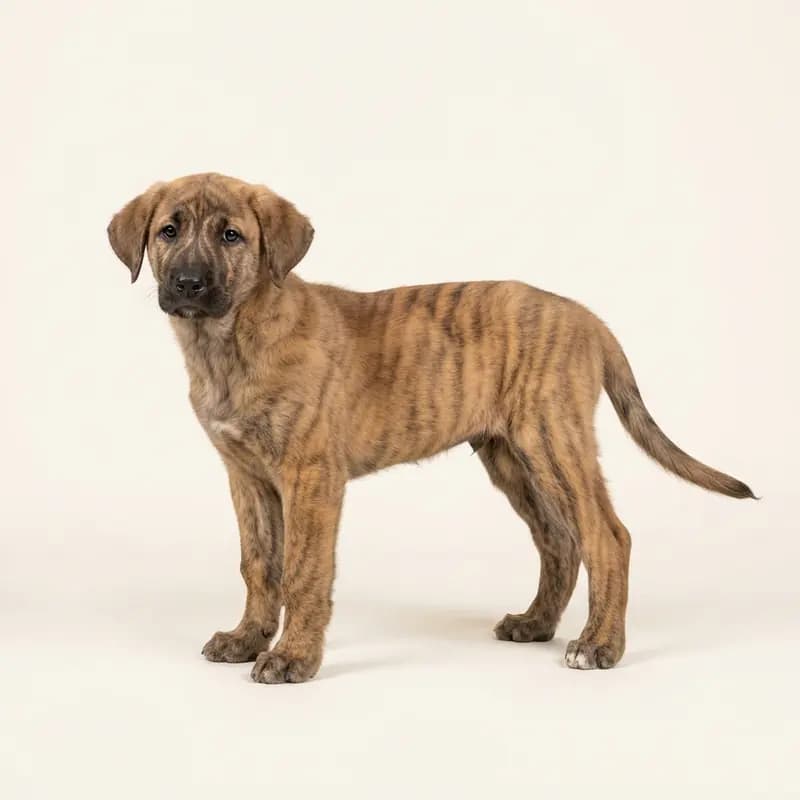
What colors does the Kangal Shepherd Dog come in?
The coat colors you will see in Kangal Shepherd Dog litters — including which ones fall outside the breed standard and which carry genetic risk.
Eye colors
 Brown
Brown Amber
Amber
Coat type
 Illustrative image
Short
 Illustrative image
Medium
 Double coat
Is the Kangal Shepherd Dog right for you?
The Kangal is an imposing, incorruptible, and self-sufficient Herdenschützer (livestock guardian dog) — bred to protect sheep flocks in the vast expanses of Anatolia from predators completely on its own. It decides for itself who poses a threat and does not wait for your command to act.
Perfect for you if:
- You live in a rural area on a sprawling, extremely secure, and high-fenced property with no direct neighbors near the fence.
- You appreciate a dog that thinks and acts independently rather than one that executes commands on a loop.
- You have deep experience with territorial breeds and radiate absolute, calm sovereignty.
- You are looking for an incorruptible, serious guardian and not an affectionate companion dog for everyday city life.
Less ideal if:
- You live in a densely populated suburb or frequently receive spontaneous visitors — its territory is simply off-limits to strangers.
- You expect classic obedience and want to do dog sports — a Herdenschützer sees absolutely no point in fetching or agility training.
- You are physically or mentally unable to hold up to 60 kilos of pure determination on a leash in an emergency.
- You want relaxed dog encounters at the local dog park — it rarely tolerates strange dogs within its radius.
The real vibes check
A Kangal is not a subordinate that follows orders, but an autonomous security chief. When it stands at the fence at night and identifies a danger, it won't ask for your permission first; it will act. You aren't buying a classic family dog, but a centuries-old institution with its own consciousness — this demands enormous respect, a great deal of space, and absolute leadership competence.
Self-check
Would the Kangal Shepherd Dog really fit your life?
Answer 6 quick questions about your everyday life and see how well the Kangal Shepherd Dog fits you — including an honest cost estimate per month, per year, and across the dog's lifetime.
Fit checkCost estimateRisk dice
Takes about 1 minute · free & anonymous
Breed Profile
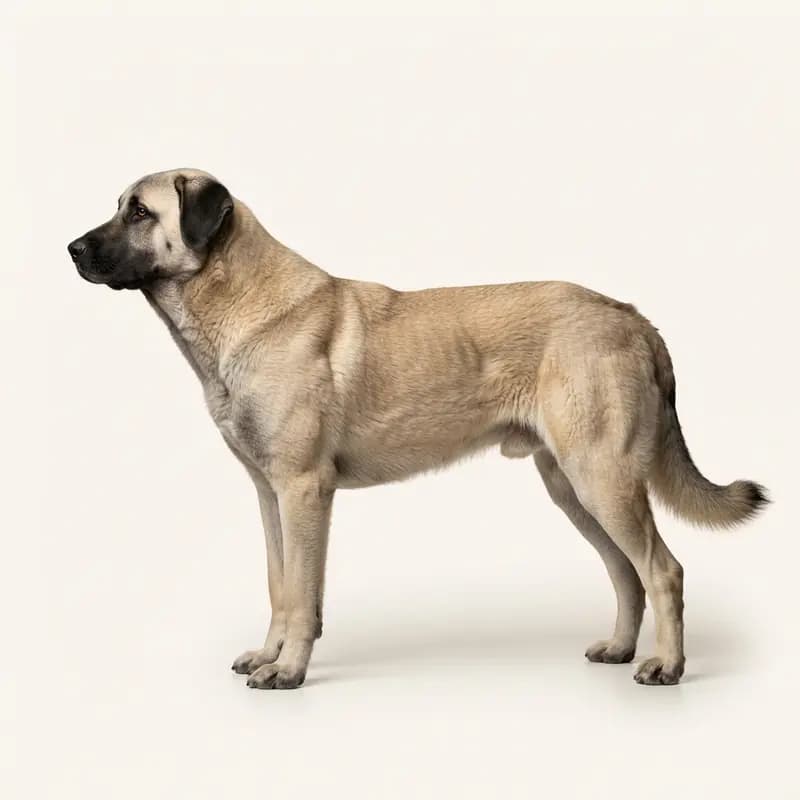
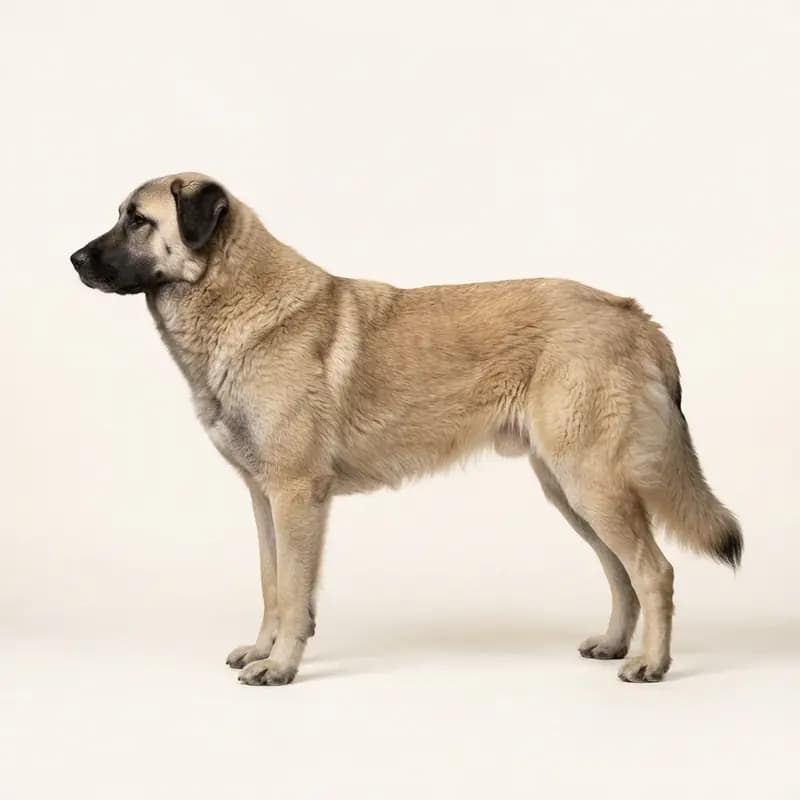
The Kangal, also known as the Kangal Shepherd, is an impressive and majestic breed of dog. With his massive head, black mask and powerful physique, he exudes authority and strength. His eyes are often a warm amber tone, giving him a penetrating look. Its short but dense coat with a thick undercoat protects it from the elements, making it an ideal working dog for different climatic conditions. He belongs to FCI Group 2, Section 2.2, the Molosser, and is categorized as a livestock guard dog. There is no specific division between show and performance lines for this breed.
All measurements in detail
- Height
- 65 - 73 cm (Female), 72 - 78 cm (Male)
- Weight
- 41 - 54 kg (Female), 50 - 66 kg (Male)
- Life Expectancy
- 12 - 15 yrs
- Character
- Loyal, vigilant, independent
- Coat
- Short, dense, with a thick undercoat
- Coat Color
- Light to dark fawn with a black mask
- Price
- 2000 - 3500 €
Character & Temperament
The Kangal is a dog with an impressive personality. His loyalty to his family is unwavering and he is a natural protector. Since it has been bred over generations as a livestock guard dog, it is in its nature to guard its territory and its flock, "be it sheep or people." One thing you should know is that the Kangal is very independent. He is programmed to make independent decisions when it comes to protecting his flock and does not always expect instructions from his owner. But this does not mean that it is not related to people. On the contrary, he often forms deep bonds with his people, but in a more reserved way. The Kangal is generally a calm dog as long as it is not challenged by intruders or danger. His temperament is even-tempered and he remains calm in most situations. However, he is also alert and has a very good perception of his surroundings. If he feels that something is wrong, he will not hesitate to act. While the Kangal is not considered particularly playful, it enjoys being challenged mentally and physically. He is intelligent and learns quickly, but can also be stubborn when he feels a task doesn't make sense. Regarding behavior towards other animals, it is important to know that the Kangal has a strong protective instinct. He doesn't tend to show strong hunting behavior, but can be territorial towards other dogs, especially if they invade his territory. Staying alone is usually not a problem for the Kangal as long as it is in a safe environment. Being a guardian by nature, he sees it as his job to guard the territory when his family is away. When it comes to living with the Kangal, it is important to know that he needs space. A large garden or property where he can move freely is ideal. It is not suitable as an indoor dog and should not be kept in a cramped environment. In addition, he needs daily physical and mental exercise to be happy and balanced. If you live in a rural area or have lots of space and are looking for a loyal, alert and independent companion, the Kangal could be the perfect dog for you. However, note that this breed requires experienced dog owners who are able to understand and manage the Kangal's natural instincts.
| Trainability Has its own ideas and will test limits. | Strong-willed |
| Watchfulness Strong territorial instinct — may actively confront intruders. | Very high |
| Openness to Strangers Careful around unfamiliar people — thaws slowly. | Cautious |
| Hunting or Herding Drive Mild interest in movement and small animals — easily managed. | Low |
Fun Fact!
In its native Turkey, the Kangal is often referred to as "Karabas," meaning "black-headed," due to the breed's distinctive black face and ears.
What Awaits You
The Kangal is a livestock guard dog that works independently. He is alert and ready to defend himself. These dogs are not suitable for beginners or for keeping in the city.
Housing & Care
The Kangal is not suitable as a city dog. It requires a lot of space and feels most comfortable in a rural setting with a large one Garden or property. Because he is a protector by nature, he can sometimes be reserved towards strangers. He is generally good with children, but due to his size and strength, interaction should be supervised. The Kangal can get along with other pets, but it is important to get him used to it from an early age, especially cats.
- Family Friendly
Loves family life and thrives in a group.
Family-oriented - Child Friendly
Takes boisterous and affectionate children in its stride.
Patient with children - Dog Friendly
Usually gets on fine with other dogs.
Generally tolerant - City Friendly
Suffers in tight urban conditions.
Needs the countryside
Owning a dog is a privilege, but it's also a real responsibility. Before you bring one into your life, be honest with yourself about the commitment it takes.
Training & Education
Kangals are intelligent and independent-minded dogs that require consistent and fair training. They should be socialized early and learn to deal with different people, animals and situations. It is important that they learn that not every visitor poses a threat. Obedience and leash training is also important as they are a large and strong breed. The Kangal has a high willingness to work and should be challenged mentally and physically, but without overworking him. Activities he may enjoy include herding, mantrailing, or protection work. It is also important that the Kangal learns frustration tolerance and impulse control in order to cope well in different environments.
Nutrition & Care
The Kangal's diet should be high quality and balanced. Due to his size and activity level, he requires a diet rich in proteins and fats to maintain his muscle and energy. It is also important to pay attention to calcium and phosphorus intake, especially in growing puppies, to prevent bone diseases. When it comes to grooming, the Kangal has a short, dense coat with a thick undercoat. This protects it from extreme weather conditions, but in Germany it can be sensitive to heat in summer. It is advisable to keep it in the shade on hot days and ensure access to fresh water. The Kangal sheds moderately, but more intensively during shedding in spring and autumn. Regular brushing, especially during these times, is recommended.
| Care Level Minimal effort — occasional brushing and bathing. | Low-maintenance |
| Exercise Needs Needs several hours of serious exercise every day. | Very active |
| Shedding Hair everywhere, always — no white clothing survives. | Very heavy |
| Trainability Has its own ideas and will test limits. | Strong-willed |
Our experts are still reviewing this information. Spotted something wrong? Email us at info@honestdog.de.
Health & hereditary diseases
Health
B
Solid
Health grade
The Kangal is an extremely robust working breed, but like almost all giant breeds, it faces challenges with hip dysplasia (HD) and elbow dysplasia (ED). Since there are no simple DNA tests for these joint issues, reviewing the X-ray results of the parent dogs is vital for prospective buyers. Additionally, you should look out for entropion (inward-turning eyelids) to avoid the need for future eye surgeries.
Grade is relative to other breeds — AI-assisted and editorially reviewed.
In daily life this can mean
You should focus on joint-friendly development and a healthy weight to relieve the strain on its heavy frame, and have the thyroid checked early if there are any sudden changes in temperament.
The breeder's role
Reputable breeders have the hips, elbows, shoulder joints, and thyroid of the parent animals tested to reduce orthopedic risks and temperament-altering diseases in the lineage.
Note: This health overview is AI-assisted and editorially reviewed. It is for orientation only and does not replace veterinary advice.
No Health Tests Available
No specific health tests are currently available for this breed.
Costs & where to find one
How much does a Kangal Shepherd Dog cost?
A Kangal Shepherd Dog costs around ~€220 per month (€120 – €430, depending on your setup). The first year adds up to roughly ~€6,260 including purchase, equipment and puppy school; across the dog's life (13.5 years) it comes to about ~€39,750.
With surgery cover, running costs come to about ~€230 per month — in return, your share of a major operation drops from several thousand euros to around 20 percent.
Per month
~€220
In the first year
~€6,260
Across the dog's life
~€39,750
Purchase from a breeder: €2,000 – €3,500
Estimate at a mid-range setup (suburban, dry food, 1–2 hours of daily exercise), average German prices, as of July 2026.
Calculate your personal costs1-minute self-check with your own answers
Looking for a Kangal Shepherd Dog?
Legal Notice
Kangal Shepherd Dog is not treated uniformly throughout Germany and may be subject to specific regulations depending on the federal state or municipality. This may include a permit or other official requirements, restricted insurance options, or a higher dog tax. Always check with your local authorities.
Full guide to restricted-breed ownership in GermanyAppearance, variants & origin
History
The full history
The Kangal has its origins in Turkey, more precisely in the region around the city of Kangal, after which it is named. It has been a valued livestock guard dog for centuries and is traditionally used to guard flocks of sheep against predators such as wolves and bears. Turkish shepherds bred the Kangal for its strength, courage and protective instinct. In Turkey, the Kangal is often considered the national dog and its breeding is subject to strict rules to maintain the purity of the breed. The breed only became more widely known internationally in the 1980s, when some Kangals were exported to other countries. The Kangal is recognized as an independent breed and is managed by many international dog associations such as the F"d"ration Cynologique Internationale (FCI) and the United Kennel Club (UKC). However, in some countries, including the United States, the Kangal is often confused with the Anatolian Shepherd Dog or considered a variant of that breed.
Original Use
The Kangal was used as a livestock guard dog to protect herds of livestock from predators.
Origin
Türkiye
Date
Antike
Owner experiences
What owners say about the Kangal Shepherd Dog
Sultan K., Halter aus Baden-Württemberg (Hündin, 14 Monate)
Wir haben uns mit unserer mittlerweile knapp 14 Monate alten Kangal-Hündin einen großen Traum erfüllt, stehen im Alltag aber vor extremen Herausforderungen. Das Spazierengehen ist für uns momentan eine absolute Qual. Sie zieht an der Leine so massiv, dass uns nach jeder Runde die Hände wehtun. Nur mit einem Geschirr klappt es halbwegs, weil sie Geschirre einfach hasst und sich dann weniger bewegt – am Halsband dagegen ist es kaum auszuhalten.
Die Grundbefehle beherrscht sie zwar, aber sie führt sie ausschließlich dann aus, wenn wir sichtbar Futter oder ein Leckerli in der Hand halten. Ohne diese direkte Belohnung schaltet sie völlig auf stur. Wir waren mit ihr auch schon in der Hundeschule, aber das war für uns leider nur rausgeschmissenes Geld, da es überhaupt nichts gebracht hat. Man darf die enorme Kraft und Eigenwilligkeit in der Pubertät dieser Rasse wirklich nicht unterschätzen.
David M., Landwirt aus Niedersachsen (zwei Kangals zur Herdensicherung, seit 2021)
Wir halten Kangals auf unserem landwirtschaftlichen Betrieb mit viel Weidehaltung, um unsere Herde vor dem Wolf zu schützen. In ihrer eigentlichen Aufgabe als Herdenschutzhunde sind sie unschlagbar, arbeiten instinktiv hervorragend und sind absolut verlässlich. Allerdings muss man sich im Klaren darüber sein, dass wir hier in Deutschland leben und die Bedingungen überhaupt nicht mit den Herkunftsländern vergleichbar sind.
Unsere größte Herausforderung im Alltag sind tatsächlich neugierige Mitmenschen. Es kommt immer wieder vor, dass Spaziergänger oder Fremde versuchen, die Hunde am Zaun zu streicheln oder sie mit Futter anzulocken, um sich mit ihnen anzufreunden. Das funktioniert bei einem echten, wachsamen Kangal natürlich überhaupt nicht und kann aufgrund ihres ausgeprägten Schutzinstinkts extrem gefährlich werden. Man muss als Halter permanent ein Auge darauf haben und das Gelände absolut sicher einzäunen.
Paraphrased from real owner reports
Loading owner stories
FAQ & more
Frequently asked questions about the Kangal Shepherd Dog
Is a Kangal Shepherd Dog the right dog for me?
The Kangal Shepherd Dog is an active dog that needs plenty of exercise and mental stimulation. Research the temperament, grooming needs, and space requirements before deciding.
How long does a Kangal Shepherd Dog live?
The average life expectancy of a Kangal Shepherd Dog is 12-15 years. With proper care and regular vet visits, your dog can live a long, healthy life.
How much grooming does a Kangal Shepherd Dog need?
Kangal Shepherd Dog grooming requirements include regular brushing, nail trimming, and dental care. HonestDog provides detailed grooming tips for every breed.
Is a Kangal Shepherd Dog good for families with children?
The Kangal Shepherd Dog can be a great family dog. Proper training and socialization are key. HonestDog provides family suitability information for every breed.
What colors does the Kangal Shepherd Dog come in?
The Kangal Shepherd Dog comes in these colors: Fawn, Cream, Grey, Wolf grey, Sable, Brindle. Colors that fall outside the breed standard are marked as such on the breed page.
Loading related articles
Are you a Kangal Shepherd Dog breeder?
Showcase your kennel on HonestDog and reach families searching for a responsibly bred Kangal Shepherd Dog.
Why HonestDog?
What makes HonestDog different from other platforms
Full transparency
We lay out what we have: who the breeder is, how they work, and any health records they've uploaded. So you can judge for yourself.
Responsible breeding, assured
Every breeder on HonestDog has their identity and documents checked before their profile goes live. Health records they upload are shown on the profile, so you can see exactly what has been tested.
Trust and verification
We verify breeders and buyers alike, so every conversation happens on solid ground. It's a new standard of trust in dog breeding.
Less hassle, more time
We've already checked the breeders' documents and gathered the details, so you can skip the endless research and focus on finding the right puppy for your family.
Our Mission

We connect dog lovers with responsible breeders and shelters to ensure every dog finds the perfect home.
Founded by dog enthusiasts, our platform focuses on ethical dog breeding and adoption.
Why HonestDog?
We connect you with vetted breeders and shelters so you can find your — your new companion — with confidence.
Vetted Partners
Only verified breeders and shelters — for a safe start.
Highest Standards
Every animal's health and wellbeing is our top priority.
Guides & Resources
Guides, checklists, and breed profiles — so you can make a well-informed decision.