Loading breed
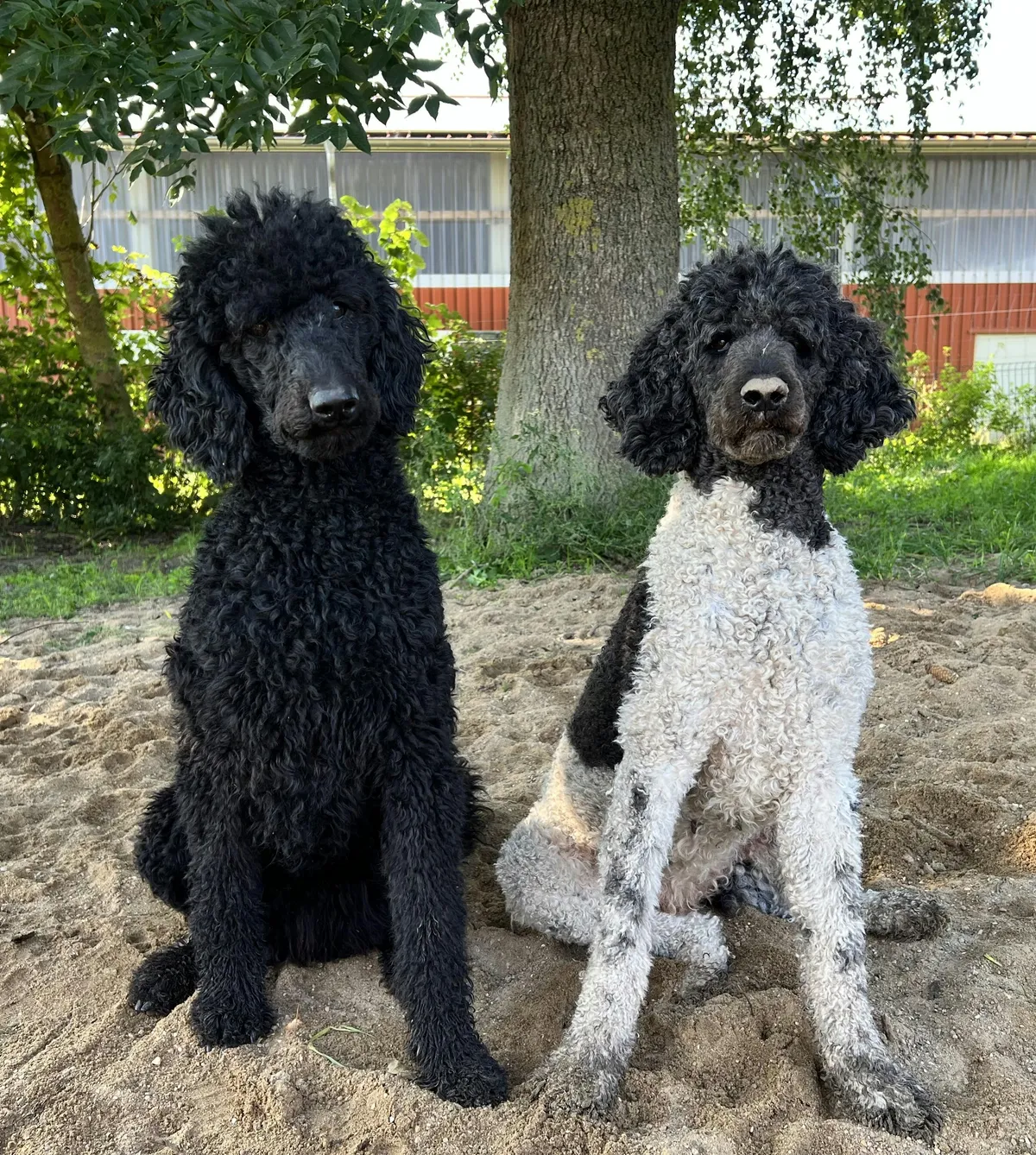
Standard Poodle
Health grade BThe Großpudel (Standard Poodle) is a highly intelligent, sensitive athlete—a true water-based Apportierhund (retrieving dog) in an elegant coat, whose work ethic and physical energy are often massively underestimated in everyday life.
- Height45–60 cm
- Weight18–28 kg
- Life expectancy12–15 yrs
- Puppy price1,500–2,800 €
- Energy4/5
The Essentials at a Glance
The Großpudel (Standard Poodle) is a highly intelligent, sensitive athlete—a true water-based Apportierhund (retrieving dog) in an elegant coat, whose work ethic and physical energy are often massively underestimated in everyday life.
- Health grade B: The Standard Poodle (Großpudel) receives a B grade because, compared to other large breeds, it has an average health risk profile that is well-manageable through targeted breeding tests.
- You are keen on real training, dummy work, or agility—this dog wants to retrieve, cooperate, and think along with you, not just trot along mindlessly.
- You are prepared to invest time and money into regular, intensive grooming in exchange for a non-shedding companion.
- You expect an undemanding, decorative couch potato—without mental tasks, this highly intelligent Apportier-Hardware will quickly find its own, usually very creative, jobs around the house.
Is the Standard Poodle right for you?
At a glance
Standard Poodle overview
The essentials — key facts, traits, and health priorities — before you dive deeper.
Health grade
Relative to other breeds
S
A
B
C
D
E
Very healthyHigher risk
Solid — a handful of items a good breeder watches.
See full health info & tests →
Note: This health overview is AI-assisted and editorially reviewed. It is for orientation only and does not replace veterinary advice.
Lifespan
12–15 yrs
Height
45–60 cm
Weight
18–28 kg
Practical
- Puppy price: 1,500 – 2,800 €
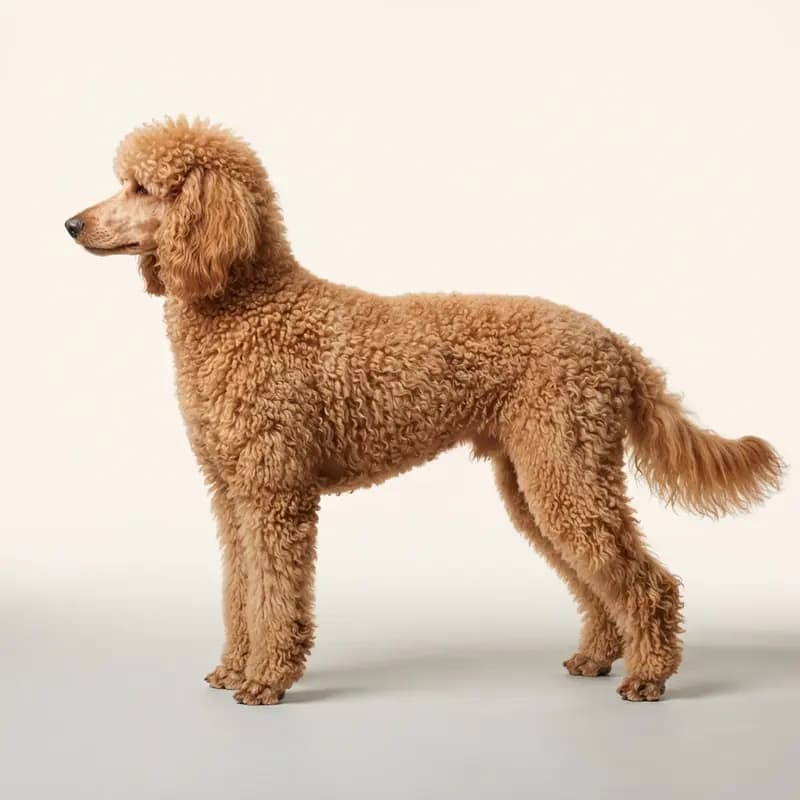
- Coat: Curly, dense, fine texture; no undercoat
- Origin: Germany, France
Temperament
Energy
Trainability
Family fit
With kids
Daily life
Care effort
Shedding
Barking
City-friendly
Guard instinct
What matters most
Especially with a Standard Poodle, choosing the right breeder is the single most important decision you'll make. Serious breeders consistently test the parents for inherited conditions, prioritize healthy early socialization, and stay accountable long after handover. A cheap puppy without health screening tends to become the most expensive dog later on.
See HonestDog breeder standards →Colors & coat
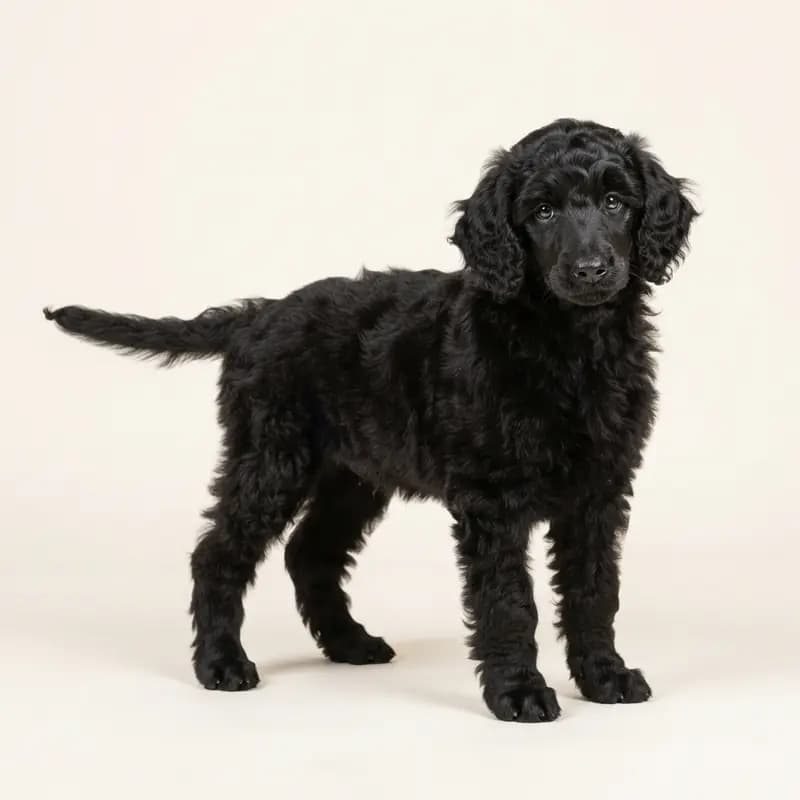
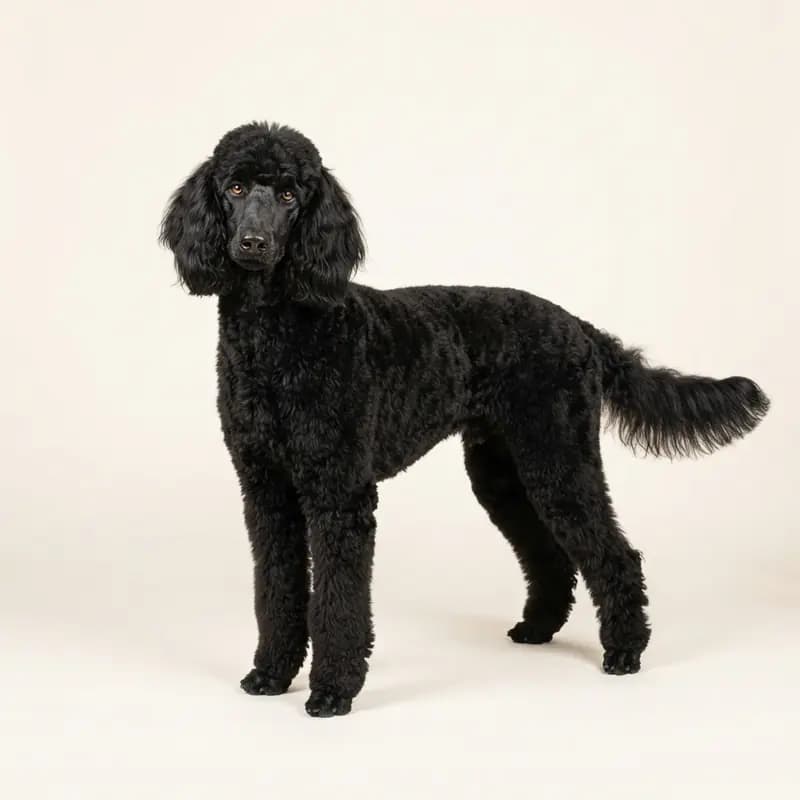
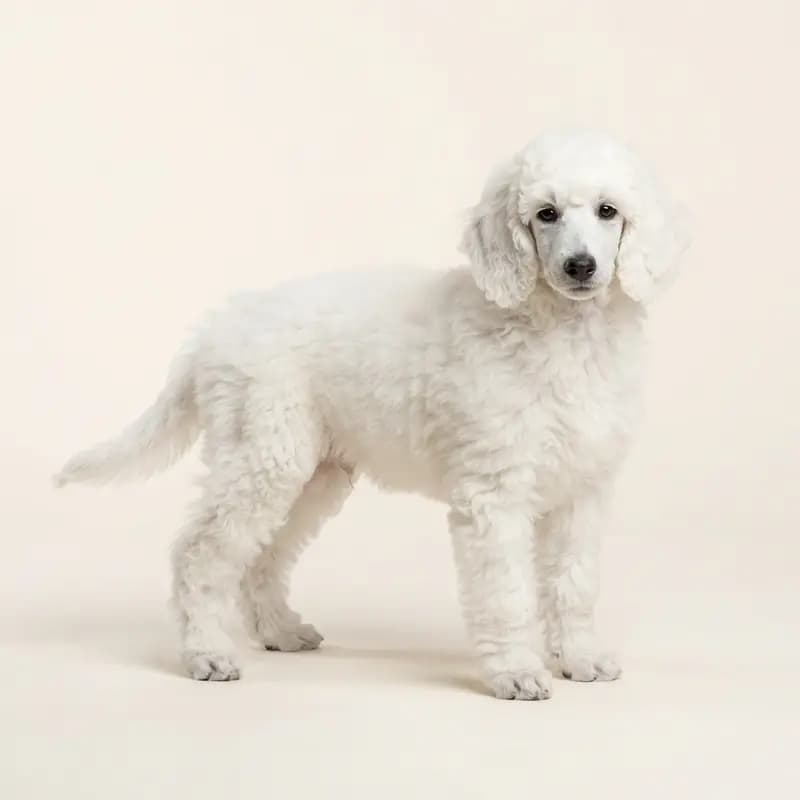
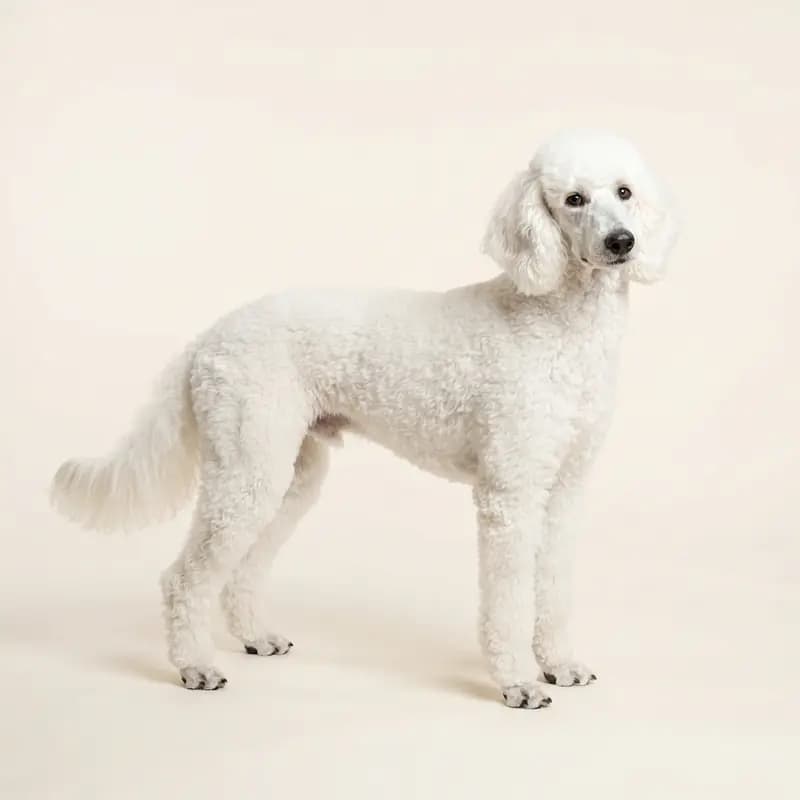
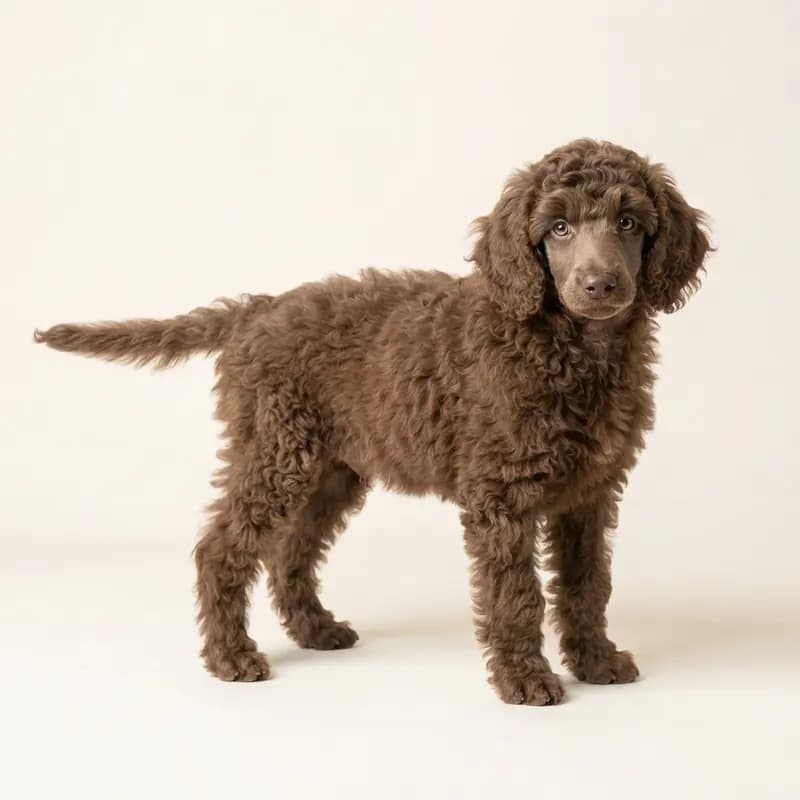
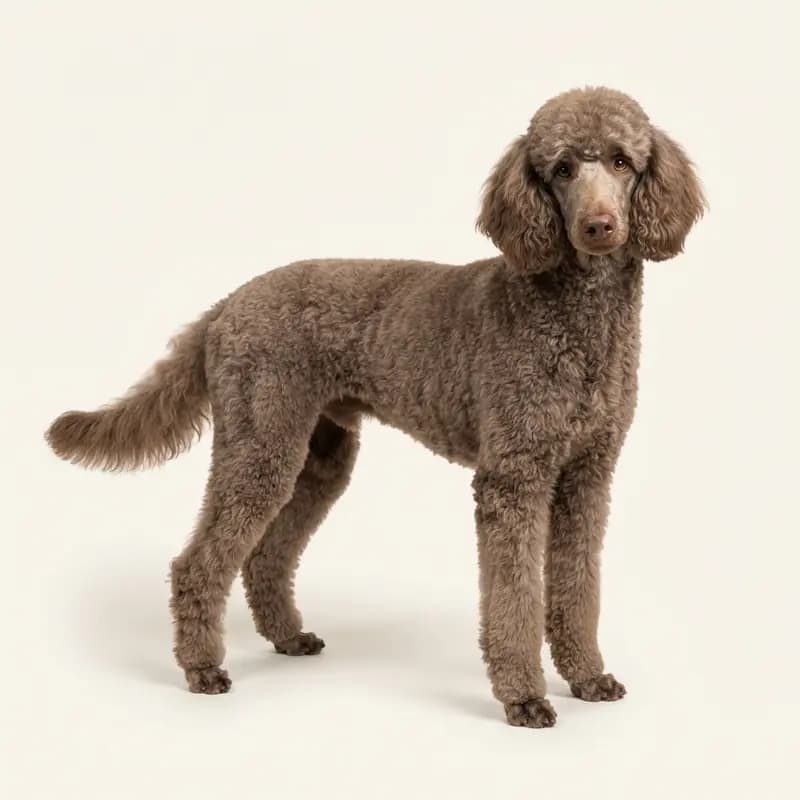
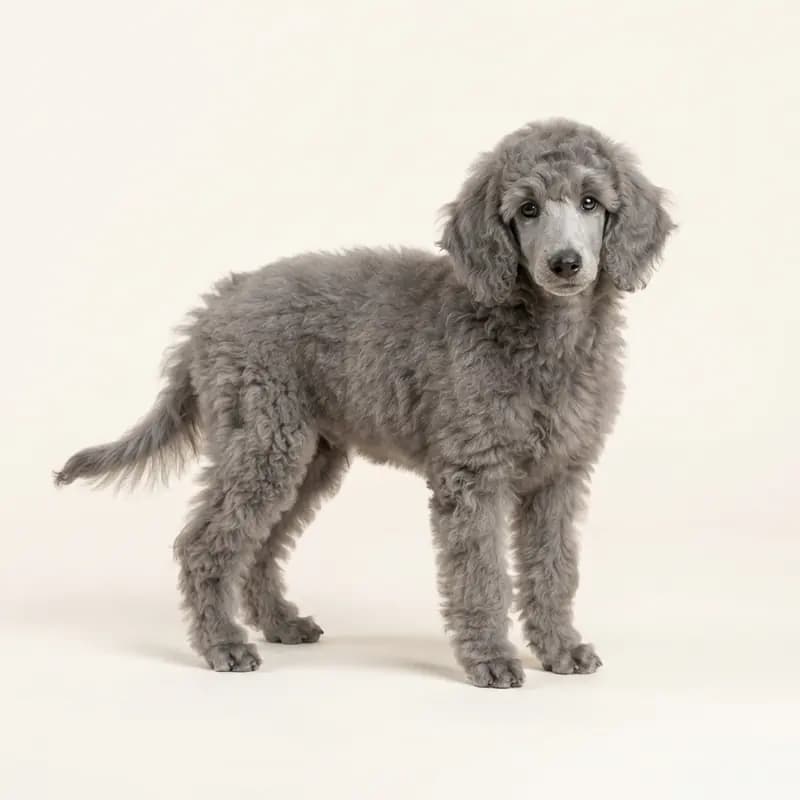
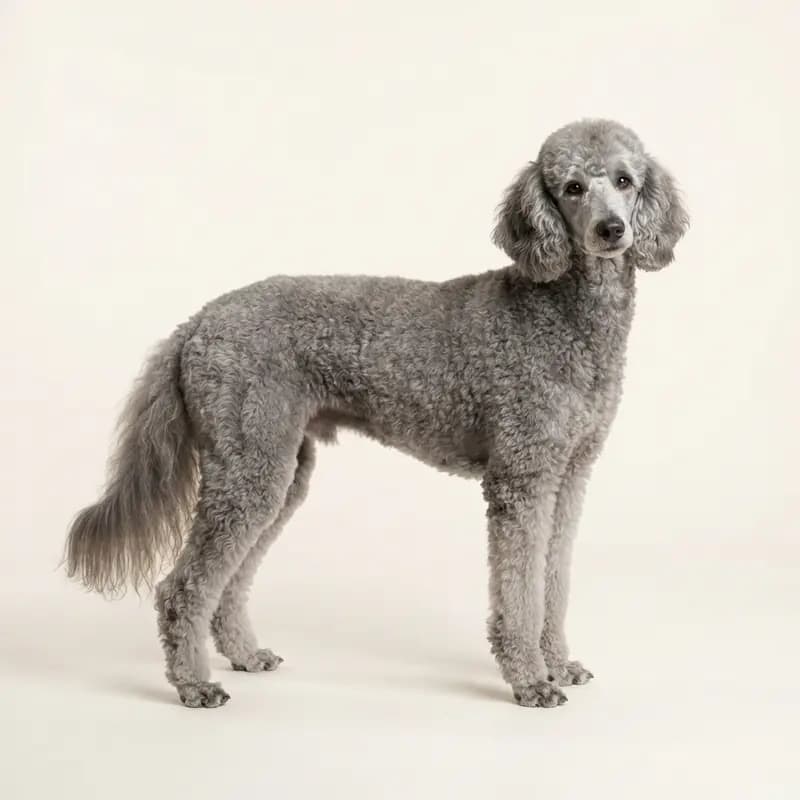
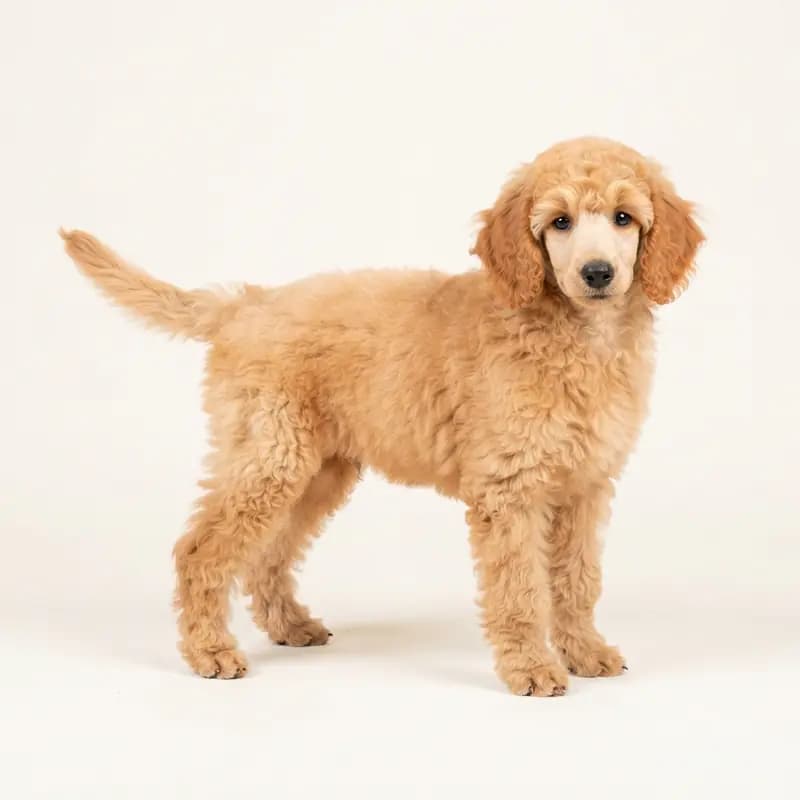
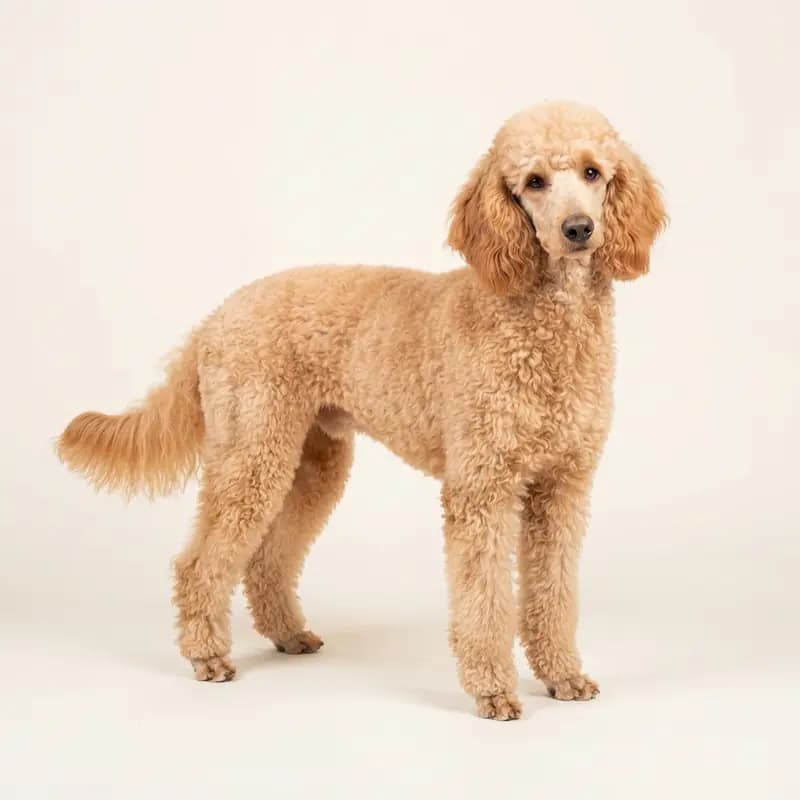
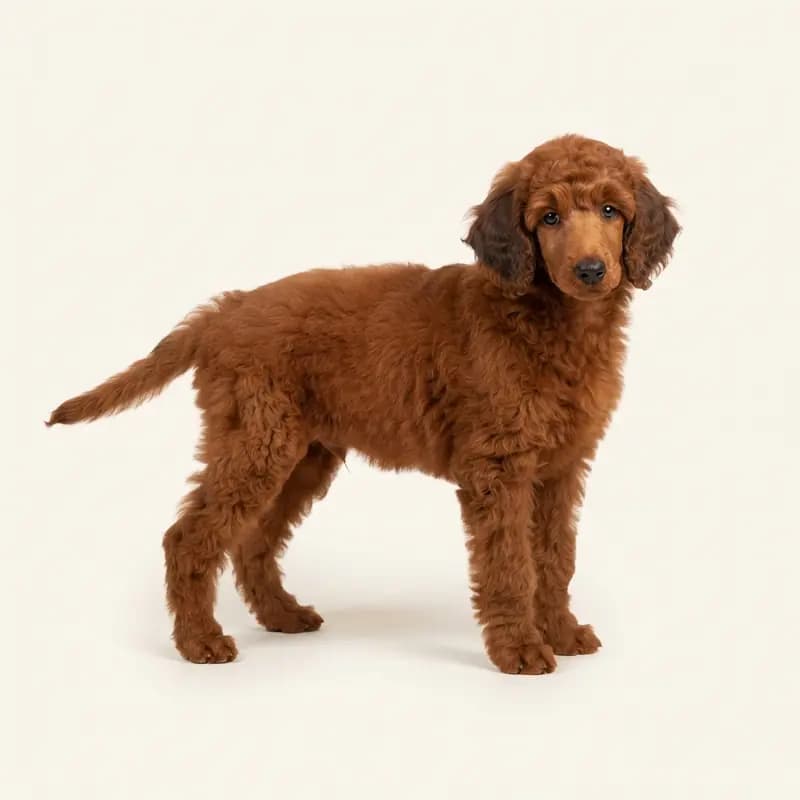
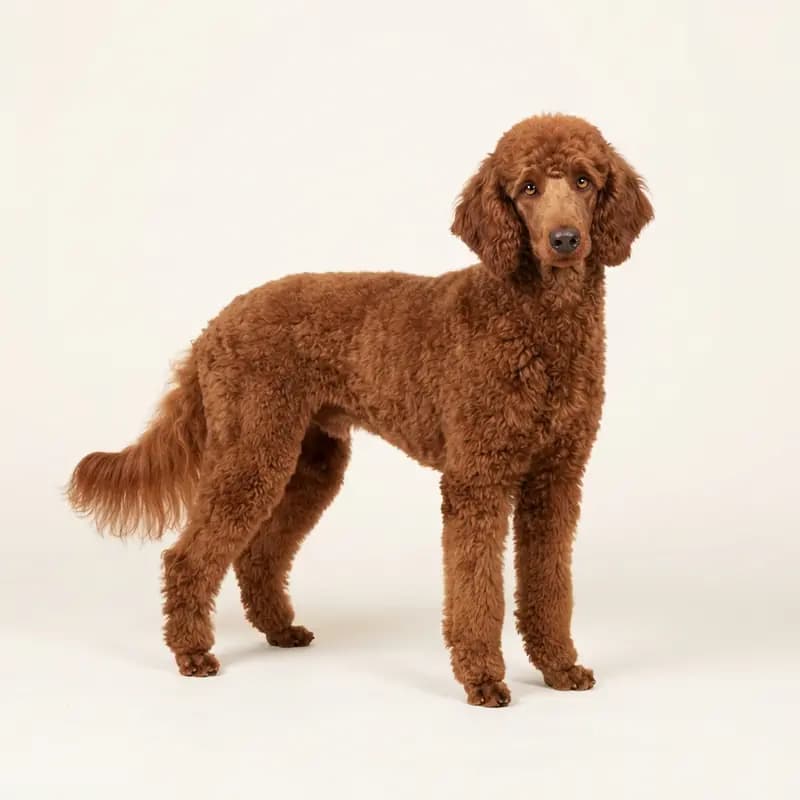
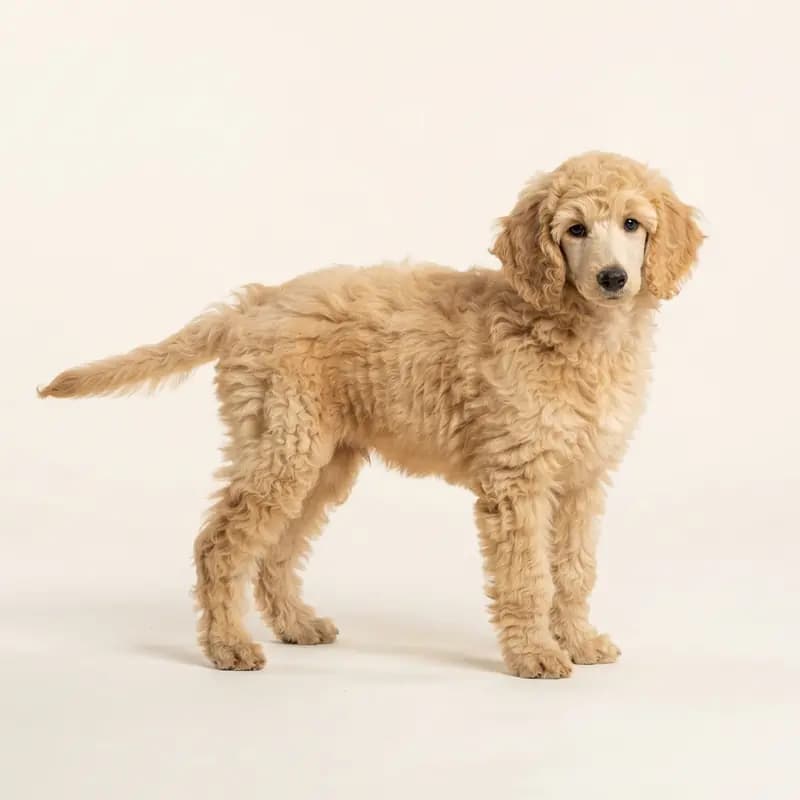
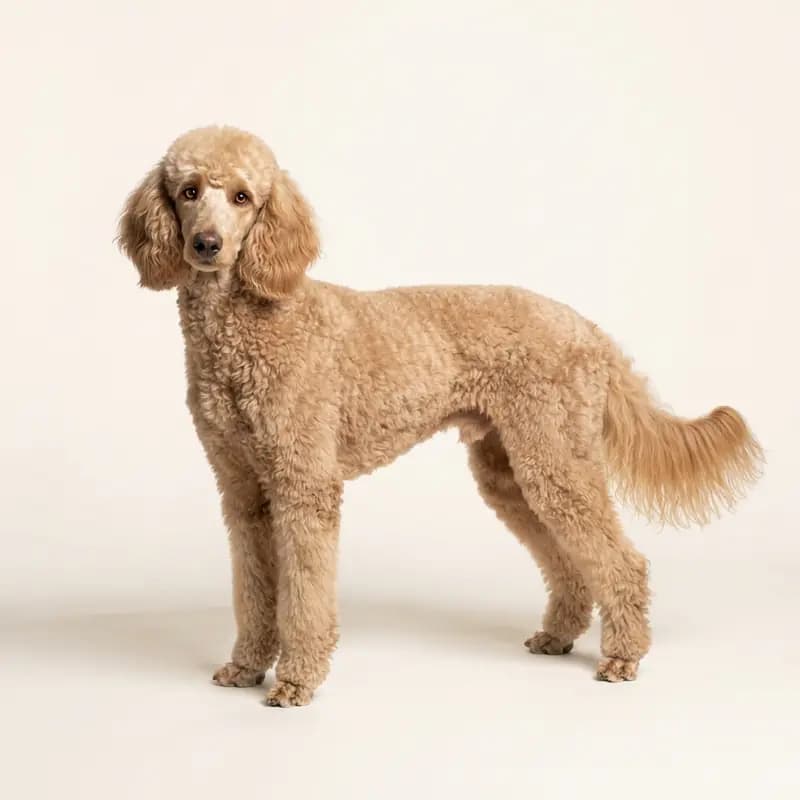
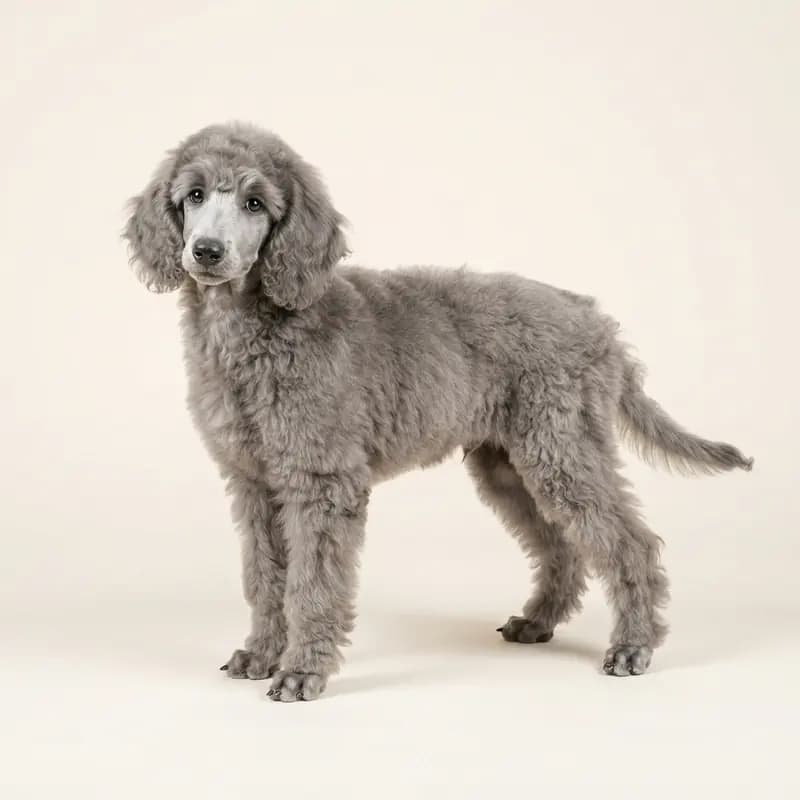
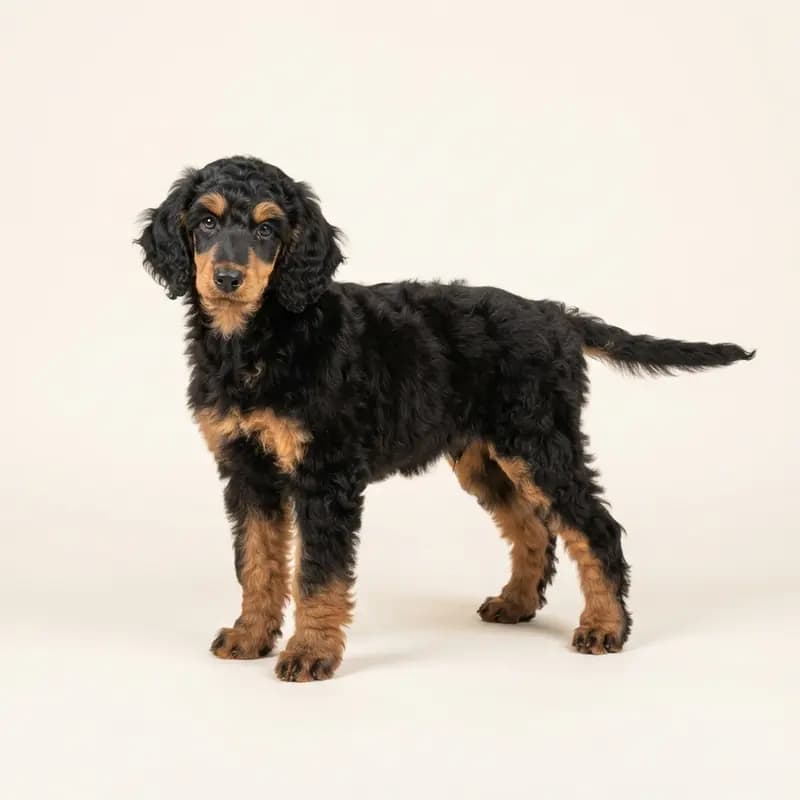
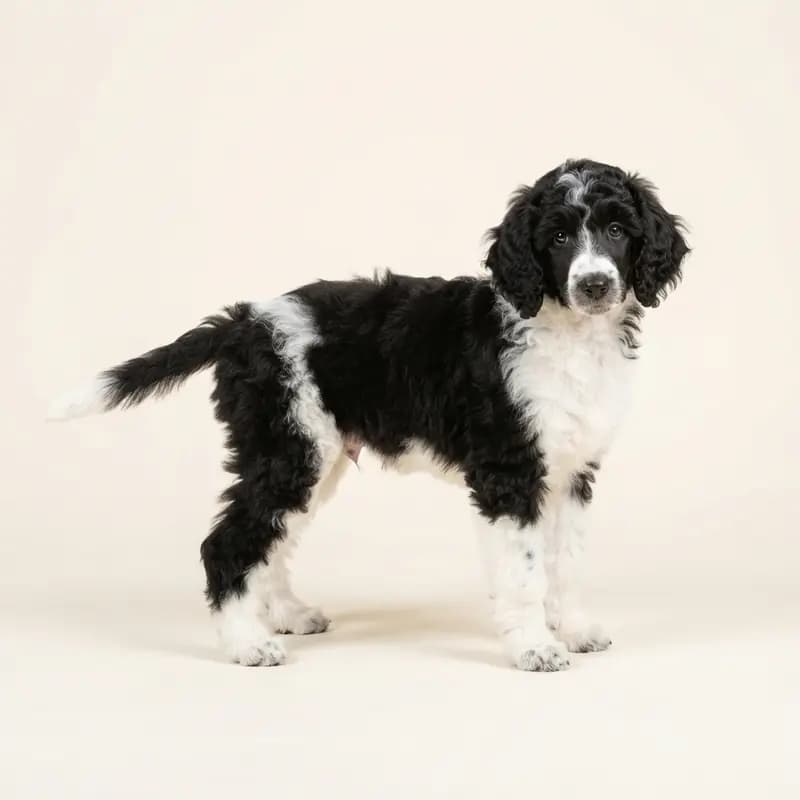
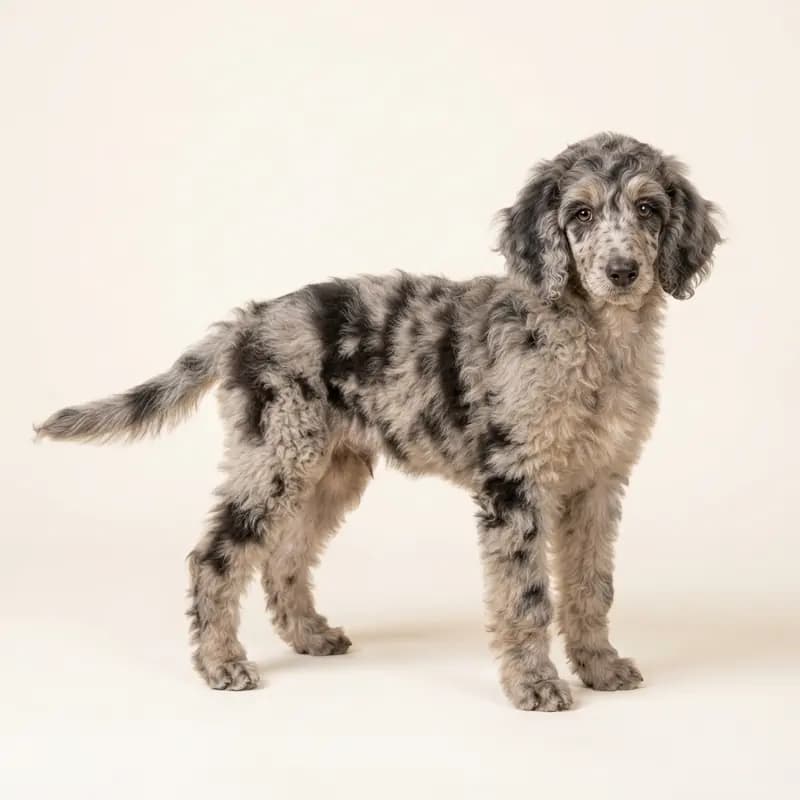
What colors does the Standard Poodle come in?
The coat colors you will see in Standard Poodle litters — including which ones fall outside the breed standard and which carry genetic risk.
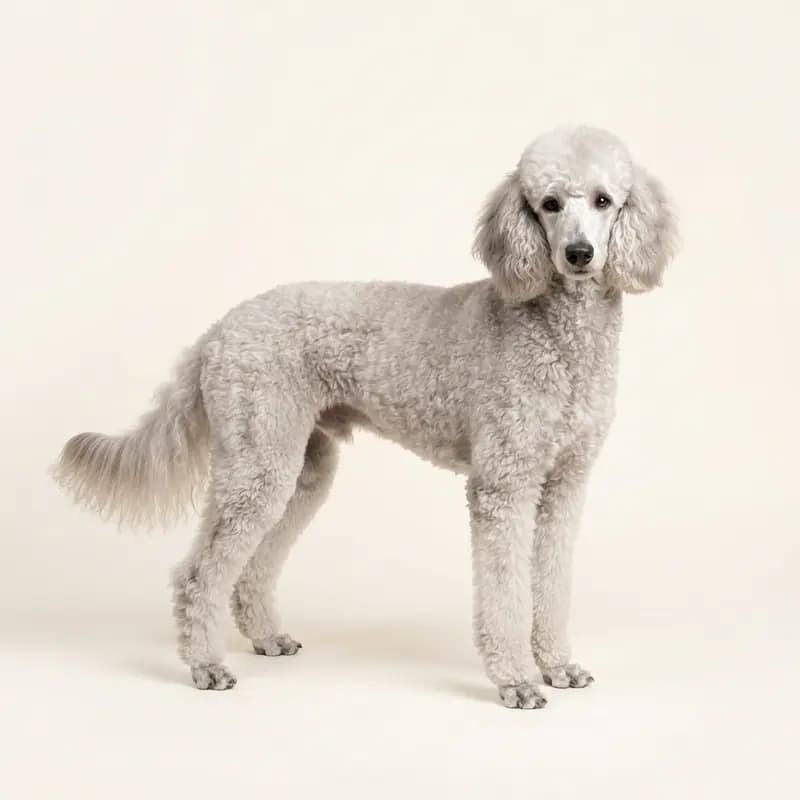
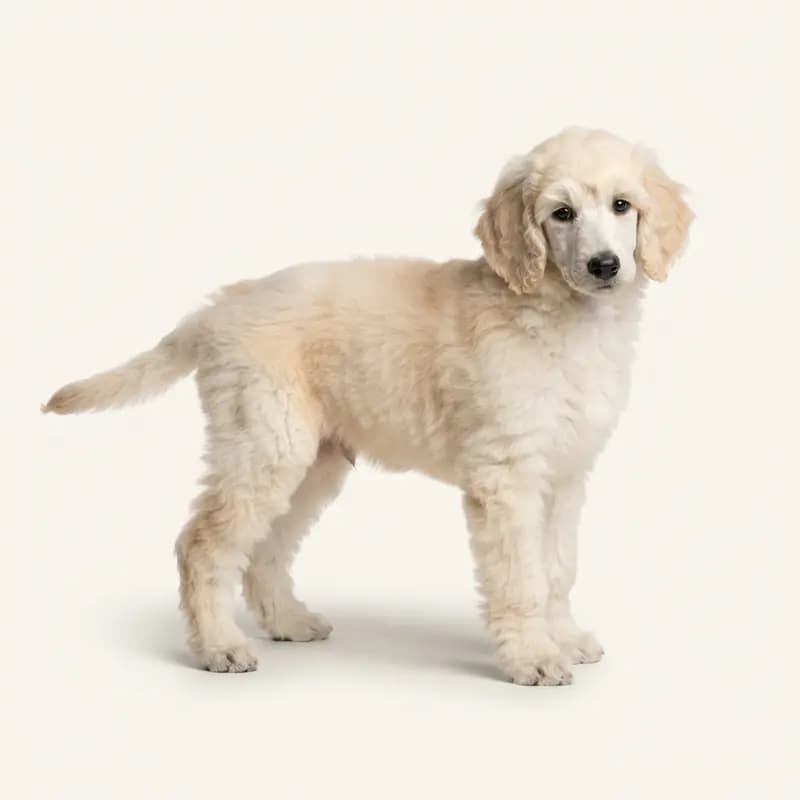
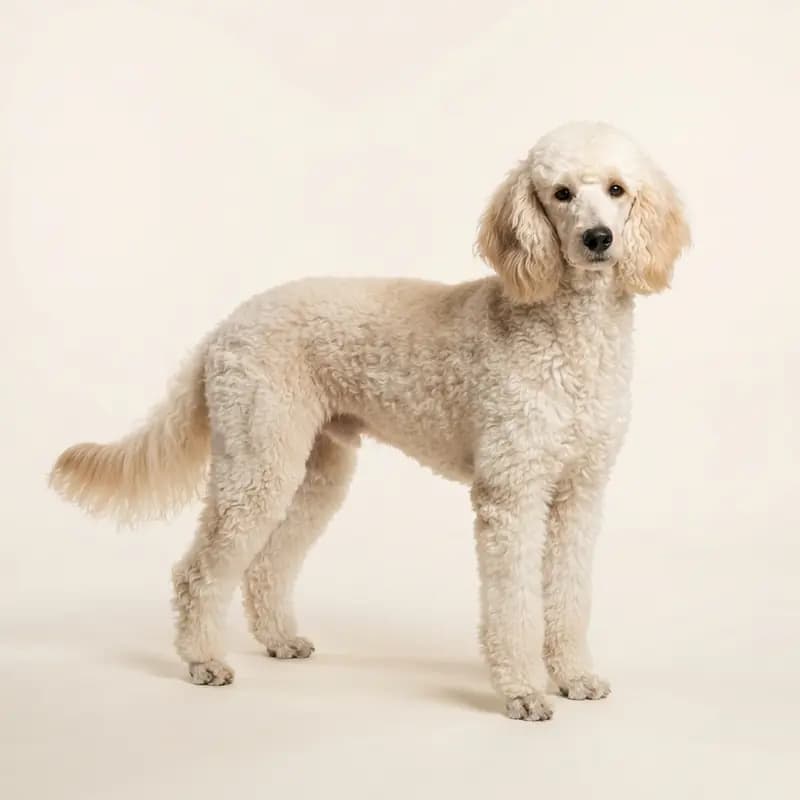
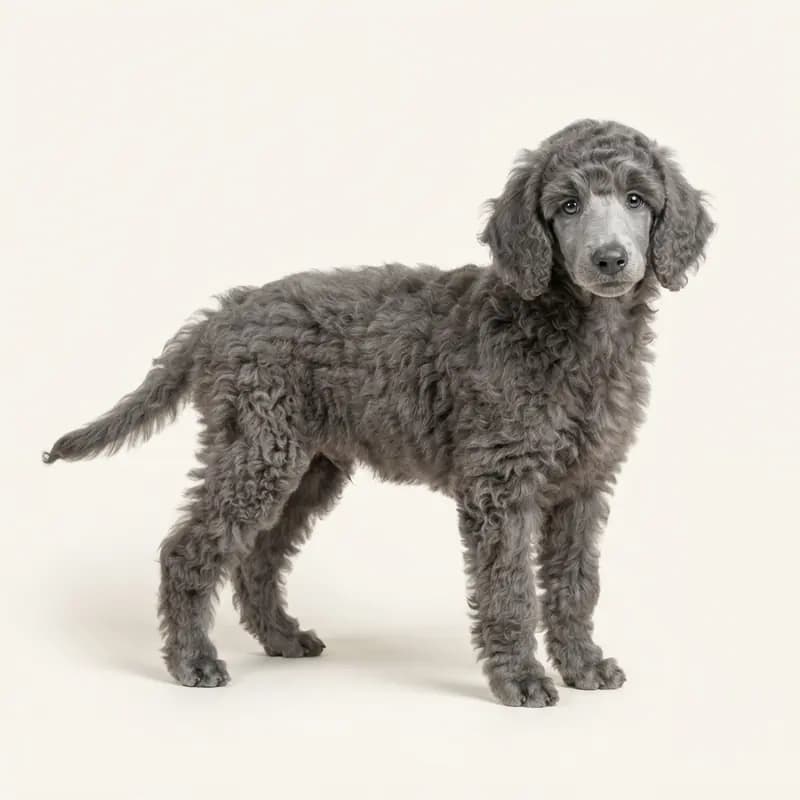
Eye colors
 Brown
Brown Amber
Amber
Coat type
 Illustrative image
Curly
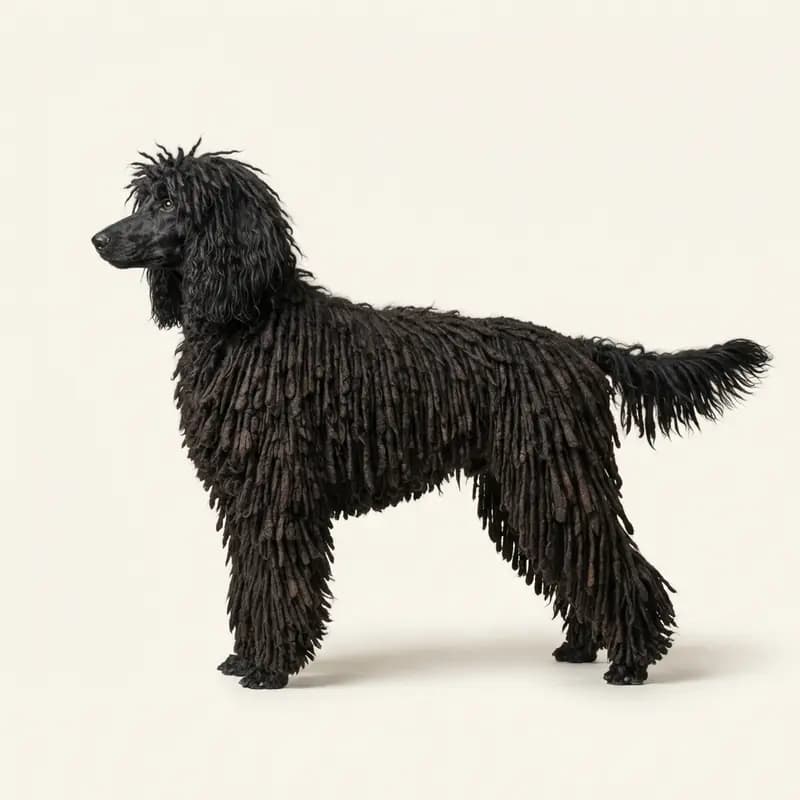 Illustrative image
Corded
Is the Standard Poodle right for you?
The Großpudel (Standard Poodle) is a highly intelligent, sensitive athlete—a true water-based Apportierhund (retrieving dog) in an elegant coat, whose work ethic and physical energy are often massively underestimated in everyday life.
Perfect for you if:
- You are keen on real training, dummy work, or agility—this dog wants to retrieve, cooperate, and think along with you, not just trot along mindlessly.
- You are prepared to invest time and money into regular, intensive grooming in exchange for a non-shedding companion.
- You are looking for an enduring, athletic partner for long hikes, jogging sessions, or extensive bike rides.
- You lead with subtle communication and positive reinforcement, as he quickly becomes unsettled by harshness or loud pressure.
Less ideal if:
- You expect an undemanding, decorative couch potato—without mental tasks, this highly intelligent Apportier-Hardware will quickly find its own, usually very creative, jobs around the house.
- You have no interest in daily brushing and the mandatory trip to the professional groomer every six to eight weeks.
- You have to leave him alone for hours every day, as he is an extremely people-oriented dog who withers without close connection to his family.
- You have a problem with wet paws—despite his elegant appearance, he remains a water dog that is magically drawn to almost every puddle.
The real vibes check
Forget the cliché of the arrogant fashion doll—the Großpudel is actually a sporty nerd in a curly tailored suit. If you look past his exterior and treat him like the true working dog he is genetically, you will get an incredibly loyal, humorous partner who will go through every mud puddle for you.
Self-check
Would the Standard Poodle really fit your life?
Answer 6 quick questions about your everyday life and see how well the Standard Poodle fits you — including an honest cost estimate per month, per year, and across the dog's lifetime.
Fit checkCost estimateRisk dice
Takes about 1 minute · free & anonymous
Breed Profile
The Standard Poodle is a magnificent and elegant dog that has an impressive appearance. With his upright posture, fine, curly fur and expressive face, he embodies grace and dignity. The breed belongs to FCI Group 9, Section 2, which includes companion and companion dogs. While there is no strict separation between performance and show lines, some breeders are more focused on appearance while others place more emphasis on working ability. However, Standard Poodles are talented in both areas and can excel both as show dogs and in dog sports.
All measurements in detail
- Height
- 45 - 60 cm (Female), 45 - 60 cm (Male)
- Weight
- 18 - 28 kg (Female), 18 - 28 kg (Male)
- Life Expectancy
- 12 - 15 yrs
- Character
- Intelligent, sensitive, elegant
- Coat
- Curly, dense, fine texture; no undercoat
- Coat Color
- White, Black, Brown, Gray, Apricot, Red
- Price
- 1500 - 2800 €
Character & Temperament
The Standard Poodle, also called the King Poodle, is an extremely intelligent and versatile dog with an elegant appearance. It is characterized by its friendly and balanced nature and is very people-oriented. Standard Poodles enjoy being close to their family and are excellent for both active individuals and families with children. Thanks to its high willingness to learn and enthusiasm for work, the Standard Poodle is well suited for a variety of tasks such as dog sports, therapy work, or as a companion dog. It is very sensitive and responds well to positive reinforcement, which is why consistent but loving training is important. Standard Poodles require both physical and mental exercise to remain balanced and content. Without sufficient activity, they can quickly become bored and develop undesirable behaviors. The Standard Poodle has a strong retrieving instinct and loves to work together with its human. Its coat is hypoallergenic and requires regular grooming, making it especially interesting for allergy sufferers. Despite its elegance, the Standard Poodle is robust and adaptable, and as a watchdog, it is rather reserved but attentive. Overall, the Standard Poodle is a loyal, eager-to-learn, and versatile companion distinguished by its combination of intelligence, sensitivity, and zest for life.
| Trainability Bred to work closely alongside humans. | Highly trainable |
| Watchfulness Reports unusual activity but stays controlled. | Moderate |
| Openness to Strangers Warms up quickly and is generally welcoming. | Friendly |
| Hunting or Herding Drive Noticeable drive — needs attention around small animals. | Moderate |
Fun Fact!
Despite their elegant appearance and often luxurious treatment, Poodles were originally bred as water dogs. Their characteristic fur hairstyle was originally intended to protect the body in the water.
What Awaits You
Standard Poodles are lively, very intelligent dogs that want to work. They enjoy working with people and need a lot of activity and exercise. They come in different sizes. In addition to the standard poodle or royal poodle, there are also small poodles (often also called standard poodles), toy poodles and toy poodles. Teacup Poodles are so small that they suffer from many torturous breeding traits.
Housing & Care
Standard Poodles (Royal Poodles) are intelligent and versatile dogs that are well suited for families who can invest a lot of time and attention. They are very eager to learn and require both mental and physical exercise to remain balanced and content. Standard Poodles are generally friendly and compatible with other dogs and pets if socialized early. Due to their sensitive nature, they respond well to positive training and a close bond with their humans. They are adaptable and can be kept both in houses with gardens and in apartments, provided they receive sufficient exercise and activity. Standard Poodles usually get along well with children, with respectful handling being important to consider the dog's sensitive nature.
- Family Friendly
Lives for its family — the born family companion.
Ideal family dog - Child Friendly
Takes boisterous and affectionate children in its stride.
Patient with children - Dog Friendly
Actively enjoys the company of other dogs.
Dog-friendly - City Friendly
Adapts well to city living and urban environments.
Well-suited to city life
Owning a dog is a privilege, but it's also a real responsibility. Before you bring one into your life, be honest with yourself about the commitment it takes.
Training & Education
Standard Poodles (Royal Poodles) are extremely intelligent and eager-to-learn dogs that enjoy being challenged. Their high demand for mental engagement makes it important to offer varied and meaningful training content. Similar to Labradors and German Shepherds, Standard Poodles benefit from positive, reward-based training that promotes their motivation and joy in learning. Due to their original use as retrieving and water dogs, they are particularly skilled in retrieving games, obedience, and other dog sports such as agility or rally obedience. You should ensure that the training consists not only of physical exercise but also includes mental challenges to avoid boredom and unwanted behavior. Standard Poodles have a sensitive side and respond well to consistent but loving leadership. Frustration tolerance should be encouraged early so that they remain calm even in stressful situations. Good socialization and building a strong bond are essential, as they are very people-oriented and seek close relationships with their owners. Overall, the Standard Poodle requires regular, varied training that addresses both body and mind. Those willing to invest time and commitment will gain a versatile, intelligent, and loyal companion who can excel in many areas – from family dog to sport partner.
Nutrition & Care
Standard Poodle (King Poodle): The diet of the standard poodle should be balanced and high-quality to support its health and active nature. A protein-rich food that contains all essential nutrients is ideal. Be careful to avoid overweight, as poodles can be prone to joint problems. The coat of the standard poodle is dense, curly, and grows continuously, making it a hypoallergenic dog. Regular coat care is essential: daily or at least several times a week brushing prevents matting and tangles. Additionally, the poodle should be professionally clipped every 6-8 weeks to keep the coat in shape and avoid skin problems. Standard poodles adapt well to the Central European climate. Their coat protects them from cold, but in extreme heat, sufficient shade and water should be provided to prevent overheating. Regular exercise and mental stimulation are important, as the standard poodle is an intelligent and active dog.
| Care Level Daily care is non-negotiable — neglect affects health. | Very high-maintenance |
| Exercise Needs Needs several hours of serious exercise every day. | Very active |
| Shedding No or minimal hair loss — suitable for allergy sufferers. | No shedding |
| Trainability Bred to work closely alongside humans. | Highly trainable |
Our experts are still reviewing this information. Spotted something wrong? Email us at info@honestdog.de.
Health & hereditary diseases
Health
B
Solid
Health grade
The Standard Poodle (Großpudel) receives a B grade because, compared to other large breeds, it has an average health risk profile that is well-manageable through targeted breeding tests. Important hereditary conditions such as Progressive Retinal Atrophy (PRA-PRCD) and cataracts primarily affect the eyes, while patellar luxation can impact the kneecaps. Prospective buyers should ensure that the parents have been verifiably tested for these eye conditions and joint issues to minimize the risk for the puppy.
Grade is relative to other breeds — AI-assisted and editorially reviewed.
In daily life this can mean
Without joint-friendly exercise and good preventative care—such as regular check-ups—health problems and veterinary costs can rise significantly later on.
The breeder's role
Reputable breeders have hips and eyes checked and use targeted DNA tests to ensure the hereditary health of the line as much as possible.
Note: This health overview is AI-assisted and editorially reviewed. It is for orientation only and does not replace veterinary advice.
No Health Tests Available
No specific health tests are currently available for this breed.
Costs & where to find one
How much does a Standard Poodle cost?
A Standard Poodle costs around ~€200 per month (€100 – €380, depending on your setup). The first year adds up to roughly ~€5,360 including purchase, equipment and puppy school; across the dog's life (13.5 years) it comes to about ~€35,180.
With surgery cover, running costs come to about ~€190 per month — in return, your share of a major operation drops from several thousand euros to around 20 percent.
Per month
~€200
In the first year
~€5,360
Across the dog's life
~€35,180
Purchase from a breeder: €1,500 – €2,800
Estimate at a mid-range setup (suburban, dry food, 1–2 hours of daily exercise), average German prices, as of July 2026.
Calculate your personal costs1-minute self-check with your own answers
Looking for a Standard Poodle?
Appearance, variants & origin
History
The full history
The history of the Standard Poodle, also called the Royal Poodle, dates back to the 17th century. Originally bred in France and Germany, the Poodle was primarily used as a water retrieving dog. Its excellent swimming abilities and intelligent nature made it a valued companion in hunting waterfowl. The name "Poodle" is derived from the German word "puddeln," which means "to splash in water." Over time, the Standard Poodle evolved from a working dog to an elegant companion and show dog. The breed was standardized in the 19th century and has since enjoyed great popularity as a versatile and intelligent family dog.
Original Use
The Standard Poodle was originally bred as a water hunting dog for duck hunting, known for its intelligence and curly coat.
Origin
Germany, France
Date
1500
Owner experiences
What owners say about the Standard Poodle
Christian B., Halter aus Hessen (Hündin, seit 2019)
Das Thema Fellpflege wird beim Großpudel oft heiß diskutiert, aber ich finde es absolut machbar. Ich schere unsere Hündin alle 5 bis 6 Wochen selbst. Je nach Jahreszeit lasse ich das Fell mal länger oder kürzer – im Winter bleibt es am Bauch zum Schutz etwas länger. Man muss sich einfach darauf einlassen, dass das Fell kontinuierlich wächst und Arbeit macht.
Eine viel größere Herausforderung war für uns anfangs die geistige Auslastung. Weil Pudel so klug sind, neigt man als Halter schnell dazu, zu viel zu machen. Wir haben auf jedem Spaziergang Tricks geübt, den Futterbeutel versteckt und Gehorsamstraining gemacht. Das Ende vom Lied war eine völlig gestresste Hündin, die permanent unter Strom stand, uns nur noch erwartungsvoll anstarrte und ständig Aufmerksamkeit forderte.
Wir mussten erst lernen, einen Gang zurückzuschalten, damit sie auch mal entspannen kann. Zudem ist ihr Jagdtrieb (besonders auf Sicht bei Vögeln und Hasen) nicht ohne. Sie liebt schnelle Jagdsprints, lässt sich aber dank unserer engen Bindung und konsequentem Training inzwischen gut kontrollieren und umlenken.
Laura S., Halterin aus Nordrhein-Westfalen (Rüde, seit 2025)
Wir haben unseren Königspudel im Alter von neun Monaten übernommen, nachdem seine Vorbesitzerin ihn nach nur einem Monat wieder an den Züchter zurückgeben musste. Er ist ein unglaublich freundlicher, aktiver und intelligenter Kerl, mit dem es eigentlich wahnsinnig viel Spaß macht, den Alltag zu verbringen.
Unser riesiges Problem ist allerdings das Alleinbleiben. Sobald die Wohnungstür ins Schloss fällt, gerät er sofort in extremen Stress und wird total unruhig. Wir versuchen nun schon seit längerer Zeit, ihn in ganz kleinen Schritten daran zu gewöhnen. Während es in der Wohnung gut klappt, wenn wir mal kurz in die Küche gehen, bedeuten echte Trennungen von mehr als 10 Minuten für ihn puren Panikmodus.
Diese Sensibilität und die extrem enge Bindung an seine Menschen sind typisch für den Großpudel. Sie wollen am liebsten immer und überall dabei sein. Für uns als junges Paar bedeutet das aktuell ein sehr intensives Training und den Verzicht auf spontane Kinobesuche oder Restaurantbesuche ohne Hundesitter. Man sollte sich vor dem Kauf bewusst sein, wie viel Zeit und Geduld solche Baustellen kosten können.
Paraphrased from real owner reports
Loading owner stories
Community Posts
FAQ & more
Frequently asked questions about the Standard Poodle
Is a Standard Poodle the right dog for me?
The Standard Poodle is an active dog that needs plenty of exercise and mental stimulation. Research the temperament, grooming needs, and space requirements before deciding.
How long does a Standard Poodle live?
The average life expectancy of a Standard Poodle is 12-15 years. With proper care and regular vet visits, your dog can live a long, healthy life.
How much grooming does a Standard Poodle need?
Standard Poodle grooming requirements include regular brushing, nail trimming, and dental care. HonestDog provides detailed grooming tips for every breed.
Is a Standard Poodle good for families with children?
The Standard Poodle can be a great family dog. Proper training and socialization are key. HonestDog provides family suitability information for every breed.
What colors does the Standard Poodle come in?
The Standard Poodle comes in these colors: Black, White, Brown, Grey, Apricot, Red, Fawn, Silver, Cream, Blue, Black and tan, Black and white, Merle. Colors that fall outside the breed standard are marked as such on the breed page.
Loading related articles
Are you a Standard Poodle breeder?
Showcase your kennel on HonestDog and reach families searching for a responsibly bred Standard Poodle.
Why HonestDog?
What makes HonestDog different from other platforms
Full transparency
We lay out what we have: who the breeder is, how they work, and any health records they've uploaded. So you can judge for yourself.
Responsible breeding, assured
Every breeder on HonestDog has their identity and documents checked before their profile goes live. Health records they upload are shown on the profile, so you can see exactly what has been tested.
Trust and verification
We verify breeders and buyers alike, so every conversation happens on solid ground. It's a new standard of trust in dog breeding.
Less hassle, more time
We've already checked the breeders' documents and gathered the details, so you can skip the endless research and focus on finding the right puppy for your family.
Our Mission

We connect dog lovers with responsible breeders and shelters to ensure every dog finds the perfect home.
Founded by dog enthusiasts, our platform focuses on ethical dog breeding and adoption.
Why HonestDog?
We connect you with vetted breeders and shelters so you can find your — your new companion — with confidence.
Vetted Partners
Only verified breeders and shelters — for a safe start.
Highest Standards
Every animal's health and wellbeing is our top priority.
Guides & Resources
Guides, checklists, and breed profiles — so you can make a well-informed decision.