Loading breed
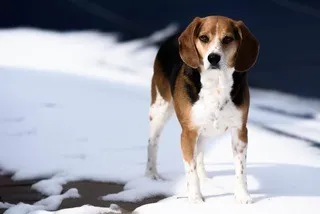
English Foxhound
Health grade AThe English Foxhound is an athletic, extremely high-stamina pack hound—bred to follow a fox trail for hours in large groups, with his nose and urge to run dictating his entire life.
- Height58–64 cm
- Weight25–34 kg
- Life expectancy10–13 yrs
- Puppy price1,500–2,500 €
- Energy5/5
The Essentials at a Glance
The English Foxhound is an athletic, extremely high-stamina pack hound—bred to follow a fox trail for hours in large groups, with his nose and urge to run dictating his entire life.
- Health grade A: As a robust working dog, the English Foxhound is genetically very healthy, with almost no documented breed-specific hereditary diseases.
- You aren't looking for a classic companion dog, but a true running dog that can cover enormous distances daily alongside a bike or in dog-powered sports.
- You ideally already keep other dogs—as a classic pack hound, he will completely wither away as an only child.
- You expect him to have a reliable recall when he's on an exciting scent—he has been bred for centuries to become blind and deaf to everything else once he's on a trail.
Is the English Foxhound right for you?
At a glance
English Foxhound overview
The essentials — key facts, traits, and health priorities — before you dive deeper.
Health grade
Relative to other breeds
S
A
B
C
D
E
Very healthyHigher risk
Very healthy — limited common concerns.
See full health info & tests →
Note: This health overview is AI-assisted and editorially reviewed. It is for orientation only and does not replace veterinary advice.
Lifespan
10–13 yrs
Height
58–64 cm
Weight
25–34 kg
Practical
- Puppy price: 1,500 – 2,500 €
- Coat: Short, dense, hard texture, no undercoat
- Origin: Great Britain
Temperament
Energy
Trainability
Family fit
With kids
Daily life
Care effort
Shedding
Barking
City-friendly
Guard instinct
What matters most
Especially with a English Foxhound, choosing the right breeder is the single most important decision you'll make. Serious breeders consistently test the parents for inherited conditions, prioritize healthy early socialization, and stay accountable long after handover. A cheap puppy without health screening tends to become the most expensive dog later on.
See HonestDog breeder standards →Colors & coat
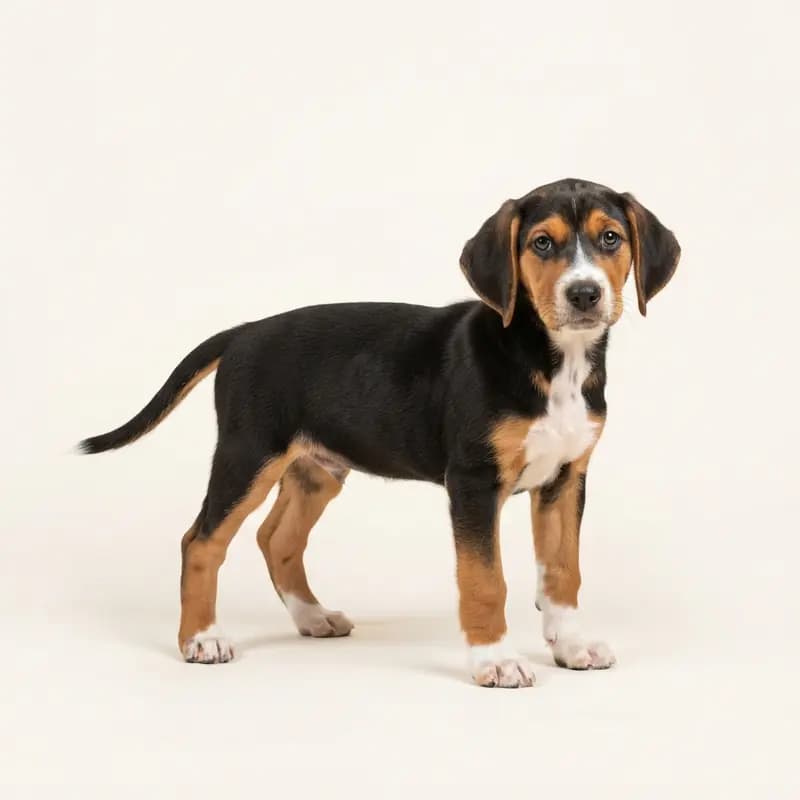
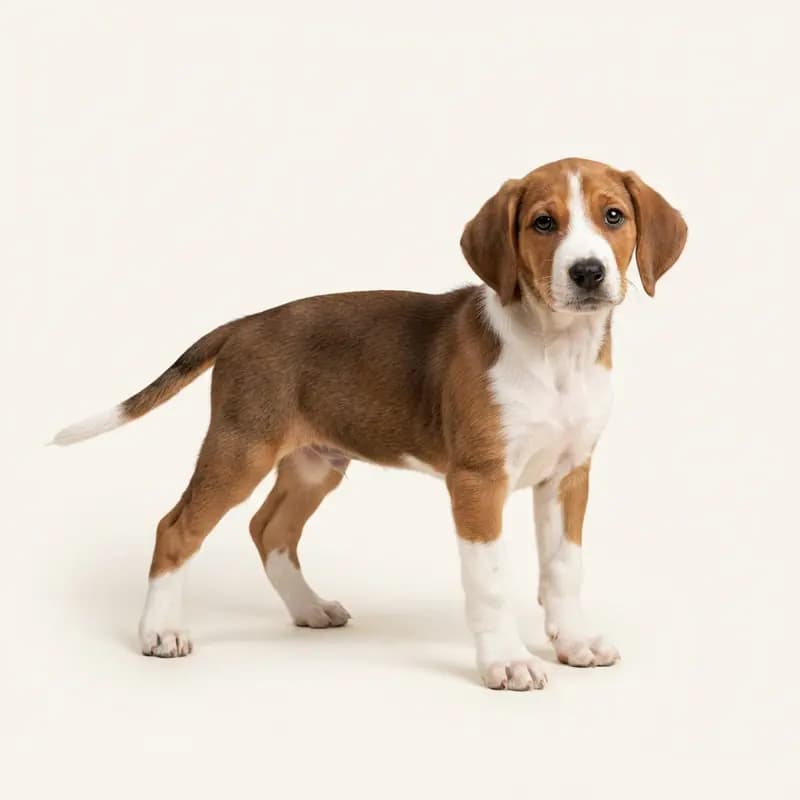
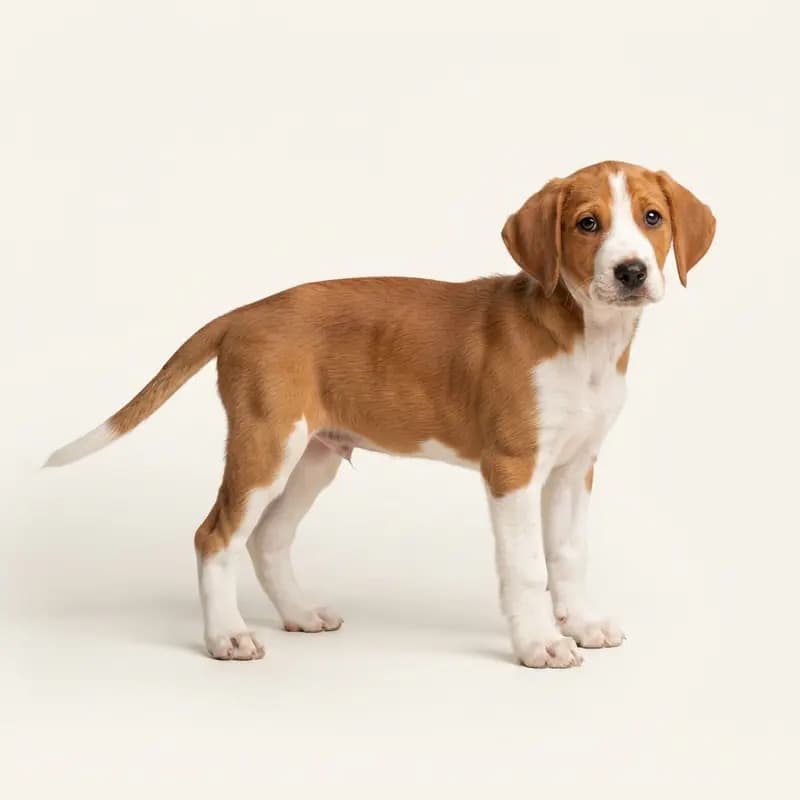
What colors does the English Foxhound come in?
The coat colors you will see in English Foxhound litters — including which ones fall outside the breed standard and which carry genetic risk.







Eye colors
 Brown
Brown
Coat type
 Short
Short
Is the English Foxhound right for you?
The English Foxhound is an athletic, extremely high-stamina pack hound—bred to follow a fox trail for hours in large groups, with his nose and urge to run dictating his entire life.
Perfect for you if:
- You aren't looking for a classic companion dog, but a true running dog that can cover enormous distances daily alongside a bike or in dog-powered sports.
- You ideally already keep other dogs—as a classic pack hound, he will completely wither away as an only child.
- You live in a rural area with an absolutely escape-proof garden where his loud, piercing bark won't bother anyone.
- You can handle his hunting independence and don't expect absolute obedience.
Less ideal if:
- You expect him to have a reliable recall when he's on an exciting scent—he has been bred for centuries to become blind and deaf to everything else once he's on a trail.
- You have to leave him alone in an apartment regularly—without his pack, he is prone to extreme stress and loud protest.
- You are looking for a companion for relaxed off-leash outings—outside of a fenced area, a long training lead will usually be mandatory for life with this thoroughbred hunter.
The real vibes check
An English Foxhound is not a cozy family dog that waits for you on the sofa—he is a marathon runner who lives for the thrill of the hunt in a pack. If you don't provide him with a surrogate pack and a real job for his legs and nose, he will find both for himself. You are getting an extremely friendly but completely self-sufficient specialist who will always find the great outdoors more fascinating than your commands.
Self-check
Would the English Foxhound really fit your life?
Answer 6 quick questions about your everyday life and see how well the English Foxhound fits you — including an honest cost estimate per month, per year, and across the dog's lifetime.
Fit checkCost estimateRisk dice
Takes about 1 minute · free & anonymous
Breed Profile
The English Foxhound is a dog of remarkable beauty and noble demeanor. With his muscular body and long, straight legs, he is an impressive sight. Its head is long and slightly domed, with large, dark eyes that radiate a friendly and intelligent nature. The ears are medium-sized and lie close to the head. The tail is carried cheerfully, but never over the back. The English Foxhound belongs to FCI Group 6, the scent hounds, bloodhounds and related breeds. He is a classic pack dog and was originally used for fox hunting. There is no distinction between performance and show lines in this breed. The English Foxhound is still valued primarily for its working qualities, although it can also be found at dog shows.
All measurements in detail
- Height
- 58 - 64 cm (Female), 58 - 64 cm (Male)
- Weight
- 25 - 32 kg (Female), 27 - 34 kg (Male)
- Life Expectancy
- 10 - 13 yrs
- Character
- Energetic, friendly, persistent
- Coat
- Short, dense, hard texture, no undercoat
- Coat Color
- Tri-color (black, white, brown), two-color combinations (black & white or brown & white)
- Price
- 1500 - 2500 €
Character & Temperament
The English Foxhound is an extremely energetic dog with a friendly and outgoing nature. Its origins as a pack dog make it a very social creature that enjoys the company of people and other dogs. But don't be fooled - although he can be very loving and affectionate, he also has an independent streak and needs an owner who will set clear boundaries for him. As a hunting dog, the English Foxhound has a strong hunting instinct and can be easily distracted by smells and movements. It is important to note that his hunting instinct is strong and he may not always listen well when following a scent. When it comes to his activity levels, the English Foxhound is definitely on the hyperactive side. He needs lots of exercise and mental stimulation to be happy and balanced. He loves taking long walks, running and playing, and he is also a great companion for joggers or cyclists. You may be wondering whether the English Foxhound can stay alone well. Well, he can learn it, but it's not his preferred option. He loves company and can suffer from separation anxiety if left alone for long periods of time. It's important that he learns from an early age that it's okay to be alone and helps him relax in such situations. The English Foxhound is an alert dog and will alert you if someone enters the house. But he is not a typical guard dog and is not prone to being aggressive. He is more likely to respond friendly to visitors, especially if he has been properly socialized. All in all, the English Foxhound is a wonderful dog for active people who have the time and energy to challenge them physically and mentally. He is not necessarily suitable for beginners or people looking for a calm, easy-care dog. However, if you are ready to take on the challenges and plunge into the world of English Foxhounds, you will be rewarded with a loyal, loving and incredibly entertaining companion.
| Trainability Willing to learn with clear rules and regular training. | Balanced |
| Watchfulness Reports unusual activity but stays controlled. | Moderate |
| Openness to Strangers Warms up quickly and is generally welcoming. | Friendly |
| Hunting or Herding Drive This drive runs deep — no amount of training eliminates it. | Very strong |
Fun Fact!
Did you know that the English Foxhound is one of the few dog breeds that can actually be kept in packs by the American Kennel Club? This means breeders can keep and show multiple dogs together in a group!
What Awaits You
The English Foxhound is a pure hunting dog and should therefore also be used for hunting purposes.
Housing & Care
The English Foxhound is not necessarily suitable as a city dog as it needs a lot of exercise and space to run. A house with a large, fenced yard would be ideal for him. He gets along well with children and can be a great family dog if properly socialized. However, small children should always be supervised as the English Foxhound could accidentally knock over a small child due to its size and energy. He can also get along with cats and other pets if he is introduced to them from an early age.
- Family Friendly
Loves family life and thrives in a group.
Family-oriented - Child Friendly
Takes boisterous and affectionate children in its stride.
Patient with children - Dog Friendly
Actively enjoys the company of other dogs.
Dog-friendly - City Friendly
Can manage in the city, but only with very active owners.
Difficult in cities
Owning a dog is a privilege, but it's also a real responsibility. Before you bring one into your life, be honest with yourself about the commitment it takes.
Training & Education
The English Foxhound presents some challenges due to its disposition as a hunting dog. He is intelligent, but his hunting instincts can make training difficult. It's important to start training early and stay consistent. The English Foxhound requires a lot of physical and mental activity. It is well suited for dog sports such as mantrailing or agility. However, it is important to be careful not to "over-busy" the dog. as this can lead to stress. Because of its high energy, the English Foxhound can also become a "ball junkie." so it is advisable to offer a variety of activities and not just ball games. Learning frustration tolerance and impulse control is particularly important for this breed as they tend to be impulsive, especially when it comes to movement and smells.
Nutrition & Care
The English Foxhound needs a balanced diet to maintain its energy and health. Since he is an active dog, his food should contain high-quality proteins and fats. It is also advisable to limit the amount of carbohydrates to maintain a healthy weight. The diet should be tailored to the dog's age, activity level and health. In terms of grooming, the English Foxhound has short, dense fur with no undercoat. The coat is quite easy to care for, but still requires regular brushing to remove dead hair and keep the coat clean. The English Foxhound sheds moderately and copes well with Germany's climate, although it may require a coat in extremely cold temperatures.
| Care Level Minimal effort — occasional brushing and bathing. | Low-maintenance |
| Exercise Needs Working-dog energy that needs burning off every single day. | High-drive |
| Shedding Hair everywhere, always — no white clothing survives. | Very heavy |
| Trainability Willing to learn with clear rules and regular training. | Balanced |
Our experts are still reviewing this information. Spotted something wrong? Email us at info@honestdog.de.
Health & hereditary diseases
Health
A
Robust
Health grade
As a robust working dog, the English Foxhound is genetically very healthy, with almost no documented breed-specific hereditary diseases. Nevertheless, buyers should look out for hip dysplasia (HD) and the rare but serious condition of renal amyloidosis. Since there are hardly any standardized genetic tests for this breed, choosing a responsible breeder who clinically screens the parent dogs is particularly important.
Grade is relative to other breeds — AI-assisted and editorially reviewed.
In daily life this can mean
You should ensure he is raised in a way that protects his joints and maintain a healthy weight, as well as have any early changes in his gait, vision, or hearing checked by a veterinarian promptly.
The breeder's role
Reputable breeders have the parents' hips, elbows, eyes, and hearing tested and use genetic screening to reduce the risk of neurological conditions in the bloodline.
Note: This health overview is AI-assisted and editorially reviewed. It is for orientation only and does not replace veterinary advice.
No Health Tests Available
No specific health tests are currently available for this breed.
Costs & where to find one
How much does a English Foxhound cost?
A English Foxhound costs around ~€190 per month (€100 – €360, depending on your setup). The first year adds up to roughly ~€5,080 including purchase, equipment and puppy school; across the dog's life (11.5 years) it comes to about ~€28,650.
With surgery cover, running costs come to about ~€190 per month — in return, your share of a major operation drops from several thousand euros to around 20 percent.
Per month
~€190
In the first year
~€5,080
Across the dog's life
~€28,650
Purchase from a breeder: €1,500 – €2,500
Estimate at a mid-range setup (suburban, dry food, 1–2 hours of daily exercise), average German prices, as of July 2026.
Calculate your personal costs1-minute self-check with your own answers
Looking for a English Foxhound?
HonestDog Concierge
No verified English Foxhound breeders on HonestDog yet
We currently have no breeders for this breed who have passed our verification. Create your short buyer profile: we'll set up your search alert, review a possible source and email you within 28 days.
Appearance, variants & origin
History
The full history
The English Foxhound has a long and well-documented history in Great Britain, closely linked to the development of traditional fox hunting. In the late 16th and early 17th centuries, deer hunting declined in importance, and the red fox became the focus of the British hunting community. This fast-paced and demanding style of hunting required a dog with immense stamina, speed, and an excellent sense of smell. To meet these requirements, breeders selectively crossed older, heavier hounds like the Staghound with sighthound-type breeds such as the Greyhound. This gave the English Foxhound its characteristic combination of persistent tracking ability and rapid pace. The studbook records for this breed are historically remarkably precise: the British Master of Foxhounds Association (MFHA) has maintained complete records of pack hound lineages since the late 18th century. Although the English Foxhound was officially recognized by the Fédération Cynologique Internationale (FCI) in 1954, it is still kept almost exclusively in large packs for hunting purposes today. Due to its extreme need for exercise and strong pack orientation, it remains an absolute exception as a pure family or companion dog in private hands.
Original Use
The English Foxhound was bred for hunting foxes in large packs, renowned for its stamina and speed.
Origin
Great Britain
Date
1500
Owner experiences
What owners say about the English Foxhound
Sabine D., Halterin aus Niedersachsen (Rüde, seit 2019)
Als wir unseren Rüden Hugo zu uns holten, wurde uns im Tierheim erzählt, er sei ein Beagle-Mix. Ein ganzes Jahr lang haben wir das geglaubt, bis wir schließlich einen DNA-Test machen ließen. Das überraschende Ergebnis: Hugo ist ein reinrassiger English Foxhound!
Man muss ehrlich sein: Die Haltung ist eine echte Aufgabe. Er ist extrem eigenwillig, unabhängig und manchmal auch richtig frech. Man merkt einfach, dass diese Hunde für die selbstständige Arbeit gezüchtet wurden und ihren eigenen Kopf haben. Wenn er eine Fährte in die Nase bekommt, vergisst er schnell mal seine gute Kinderstube.
Auf der anderen Seite ist er aber auch unglaublich liebevoll, sanft und intelligent. Er bringt uns jeden Tag zum Lachen und ist ein absolut unterhaltsamer Partner. Wir könnten uns keinen besseren Hund wünschen und lieben ihn trotz all seiner Macken über alles.
Michael S., Halter aus Bayern (Hündin, seit 2024)
Einen English Foxhound zu halten, erfordert vor allem eines: ein extrem gutes Management im Freien. Da diese Hunde darauf selektiert sind, Fährten über kilometerweite Strecken zu verfolgen, ist der Freilauf ein echtes Nervenspiel. Ich lasse meine Hündin eigentlich nur in Gebieten von der Leine, die natürlich begrenzt sind – zum Beispiel in einem Park, der auf einer Seite von einem Fluss und auf den anderen Seiten von Zäunen umgeben ist.
Zusätzlich nutzen wir GPS- und Trainingshalsbänder zur Sicherheit, falls sie doch mal im Unterholz verschwindet. Man darf die enorme Energie und den unbändigen Vorwärtsdrang dieser Rasse einfach nicht unterschätzen. Wer einen gemütlichen Begleiter für die Standard-Runde um den Block sucht, wird mit einem Foxhound definitiv nicht glücklich.
Wenn man sich aber auf dieses Abenteuer einlässt, viel Zeit in der Natur verbringt und mit der unbändigen Jagdpassion umgehen kann, bekommt man einen unglaublich treuen und robusten Hund, der für jeden sportlichen Spaß zu haben ist.
Paraphrased from real owner reports
Loading owner stories
FAQ & more
Frequently asked questions about the English Foxhound
Is a English Foxhound the right dog for me?
The English Foxhound is an active dog that needs plenty of exercise and mental stimulation. Research the temperament, grooming needs, and space requirements before deciding.
How long does a English Foxhound live?
The average life expectancy of a English Foxhound is 10-13 years. With proper care and regular vet visits, your dog can live a long, healthy life.
How much grooming does a English Foxhound need?
English Foxhound grooming requirements include regular brushing, nail trimming, and dental care. HonestDog provides detailed grooming tips for every breed.
Is a English Foxhound good for families with children?
The English Foxhound can be a great family dog. Proper training and socialization are key. HonestDog provides family suitability information for every breed.
What colors does the English Foxhound come in?
The English Foxhound comes in these colors: Tricolor, Bicolor, Black and white, Brown and white, Red and white, Piebald, Black and tan, White, Roan, Spotted.
Loading related articles
Are you a English Foxhound breeder?
Showcase your kennel on HonestDog and reach families searching for a responsibly bred English Foxhound.
Why HonestDog?
What makes HonestDog different from other platforms
Full transparency
We lay out what we have: who the breeder is, how they work, and any health records they've uploaded. So you can judge for yourself.
Responsible breeding, assured
Every breeder on HonestDog has their identity and documents checked before their profile goes live. Health records they upload are shown on the profile, so you can see exactly what has been tested.
Trust and verification
We verify breeders and buyers alike, so every conversation happens on solid ground. It's a new standard of trust in dog breeding.
Less hassle, more time
We've already checked the breeders' documents and gathered the details, so you can skip the endless research and focus on finding the right puppy for your family.
Our Mission

We connect dog lovers with responsible breeders and shelters to ensure every dog finds the perfect home.
Founded by dog enthusiasts, our platform focuses on ethical dog breeding and adoption.
Why HonestDog?
We connect you with vetted breeders and shelters so you can find your — your new companion — with confidence.
Vetted Partners
Only verified breeders and shelters — for a safe start.
Highest Standards
Every animal's health and wellbeing is our top priority.
Guides & Resources
Guides, checklists, and breed profiles — so you can make a well-informed decision.