Loading breed
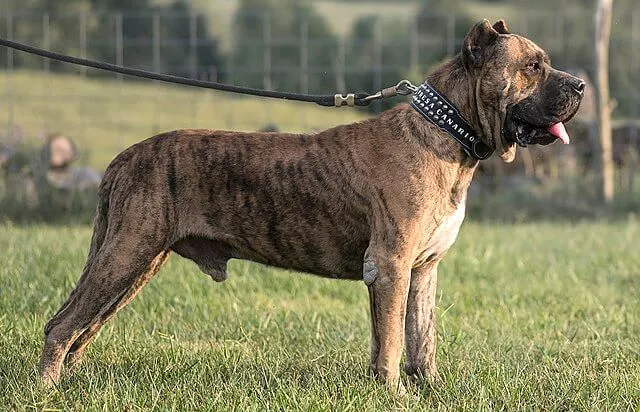
Presa Canario
Health grade CThe Dogo Canario is a massive, steady-nerved, mastiff-type guardian—bred to herd cattle and protect farms without compromise. Beneath his calm exterior lies a powerful protective instinct that absolutely requires confident, sovereign leadership.
- Height56–66 cm
- Weight40–65 kg
- Life expectancy9–11 yrs
- Puppy price2,000–3,500 €
- Energy4/5
The Essentials at a Glance
The Dogo Canario is a massive, steady-nerved, mastiff-type guardian—bred to herd cattle and protect farms without compromise. Beneath his calm exterior lies a powerful protective instinct that absolutely requires confident, sovereign leadership.
- Health grade C: As a heavy, large-breed dog, the Dogo Canario is prone to joint conditions such as hip dysplasia (HD) and elbow dysplasia (ED), for which there are no mandatory health tests recorded here.
- You already have solid experience with territorial, physically powerful dogs and lead through calm presence rather than harshness.
- You live in a rural area with a securely fenced property where he can fulfill his instinctive job as a guardian within the family setting.
- You live in a densely populated area or an apartment where constant stimuli and strangers would permanently trigger his deeply rooted protective instinct.
Is the Presa Canario right for you?
At a glance
Presa Canario overview
The essentials — key facts, traits, and health priorities — before you dive deeper.
Health grade
Relative to other breeds
S
A
B
C
D
E
Very healthyHigher risk
Average — several important tests are expected.
See full health info & tests →
Note: This health overview is AI-assisted and editorially reviewed. It is for orientation only and does not replace veterinary advice.
Lifespan
9–11 yrs
Height
56–66 cm
Weight
40–65 kg
Practical
- Puppy price: 2,000 – 3,500 €
- Coat: Short, dense, without undercoat
- Origin: Canary Islands, Spain
Temperament
Energy
Trainability
Family fit
With kids
Daily life
Care effort
Shedding
Barking
City-friendly
Guard instinct
What matters most
Especially with a Presa Canario, choosing the right breeder is the single most important decision you'll make. Serious breeders consistently test the parents for inherited conditions, prioritize healthy early socialization, and stay accountable long after handover. A cheap puppy without health screening tends to become the most expensive dog later on.
See HonestDog breeder standards →Colors & coat
What colors does the Presa Canario come in?
The coat colors you will see in Presa Canario litters — including which ones fall outside the breed standard and which carry genetic risk.



Eye colors
 Brown
Brown
Coat type
 Short
Short Smooth
Is the Presa Canario right for you?
The Dogo Canario is a massive, steady-nerved, mastiff-type guardian—bred to herd cattle and protect farms without compromise. Beneath his calm exterior lies a powerful protective instinct that absolutely requires confident, sovereign leadership.
Perfect for you if:
- You already have solid experience with territorial, physically powerful dogs and lead through calm presence rather than harshness.
- You live in a rural area with a securely fenced property where he can fulfill his instinctive job as a guardian within the family setting.
- You are looking for a loyal, one-family dog that builds close bonds but doesn't care for constant visitors or strange dogs.
- You plan on moderate, regular walks and prefer investing time in clear obedience training rather than hours of endurance sports.
Less ideal if:
- You live in a densely populated area or an apartment where constant stimuli and strangers would permanently trigger his deeply rooted protective instinct.
- You expect your dog to greet every guest joyfully or play with everyone at the dog park—he will tolerate strangers at best, only if you tell him to.
- You would not be physically capable of confidently holding 50 to 60 kilos of explosive muscle on a leash in an emergency.
The real vibes check
A Dogo Canario is like a highly professional bouncer: he is calm, observes everything, and intervenes without compromise if he perceives a real threat. Your job is to reliably take that decision away from him at every second before his hardware takes command. If you succeed, you have an unshakable protector; if you don't, he will decide for himself who is allowed to enter your property.
Self-check
Would the Presa Canario really fit your life?
Answer 6 quick questions about your everyday life and see how well the Presa Canario fits you — including an honest cost estimate per month, per year, and across the dog's lifetime.
Fit checkCost estimateRisk dice
Takes about 1 minute · free & anonymous
Breed Profile
The Dogo Canario, also known as Presa Canario, is a large and muscular dog with an impressive yet elegant appearance. Its square build, wide, massive head and powerful jaw give it an imposing appearance. At the same time, his calm and confident expression conveys composure and sovereignty. The ears can either be left natural or cropped. In Germany, however, cropping ears is prohibited. This dog belongs to FCI Group 2, Section 2.1 (Molossoid, Great Dane-like dogs) and is listed there as breed no. 346. There is no distinction between show and performance lines in this breed. The Dogo Canario's coat is short and dense, with no undercoat. Colors vary from brindle to various shades of fawn, although all specimens should have a dark face mask.
All measurements in detail
- Height
- 56 - 62 cm (Female), 60 - 66 cm (Male)
- Weight
- 40 - 55 kg (Female), 50 - 65 kg (Male)
- Life Expectancy
- 9 - 11 yrs
- Character
- Loyal, confident, calm
- Coat
- Short, dense, without undercoat
- Coat Color
- Short, dense, without undercoat
- Price
- 2000 - 3500 €
Character & Temperament
The Dogo Canario is a proud and self-confident dog with a strong protective instinct. Its original role as a working dog, guardian and protector of herds and property entum has given him a strong protective instinct and natural alertness. At the same time, he is extremely loyal and affectionate towards his family and often shows special affection for children. Despite its size and strength, the Dogo Canario is generally a calm and even-tempered dog that enjoys being around its people. He is not a hyperactive dog that needs to be constantly moving, but also enjoys spending quiet times with his family. He is always alert and attentive and reacts quickly to any changes in his environment. The Dogo Canario is also a very people-oriented dog. He loves being involved in his family's activities and always wants to be there. He is not a dog that likes to be left alone for long periods of time. Therefore, care should be taken to ensure that he has as much company as possible. If he is away for a long time, he can learn to stay alone, but this should be the exception and not the rule. Although it was originally used to herd and protect herds, the Dogo Canario has a rather low hunting instinct. He may react to moving objects or small animals, but this can usually be well controlled with consistent education and training. Overall, the Dogo Canario is a faithful, loyal, and confident dog that has a strong need to protect and serve its family. He makes a wonderful companion for people who appreciate the strength and character of this breed and who are willing to invest the time and energy necessary to raise and train this strong and intelligent dog. It should always be remembered that the Dogo Canario has a distinct personality and requires strong but loving leadership.
| Trainability Has its own ideas and will test limits. | Strong-willed |
| Watchfulness Strong territorial instinct — may actively confront intruders. | Very high |
| Openness to Strangers Careful around unfamiliar people — thaws slowly. | Cautious |
| Hunting or Herding Drive Mild interest in movement and small animals — easily managed. | Low |
Fun Fact!
Dogo Canarios are not only excellent guard and protection dogs, but also excellent therapy dogs. Their sensitive and intuitive nature makes them ideal companions for people with special needs.
What Awaits You
The Perro de Presa Canario has a calm appearance and an attentive expression. It is particularly suitable for guarding and is traditionally used to herd livestock.
Housing & Care
Dogo Canarios can be kept in the city, but they require sufficient exercise and activity. They are very tied to their family and should therefore not be left alone for long periods of time. They generally get along well with children, although encounters between dogs and small children should always be supervised to ensure that both parties treat each other with respect. Other pets, particularly cats, can also be accepted with proper socialization, but this should be considered on a case-by-case basis.
- Family Friendly
Loves family life and thrives in a group.
Family-oriented - Child Friendly
Takes boisterous and affectionate children in its stride.
Patient with children - Dog Friendly
Usually gets on fine with other dogs.
Generally tolerant - City Friendly
City-appropriate with enough exercise and stimulation.
Manageable in cities
Owning a dog is a privilege, but it's also a real responsibility. Before you bring one into your life, be honest with yourself about the commitment it takes.
Training & Education
Dogo Canarios are intelligent and willing to learn, but require consistent and loving leadership. They respond well to positive reinforcement and need meaningful activity to ensure their physical and mental saturation. Due to their original use as livestock guard dogs, activities such as protection work or mantrailing can be a suitable occupation. It is important to find the balance between sufficient employment and the risk of "overemployment". Sufficient rest time also plays an important role. Impulse control and frustration tolerance are essential in raising a Dogo Canario. Particularly during ball games, care should be taken to ensure that the dog does not become a “ball junkie”. becomes. A balanced mix of play, work and rest helps the Dogo Canario become a balanced and happy companion.
Nutrition & Care
Dogo Canarios are active and vigorous dogs that require a balanced and nutritious diet. High-quality food that is tailored to the dog's size, weight and activity level is essential. Keep in mind that puppies and young dogs have higher nutritional needs than adult dogs. Caring for the Dogo Canario is uncomplicated. Its short, dense coat with no undercoat requires regular brushing to remove dead hair and promote skin health. However, compared to many other breeds, the Dogo Canario sheds relatively little. Despite its short coat, the Dogo Canario also copes well with the German climate.
| Care Level Minimal effort — occasional brushing and bathing. | Low-maintenance |
| Exercise Needs Needs several hours of serious exercise every day. | Very active |
| Shedding Hair everywhere, always — no white clothing survives. | Very heavy |
| Trainability Has its own ideas and will test limits. | Strong-willed |
Our experts are still reviewing this information. Spotted something wrong? Email us at info@honestdog.de.
Health & hereditary diseases
Health
C
Solid, watch carefully
Health grade
As a heavy, large-breed dog, the Dogo Canario is prone to joint conditions such as hip dysplasia (HD) and elbow dysplasia (ED), for which there are no mandatory health tests recorded here. Furthermore, their physical build carries an increased risk of gastric dilatation-volvulus (GDV). Prospective buyers should therefore be particularly diligent in requesting proof that the parent dogs have undergone radiographic screening to help prevent severe lameness later in life.
Grade is relative to other breeds — AI-assisted and editorially reviewed.
In daily life this can mean
With joint-friendly rearing, a healthy weight, and regular vet checks for the heart and eyes, you can positively influence your dog's life.
The breeder's role
Reputable breeders have the hips, elbows, spine, and heart of the parent animals tested and pay attention to healthy eyelids to lower risks in the bloodline.
Note: This health overview is AI-assisted and editorially reviewed. It is for orientation only and does not replace veterinary advice.
No Health Tests Available
No specific health tests are currently available for this breed.
Costs & where to find one
How much does a Presa Canario cost?
A Presa Canario costs around ~€220 per month (€120 – €430, depending on your setup). The first year adds up to roughly ~€6,240 including purchase, equipment and puppy school; across the dog's life (10 years) it comes to about ~€30,210.
With surgery cover, running costs come to about ~€230 per month — in return, your share of a major operation drops from several thousand euros to around 20 percent.
Per month
~€220
In the first year
~€6,240
Across the dog's life
~€30,210
Purchase from a breeder: €2,000 – €3,500
Estimate at a mid-range setup (suburban, dry food, 1–2 hours of daily exercise), average German prices, as of July 2026.
Calculate your personal costs1-minute self-check with your own answers
Looking for a Presa Canario?
HonestDog Concierge
No verified Presa Canario breeders on HonestDog yet
We currently have no breeders for this breed who have passed our verification. Create your short buyer profile: we'll set up your search alert, review a possible source and email you within 28 days.
Legal Notice
Presa Canario is not regulated uniformly across Germany but may be subject to specific rules in individual federal states. Depending on your location, requirements such as a temperament test, proof of competence, specific ownership obligations, or additional local rules may apply. Always check with your local authorities.
Full guide to restricted-breed ownership in GermanyAppearance, variants & origin
History
The full history
The Dogo Canario comes from the Canary Islands, an archipelago in the Atlantic Ocean that belongs to Spain. Its history dates back to the 15th century, when Spanish conquerors occupied the Canary Islands and brought their mastiffs with them. These were crossed with the local dogs and thus formed the basis for the Dogo Canario breed. The Dogo Canario was originally used as a working dog, herding herds and protecting farms from intruders. It was also used to hunt wild boar. In the 1940s and 1950s, the Dogo Canario's population declined sharply due to the lack of livestock farming in the Canary Islands. However, in the 1970s, a breeding program was started to save and promote the breed. The breed was officially recognized by the FCI in 2001.
Original Use
The Dogo Canario was used as a guard dog and for working with livestock.
Origin
Canary Islands, Spain
Date
1800
Owner experiences
What owners say about the Presa Canario
Sandra B., Halterin aus Hessen (Hündin, 1 Jahr alt)
Wir haben seit fast einem Jahr eine Dogo Canario Hündin bei uns und für uns als Familie mit Kindern hätte es kaum besser laufen können. Sie ist absolut lieb, verspielt und zeigt eine enorme Bindung zu unseren Kids, die sie über alles liebt und am liebsten beschützen möchte. Im Haus ist sie ein extrem angenehmer Begleiter – man merkt sie phasenweise kaum, weil sie so ruhig und verschmust ist.
Allerdings darf man den typischen Molosser-Dickkopf absolut nicht unterschätzen. Kadavergehorsam darf man hier nicht erwarten. Sie lernt zwar schnell, braucht aber eine absolut konsequente, liebevolle Führung, da sie als Spätzünderin geistig noch lange nicht ausgereift ist. Man muss von Anfang an sehr vorausschauend trainieren, um ihren ausgeprägten Schutzinstinkt in die richtigen Bahnen zu lenken.
Markus S., Halter aus Nordrhein-Westfalen (Rüde, 5 Jahre alt)
Mein unkastrierter Rüde ist mittlerweile fünf Jahre alt und im Alltag ein absolut treuer, loyaler Partner. Wenn ich dabei bin, verhält er sich Menschen gegenüber vollkommen neutral und sauber. Aber man muss sich im Klaren darüber sein, was man da an der Leine hat: Ein Dogo Canario ist kein Hund, den man beim Gassi gehen mal eben aus den Augen lässt, und auch den entspannten Besuch in der Eisdiele erspare ich ihm meistens.
Die Erziehung erfordert extrem viel Zeit, Geduld, Fairness und absolute Konsequenz. Mit Härte oder Zwang erreicht man bei dieser Rasse gar nichts – man macht den Hund damit nur kaputt. Wer sich einen DC anschafft, muss wissen, dass diese Hunde einen sehr ernsthaften Schutz- und Wachtrieb mitbringen. Einbrechen braucht bei uns definitiv niemand.
Mirko K., Halter aus Baden-Württemberg (Rüde, 2 Jahre alt)
Ich habe mir mit meinem Presa Canario Rüden aus einer spanischen Leistungslinie einen großen Traum erfüllt. Er ist ein fantastischer Hund für Haus und Hof, extrem wachsam und meldet sofort jede Veränderung. Für uns ist das ideal, da bei uns in der Gegend leider häufig eingebrochen wird und er hier eine ganz klare Aufgabe hat, die er sehr ernst nimmt.
Allerdings ist der extreme Wach- und Schutztrieb im Alltag auch eine echte Herausforderung, die man managen muss. Wenn wir Besuch bekommen, ist mir das ständige Aufpassen einfach zu stressig. Ich handhabe es daher so, dass ich ihn für die Zeit, in der Fremde da sind, wegsperre oder ihn den Besuch nur an einem absolut neutralen Ort kennenlernen lasse. Man muss sich dieser Verantwortung bei so einem kraftvollen Hund einfach bewusst sein.
Paraphrased from real owner reports
Loading owner stories
FAQ & more
Frequently asked questions about the Presa Canario
Is a Presa Canario the right dog for me?
The Presa Canario is an active dog that needs plenty of exercise and mental stimulation. Research the temperament, grooming needs, and space requirements before deciding.
How long does a Presa Canario live?
The average life expectancy of a Presa Canario is 9-11 years. With proper care and regular vet visits, your dog can live a long, healthy life.
How much grooming does a Presa Canario need?
Presa Canario grooming requirements include regular brushing, nail trimming, and dental care. HonestDog provides detailed grooming tips for every breed.
Is a Presa Canario good for families with children?
The Presa Canario can be a great family dog. Proper training and socialization are key. HonestDog provides family suitability information for every breed.
What colors does the Presa Canario come in?
The Presa Canario comes in these colors: Brindle, Fawn, Black.
Loading related articles
Are you a Presa Canario breeder?
Showcase your kennel on HonestDog and reach families searching for a responsibly bred Presa Canario.
Why HonestDog?
What makes HonestDog different from other platforms
Full transparency
We lay out what we have: who the breeder is, how they work, and any health records they've uploaded. So you can judge for yourself.
Responsible breeding, assured
Every breeder on HonestDog has their identity and documents checked before their profile goes live. Health records they upload are shown on the profile, so you can see exactly what has been tested.
Trust and verification
We verify breeders and buyers alike, so every conversation happens on solid ground. It's a new standard of trust in dog breeding.
Less hassle, more time
We've already checked the breeders' documents and gathered the details, so you can skip the endless research and focus on finding the right puppy for your family.
Our Mission

We connect dog lovers with responsible breeders and shelters to ensure every dog finds the perfect home.
Founded by dog enthusiasts, our platform focuses on ethical dog breeding and adoption.
Why HonestDog?
We connect you with vetted breeders and shelters so you can find your — your new companion — with confidence.
Vetted Partners
Only verified breeders and shelters — for a safe start.
Highest Standards
Every animal's health and wellbeing is our top priority.
Guides & Resources
Guides, checklists, and breed profiles — so you can make a well-informed decision.