Loading breed
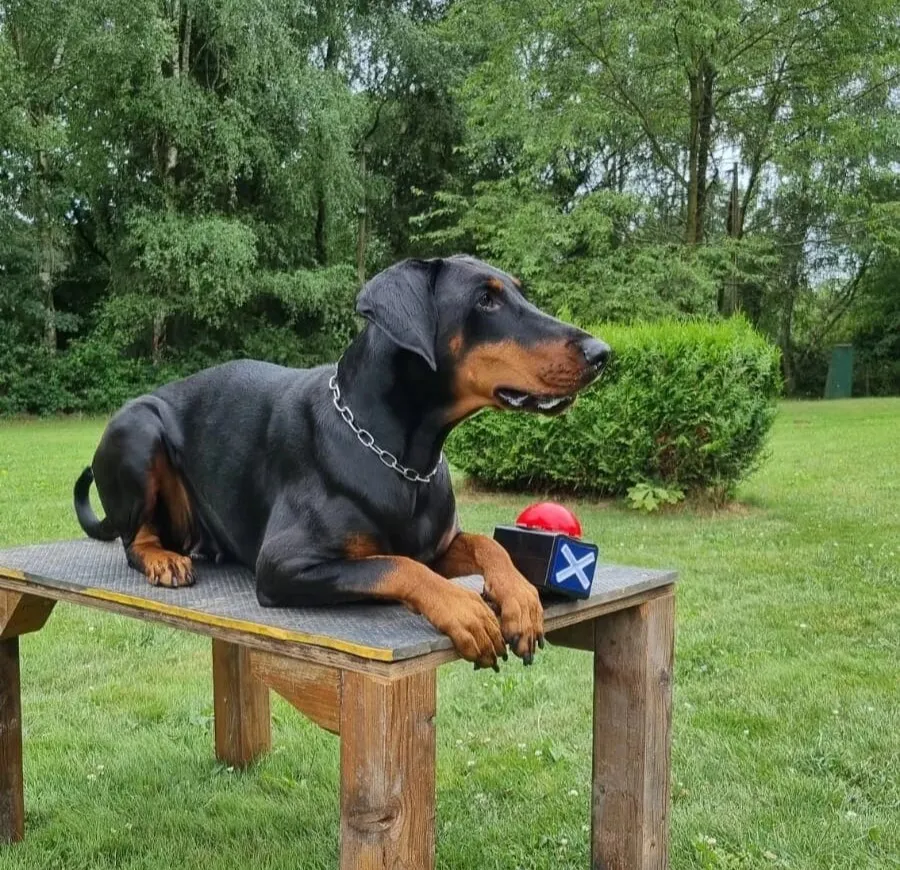
Dobermann
Health grade EThe Dobermann is a highly intelligent, sensitive athlete—bred as a people-oriented Gebrauchshund (working dog) that will defend its owner uncompromisingly if necessary. This explosive mix of guarding instinct and extreme attachment to its handler requires clear tasks.
- Height63–72 cm
- Weight32–45 kg
- Life expectancy10–12 yrs
- Puppy price1,500–3,000 €
- Energy5/5
The Essentials at a Glance
The Dobermann is a highly intelligent, sensitive athlete—bred as a people-oriented Gebrauchshund (working dog) that will defend its owner uncompromisingly if necessary. This explosive mix of guarding instinct and extreme attachment to its handler requires clear tasks.
- Health grade E: The Doberman receives a health grade of E, as the breed is affected by extremely severe health risks: dilated cardiomyopathy (DCM) affects around half to nearly 60% of all Dobermans over their lifetime in European studies and is often suddenly fatal, while Wobbler syndrome (cervical spondylomyelopathy) and intervertebral disc disease (IVDD) also represent significant dangers.
- You aren't looking for a casual companion, but a true working partner for demanding dog sports like tracking or IGP—he is a Gebrauchshund and needs a job.
- You already have solid experience with reactive, high-drive dogs and lead with absolute confidence, without becoming emotional or loud.
- You expect him to greet strangers at the door in a relaxed manner—his genetic job is to guard and, if in doubt, to take the initiative.
Is the Dobermann right for you?
At a glance
Dobermann overview
The essentials — key facts, traits, and health priorities — before you dive deeper.
Health grade
Relative to other breeds
S
A
B
C
D
E
Very healthyHigher risk
High risk — only worth it from a thoroughly tested program.
See full health info & tests →
Note: This health overview is AI-assisted and editorially reviewed. It is for orientation only and does not replace veterinary advice.
Lifespan
10–12 yrs
Height
63–72 cm
Weight
32–45 kg
Practical
- Puppy price: 1,500 – 3,000 €
- Coat: Short, dense, without undercoat
- Origin: Germany
Temperament
Energy
Trainability
Family fit
With kids
Daily life
Care effort
Shedding
Barking
City-friendly
Guard instinct
What matters most
Especially with a Dobermann, choosing the right breeder is the single most important decision you'll make. Serious breeders consistently test the parents for inherited conditions, prioritize healthy early socialization, and stay accountable long after handover. A cheap puppy without health screening tends to become the most expensive dog later on.
See HonestDog breeder standards →Colors & coat
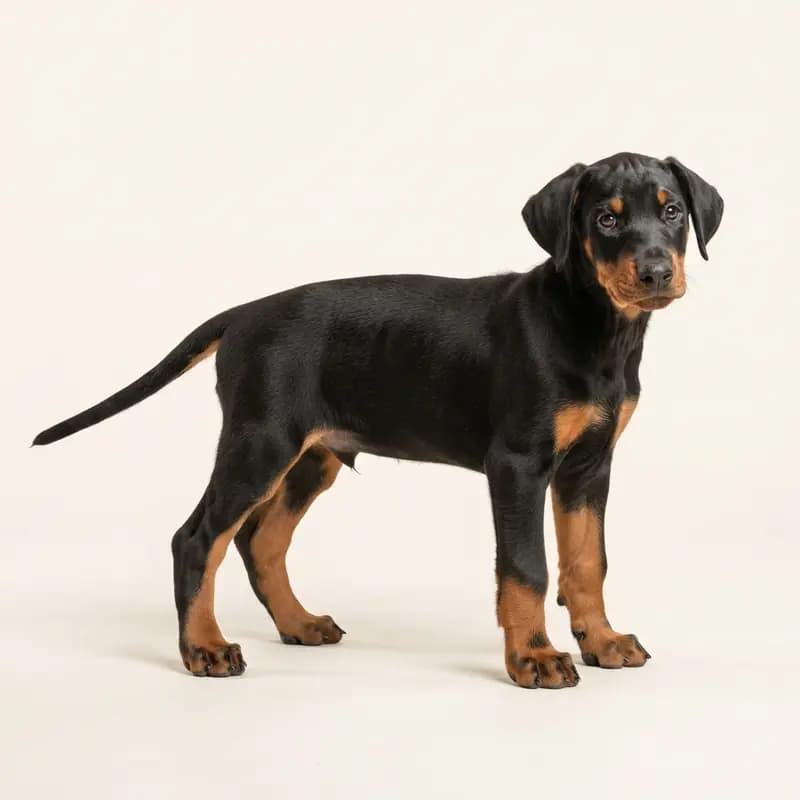
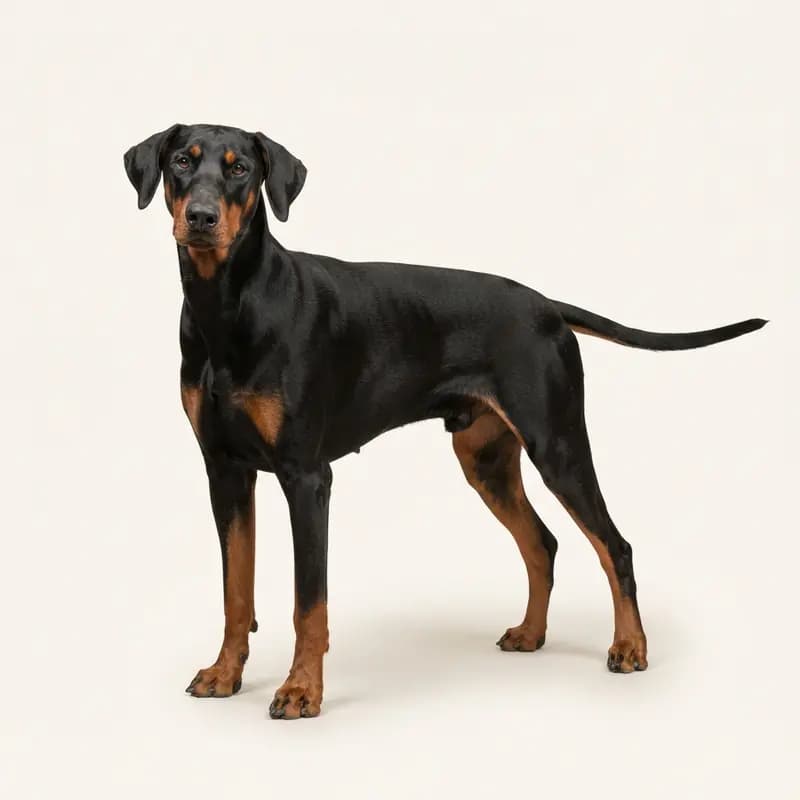
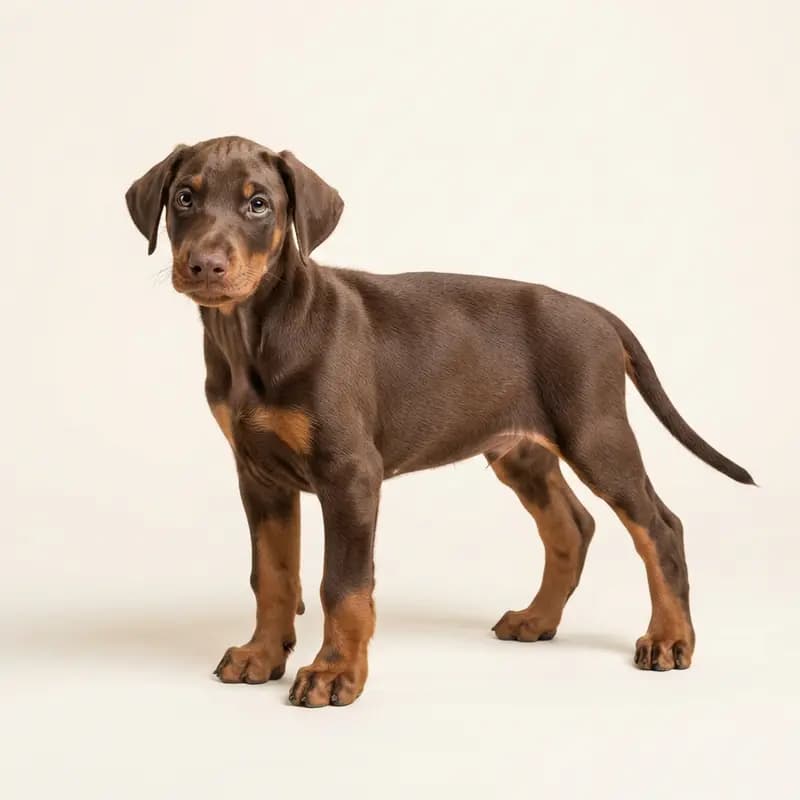
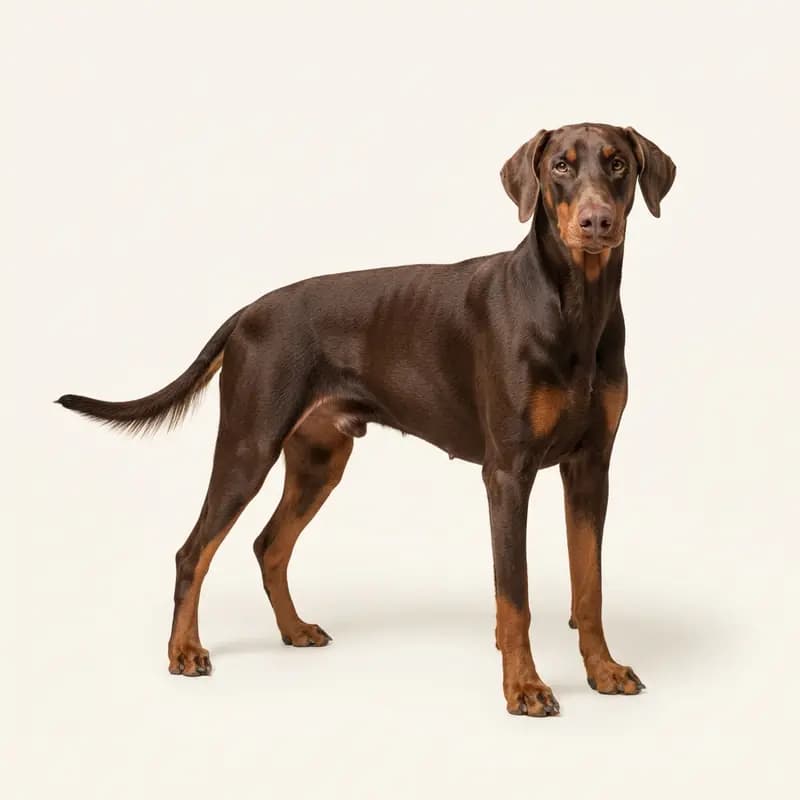
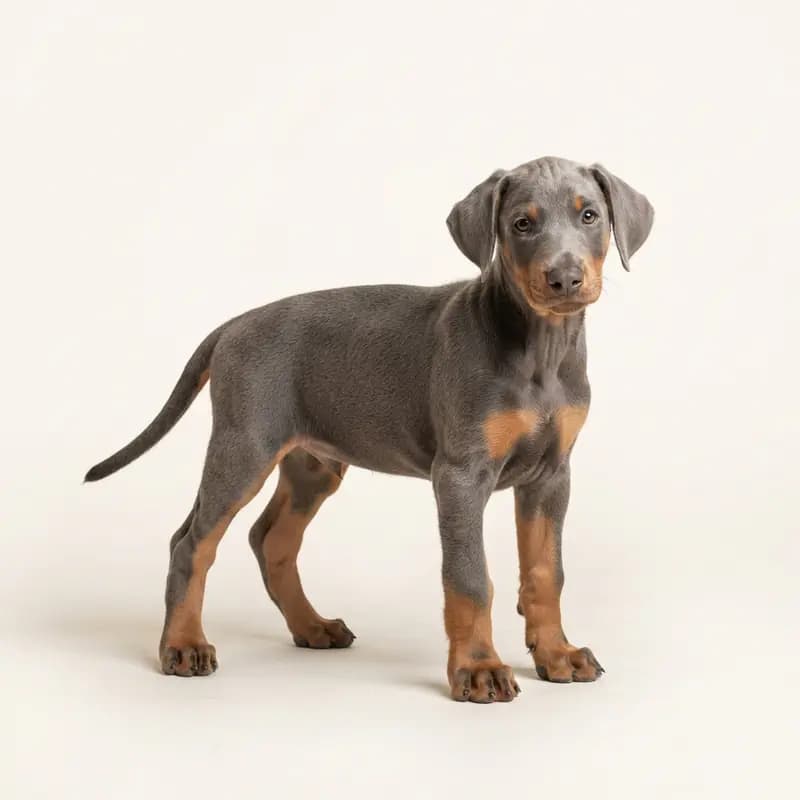
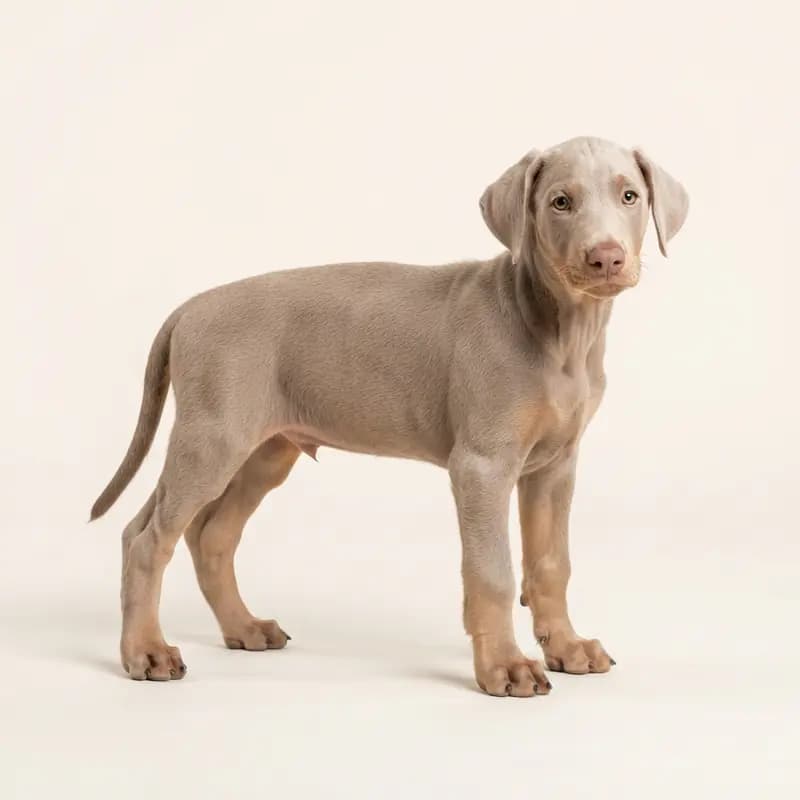
What colors does the Dobermann come in?
The coat colors you will see in Dobermann litters — including which ones fall outside the breed standard and which carry genetic risk.
- Black and tan
- Brown and tan
- Blue and tan
- Isabella
- Not standard
White
Eye colors
 Brown
Brown Amber
Amber
Coat type
 Short
Short Smooth
Is the Dobermann right for you?
The Dobermann is a highly intelligent, sensitive athlete—bred as a people-oriented Gebrauchshund (working dog) that will defend its owner uncompromisingly if necessary. This explosive mix of guarding instinct and extreme attachment to its handler requires clear tasks.
Perfect for you if:
- You aren't looking for a casual companion, but a true working partner for demanding dog sports like tracking or IGP—he is a Gebrauchshund and needs a job.
- You already have solid experience with reactive, high-drive dogs and lead with absolute confidence, without becoming emotional or loud.
- You don't live in the middle of a bustling city, but can offer a stable, low-stimulus environment where he can switch off after work.
- You want a dog that is extremely closely bonded to you and considers you the absolute center of his world.
Less ideal if:
- You expect him to greet strangers at the door in a relaxed manner—his genetic job is to guard and, if in doubt, to take the initiative.
- You are often hectic or insecure yourself—this dog will scan your leadership weaknesses in seconds and immediately take control himself.
- You have to leave him alone for long periods regularly—Dobermanns bond almost fanatically to their humans and handle isolation extremely poorly.
- You believe that simple jogging or cycling is enough to keep a highly intelligent working dog from constantly being on guard.
The real vibes check
A Dobermann is not a dog that lies comfortably on the sofa while the world passes him by—he is a bodyguard who is constantly on standby. He sticks to you like a shadow and continuously scans every change in your vicinity. If you don't take this responsibility off his shoulders through absolute leadership, the loyal companion will quickly turn into a stressed controller.
Self-check
Would the Dobermann really fit your life?
Answer 6 quick questions about your everyday life and see how well the Dobermann fits you — including an honest cost estimate per month, per year, and across the dog's lifetime.
Fit checkCost estimateRisk dice
Takes about 1 minute · free & anonymous
Breed Profile
The Doberman is a medium to large dog breed known for their slim, muscular bodies and elegant appearance. Docking of body parts is no longer permitted in many countries. The Doberman's FCI group is Group 3, Section 1, Pinscher and Schnauzer.
All measurements in detail
- Height
- 63 - 68 cm (Female), 68 - 72 cm (Male)
- Weight
- 32 - 35 kg (Female), 40 - 45 kg (Male)
- Life Expectancy
- 10 - 12 yrs
- Character
- Loyal, intelligent, energetic
- Coat
- Short, dense, without undercoat
- Coat Color
- Black or brown, often with reddish-brown markings
- Price
- 1500 - 3000 €
Character & Temperament
The Doberman is a fascinating breed that has a lot of character traits and behaviors that you should take into account as a future owner. He is not only very agile and sporty but also sensitive and intelligent. Basically, the Doberman is an extremely loyal and people-oriented dog. So if you are someone who can spend a lot of time with your four-legged friend, the Doberman could be just the right choice for you. However, the Doberman is not just a cuddly cheek. Because of his history as a protector, he has a strong guarding instinct. This means he is vigilant and has a strong need to protect his territory and family. In some cases, this can cause him to be wary of strangers and to be stressed by frequently changing visitors. That's why it's important that you make sure to socialize your Doberman well from an early age and teach him that not every stranger is a threat. Another important point is the Doberman’s high energy level. He is not a dog that can lie on the couch all day. He needs lots of exercise and mental stimulation. Be it through long walks, playing time in the garden or dog sports. It is important that you are able to meet his need to move so that he can lead a balanced and happy life. When it comes to staying alone, you should also know that the Doberman, as a very people-oriented breed, usually doesn't like being alone. He can learn to stay alone for short periods, but care should be taken to ensure that this does not become the rule. When it comes to hunting behavior, it should be said that the Doberman does not have an extremely strong hunting instinct, but due to its history it is still a dog with a high level of prey-catching behavior. It is important to start recall training early and ensure that the dog remains controllable in any situation.
| Trainability Bred to work closely alongside humans. | Highly trainable |
| Watchfulness Strong territorial instinct — may actively confront intruders. | Very high |
| Openness to Strangers Careful around unfamiliar people — thaws slowly. | Cautious |
| Hunting or Herding Drive Noticeable drive — needs attention around small animals. | Moderate |
Fun Fact!
Did you know that the Doberman was named after the German tax collector and dog catcher Louis Dobermann, who bred the breed as a protection dog for himself in the late 19th century?
What Awaits You
The Doberman is considered a very excitable dog with a high energy level. He is docile and quick. The Doberman is not a beginner dog and needs exercise appropriate to its type. Heart disease is common in this breed.
Housing & Care
The Doberman Pinscher can be kept in the city as long as it receives enough exercise and activity. A garden is ideal, but not absolutely necessary. As very social creatures, dogs should generally not be kept in kennels. Despite its reputation as a guard dog, the Doberman is also not a kennel dog as it could freeze outside without an undercoat. Dobermans are generally good with children as long as they are properly socialized, but it is always important to monitor interaction between dogs and children. However, they are only moderately suitable as family dogs, as they could be stressed by the hustle and bustle of other visiting children. The Doberman can get along with other pets, including cats, if he is used to them from an early age.
- Family Friendly
Gets on well with different people and varying routines.
Family-friendly - Child Friendly
Gets on well with children — with adult supervision.
With supervision - Dog Friendly
Actively enjoys the company of other dogs.
Dog-friendly - City Friendly
City-appropriate with enough exercise and stimulation.
Manageable in cities
Owning a dog is a privilege, but it's also a real responsibility. Before you bring one into your life, be honest with yourself about the commitment it takes.
Training & Education
Dobermans are intelligent and trainable dogs that like to keep busy. They are suitable for a variety of dog sports, such as obedience, agility, pulling dog sports, cycling and jogging. You should make sure that the dog is not overly busy and gets enough rest periods. It is important to offer them mental challenges and not just physical ones. Nose work is very suitable for this. Dobermans should be trained consistently but fairly. You have to offer them good leadership so that they learn to give up responsibility for protecting the house and the "pack". Developing frustration tolerance and impulse control is particularly important so that they learn to remain calm and controlled in various situations. Early socialization and exposure to different environments and people are crucial to developing a well-adjusted Doberman.
Nutrition & Care
Dobermans are active dogs and therefore require a balanced diet with high-quality proteins and fats. It is also important to keep an eye on calorie intake to avoid becoming overweight. In terms of care, the Doberman is quite easy to care for. The coat is short and dense without an undercoat. An occasional brushing is enough to keep the coat clean and shiny. Since the Doberman has no undercoat, it is not particularly well suited to very cold climates; in Germany, you may want to consider a dog coat in winter.
| Care Level Occasional brushing is all it takes. | Very low-maintenance |
| Exercise Needs Working-dog energy that needs burning off every single day. | High-drive |
| Shedding Hair everywhere, always — no white clothing survives. | Very heavy |
| Trainability Bred to work closely alongside humans. | Highly trainable |
Our experts are still reviewing this information. Spotted something wrong? Email us at info@honestdog.de.
Health & hereditary diseases
Health
E
High risks
Health grade
The Doberman receives a health grade of E, as the breed is affected by extremely severe health risks: dilated cardiomyopathy (DCM) affects around half to nearly 60% of all Dobermans over their lifetime in European studies and is often suddenly fatal, while Wobbler syndrome (cervical spondylomyelopathy) and intervertebral disc disease (IVDD) also represent significant dangers. A responsible breeder consistently counteracts this through regular cardiological and orthopedic examinations of the parent animals. Before buying a puppy, you should ask to see complete records showing an unremarkable dilated cardiomyopathy status, an examination result of A for cervical spondylomyelopathy (Wobbler syndrome) and intervertebral disc disease (IVDD), as well as the HD result (limit B or better). In addition, the result for Von Willebrand disease Type I must be available, where carriers may only be mated with proven free partners.
Grade is relative to other breeds — AI-assisted and editorially reviewed.
In daily life this can mean
You should plan for regular cardiological check-ups, ensure joint-friendly exercise, and inform the vet about potential blood clotting disorders before any surgeries.
The breeder's role
Reputable breeders have the parents' hearts, hips, and eyes intensively tested, genetically exclude blood clotting disorders, and pay attention to clear lines to reduce risks to the spine.
Note: This health overview is AI-assisted and editorially reviewed. It is for orientation only and does not replace veterinary advice.
No Health Tests Available
No specific health tests are currently available for this breed.
Costs & where to find one
How much does a Dobermann cost?
A Dobermann costs around ~€200 per month (€100 – €380, depending on your setup). The first year adds up to roughly ~€5,440 including purchase, equipment and puppy school; across the dog's life (11 years) it comes to about ~€29,020.
With surgery cover, running costs come to about ~€210 per month — in return, your share of a major operation drops from several thousand euros to around 20 percent.
Per month
~€200
In the first year
~€5,440
Across the dog's life
~€29,020
Purchase from a breeder: €1,500 – €3,000
Estimate at a mid-range setup (suburban, dry food, 1–2 hours of daily exercise), average German prices, as of July 2026.
Calculate your personal costs1-minute self-check with your own answers
Looking for a Dobermann?
Appearance, variants & origin
History
The full history
The Doberman comes from Germany and was developed in the second half of the 19th century by a man named Friedrich Louis Dobermann. Louis Doberman, who worked as a tax collector and dog catcher, was looking for a loyal and fearless companion. He paired the particularly vigilant strays with his favorite dog. It is believed that several breeds were involved in the breeding of the Doberman, including the predecessors of today's Rottweilers. It is also believed that German Shepherds, Greyhounds, Pinschers, Terriers, Weimaraners, Greyhounds and Great Danes may have contributed to the creation of the breed. The Doberman-bred dogs that resulted from these matings were known for their alertness and hunting motivation. Otto Göller later crossed some of the dogs with other breeds, which led to the founding of the first Doberman Club in 1899. The Doberman quickly became valued for its intelligence, loyalty and protective instinct and found use as a guard dog, police dog and even as a medical dog during the two world wars. The breed received its official recognition from the FCI in 1955.
Original Use
The Doberman was bred as a guard and protection dog and is known for its intelligence and courage.
Origin
Germany
Date
1890
Owner experiences
What owners say about the Dobermann
Sabine M., Halterin aus Hessen (Rüde, seit 2020)
Ich habe mir mit meinem Dobermann-Rüden einen absoluten Traum erfüllt. Er ist unglaublich treu, lernt extrem schnell und weicht mir am liebsten keine Sekunde von der Seite. Diese enge Bindung ist wunderschön, bringt aber auch Verantwortung mit sich. Er spiegelt meine Stimmung zu 200 Prozent wider – wenn ich mal gestresst oder nervös bin, überträgt sich das sofort auf ihn und er wird unruhig.
Man muss sich darüber im Klaren sein, dass diese Rasse sehr sensibel ist und man im Training absolut ohne Druck arbeiten muss, da sie sonst mit Hektik oder sogar Aggression reagieren können. Auch die gesundheitliche Komponente darf man nicht unterschätzen: Die Sorge vor Herzerkrankungen wie DCM ist in der Dobermann-Szene leider ein allgegenwärtiges Thema, weshalb man bei der Züchterauswahl extrem aufpassen muss.
Michael T., Halter aus Bayern (Hündin, seit 2021)
Wir haben eine Dobermann-Hündin aus dem Tierschutz übernommen. Sie ist im Haus eine unfassbar liebevolle Schmusebacke, aber draußen zeigt sich ihr extrem ausgeprägter Schutz- und Wachtrieb. Fremden gegenüber ist sie hochgradig misstrauisch. Wenn wir Besuch bekommen oder uns draußen Spaziergänger begegnen, muss ich sie permanent im Auge behalten und vorausschauend führen, da sie sofort in den Beschützermodus schaltet.
Ein Dobermann ist definitiv kein Hund, den man einfach so nebenher laufen lassen kann oder der sich über jeden Fremden freut. Es erfordert täglich konsequente Arbeit, um diesen Schutztrieb in kontrollierte Bahnen zu lenken. Wer einen unkomplizierten, allzeit freundlichen 'Everybody's Darling' sucht, ist mit dieser Rasse definitiv falsch beraten.
Christian L., Halter aus Nordrhein-Westfalen (Rüde, seit 2022)
Als mein Dobermann als Welpe bei mir einzog, stand ich schnell vor einer riesigen Herausforderung: dem Alleinbleiben. Er war so extrem auf mich fixiert, dass er anfangs keine Sekunde ohne mich sein konnte und sofort anfing zu heulen, zu jaulen und die Wohnung zu zerlegen, sobald ich nur das Badezimmer betrat. Es hat Monate gedauert, ihm in ganz kleinen Schritten beizubringen, dass er auch mal zur Ruhe kommen kann, wenn ich nicht im Raum bin.
Diese Hunde haben einfach unendlich viel Energie und Hummeln im Hintern. Wenn man sie nicht sowohl körperlich als auch geistig fordert – sei es durch Hundesport oder intensive Suchspiele –, suchen sie sich selbst eine Beschäftigung, die selten im Sinne des Halters ist. Man braucht unheimlich viel Geduld, Konsequenz und starke Nerven.
Paraphrased from real owner reports
Loading owner stories
Community Posts
FAQ & more
Frequently asked questions about the Dobermann
Is a Dobermann the right dog for me?
The Dobermann is an active dog that needs plenty of exercise and mental stimulation. Research the temperament, grooming needs, and space requirements before deciding.
How long does a Dobermann live?
The average life expectancy of a Dobermann is 10-12 years. With proper care and regular vet visits, your dog can live a long, healthy life.
How much grooming does a Dobermann need?
Dobermann grooming requirements include regular brushing, nail trimming, and dental care. HonestDog provides detailed grooming tips for every breed.
Is a Dobermann good for families with children?
The Dobermann can be a great family dog. Proper training and socialization are key. HonestDog provides family suitability information for every breed.
What colors does the Dobermann come in?
The Dobermann comes in these colors: Black and tan, Brown and tan, Blue and tan, Isabella, White. Colors that fall outside the breed standard are marked as such on the breed page.
Loading related articles
Are you a Dobermann breeder?
Showcase your kennel on HonestDog and reach families searching for a responsibly bred Dobermann.
Why HonestDog?
What makes HonestDog different from other platforms
Full transparency
We lay out what we have: who the breeder is, how they work, and any health records they've uploaded. So you can judge for yourself.
Responsible breeding, assured
Every breeder on HonestDog has their identity and documents checked before their profile goes live. Health records they upload are shown on the profile, so you can see exactly what has been tested.
Trust and verification
We verify breeders and buyers alike, so every conversation happens on solid ground. It's a new standard of trust in dog breeding.
Less hassle, more time
We've already checked the breeders' documents and gathered the details, so you can skip the endless research and focus on finding the right puppy for your family.
Our Mission

We connect dog lovers with responsible breeders and shelters to ensure every dog finds the perfect home.
Founded by dog enthusiasts, our platform focuses on ethical dog breeding and adoption.
Why HonestDog?
We connect you with vetted breeders and shelters so you can find your — your new companion — with confidence.
Vetted Partners
Only verified breeders and shelters — for a safe start.
Highest Standards
Every animal's health and wellbeing is our top priority.
Guides & Resources
Guides, checklists, and breed profiles — so you can make a well-informed decision.