Loading breed
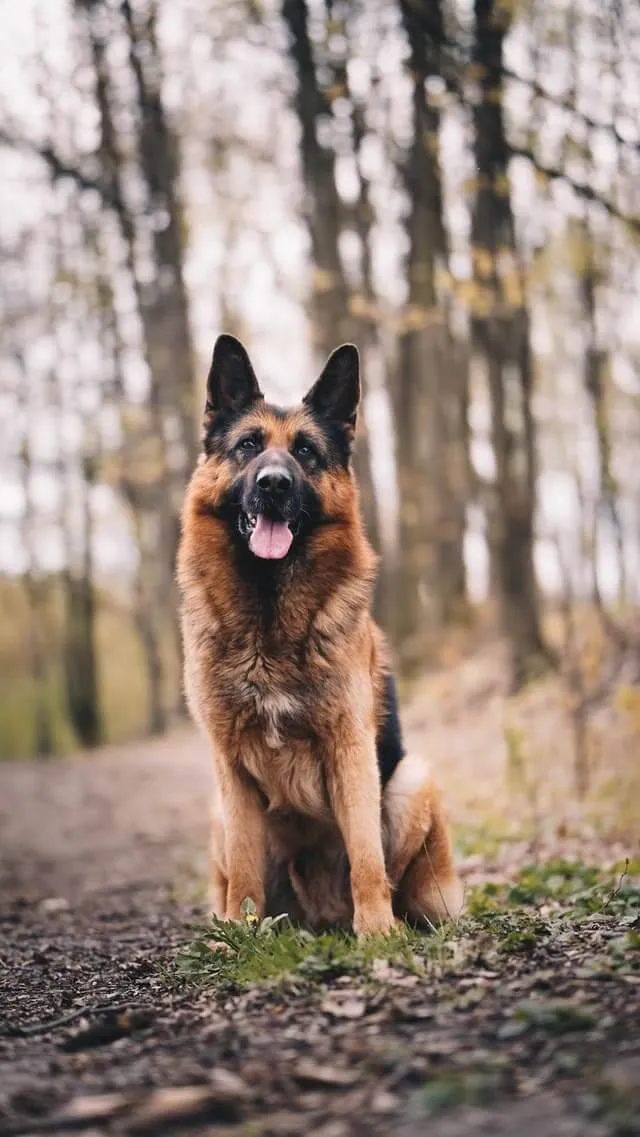
German Shepherd
Health grade DThe German Shepherd is a highly intelligent, incredibly cooperative Hütehund (herding dog) and working dog—bred for endurance, work, and absolute loyalty to its owner. It is precisely this unconditional willingness to perform that makes them the perfect partner, but also a dog that quickly withers away without a job to do.
- Height55–65 cm
- Weight22–40 kg
- Life expectancy9–13 yrs
- Puppy price1,300–2,500 €
- Energy5/5
The Essentials at a Glance
The German Shepherd is a highly intelligent, incredibly cooperative Hütehund (herding dog) and working dog—bred for endurance, work, and absolute loyalty to its owner. It is precisely this unconditional willingness to perform that makes them the perfect partner, but also a dog that quickly withers away without a job to do.
- Health grade D: The German Shepherd is heavily affected by health risks, with hip and elbow dysplasia remaining the breed's most common orthopedic findings despite decades of selective breeding, and degenerative myelopathy is also more prevalent than average.
- You set clear rules and lead with confidence, as they will immediately respond to any uncertainty by taking control themselves
- You provide them with a real task—whether it's tracking or obedience—since simple walks will leave their intelligent operating system severely under-stimulated
- You expect them to joyfully greet every strange dog in the park—they were bred to seriously protect their pack and territory
Is the German Shepherd right for you?
At a glance
German Shepherd overview
The essentials — key facts, traits, and health priorities — before you dive deeper.
Health grade
Relative to other breeds
S
A
B
C
D
E
Very healthyHigher risk
Elevated risk — responsible breeding really matters.
See full health info & tests →
Note: This health overview is AI-assisted and editorially reviewed. It is for orientation only and does not replace veterinary advice.
Lifespan
9–13 yrs
Height
55–65 cm
Weight
22–40 kg
Practical
- Puppy price: 1,300 – 2,500 €
- Coat: Dense, straight hair, strong undercoat
- Origin: Germany
Temperament
Energy
Trainability
Family fit
With kids
Daily life
Care effort
Shedding
Barking
City-friendly
Guard instinct
What matters most
Especially with a German Shepherd, choosing the right breeder is the single most important decision you'll make. Serious breeders consistently test the parents for inherited conditions, prioritize healthy early socialization, and stay accountable long after handover. A cheap puppy without health screening tends to become the most expensive dog later on.
See HonestDog breeder standards →Colors & coat
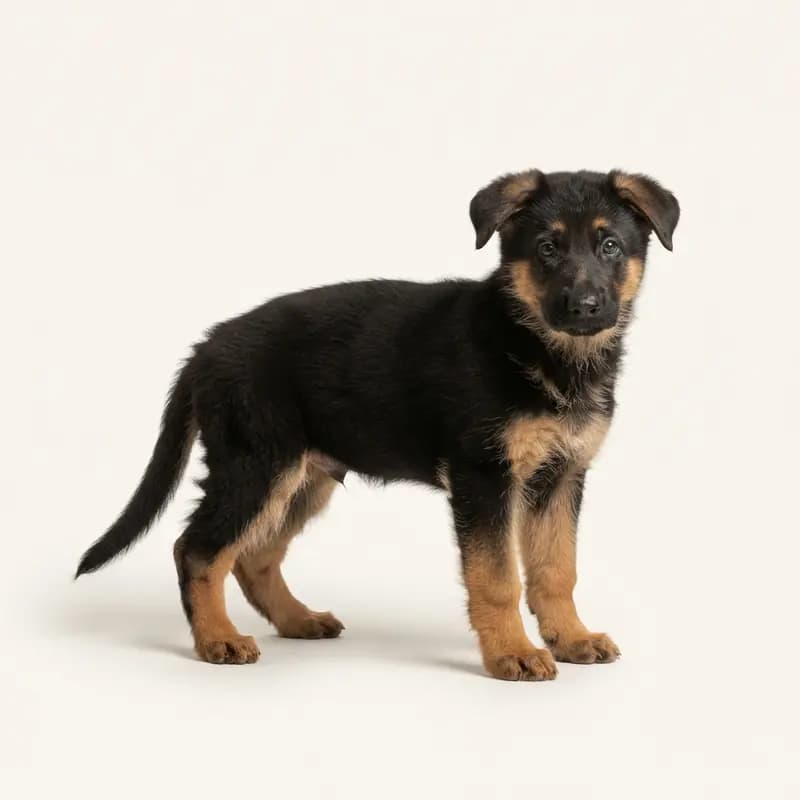
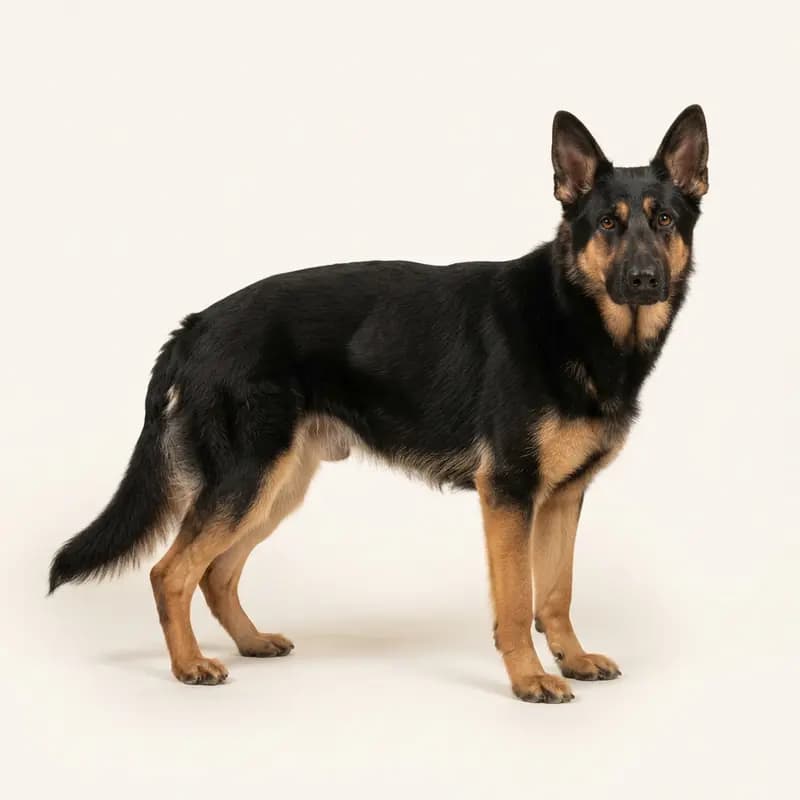
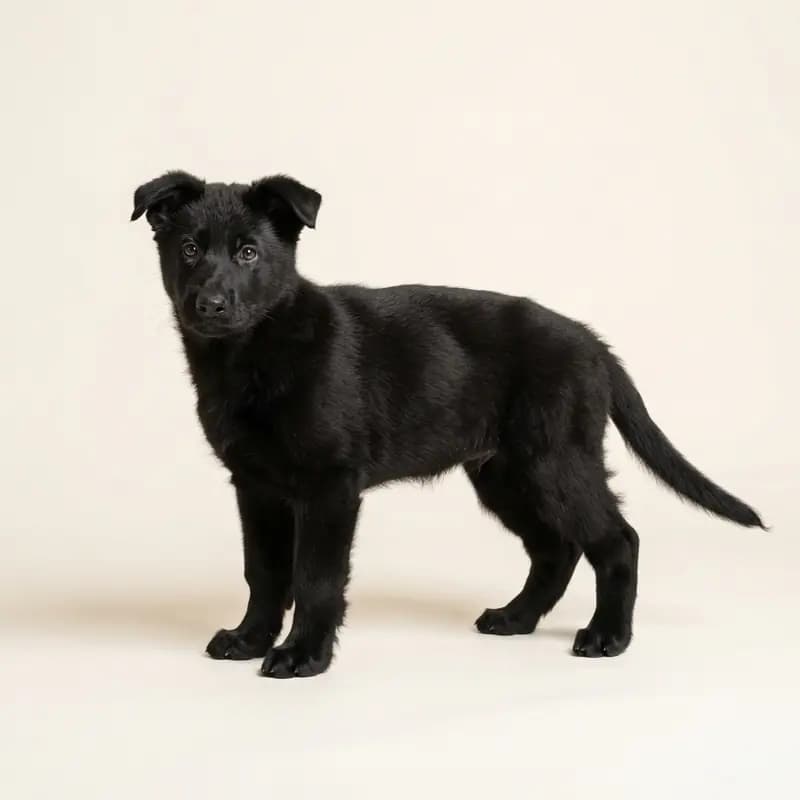
What colors does the German Shepherd come in?
The coat colors you will see in German Shepherd litters — including which ones fall outside the breed standard and which carry genetic risk.
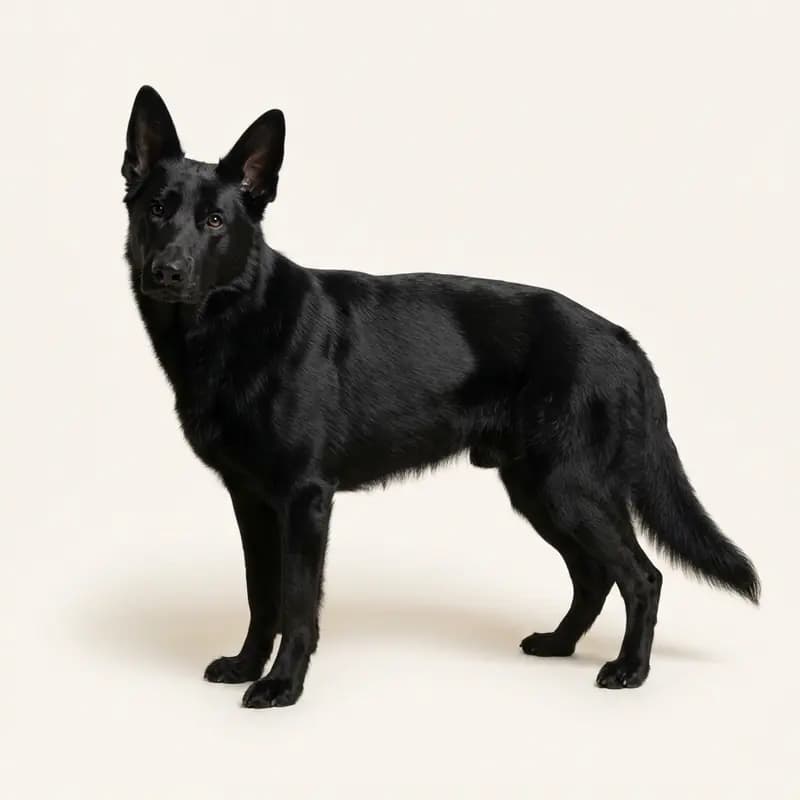
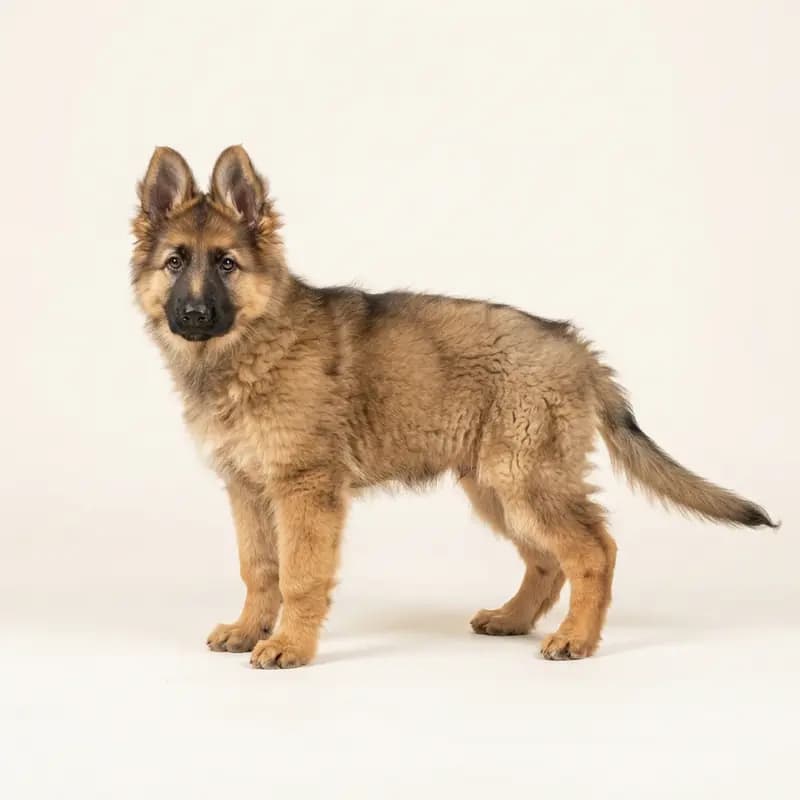
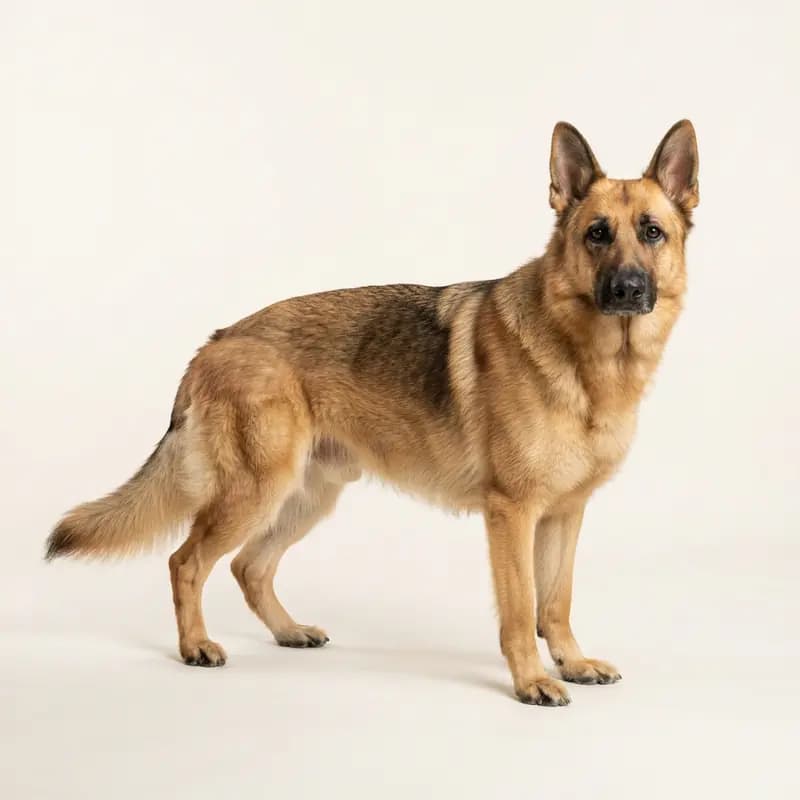
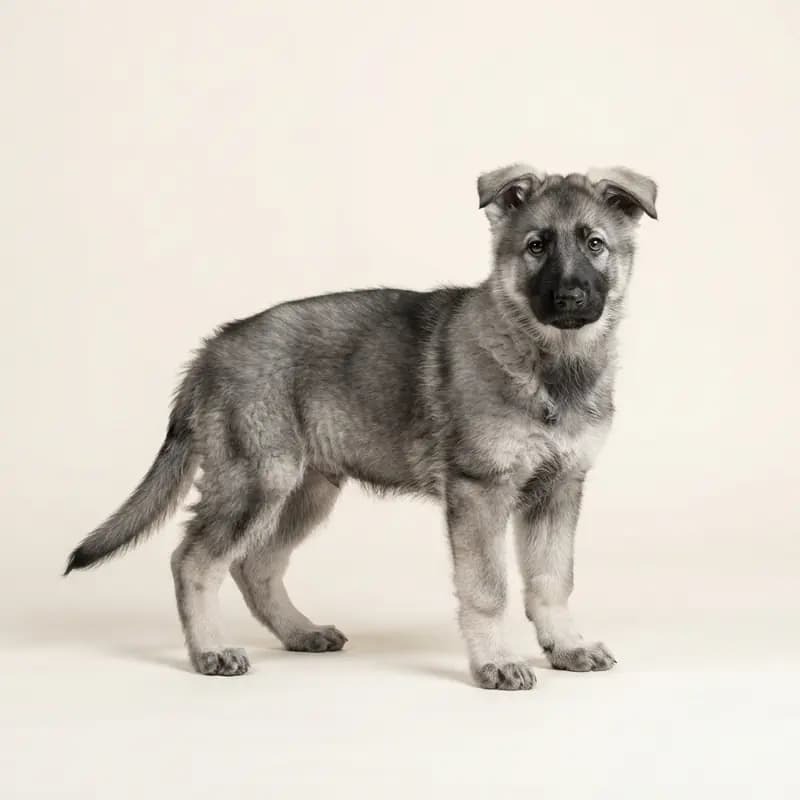
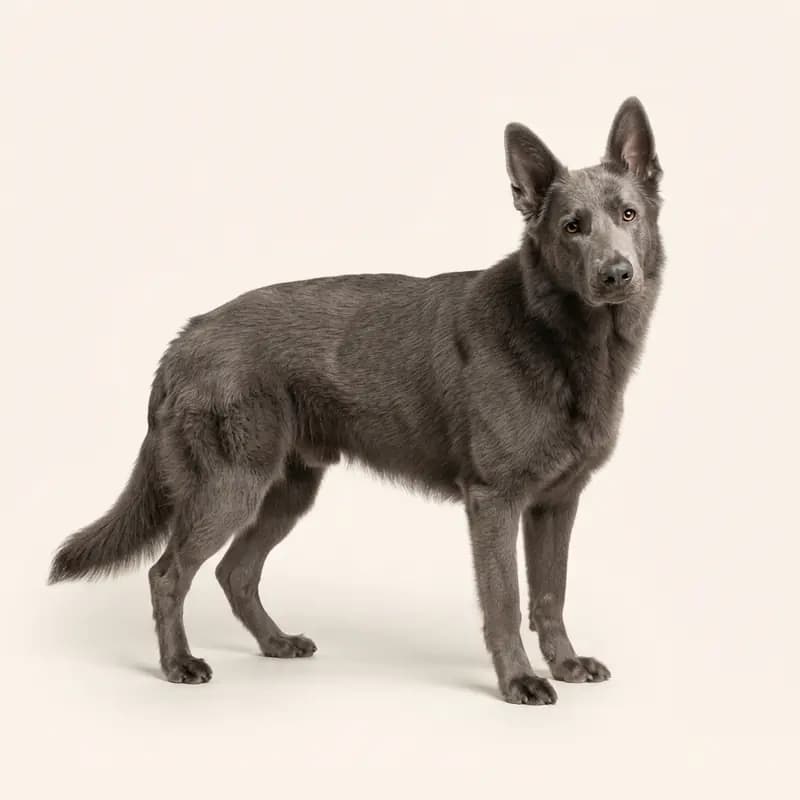
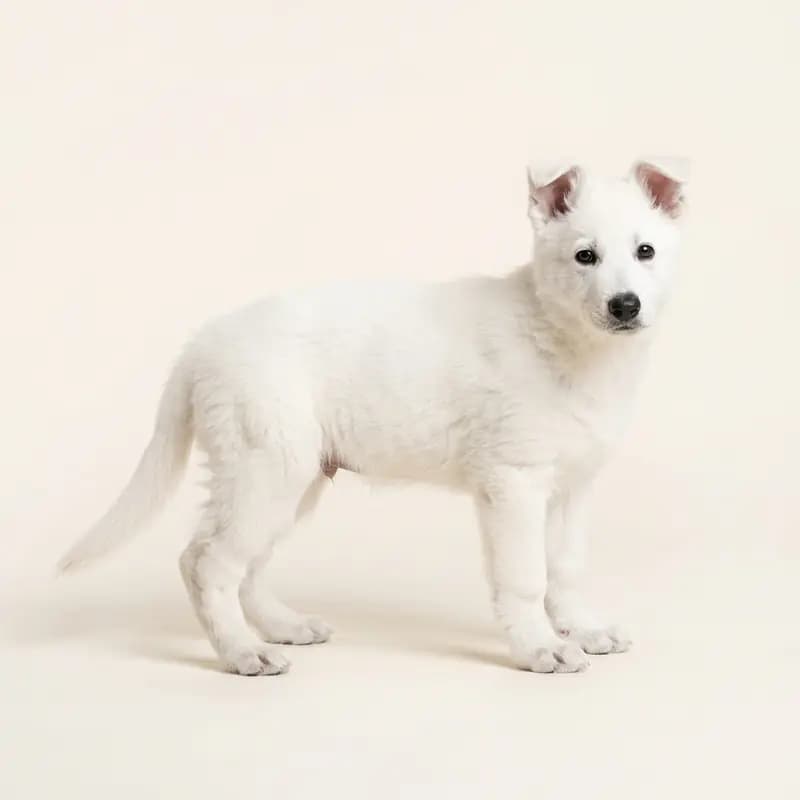
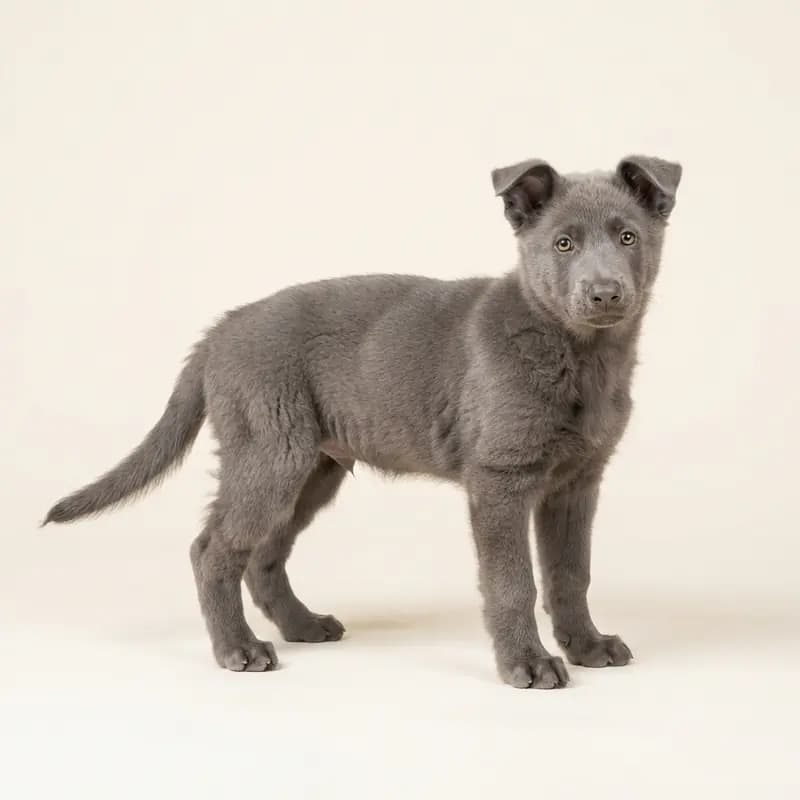
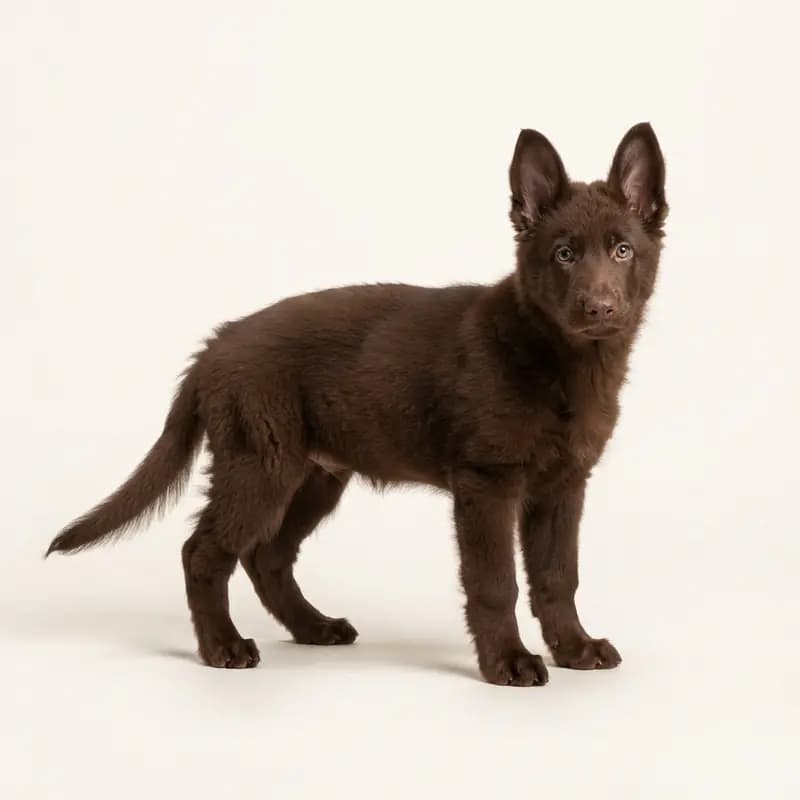
Eye colors
 Brown
Brown
Coat type
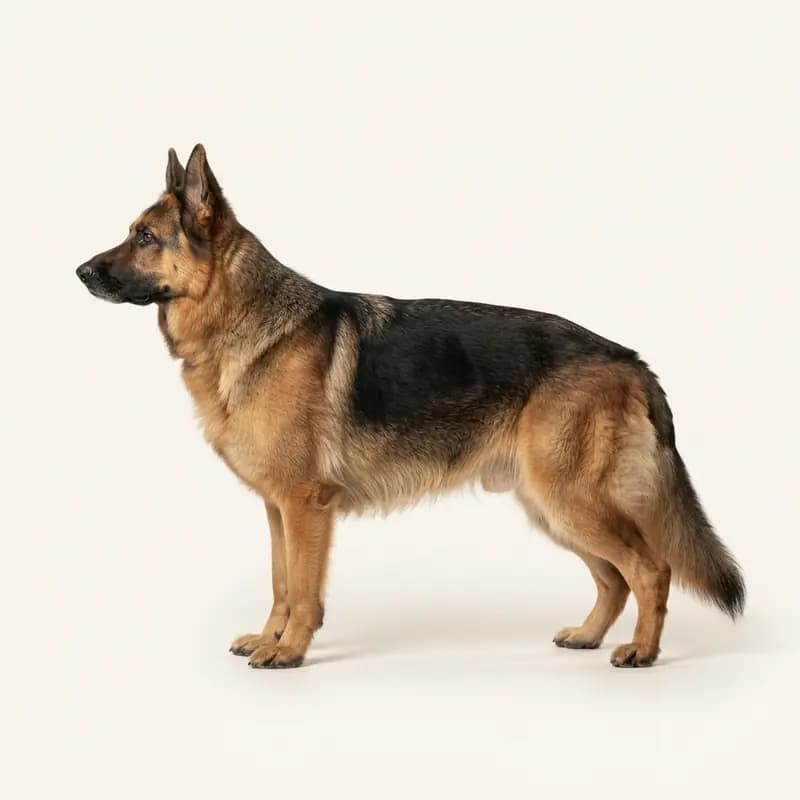 Illustrative image
Medium
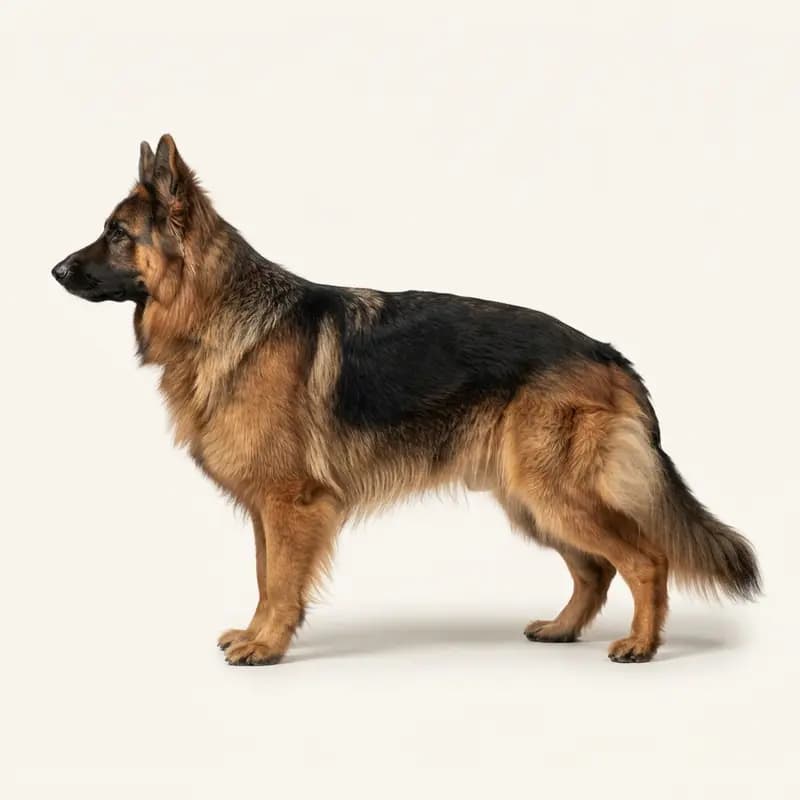 Illustrative image
Long
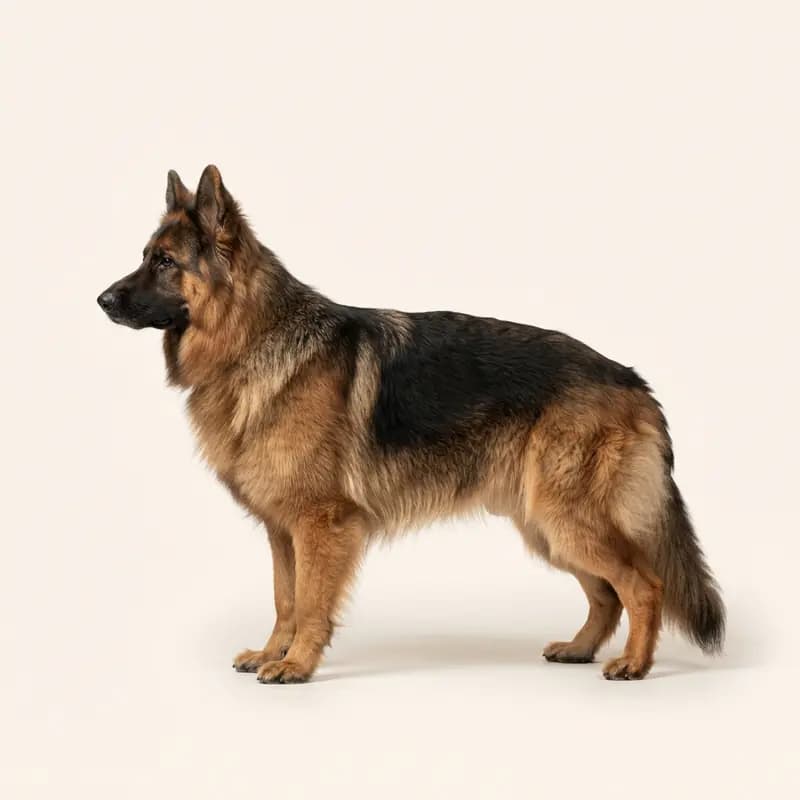 Illustrative image
Double coat
Is the German Shepherd right for you?
The German Shepherd is a highly intelligent, incredibly cooperative Hütehund (herding dog) and working dog—bred for endurance, work, and absolute loyalty to its owner. It is precisely this unconditional willingness to perform that makes them the perfect partner, but also a dog that quickly withers away without a job to do.
Perfect for you if:
- You set clear rules and lead with confidence, as they will immediately respond to any uncertainty by taking control themselves
- You provide them with a real task—whether it's tracking or obedience—since simple walks will leave their intelligent operating system severely under-stimulated
- You are looking for a companion that forms an extremely close bond with its owner and prefers to share every step with you
- You ideally live in a rural area or have a garden, where their vigilant heritage isn't triggered by every noise in the hallway
Less ideal if:
- You expect them to joyfully greet every strange dog in the park—they were bred to seriously protect their pack and territory
- You have little time for consistent training and are looking for a dog that just relaxes and tags along
- You live in a very restless, noisy environment where a quick-reacting dog with a strong protective instinct will be under constant stress
The real vibes check
A German Shepherd is not a dog for passive companionship—they are a highly motivated employee who asks what is on the schedule every single morning. If they don't get a task, they will invent one themselves, and that usually involves tirelessly controlling your surroundings. Honest reality check: There are worlds of difference between the appearance-focused show lines and the extremely driven working lines—choose very wisely which operating system truly fits your everyday life.
Self-check
Would the German Shepherd really fit your life?
Answer 6 quick questions about your everyday life and see how well the German Shepherd fits you — including an honest cost estimate per month, per year, and across the dog's lifetime.
Fit checkCost estimateRisk dice
Takes about 1 minute · free & anonymous
Breed Profile
The German Shepherd is one of the most famous and popular dog breeds worldwide. He belongs to FCI Group 1, Section 1, which includes herding dogs and cattle dogs. The appearance of the German Shepherd Dog is characterized by its strong build, almond-shaped eyes and upright ears, which give it an alert appearance. A special feature is the slightly sloping back. There are two lines within the breed: the working line, which is known for its performance and high energy, and the show line, which is bred more for its appearance. It is important to note that the back of the show line is often more sloping than the working line.
All measurements in detail
- Height
- 55 - 60 cm (Female), 60 - 65 cm (Male)
- Weight
- 22 - 32 kg (Female), 30 - 40 kg (Male)
- Life Expectancy
- 9 - 13 yrs
- Character
- Intelligent, loyal, vigilant
- Coat
- Dense, straight hair, strong undercoat
- Coat Color
- Mostly black with reddish-brown, brown, yellow to light gray markings
- Price
- 1300 - 2500 €
Character & Temperament
The German Shepherd is a highly intelligent and hard-working dog. Due to his origins as a herding dog, he has a strong work instinct. He is extremely people-oriented and forms a close bond with his family. The work line in particular is very energetic and requires both mental and physical exercise. It is advisable to give him tasks to work on, such as nose work, obedience training, or agility. In comparison, the show line often has a somewhat calmer temperament, but still requires a lot of exercise. German Shepherds usually learn quickly to stay alone, but early and consistent training is essential to prevent problematic behavior. His high intelligence and learning ability also mean that he can be prone to hyperactivity if not given enough encouragement. He is an excellent watchdog and exhibits natural protective behavior without being overly aggressive. When it comes to prey catching behavior, it is important to know that due to their herding instinct, they may tend to chase after moving objects. That's why it's important to start training retrieval skills and building a good bond as early as puppyhood.
| Trainability Bred to work closely alongside humans. | Highly trainable |
| Watchfulness Strong territorial instinct — may actively confront intruders. | Very high |
| Openness to Strangers Neither pushily friendly nor suspicious. | Neutral |
| Hunting or Herding Drive This drive runs deep — no amount of training eliminates it. | Very strong |
Fun Fact!
The German Shepherd was originally bred for sheep herding, but is now one of the most widely used breeds for police and military services worldwide due to its intelligence and versatility.
What Awaits You
German Shepherds are versatile dogs that need meaningful activity. They are alert and territorial. They are considered good family dogs, but only with the appropriate training and activity. In addition to the stockhair coat variant, there is also the longstockhair coat variant, also known as the Old German Shepherd Dog.
Housing & Care
German Shepherds are active and intelligent dogs that require plenty of exercise and mental stimulation. They are more suitable for rural areas or houses with gardens than for purely residential living in the city. However, they can also be kept in the city if there is enough exercise and activity. When it comes to children, German Shepherds tend to be very family friendly and can get along well with older children. Small children should always be supervised as the dog could unintentionally be too rough due to its size. German Shepherds can also get along well with other pets, including cats, especially if they are used to it from an early age.
- Family Friendly
Loves family life and thrives in a group.
Family-oriented - Child Friendly
Gets on well with children — with adult supervision.
With supervision - Dog Friendly
Usually gets on fine with other dogs.
Generally tolerant - City Friendly
Can manage in the city, but only with very active owners.
Difficult in cities
Owning a dog is a privilege, but it's also a real responsibility. Before you bring one into your life, be honest with yourself about the commitment it takes.
Training & Education
German Shepherds are known for their high learning abilities, which makes them great candidates for various dog sports and tasks. Although they were primarily bred as working dogs, they can also excel in obedience, agility, mantrailing and many other activities. It is important to take into account the dog's natural need for activity, but also to be careful not to "over-occupy" the dog. An overexcited German Shepherd may become a "ball junkie," a "jogger fright," or develop other obsessive behaviors. The German Shepherd dog naturally has a strong protective and working instinct. It is important that he learns early to tolerate frustration, control impulses, and not drown in overprotective or herding behavior. Good socialization and fostering a strong bond between dog and owner are essential. Training should always be positive and reward-based to build a strong bond between you and your dog. German Shepherds tend to be very personable, and positive training fosters this bond. Finally, it is essential to consider and encourage the German Shepherd's natural temperament and dispositions, while providing alternative activities and training to ensure the dog is a well-adjusted and happy member of the family. This is particularly important for dogs that come from working lines and therefore have an increased need for physical and mental activity. Please note that owning a German Shepherd requires a lot of time, commitment and understanding. If you are willing to invest this, you will be rewarded with a loyal, intelligent and versatile companion who will enrich your life in countless ways.
Nutrition & Care
Proper nutrition is crucial to your German Shepherd's health and well-being. A balanced diet with high-quality, protein-rich food that contains all the necessary nutrients is essential. Due to the susceptibility to gastric torsion, feeding should be done carefully. It is important to maintain a good calcium to phosphorus ratio to support bone health. Special food for large breeds can also help keep joints healthy. In terms of grooming, the German Shepherd has a thick undercoat and long top coat. Regular brushing (about 2-3 times per week) is necessary to prevent tangles and remove dead hair. The German Shepherd dog sheds heavily, especially during the coat change in spring and autumn. When it comes to the climate in Germany, the German Shepherd gets along well. Its fur provides protection from the cold, but caution should be exercised in extreme heat to avoid overheating.
| Care Level Needs regular professional grooming — time-consuming and costly. | High-maintenance |
| Exercise Needs Working-dog energy that needs burning off every single day. | High-drive |
| Shedding Hair everywhere, always — no white clothing survives. | Very heavy |
| Trainability Bred to work closely alongside humans. | Highly trainable |
Our experts are still reviewing this information. Spotted something wrong? Email us at info@honestdog.de.
Health & hereditary diseases
Health
D
Elevated risks
Health grade
The German Shepherd is heavily affected by health risks, with hip and elbow dysplasia remaining the breed's most common orthopedic findings despite decades of selective breeding, and degenerative myelopathy is also more prevalent than average. A responsible breeder actively counteracts this and has their breeding animals comprehensively tested. Before buying, you should definitely ask to see the official results of the examinations prescribed by the Verein für Deutsche Schäferhunde (SV) e.V. for hip dysplasia (HD) with a limit of grade C or better, as well as for elbow dysplasia (ED) with a limit of grade 1 or better. In addition, it is important that you request proof of the recommended DNA tests, such as for pituitary dwarfism, LHX3-associated, where the limit 'free or carrier' applies, provided that a carrier is only mated with a free partner.
Grade is relative to other breeds — AI-assisted and editorially reviewed.
In daily life this can mean
Without conscious management of medication sensitivity and joint-friendly rearing—such as through regular check-ups—health problems and veterinary costs can rise significantly later on.
The breeder's role
Reputable breeders have hips, elbows, and the back examined and use appropriate DNA tests to minimize medication sensitivity, neurological diseases, and known risks in the German Shepherd as much as possible.
Note: This health overview is AI-assisted and editorially reviewed. It is for orientation only and does not replace veterinary advice.
No Health Tests Available
No specific health tests are currently available for this breed.
Costs & where to find one
How much does a German Shepherd cost?
A German Shepherd costs around ~€200 per month (€110 – €380, depending on your setup). The first year adds up to roughly ~€5,130 including purchase, equipment and puppy school; across the dog's life (11 years) it comes to about ~€29,140.
With surgery cover, running costs come to about ~€210 per month — in return, your share of a major operation drops from several thousand euros to around 20 percent.
Per month
~€200
In the first year
~€5,130
Across the dog's life
~€29,140
Purchase from a breeder: €1,300 – €2,500
Estimate at a mid-range setup (suburban, dry food, 1–2 hours of daily exercise), average German prices, as of July 2026.
Calculate your personal costs1-minute self-check with your own answers
Looking for a German Shepherd?
Appearance, variants & origin
History
The full history
The history of the German Shepherd Dog begins in Germany in the 19th century. It was originally bred as a working dog for herding and driving flocks of sheep. His skills, intelligence and loyalty quickly made him a valued herding dog. Max von Stephanitz, a former German cavalry officer, is often considered the father of the breed. He founded the Association for German Shepherd Dogs (SV) in 1899 and laid the foundation for modern breeding.
Original Use
The German Shepherd was bred to be a versatile working dog for herding and protection tasks.
Origin
Germany
Date
1899
Owner experiences
What owners say about the German Shepherd
Philippe M., Halter aus Bayern (Rüde, seit 2023) [3.1.4]
Ich habe einen wundervollen Schäferhund-Rüden, der jetzt etwa 6 Monate alt ist. Vom Wesen her ist er absolut ausgeglichen, trainiert unglaublich gerne und ich bereue meine Entscheidung für diese Rasse keine einzige Sekunde. Er stammt von einer seriösen Züchterin mit Ahnentafel, bei der alle Elterntiere HD/ED-frei waren.
Trotzdem mache ich mir als Halter extrem viele Gedanken um seine Gesundheit, besonders wenn er älter wird. Die typische, stark abfallende Kruppe der Showlinie und seine aktuell noch etwas unrunde Gangart verunsichern mich im Alltag immer wieder.
Zudem liest man im Netz und von Züchtern ständig Warnungen wie „bloß keine Treppen steigen lassen“ oder „keine harten Richtungswechsel“. Tierärzte und Chiropraktiker sagen mir dagegen wieder, dass ein paar Treppenstufen für den Muskelaufbau sogar notwendig sind. Es ist gar nicht so leicht, hier als Besitzer die richtige Balance zwischen Schonen und Fördern zu finden.
Kerstin J., Halterin aus Brandenburg (mehrere Hunde, Langzeiterfahrung)
Ich bin quasi mit Deutschen Schäferhunden großgeworden, da meine Eltern immer welche hatten. Für mich sind sie einfach fantastische Begleiter: Sie sind extrem anhänglich, gelehrig, führig und absolut treu. Wenn man sich auf sie einlässt, bekommt man einen Partner fürs Leben.
Allerdings muss man auch ehrlich sagen, dass man bei dieser Rasse beim Thema Hüftdysplasie (HD) wirklich sehr aufpassen muss. Früher hat sich darüber kaum jemand Gedanken gemacht, aber heute ist das ein wichtiges Thema bei der Anschaffung.
Ein Schäferhund ist ein Hund, den man unglaublich leicht erziehen kann – den man aber genauso schnell völlig verhunzen kann, wenn man nicht konsequent bleibt. In den falschen Händen, wo der Hund nur auf dem Hundeplatz funktionieren muss, aber im Alltag nicht sauber geführt wird, kann es schnell anstrengend werden.
Paraphrased from real owner reports
Loading owner stories
Community Posts
FAQ & more
Frequently asked questions about the German Shepherd
Is a German Shepherd the right dog for me?
The German Shepherd is an active dog that needs plenty of exercise and mental stimulation. Research the temperament, grooming needs, and space requirements before deciding.
How long does a German Shepherd live?
The average life expectancy of a German Shepherd is 9-13 years. With proper care and regular vet visits, your dog can live a long, healthy life.
How much grooming does a German Shepherd need?
German Shepherd grooming requirements include regular brushing, nail trimming, and dental care. HonestDog provides detailed grooming tips for every breed.
Is a German Shepherd good for families with children?
The German Shepherd can be a great family dog. Proper training and socialization are key. HonestDog provides family suitability information for every breed.
What colors does the German Shepherd come in?
The German Shepherd comes in these colors: Black and tan, Black, Sable, Grey, White, Blue, Liver. Colors that fall outside the breed standard are marked as such on the breed page.
Loading related articles
Are you a German Shepherd breeder?
Showcase your kennel on HonestDog and reach families searching for a responsibly bred German Shepherd.
Why HonestDog?
What makes HonestDog different from other platforms
Full transparency
We lay out what we have: who the breeder is, how they work, and any health records they've uploaded. So you can judge for yourself.
Responsible breeding, assured
Every breeder on HonestDog has their identity and documents checked before their profile goes live. Health records they upload are shown on the profile, so you can see exactly what has been tested.
Trust and verification
We verify breeders and buyers alike, so every conversation happens on solid ground. It's a new standard of trust in dog breeding.
Less hassle, more time
We've already checked the breeders' documents and gathered the details, so you can skip the endless research and focus on finding the right puppy for your family.
Our Mission

We connect dog lovers with responsible breeders and shelters to ensure every dog finds the perfect home.
Founded by dog enthusiasts, our platform focuses on ethical dog breeding and adoption.
Why HonestDog?
We connect you with vetted breeders and shelters so you can find your — your new companion — with confidence.
Vetted Partners
Only verified breeders and shelters — for a safe start.
Highest Standards
Every animal's health and wellbeing is our top priority.
Guides & Resources
Guides, checklists, and breed profiles — so you can make a well-informed decision.