Loading breed
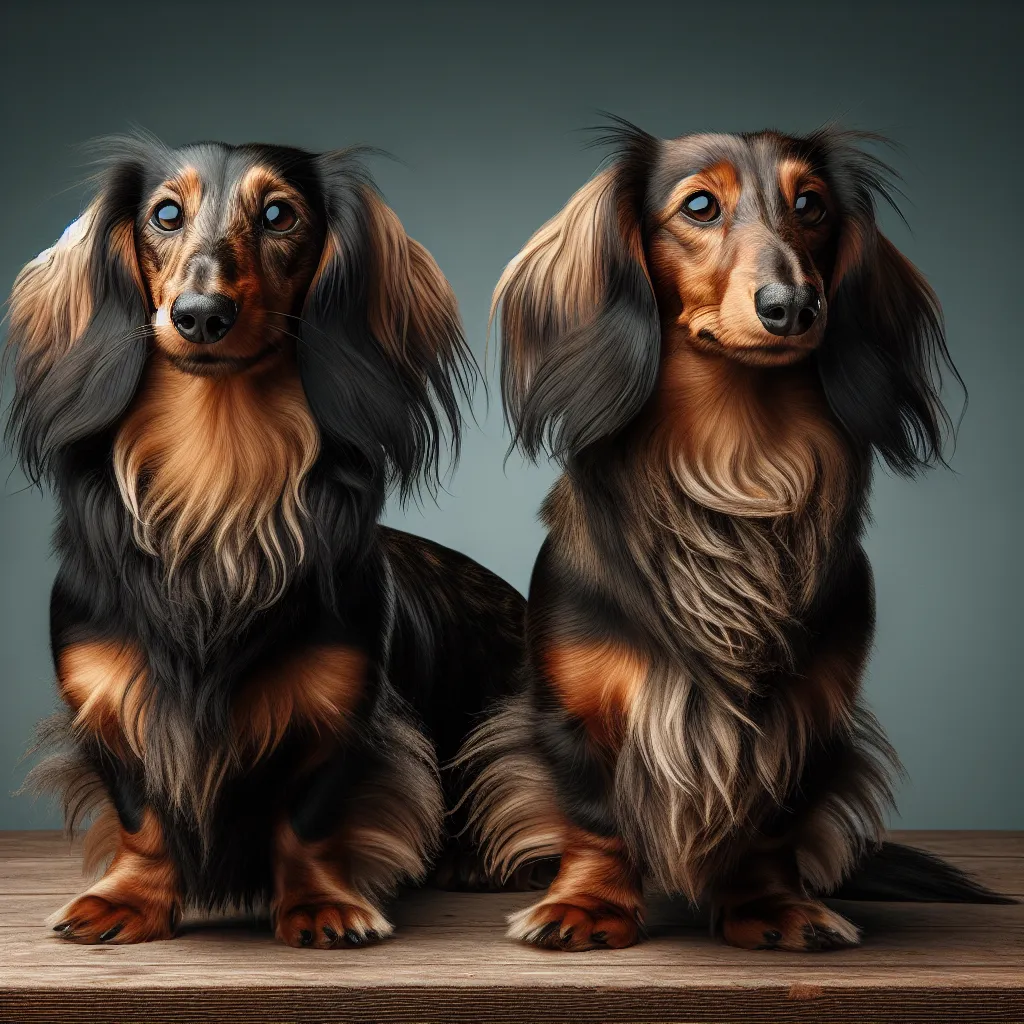
Long-haired Dachshund
Health grade DThe Long-haired Dachshund is an elegant, uncompromisingly independent Baujäger (earth dog/burrow hunter) — bred to make decisions completely autonomously underground and to fearlessly face defensive prey, all while the unwavering heart of a true earth dog beats beneath its silky coat.
- Height20–27 cm
- Weight6–9 kg
- Life expectancy12–16 yrs
- Puppy price1,200–2,500 €
- Energy3/5
The Essentials at a Glance
The Long-haired Dachshund is an elegant, uncompromisingly independent Baujäger (earth dog/burrow hunter) — bred to make decisions completely autonomously underground and to fearlessly face defensive prey, all while the unwavering heart of a true earth dog beats beneath its silky coat.
- Health grade D: The Long-haired Dachshund is graded D for health, as there are significant breed-specific problems.
- You bring humor and calm consistency to the table, as blind obedience goes against its deeply rooted nature as a decisive Baujäger.
- You are prepared to challenge its clever mind with demanding scent work or tracking, rather than just mindlessly clocking up miles.
- You expect it to turn around immediately at the sound of your voice when it spots a hare — it was bred specifically to track scents independently and persistently to the very end.
Is the Long-haired Dachshund right for you?
At a glance
Long-haired Dachshund overview
The essentials — key facts, traits, and health priorities — before you dive deeper.
Health grade
Relative to other breeds
S
A
B
C
D
E
Very healthyHigher risk
Elevated risk — responsible breeding really matters.
See full health info & tests →
Note: This health overview is AI-assisted and editorially reviewed. It is for orientation only and does not replace veterinary advice.
Lifespan
12–16 yrs
Height
20–27 cm
Weight
6–9 kg
Practical
- Puppy price: 1,200 – 2,500 €
- Coat: Silky, long, no undercoat
- Origin: Germany
Temperament
Energy
Trainability
Family fit
With kids
Daily life
Care effort
Shedding
Barking
City-friendly
Guard instinct
What matters most
Especially with a Long-haired Dachshund, choosing the right breeder is the single most important decision you'll make. Serious breeders consistently test the parents for inherited conditions, prioritize healthy early socialization, and stay accountable long after handover. A cheap puppy without health screening tends to become the most expensive dog later on.
See HonestDog breeder standards →Colors & coat
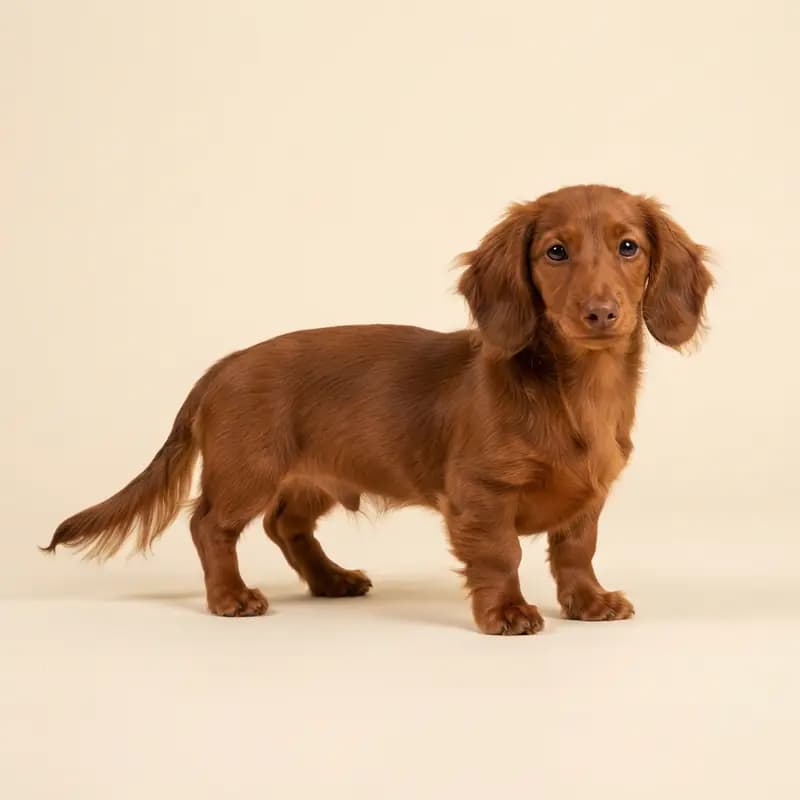
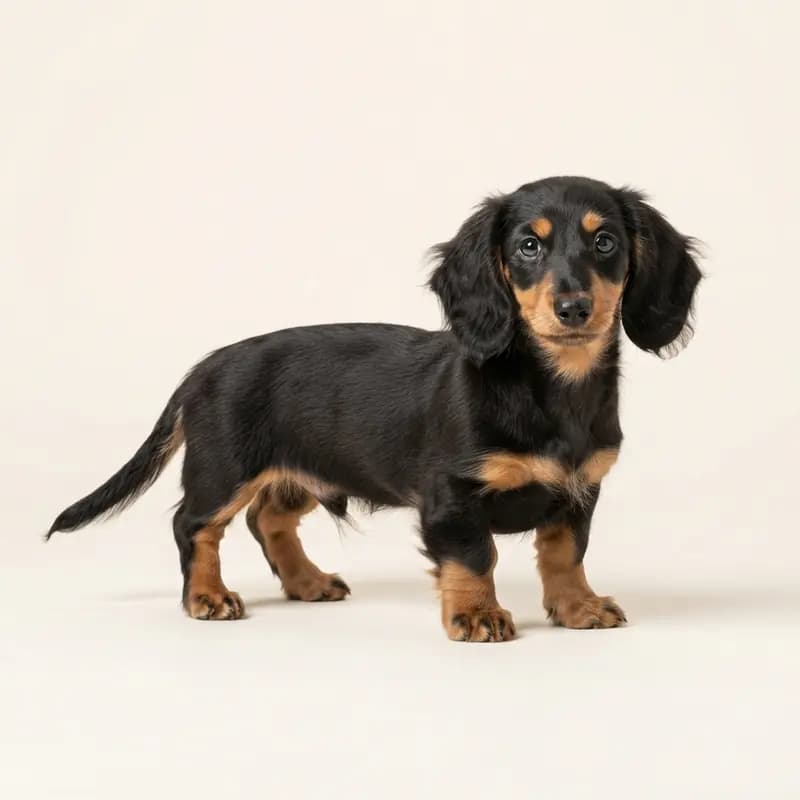
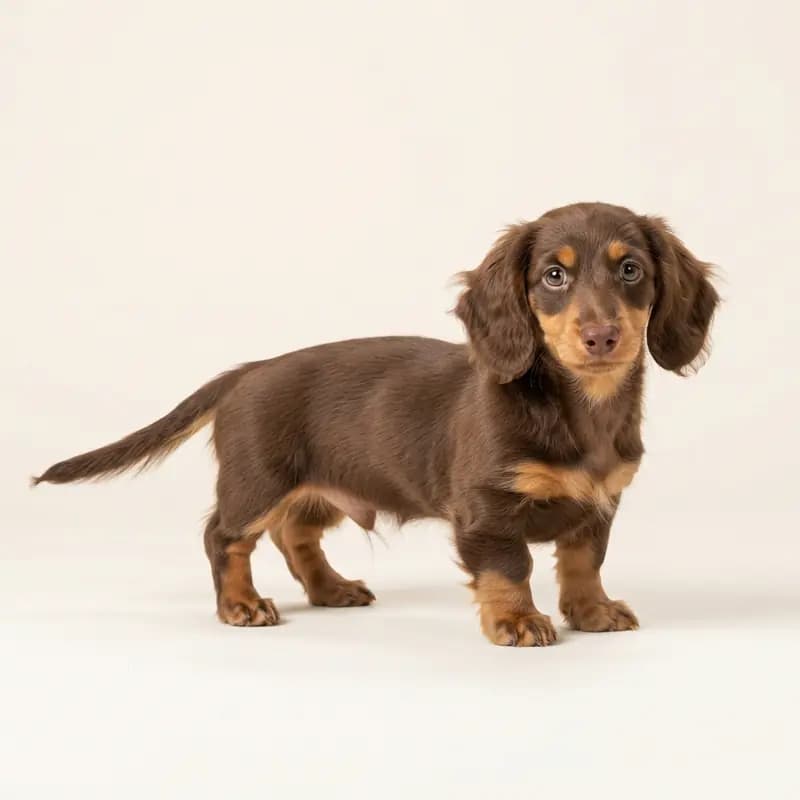
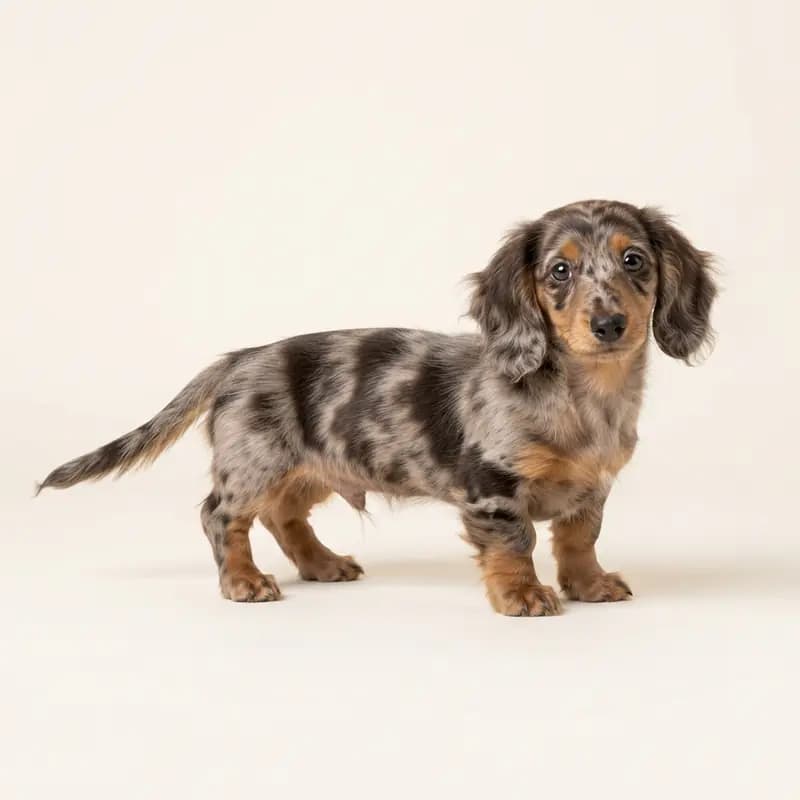
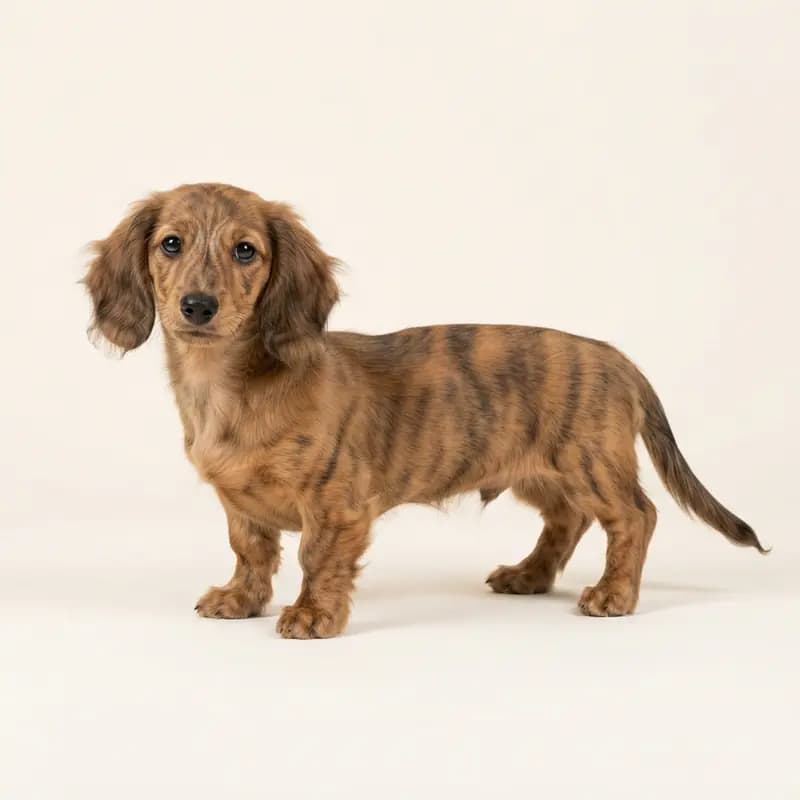
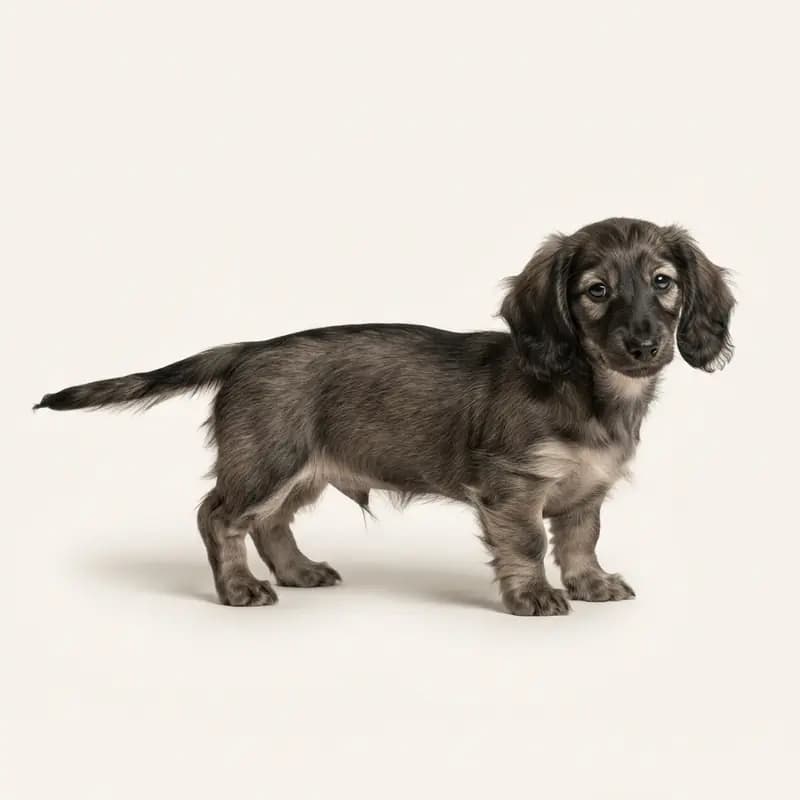
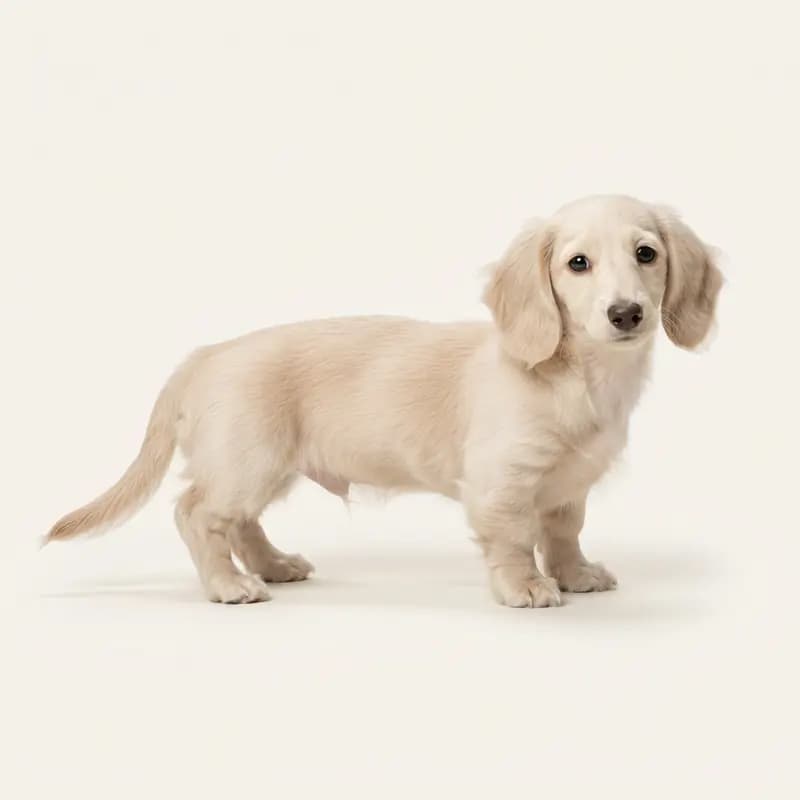
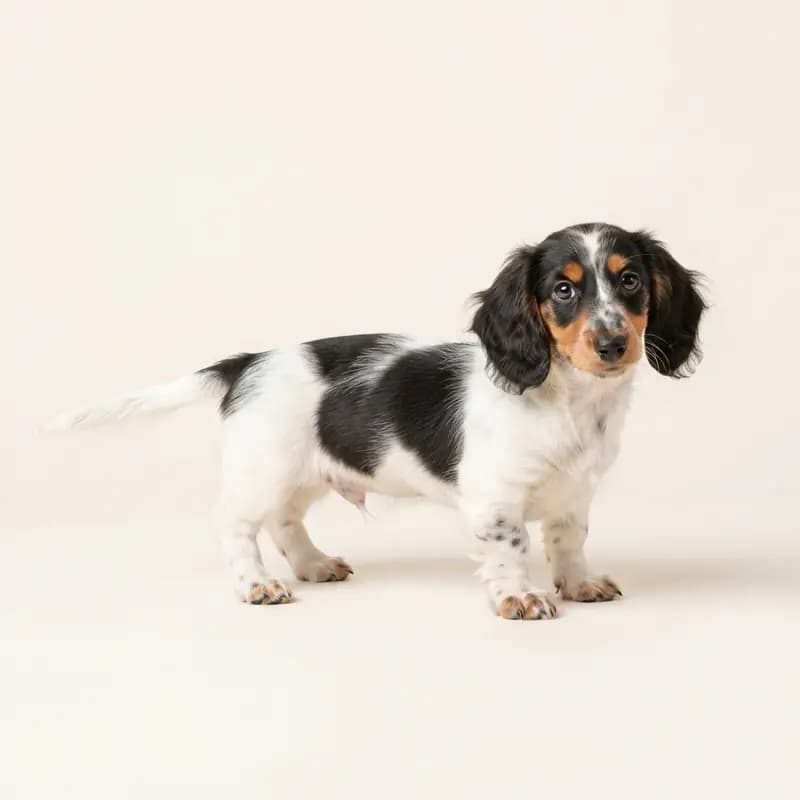
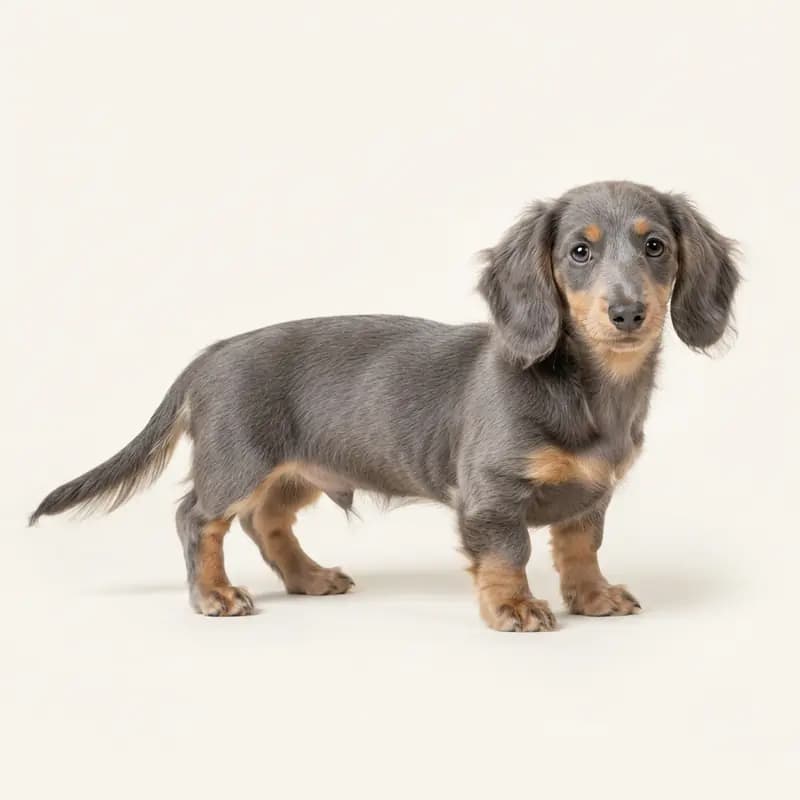
What colors does the Long-haired Dachshund come in?
The coat colors you will see in Long-haired Dachshund litters — including which ones fall outside the breed standard and which carry genetic risk.
Eye colors
 Brown
Brown Blue
Blue
Coat type
 Long
Long Silky
Silky
Is the Long-haired Dachshund right for you?
The Long-haired Dachshund is an elegant, uncompromisingly independent Baujäger (earth dog/burrow hunter) — bred to make decisions completely autonomously underground and to fearlessly face defensive prey, all while the unwavering heart of a true earth dog beats beneath its silky coat.
Perfect for you if:
- You bring humor and calm consistency to the table, as blind obedience goes against its deeply rooted nature as a decisive Baujäger.
- You are prepared to challenge its clever mind with demanding scent work or tracking, rather than just mindlessly clocking up miles.
- You remain patient during walks in wooded areas and establish a reliable long-line routine in case its hunting instinct kicks in.
- You are looking for an extremely affectionate companion who, despite the independence shown outdoors, prefers close physical contact on the sofa once inside.
Less ideal if:
- You expect it to turn around immediately at the sound of your voice when it spots a hare — it was bred specifically to track scents independently and persistently to the very end.
- You live in a thin-walled apartment and have noise-sensitive neighbors, as its surprisingly loud, vigilant voice loves to comment on every strange sound in the hallway.
- You are looking for a light-footed, athletic companion for extended jogging sessions, agility, or long bike rides, for which its anatomy is simply not built.
The real vibes check
A Dachshund doesn't argue; it decides. What is vital for survival down in a dark fox den, it applies with the same conviction in your living room — just wrapped in a charming look that often makes you forget its stubbornness in a split second. You aren't getting a submissive order-follower, but a huge, unshakeably confident personality on very short legs.
Self-check
Would the Long-haired Dachshund really fit your life?
Answer 6 quick questions about your everyday life and see how well the Long-haired Dachshund fits you — including an honest cost estimate per month, per year, and across the dog's lifetime.
Fit checkCost estimateRisk dice
Takes about 1 minute · free & anonymous
Breed Profile
The long-haired dachshund is a distinctive dog breed that belongs to the dachshund group and was originally bred for hunting badgers and other game. Its long, shiny coat gives it an elegant yet sturdy appearance. The dachshund's body is elongated with short, strong legs, allowing it to work even in tight burrows. The expressive eyes and long, hanging ears emphasize its charming and lively character. Within the breed, there are different size variants, including standard, miniature, and rabbit, which differ in weight and body size. The long-haired dachshund is known for its endurance, intelligence, and independent will, making it a loyal and sometimes stubborn companion. Its friendly and affectionate nature makes it very popular both as a hunting dog and as a family pet.
All measurements in detail
- Height
- 20 - 27 cm (Female), 20 - 27 cm (Male)
- Weight
- 6 - 9 kg (Female), 6 - 9 kg (Male)
- Life Expectancy
- 12 - 16 yrs
- Character
- Loyal, intelligent, self-confident
- Coat
- Silky, long, no undercoat
- Coat Color
- Red, black, and brown mixed
- Price
- 1200 - 2500 €
Character & Temperament
The long-haired dachshund is a lively and headstrong dog with a distinct character. Despite its compact size, it shows great courage and remarkable endurance, making it an excellent hunting companion. It is very affectionate towards its family and shows a strong bond, enjoying being the center of attention and seeking a lot of it. Its long, silky coat requires regular care, which fosters close cooperation between dog and owner. The long-haired dachshund is intelligent and learns quickly but can also be stubborn, so consistent and patient training is important. It has a strong hunting instinct, expressed in a strong tendency to follow scents and movements. Therefore, early training in impulse control and recall is essential. Despite its hunting drive, the long-haired dachshund is a loving family dog that gets along well with children when properly socialized. It needs sufficient exercise and mental stimulation to remain balanced, as under-stimulation can lead to restlessness and undesirable behavior. As a watchdog, it shows watchful and suspicious behavior towards strangers without being aggressive. Overall, the long-haired dachshund is a loyal, lively, and intelligent companion that brings much joy with the right guidance and sufficient activity.
| Trainability Has its own ideas and will test limits. | Strong-willed |
| Watchfulness Reports unusual activity but stays controlled. | Moderate |
| Openness to Strangers Neither pushily friendly nor suspicious. | Neutral |
| Hunting or Herding Drive Powerful instinct that can override recall when triggered. | Strong |
Fun Fact!
Dachshund (Long-haired): The long-haired dachshund impresses not only with its silky coat but also with its unwavering hunting instinct. Despite its short legs, it is a brave and persistent pursuer that was formerly used in narrow fox burrows – a true little adventurer with a big heart!
What Awaits You
The long-haired dachshund is a lively and headstrong dog with a friendly nature. It is characterized by its long, soft hair and courageous character. Despite its small size, it is a persistent hunting dog that likes to be active and requires consistent training. The long-haired dachshund is well suited as a family dog if it receives enough activity and attention.
Housing & Care
Dachshund (Long-haired): Long-haired dachshunds are lively and curious dogs that, despite their small size, have a lot of energy and endurance. They are very affectionate and form a close bond with their owners, which makes them well suited as family dogs. Due to their hunting instinct, they should be well socialized early on to enable harmonious coexistence with other dogs and pets. Long-haired dachshunds need regular exercise and mental stimulation to stay balanced, but they are also suitable for city life if sufficient walks and activities are provided. They usually get along well with children but should be handled carefully because of their sensitive spine.
- Family Friendly
Loves family life and thrives in a group.
Family-oriented - Child Friendly
Gets on well with children — with adult supervision.
With supervision - Dog Friendly
Usually gets on fine with other dogs.
Generally tolerant - City Friendly
Adapts well to city living and urban environments.
Well-suited to city life
Owning a dog is a privilege, but it's also a real responsibility. Before you bring one into your life, be honest with yourself about the commitment it takes.
Training & Education
Dachshund (Long-haired): Long-haired dachshunds are independent and intelligent dogs that require consistent but loving training. Although they are not as easy to train as Labradors or German Shepherds, they show a high willingness to learn when the training is varied and motivating. Due to their hunting drive, it is important to promote impulse control and frustration tolerance early on so that they do not become stubborn or headstrong. Training should be playful and patient, with short, regular sessions to maintain the dachshund's attention. Reward-based training with praise and small treats works best. Dachshunds are well suited for scent work and search games that stimulate their natural sense of smell and challenge them mentally. It is important not to overwhelm the dachshund and to allow them rest periods, as despite their energy, they also need phases of relaxation. With the right guidance and a lot of patience, the long-haired dachshund develops into a loyal and lively companion who enjoys training together and fits well into family life.
Nutrition & Care
Dachshund (Long-haired): The diet of your long-haired dachshund should be balanced and tailored to its size. High-quality food with a good proportion of proteins and essential nutrients supports its health and energy. Make sure to avoid overweight, as dachshunds are prone to back problems due to their long backs. The long-haired coat of the dachshund requires regular care. Brush your dachshund at least 2-3 times a week to prevent matting and remove loose hair. Especially during the shedding seasons in spring and autumn, more intensive brushing is advisable. Bathing should only be done when necessary to preserve the natural fat layer of the skin. Dachshunds are well adapted to the Central European climate. Their coat protects them from the cold, but they should not be overexerted in extreme temperatures, especially heat. Make sure there is enough shade and water in the summer.
| Care Level Regular brushing and occasional professional grooming. | Moderate |
| Exercise Needs Needs 1–2 hours of real exercise daily. | Active |
| Shedding Regular shedding — dog hair on clothes is now normal. | Moderate |
| Trainability Has its own ideas and will test limits. | Strong-willed |
Our experts are still reviewing this information. Spotted something wrong? Email us at info@honestdog.de.
Health & hereditary diseases
Health
D
Elevated risks
Health grade
The Long-haired Dachshund is graded D for health, as there are significant breed-specific problems. Over 95% of Dachshunds carry the genetic predisposition for intervertebral disc disease (CDDY), and about one in six to seven Dachshunds suffers a herniated disc (IVDD) during their lifetime. A responsible breeder counteracts this through targeted back screening and selective breeding, and also has the parent dogs tested for serious diseases such as osteogenesis imperfecta (OI) (limit: carrier only permitted if the partner is clear), primary lens luxation (PLL), and progressive retinal atrophy, generic. Before buying a puppy, you should ask to see the corresponding test results of the parent dogs, which must also be free of cataracts, patellar luxation (PL), and tail anomalies.
Grade is relative to other breeds — AI-assisted and editorially reviewed.
In daily life this can mean
You should absolutely ensure a lean weight and good muscle development to provide the best possible support for its long back and short joints in everyday life.
The breeder's role
Responsible breeders have the parents' spines, eyes, and bone health checked and pay attention to functional anatomy — though the fundamental risks of this breed cannot be completely eliminated even then.
Note: This health overview is AI-assisted and editorially reviewed. It is for orientation only and does not replace veterinary advice.
No Health Tests Available
No specific health tests are currently available for this breed.
Costs & where to find one
How much does a Long-haired Dachshund cost?
A Long-haired Dachshund costs around ~€170 per month (€90 – €300, depending on your setup). The first year adds up to roughly ~€4,660 including purchase, equipment and puppy school; across the dog's life (14 years) it comes to about ~€30,410.
With surgery cover, running costs come to about ~€160 per month — in return, your share of a major operation drops from several thousand euros to around 20 percent.
Per month
~€170
In the first year
~€4,660
Across the dog's life
~€30,410
Purchase from a breeder: €1,200 – €2,500
Estimate at a mid-range setup (suburban, dry food, 1–2 hours of daily exercise), average German prices, as of July 2026.
Calculate your personal costs1-minute self-check with your own answers
Looking for a Long-haired Dachshund?
HonestDog Concierge
No verified Long-haired Dachshund breeders on HonestDog yet
We currently have no breeders for this breed who have passed our verification. Create your short buyer profile: we'll set up your search alert, review a possible source and email you within 28 days.
Appearance, variants & origin
History
The full history
The history of the dachshund (long-haired) dates back to the 15th century, when dogs were bred in Germany specifically suited for hunting badgers. Due to their short stature, long bodies, and strong legs, they could easily enter narrow burrows. The long-haired dachshund originated from crossing with long-haired hunting dogs, which gave it a weather-resistant coat. In the 19th century, the dachshund was further standardized in Germany and became very popular as a versatile hunting and companion dog. In 1888, the first dachshund club was founded to promote the breeding and preservation of the breed. Today, the long-haired dachshund is not only a valued hunting dog but also a popular family pet.
Original Use
The long-haired dachshund emerged as a versatile hunting dog, ideal for hunting in forests and fields.
Origin
Germany
Date
1800
Owner experiences
What owners say about the Long-haired Dachshund
Sabine W., Halterin aus Hessen (Rüde, seit 2012)
Ich habe einen Langhaardackel-Rüden aus einer reinen Showlinie. Er ist unglaublich anhänglich und menschenbezogen. Manchmal habe ich das Gefühl, er wäre erst dann richtig zufrieden, wenn ich ihn mir direkt an den Bauch tackern würde, damit er wirklich überall dabei sein kann! Er weicht mir kaum von der Seite und liebt die Nähe zu seinen Menschen über alles.
Da seine Eltern nicht jagdlich geführt wurden und wir von Anfang an konsequent trainiert haben, kann ich ihn beim Spazierengehen relativ problemlos ableinen. Zur Auslastung machen wir hobbymäßig Mantrailing und Dummy-Arbeit, was ihm riesigen Spaß macht. Man muss sich aber bewusst sein, dass man bei einem Dackel immer konsequent bleiben muss – den typischen Dickkopf haben sie trotz ihrer sanften Art nämlich trotzdem.
Julia R., Halterin aus Bayern (Rüde, bis 2020)
Mein erster Dackel war ein roter Langhaar-Standardrüde. Obwohl seine Eltern reine Familienhunde waren und überhaupt nicht jagdlich geführt wurden, hatte er einen Jagdtrieb ohne Ende – das war sogar viel extremer als bei meinen späteren Rauhaardackeln. Er war extrem auf Spur und Sicht fixiert.
Man darf niemals blauäugig davon ausgehen, dass ein Langhaardackel wegen seines weicheren, eleganten Aussehens keinen Jagdtrieb hat. Es sind und bleiben im Herzen leidenschaftliche Jagdhunde. Ihn einfach so im Wald frei laufen zu lassen, war bei uns trotz aller Mühe im Training utopisch. Man muss sich auf diese Eigenständigkeit einstellen und darf die Erziehung nicht unterschätzen.
Paraphrased from real owner reports
Loading owner stories
FAQ & more
Frequently asked questions about the Long-haired Dachshund
Is a Long-haired Dachshund the right dog for me?
The Long-haired Dachshund is an adaptable dog that adjusts well to various lifestyles. Research the temperament, grooming needs, and space requirements before deciding.
How long does a Long-haired Dachshund live?
The average life expectancy of a Long-haired Dachshund is 12-16 years. With proper care and regular vet visits, your dog can live a long, healthy life.
How much grooming does a Long-haired Dachshund need?
Long-haired Dachshund grooming requirements include regular brushing, nail trimming, and dental care. HonestDog provides detailed grooming tips for every breed.
Is a Long-haired Dachshund good for families with children?
The Long-haired Dachshund can be a great family dog. Proper training and socialization are key. HonestDog provides family suitability information for every breed.
What colors does the Long-haired Dachshund come in?
The Long-haired Dachshund comes in these colors: Red, Black and tan, Brown and tan, Merle, Brindle, Wild boar, Cream, Piebald, Blue and tan. Colors that fall outside the breed standard are marked as such on the breed page.
Loading related articles
Are you a Long-haired Dachshund breeder?
Showcase your kennel on HonestDog and reach families searching for a responsibly bred Long-haired Dachshund.
Why HonestDog?
What makes HonestDog different from other platforms
Full transparency
We lay out what we have: who the breeder is, how they work, and any health records they've uploaded. So you can judge for yourself.
Responsible breeding, assured
Every breeder on HonestDog has their identity and documents checked before their profile goes live. Health records they upload are shown on the profile, so you can see exactly what has been tested.
Trust and verification
We verify breeders and buyers alike, so every conversation happens on solid ground. It's a new standard of trust in dog breeding.
Less hassle, more time
We've already checked the breeders' documents and gathered the details, so you can skip the endless research and focus on finding the right puppy for your family.
Our Mission

We connect dog lovers with responsible breeders and shelters to ensure every dog finds the perfect home.
Founded by dog enthusiasts, our platform focuses on ethical dog breeding and adoption.
Why HonestDog?
We connect you with vetted breeders and shelters so you can find your — your new companion — with confidence.
Vetted Partners
Only verified breeders and shelters — for a safe start.
Highest Standards
Every animal's health and wellbeing is our top priority.
Guides & Resources
Guides, checklists, and breed profiles — so you can make a well-informed decision.