Loading breed
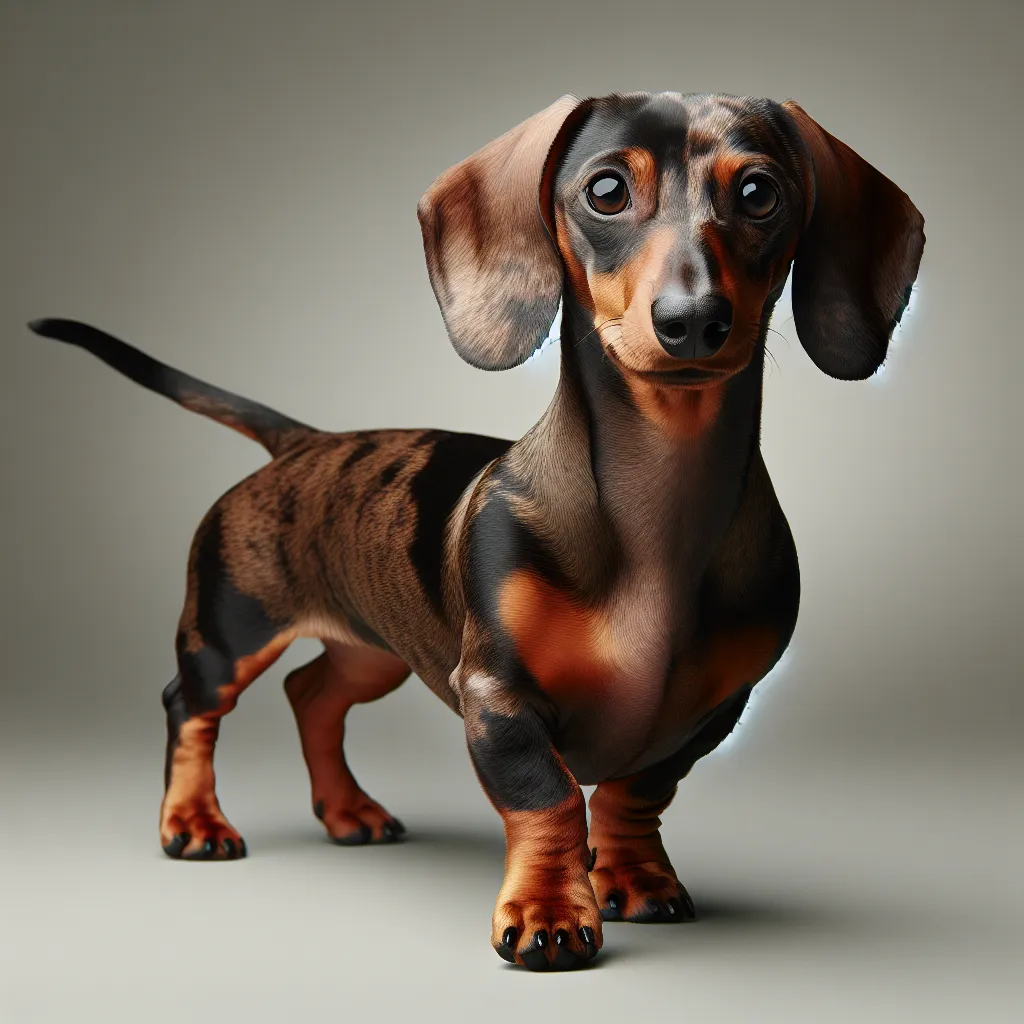
Smooth-haired Dachshund
Health grade DThe smooth-haired Dachshund is a highly intelligent, self-confident Baujäger (earth dog) — bred to make completely independent decisions against defensive predators in narrow, dark tunnels. It is precisely this uncompromising independence that makes them such a huge personality on tiny legs.
- Height20–27 cm
- Weight7–9 kg
- Life expectancy12–15 yrs
- Puppy price1,200–2,500 €
- Energy3/5
The Essentials at a Glance
The smooth-haired Dachshund is a highly intelligent, self-confident Baujäger (earth dog) — bred to make completely independent decisions against defensive predators in narrow, dark tunnels. It is precisely this uncompromising independence that makes them such a huge personality on tiny legs.
- Health grade D: The short-haired Dachshund is rated D for health, as the breed carries a significant risk of serious diseases: about one in six to seven Dachshunds suffers a herniated disc (IVDD) during their lifetime, with the proportion being significantly higher in some varieties, and over 95% of Dachshunds carry the genetic predisposition for it (CDDY).
- You bring a sense of humor and iron-clad consistency — a dog that corners badgers underground won't be impressed by a stern look in the living room.
- You enjoy scent work, tracking, or long exploratory hikes in the woods.
- You expect him to joyfully return to you the moment he spots a rabbit — he was bred to track scents persistently and completely independently.
Is the Smooth-haired Dachshund right for you?
At a glance
Smooth-haired Dachshund overview
The essentials — key facts, traits, and health priorities — before you dive deeper.
Health grade
Relative to other breeds
S
A
B
C
D
E
Very healthyHigher risk
Elevated risk — responsible breeding really matters.
See full health info & tests →
Note: This health overview is AI-assisted and editorially reviewed. It is for orientation only and does not replace veterinary advice.
Lifespan
12–15 yrs
Height
20–27 cm
Weight
7–9 kg
Practical
- Puppy price: 1,200 – 2,500 €
- Coat: Short, smooth, dense
- Origin: Germany
Temperament
Energy
Trainability
Family fit
With kids
Daily life
Care effort
Shedding
Barking
City-friendly
Guard instinct
What matters most
Especially with a Smooth-haired Dachshund, choosing the right breeder is the single most important decision you'll make. Serious breeders consistently test the parents for inherited conditions, prioritize healthy early socialization, and stay accountable long after handover. A cheap puppy without health screening tends to become the most expensive dog later on.
See HonestDog breeder standards →Colors & coat
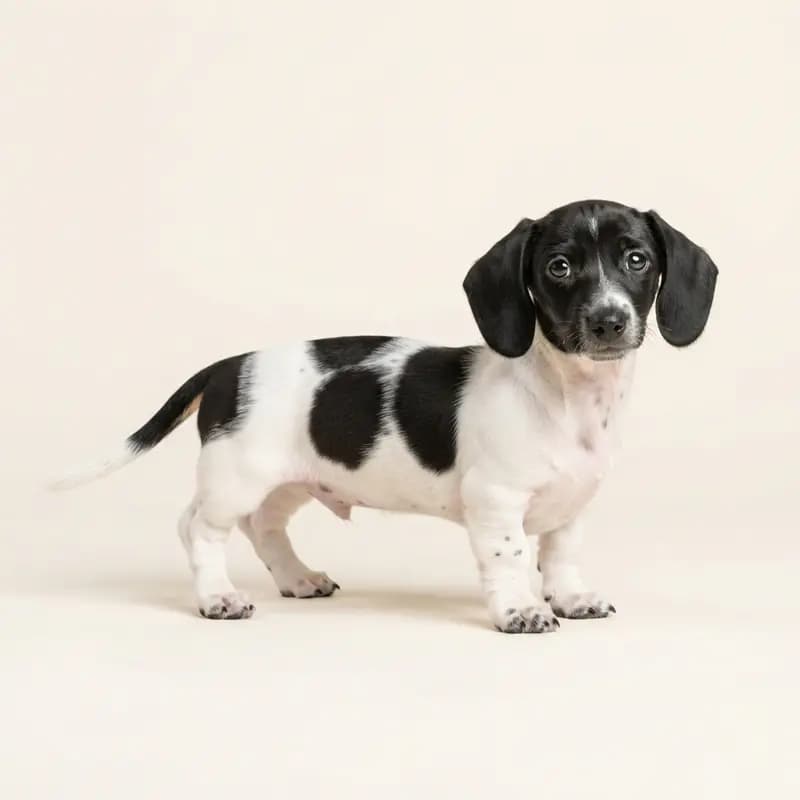
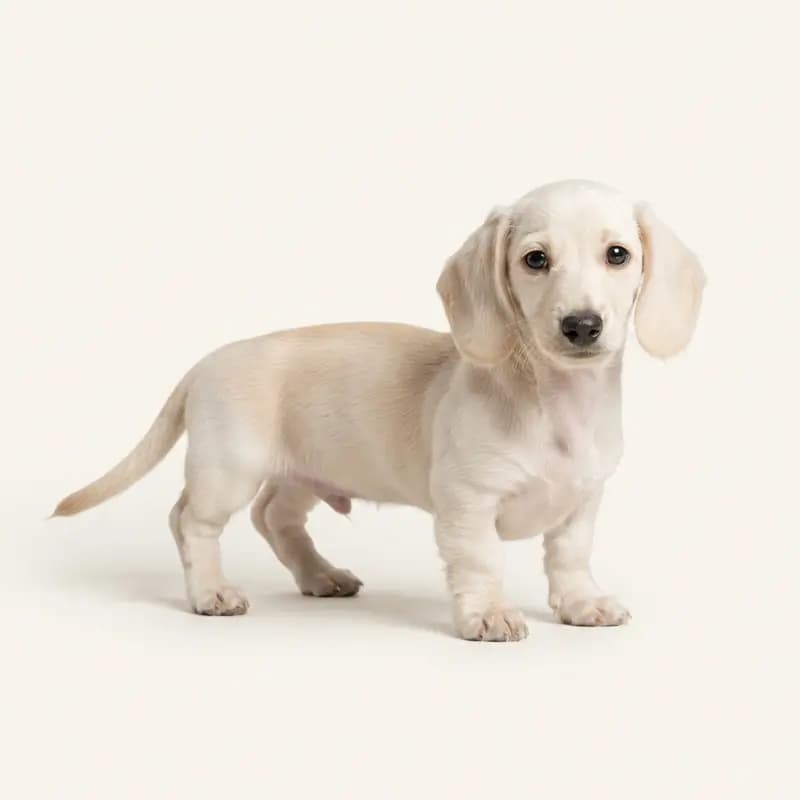
What colors does the Smooth-haired Dachshund come in?
The coat colors you will see in Smooth-haired Dachshund litters — including which ones fall outside the breed standard and which carry genetic risk.
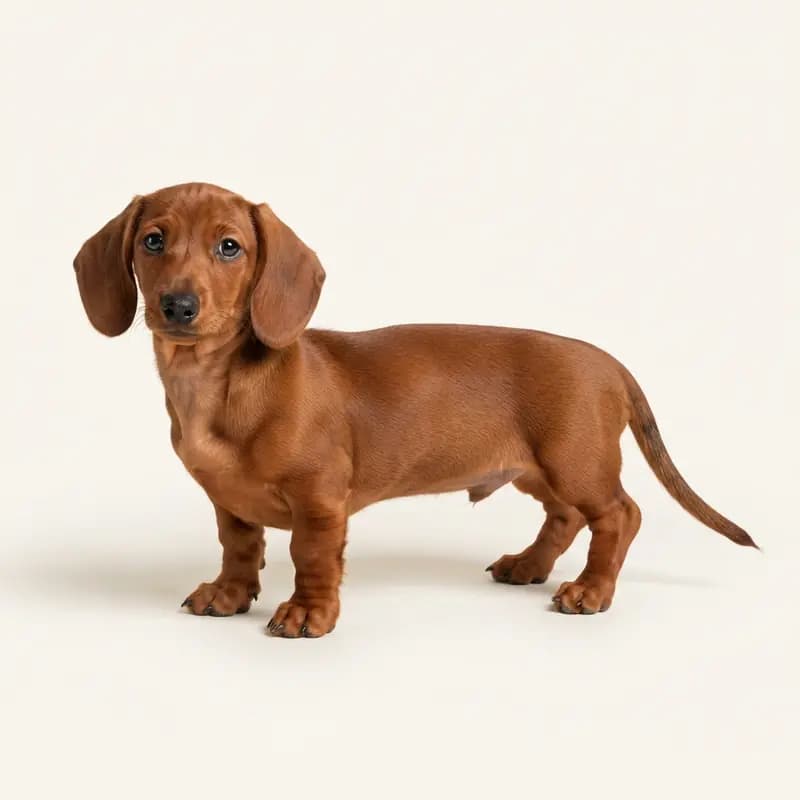
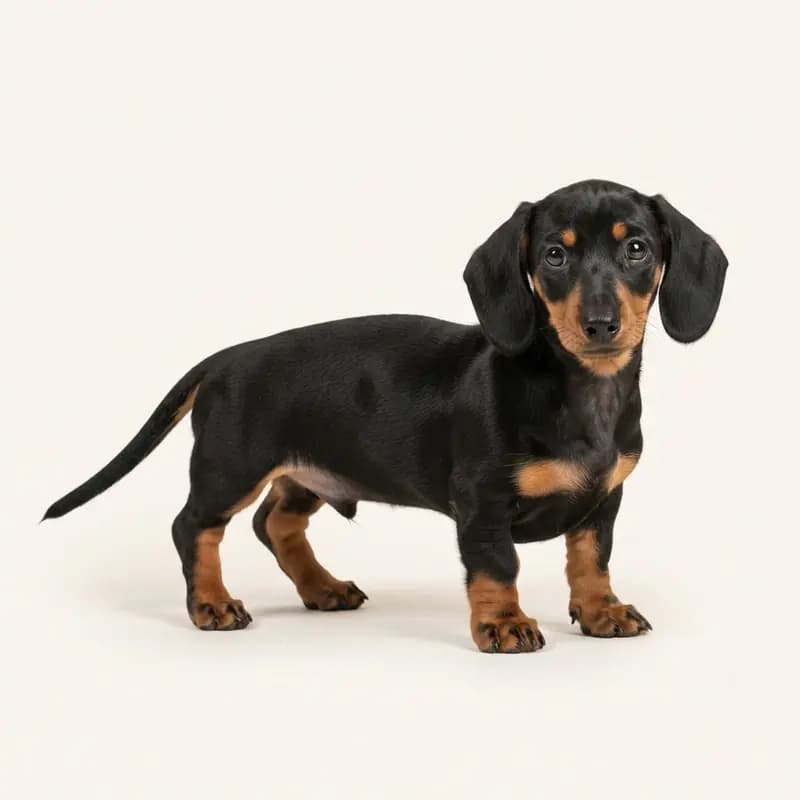
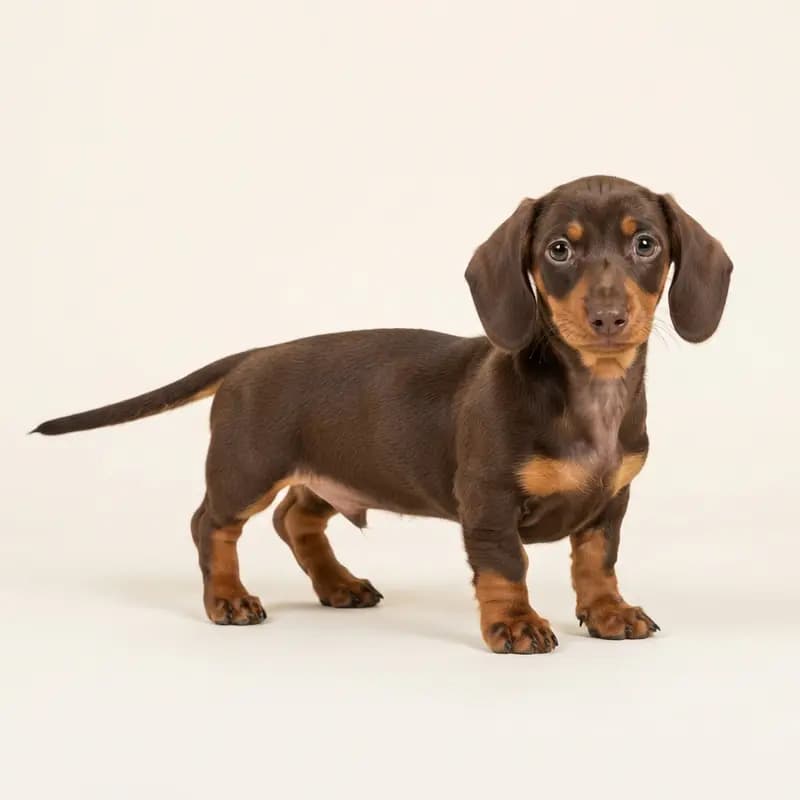
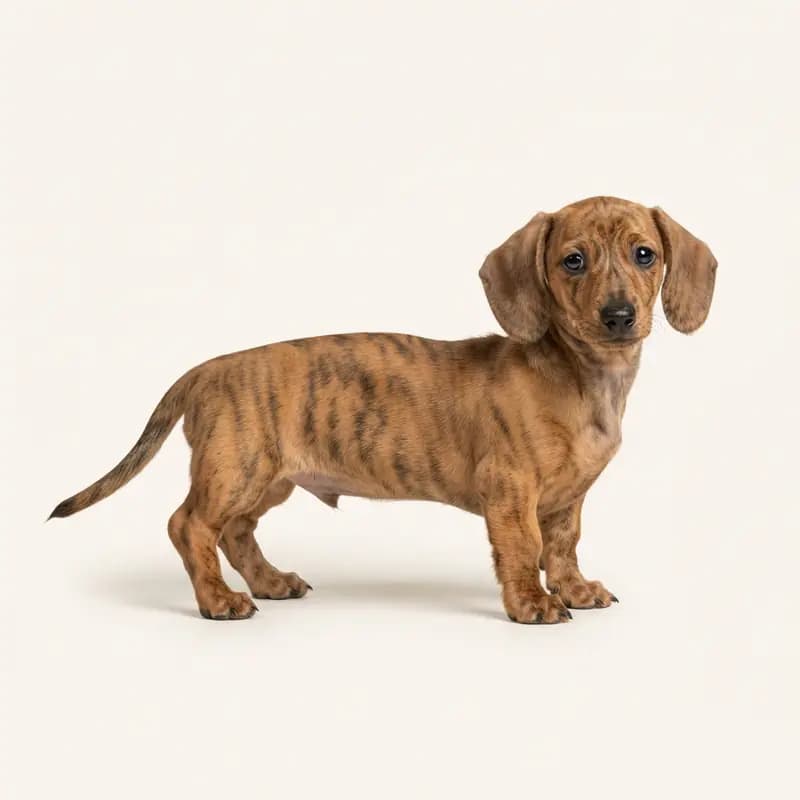
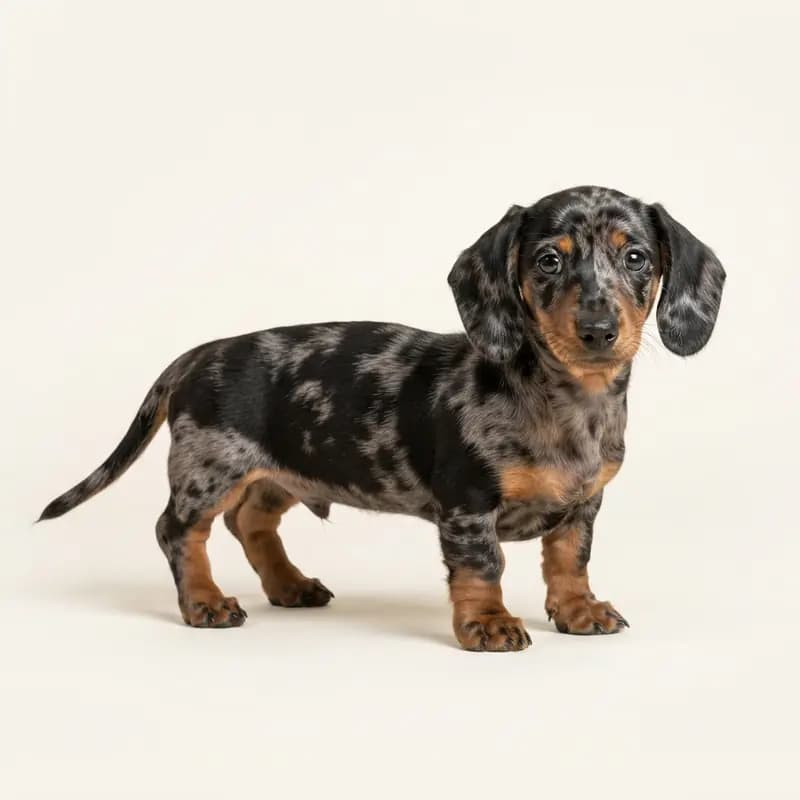
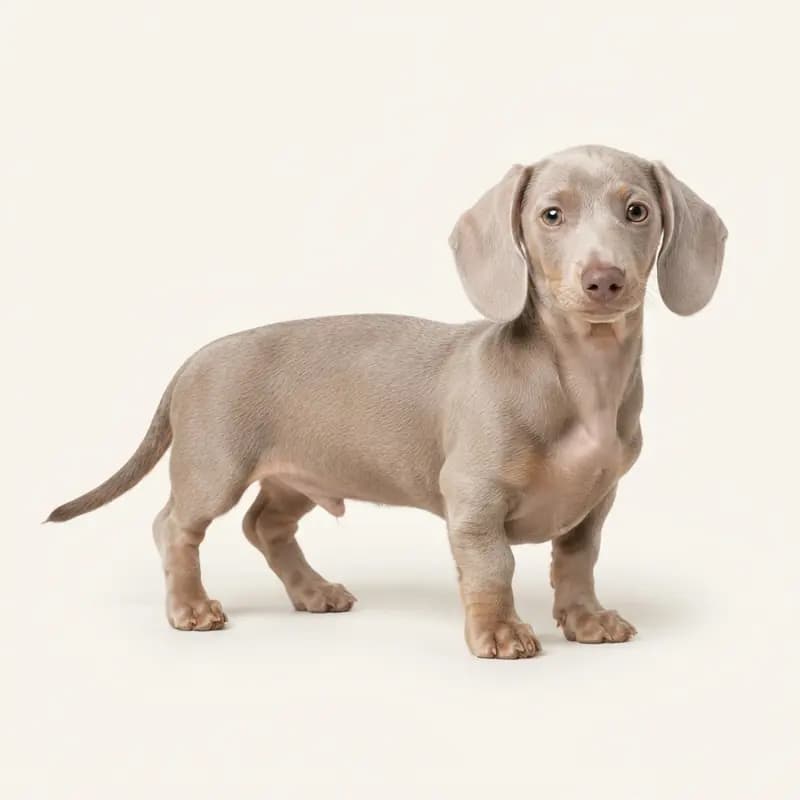
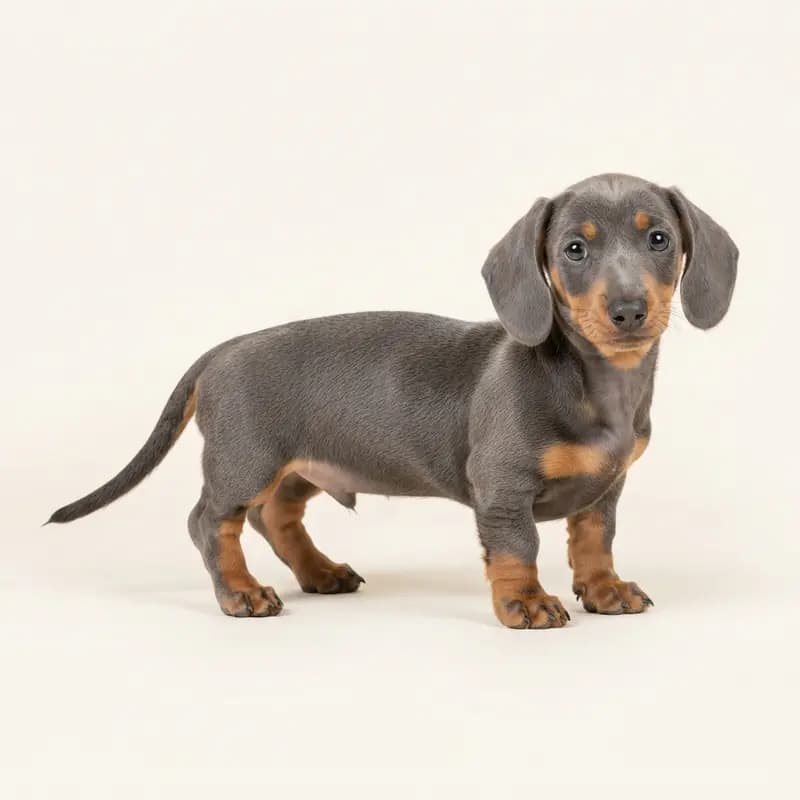
Eye colors
 Brown
Brown Blue
Blue
Coat type
 Smooth
 Short
Short
Is the Smooth-haired Dachshund right for you?
The smooth-haired Dachshund is a highly intelligent, self-confident Baujäger (earth dog) — bred to make completely independent decisions against defensive predators in narrow, dark tunnels. It is precisely this uncompromising independence that makes them such a huge personality on tiny legs.
Perfect for you if:
- You bring a sense of humor and iron-clad consistency — a dog that corners badgers underground won't be impressed by a stern look in the living room.
- You enjoy scent work, tracking, or long exploratory hikes in the woods.
- You live in an environment where a watchful, vocal dog won't cause immediate neighborhood drama.
- You are prepared to socialize him consistently from day one so that his healthy self-confidence doesn't turn into leash aggression.
Less ideal if:
- You expect him to joyfully return to you the moment he spots a rabbit — he was bred to track scents persistently and completely independently.
- You are looking for a dog that anticipates your every wish and loves classic obedience drills.
- You live on the fourth floor without an elevator and are looking for a dog that can handle those stairs on its own for its entire life.
- You have small, boisterous children who do not yet understand his clear physical boundaries and his need for respect.
The real vibes check
A Dachshund doesn't negotiate; he decides. What works down in a fox den, he applies to everyday life — just without the fox, and instead with your house rules. If you appreciate this stubborn brilliance, you'll get an incredibly loyal shadow; if not, he will lead you around by the nose without mercy.
Self-check
Would the Smooth-haired Dachshund really fit your life?
Answer 6 quick questions about your everyday life and see how well the Smooth-haired Dachshund fits you — including an honest cost estimate per month, per year, and across the dog's lifetime.
Fit checkCost estimateRisk dice
Takes about 1 minute · free & anonymous
Breed Profile
The dachshund, also known as the badger dog, is a distinctive dog breed with an elongated body and short legs. Originally bred in Germany for hunting badgers and other small animals, the dachshund belongs to the group of badger dogs. Its appearance is characterized by a strong, muscular body, a long snout, and expressive, almond-shaped eyes. There are three coat types of dachshunds: short-haired, wire-haired, and long-haired, with the short-haired dachshund particularly standing out due to its smooth, close-fitting coat. Within the breed, there are different size variants, including standard, miniature, and rabbit dachshund, which differ in weight and body size. Despite its compact size, the dachshund is a brave and lively companion that requires plenty of exercise and mental stimulation. Its independent and sometimes stubborn nature makes it a special family dog, but it requires consistent training and socialization.
All measurements in detail
- Height
- 20 - 27 cm (Female), 20 - 27 cm (Male)
- Weight
- 7 - 9 kg (Female), 7 - 9 kg (Male)
- Life Expectancy
- 12 - 15 yrs
- Character
- Loyal, intelligent, alert, high prey drive
- Coat
- Short, smooth, dense
- Coat Color
- Black, red, black and brown mixed
- Price
- 1200 - 2500 €
Character & Temperament
The Dachshund (short-haired) is a lively and courageous dog with a distinct character. Despite its small stature, it shows a strong hunting instinct and remarkable endurance, which originally distinguished it as a versatile hunting dog. It is very affectionate and forms a close bond with its family, often displaying a confident and sometimes stubborn nature. Its pronounced sense of smell and persistence make it an excellent tracking and retrieving dog that enjoys mental challenges. Due to its hunting drive, it may tend to chase small animals, which is why consistent training and early recall training are important. The short-haired Dachshund is a lively companion who, despite its brave nature, also shows a playful and cuddly side. It requires regular exercise and mental stimulation to remain balanced. It often finds being alone difficult because it is very people-oriented. As a watchdog, it shows alert behavior and reliably alerts to strangers without being overly aggressive.
| Trainability Has its own ideas and will test limits. | Strong-willed |
| Watchfulness Reports unusual activity but stays controlled. | Moderate |
| Openness to Strangers Careful around unfamiliar people — thaws slowly. | Cautious |
| Hunting or Herding Drive This drive runs deep — no amount of training eliminates it. | Very strong |
Fun Fact!
Dachshund (Short-haired): The dachshund with its short, smooth coat is not only a charming hunting companion but also a true tunnel digger thanks to its long body and short legs – perfect for entering fox dens. Despite its size, it has a great deal of courage and endurance!
What Awaits You
The Dachshund (short-haired) is a lively and courageous dog with a strong hunting instinct. Despite its small size, it shows great commitment and endurance, especially in burrow hunting. Dachshunds are willful but also very affectionate and family-oriented. They require consistent training and sufficient activity to remain balanced.
Housing & Care
Dachshund (Short-haired): Short-haired dachshunds are lively and brave dogs with a strong hunting instinct. They are very affectionate and form a close bond with their owners, making them well-suited for families who can spend a lot of time with their dog. Despite their small size, they are very confident and can sometimes be stubborn, which is why consistent but loving training is important. Dachshunds need regular exercise and mental stimulation to stay balanced, but they are also suitable for city living if enough walks and activities are provided. They are usually friendly with children but should be handled carefully due to their sensitive spine. They can get along well with other dogs and pets if socialized early.
- Family Friendly
Loves family life and thrives in a group.
Family-oriented - Child Friendly
Gets on well with children — with adult supervision.
With supervision - Dog Friendly
Usually gets on fine with other dogs.
Generally tolerant - City Friendly
Adapts well to city living and urban environments.
Well-suited to city life
Owning a dog is a privilege, but it's also a real responsibility. Before you bring one into your life, be honest with yourself about the commitment it takes.
Training & Education
Dachshunds (short-haired) are independent and intelligent dogs that are eager to learn but can sometimes be stubborn. Their hunting instinct is strongly developed, which makes training challenging but also exciting. It is important that you remain consistent and patient, while always working positively and reward-based to keep motivation high. Unlike Labradors or German Shepherds, Dachshunds are not classic working dogs, so you should make training varied and focus on short but regular sessions. Fetch games or search tasks are well suited to promote their natural sense of smell. At the same time, it is important to teach the Dachshund to control impulses and tolerate frustration, as they can otherwise quickly react stubbornly. Socialization and a clear structure are essential so that your Dachshund feels secure and gets along well with other dogs and people. Despite their size, Dachshunds need mental challenges and activities to stay balanced. With patience and loving consistency, you will gain a loyal and lively companion who will delight you with his charm and intelligence.
Nutrition & Care
Dachshund (Short-haired): The diet of a short-haired dachshund should be balanced and tailored to its size. High-quality food with a good proportion of proteins and essential nutrients supports its health and energy. Since dachshunds can be prone to overweight, it is important to control the amount of food and ensure regular exercise. The short, smooth coat of the short-haired dachshund is easy to care for and requires little effort. Weekly brushing is sufficient to remove loose hairs and keep the coat shiny. During the shedding season in spring and autumn, increased hair loss may occur; more frequent brushing helps here. The short-haired dachshund is well adapted to the Central European climate. Its short coat provides protection in mild temperatures, but in cold weather, it should be supported with a dog coat. In summer, sufficient sun protection and enough water should be ensured, as the short hair offers no special protection against heat.
| Care Level Occasional brushing is all it takes. | Very low-maintenance |
| Exercise Needs Needs 1–2 hours of real exercise daily. | Active |
| Shedding Regular shedding — dog hair on clothes is now normal. | Moderate |
| Trainability Has its own ideas and will test limits. | Strong-willed |
Our experts are still reviewing this information. Spotted something wrong? Email us at info@honestdog.de.
Health & hereditary diseases
Health
D
Elevated risks
Health grade
The short-haired Dachshund is rated D for health, as the breed carries a significant risk of serious diseases: about one in six to seven Dachshunds suffers a herniated disc (IVDD) during their lifetime, with the proportion being significantly higher in some varieties, and over 95% of Dachshunds carry the genetic predisposition for it (CDDY). In addition, epilepsy, primary lens luxation (PLL), and osteogenesis imperfecta (OI) occur in the breed. A responsible breeder counteracts this through targeted back screening and selective breeding, and has their dogs comprehensively tested. Before buying, you should therefore ask to see the parents' test results for osteogenesis imperfecta (OI) (limit: carriers are only permitted if the partner is clear), primary lens luxation (PLL) (limit: clear), as well as the results of eye examinations for cataracts (limit: clear) and progressive retinal atrophy, generic (limit: clear).
Grade is relative to other breeds — AI-assisted and editorially reviewed.
In daily life this can mean
You should strictly control his weight and avoid jumping as well as frequent stair climbing to best relieve the strain on his long back in daily life.
The breeder's role
Responsible breeders have the spine, knees, eyes, and bone structure thoroughly checked and pay attention to a firm back line — however, the fundamental risks of this breed cannot be completely eliminated even with the best care.
Note: This health overview is AI-assisted and editorially reviewed. It is for orientation only and does not replace veterinary advice.
No Health Tests Available
No specific health tests are currently available for this breed.
Costs & where to find one
How much does a Smooth-haired Dachshund cost?
A Smooth-haired Dachshund costs around ~€150 per month (€80 – €270, depending on your setup). The first year adds up to roughly ~€4,460 including purchase, equipment and puppy school; across the dog's life (13.5 years) it comes to about ~€26,760.
With surgery cover, running costs come to about ~€140 per month — in return, your share of a major operation drops from several thousand euros to around 20 percent.
Per month
~€150
In the first year
~€4,460
Across the dog's life
~€26,760
Purchase from a breeder: €1,200 – €2,500
Estimate at a mid-range setup (suburban, dry food, 1–2 hours of daily exercise), average German prices, as of July 2026.
Calculate your personal costs1-minute self-check with your own answers
Looking for a Smooth-haired Dachshund?
HonestDog Concierge
No verified Smooth-haired Dachshund breeders on HonestDog yet
We currently have no breeders for this breed who have passed our verification. Create your short buyer profile: we'll set up your search alert, review a possible source and email you within 28 days.
Appearance, variants & origin
History
The full history
The history of the Dachshund (short-haired) begins in the Middle Ages in Germany. Originally, it was bred to help hunt badgers and other underground-dwelling animals. With its long body and short legs, it could easily enter narrow burrows and flush out the prey. In the 19th century, the Dachshund was increasingly appreciated as a versatile hunting dog and further developed. The breed was officially recognized by the German Teckel Club in 1888 and has since enjoyed great popularity as a hunting and companion dog.
Original Use
The short-haired dachshund was originally bred to hunt badgers and other small animals, known for its determination and endurance.
Origin
Germany
Date
1500
Owner experiences
What owners say about the Smooth-haired Dachshund
Thomas B., Halter aus Brandenburg (Rüde, seit 2018)
Als ich mir meinen Kurzhaardackel Bodo geholt habe, dachte ich, so ein kleiner Hund läuft einfach so im Alltag mit. Weit gefehlt! Bodo hat das Selbstbewusstsein einer Dogge im Körper eines Teckels. Da diese Rasse für die eigenständige Baujagd gezüchtet wurde, merkt man ihm diese Unabhängigkeit in jeder Sekunde an. Er trifft unheimlich gerne eigene Entscheidungen und hinterfragt jedes Kommando. Wenn ich einmal nicht konsequent bin, merkt er sich diese Schwäche sofort und nutzt sie beim nächsten Mal schamlos aus.
Draußen ist sein Jagdtrieb extrem ausgeprägt. Sobald er eine interessante Fährte in die Nase bekommt, schaltet sein Gehirn gefühlt auf Durchzug. Er ist absolut kein gemütlicher Schoßhund, sondern will gefordert werden und liebt es zu stöbern und zu buddeln. Trotz der Herausforderungen bei der Erziehung liebe ich seinen Charakter über alles. Seine Mimik ist unglaublich ausdrucksstark und er bringt uns jeden Tag zum Lachen. Man muss aber wirklich mit dieser Sturheit umgehen können und darf sich vom berühmten Dackelblick nicht weichkochen lassen.
Melanie S., Halterin aus Hamburg (Hündin, seit 2021)
Unsere Kurzhaardackelhündin Lilli ist der absolute Sonnenschein in unserem Leben. Sie ist extrem verschmust, anhänglich und weicht mir kaum von der Seite. Doch das Leben mit einem Dackel bringt auch eine ständige, tiefsitzende Sorge mit sich: die Angst vor der Dackellähmung (IVDD). Bei dieser Rasse degenerieren die Bandscheiben aufgrund des langen Rückens und der kurzen Beine oft schon im jungen Alter, was uns im Alltag zu extremer Vorsicht zwingt.
Wir tragen Lilli konsequent jede Treppe hoch und runter und haben für das Sofa extra Rampen angeschafft, damit sie keine harten Sprünge macht. Ein plötzlicher Bandscheibenvorfall kann innerhalb weniger Stunden zur Lähmung der Hinterläufe führen – eine schmerzhafte und oft sehr teure Erfahrung, die wir unbedingt vermeiden wollen. Wer sich einen Kurzhaardackel anschafft, muss sich dieser gesundheitlichen Verantwortung absolut bewusst sein. Die Pflege des kurzen Fells ist zwar super unkompliziert, aber die Rückengesundheit erfordert im Alltag ständige Aufmerksamkeit und Management.
Jan N., Halter aus Köln (Rüde, seit 2022)
Mein Kurzhaardackel Emil hat mein Leben komplett auf den Kopf gestellt. Die Bindung zu ihm ist unglaublich intensiv – er ist extrem loyal und am liebsten immer ganz nah bei mir. Allerdings bringt diese enge Bindung auch ihre Tücken mit sich: Das Alleinbleiben mussten wir von Anfang an extrem kleinschrittig üben, da er sehr an mir hängt und schnell unter Trennungsangst leidet, wenn er nicht mitkommen darf.
Zudem ist Emil sehr mitteilsam und wachsam. Er meldet lautstark alles, was er im Hausflur hört oder was sich im Garten bewegt. Dieses Bellen liegt ihm einfach im Blut und lässt sich bei einem so selbstbewussten Hund nicht mal eben so wegerziehen. Man braucht im Alltag viel Humor und Geduld, denn ein Dackel verhandelt ständig über bestehende Regeln. Wer einen absolut unkomplizierten, leisen Begleiter sucht, ist hier definitiv falsch. Wer aber einen charakterstarken Partner sucht, der einen abgöttisch liebt, wird mit dem Dackel glücklich.
Paraphrased from real owner reports
Loading owner stories
Community Posts
FAQ & more
Frequently asked questions about the Smooth-haired Dachshund
Is a Smooth-haired Dachshund the right dog for me?
The Smooth-haired Dachshund is an adaptable dog that adjusts well to various lifestyles. Research the temperament, grooming needs, and space requirements before deciding.
How long does a Smooth-haired Dachshund live?
The average life expectancy of a Smooth-haired Dachshund is 12-15 years. With proper care and regular vet visits, your dog can live a long, healthy life.
How much grooming does a Smooth-haired Dachshund need?
Smooth-haired Dachshund grooming requirements include regular brushing, nail trimming, and dental care. HonestDog provides detailed grooming tips for every breed.
Is a Smooth-haired Dachshund good for families with children?
The Smooth-haired Dachshund can be a great family dog. Proper training and socialization are key. HonestDog provides family suitability information for every breed.
What colors does the Smooth-haired Dachshund come in?
The Smooth-haired Dachshund comes in these colors: Red, Black and tan, Brown and tan, Brindle, Merle, Isabella, Blue and tan, Piebald, Cream. Colors that fall outside the breed standard are marked as such on the breed page.
Loading related articles
Are you a Smooth-haired Dachshund breeder?
Showcase your kennel on HonestDog and reach families searching for a responsibly bred Smooth-haired Dachshund.
Why HonestDog?
What makes HonestDog different from other platforms
Full transparency
We lay out what we have: who the breeder is, how they work, and any health records they've uploaded. So you can judge for yourself.
Responsible breeding, assured
Every breeder on HonestDog has their identity and documents checked before their profile goes live. Health records they upload are shown on the profile, so you can see exactly what has been tested.
Trust and verification
We verify breeders and buyers alike, so every conversation happens on solid ground. It's a new standard of trust in dog breeding.
Less hassle, more time
We've already checked the breeders' documents and gathered the details, so you can skip the endless research and focus on finding the right puppy for your family.
Our Mission

We connect dog lovers with responsible breeders and shelters to ensure every dog finds the perfect home.
Founded by dog enthusiasts, our platform focuses on ethical dog breeding and adoption.
Why HonestDog?
We connect you with vetted breeders and shelters so you can find your — your new companion — with confidence.
Vetted Partners
Only verified breeders and shelters — for a safe start.
Highest Standards
Every animal's health and wellbeing is our top priority.
Guides & Resources
Guides, checklists, and breed profiles — so you can make a well-informed decision.