Loading breed
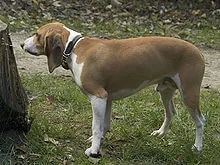
Small Bernese Hound
Health grade BThe Berner Niederlaufhund is a persistent, keen-nosed short-legged hound—bred to track game independently and audibly in rough terrain, which is why the heart of a true worker beats beneath its compact exterior.
- Height33–43 cm
- Weight13–18 kg
- Life expectancy12–15 yrs
- Puppy price1,200–2,500 €
- Energy4/5
The Essentials at a Glance
The Berner Niederlaufhund is a persistent, keen-nosed short-legged hound—bred to track game independently and audibly in rough terrain, which is why the heart of a true worker beats beneath its compact exterior.
- Health grade B: The Berner Niederlaufhund is considered a very robust and genetically healthy hunting breed, which is why there are currently no mandatory health tests required.
- You are looking for a passionate partner for tracking, mantrailing, or long hikes—its hardware demands nose work and real distance.
- You live in a rural area or have direct access to nature where a hound that tracks game audibly won't bother anyone.
- You want relaxed, off-leash walks in the woods—he was bred to follow a scent trail persistently for hours, not to stick to your side.
Is the Small Bernese Hound right for you?
At a glance
Small Bernese Hound overview
The essentials — key facts, traits, and health priorities — before you dive deeper.
Health grade
Relative to other breeds
S
A
B
C
D
E
Very healthyHigher risk
Solid — a handful of items a good breeder watches.
See full health info & tests →
Note: This health overview is AI-assisted and editorially reviewed. It is for orientation only and does not replace veterinary advice.
Lifespan
12–15 yrs
Height
33–43 cm
Weight
13–18 kg
Practical
- Puppy price: 1,200 – 2,500 €
- Coat: Short, smooth, without undercoat
- Origin: Switzerland
Temperament
Energy
Trainability
Family fit
With kids
Daily life
Care effort
Shedding
Barking
City-friendly
Guard instinct
What matters most
Especially with a Small Bernese Hound, choosing the right breeder is the single most important decision you'll make. Serious breeders consistently test the parents for inherited conditions, prioritize healthy early socialization, and stay accountable long after handover. A cheap puppy without health screening tends to become the most expensive dog later on.
See HonestDog breeder standards →Colors & coat
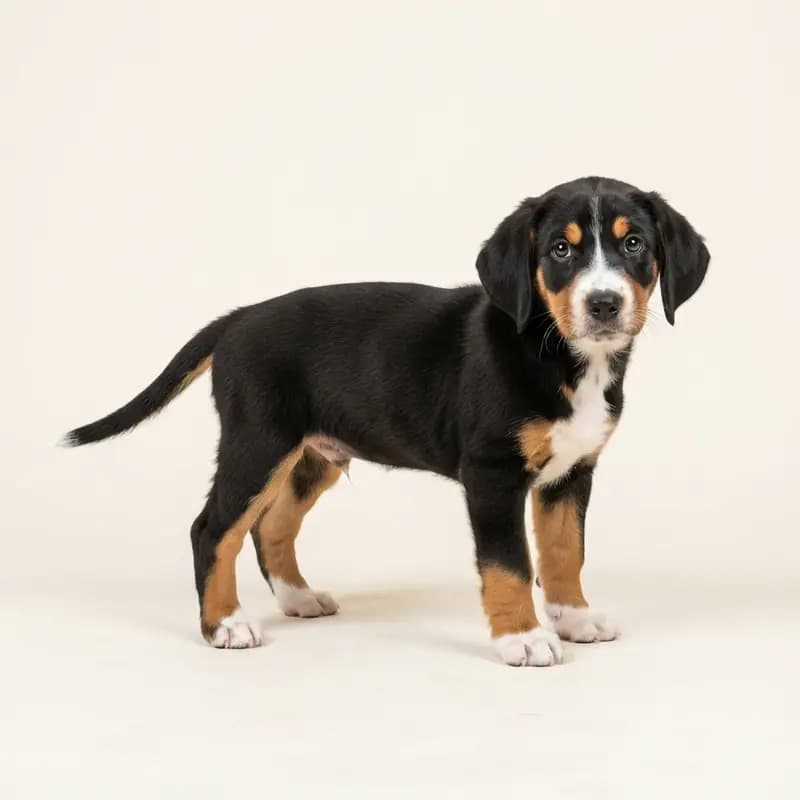
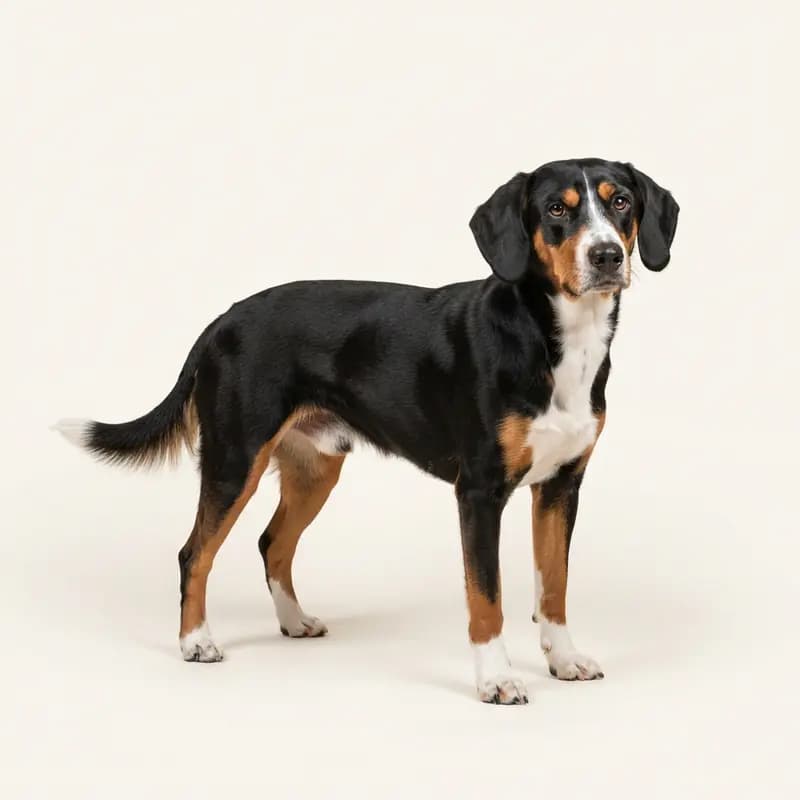
What colors does the Small Bernese Hound come in?
The coat colors you will see in Small Bernese Hound litters — including which ones fall outside the breed standard and which carry genetic risk.
Eye colors
 Brown
Brown
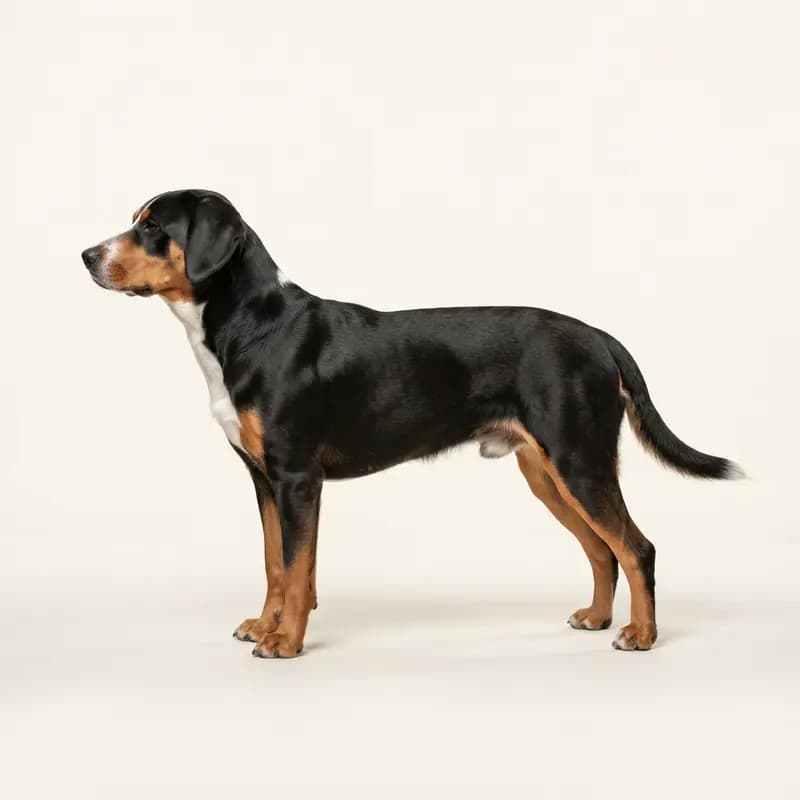
Coat type
 Illustrative image
Short
 Smooth
 Illustrative image
Wire
Is the Small Bernese Hound right for you?
The Berner Niederlaufhund is a persistent, keen-nosed short-legged hound—bred to track game independently and audibly in rough terrain, which is why the heart of a true worker beats beneath its compact exterior.
Perfect for you if:
- You are looking for a passionate partner for tracking, mantrailing, or long hikes—its hardware demands nose work and real distance.
- You live in a rural area or have direct access to nature where a hound that tracks game audibly won't bother anyone.
- You appreciate a dog that makes its own decisions and can lead with loving persistence rather than expecting blind obedience.
- You have plenty of time for him or perhaps already have a suitable second dog, as he is a pack animal that is extremely sociable and dislikes being alone.
Less ideal if:
- You want relaxed, off-leash walks in the woods—he was bred to follow a scent trail persistently for hours, not to stick to your side.
- You live in an apartment with thin walls, as this breed traditionally communicates with a loud, piercing voice when excited.
- You have little patience for extensive long-line training and are looking for a dog that naturally stays focused on its human.
The real vibes check
With his short legs and long ears, a Berner Niederlaufhund looks like a cozy companion dog—but as soon as his nose touches the ground, he becomes a highly focused professional hunter. You aren't getting a lap dog, but an extremely persistent specialist who perceives the world primarily through scents. If you share his passion for tracking, you have a fantastic, gentle companion; if not, you have a dog that will pull frustratedly at the leash.
Self-check
Would the Small Bernese Hound really fit your life?
Answer 6 quick questions about your everyday life and see how well the Small Bernese Hound fits you — including an honest cost estimate per month, per year, and across the dog's lifetime.
Fit checkCost estimateRisk dice
Takes about 1 minute · free & anonymous
Breed Profile
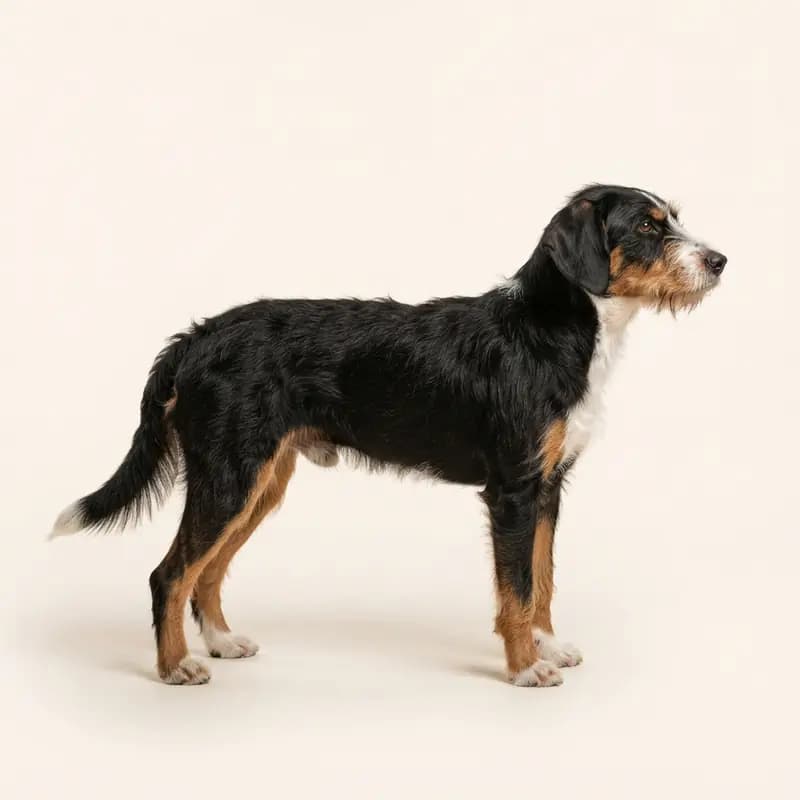
The Bernese Low Running Dog, also known as the Swiss Low Running Dog or Bernese Running Dog, is a small to medium-sized dog with an elegant and harmonious appearance. This breed belongs to FCI Group 6, which includes hounds, bloodhounds and related breeds. The Bernese Low Hounds are notable for their symmetrical rusty red and white markings on a black background, giving them a unique and attractive appearance. Their build is strong and well proportioned, allowing them to run with ease and endurance. There are no significant differences between performance and show lines in this breed as breeders always emphasize maintaining the original working abilities and appearance of the breed.
All measurements in detail
- Height
- 33 - 40 cm (Female), 35 - 43 cm (Male)
- Weight
- 13 - 18 kg (Female), 13 - 18 kg (Male)
- Life Expectancy
- 12 - 15 yrs
- Character
- Affectionate, lively, obedient
- Coat
- Short, smooth, without undercoat
- Coat Color
- Black with symmetrical rusty red and white markings
- Price
- 1200 - 2500 €
Character & Temperament
The Bernese Low Running Dogs are known for their affectionate and people-oriented nature. They are very loving and form a close bond with their owners. They are intelligent and willing to learn, making them good companions for active owners. They enjoy long walks and games, but also have no problem spending quiet hours at home. Despite their hunting history, the Bernese Low Hounds generally do not have a strong hunting instinct. They can be trained around wild animals without hunting them. However, it is important to socialize them well from the start and teach them how to respond appropriately in different environments and situations. The Bernese Low Hounds are generally very good-natured and get along well with children and other pets. However, they are also vigilant and can protect the home and family when necessary. Although they are generally easy to train, they require consistent and loving training. They respond well to positive reinforcement and encouraging training methods. Harsh or strict training methods are not recommended as they can undermine the dog's trust in its owner. The Bernese Low Hounds can easily learn to stay alone if they are properly prepared. It is important to teach them from a young age that being alone is normal and that their owners will always come back to them. They do not tend to exhibit strong hunting or prey-catching behavior, but as with all dogs, this behavior can vary. This breed is lively and active, but not hyperactive. They need regular physical and mental stimulation to stay healthy and happy. This can be achieved through daily walks, games and training sessions. Despite their need for activity and stimulation, Bernese Low Hounds are also very adaptable and can cope well in various life situations. They are equally happy in a house with a large yard where they can run around and play, or in an apartment, as long as they get enough exercise and stimulation. The nature and character of the Bernese Low Hounds make them excellent companions for people of all ages. Their affectionate and loving nature make them perfect family dogs, while their intelligence and learning ability make them good candidates for various canine sports and activities. It is important to remember that, like all dogs, they require dedicated care, appropriate socialization and training to reach their full potential as companion dogs. With the right care and leadership, Bernese Low Hounds are loving and loyal companions who can turn every day into an adventure.
| Trainability Has its own ideas and will test limits. | Strong-willed |
| Watchfulness Reports unusual activity but stays controlled. | Moderate |
| Openness to Strangers Warms up quickly and is generally welcoming. | Friendly |
| Hunting or Herding Drive Powerful instinct that can override recall when triggered. | Strong |
Fun Fact!
Did you know that the Bernese Hound is an excellent and tenacious hunter despite its small size? They were originally used to hunt small game such as rabbits, but are now best known as loving family dogs.
What Awaits You
The Bernese Niederlaufhund is a lively and friendly hunting dog with a pronounced sense of smell. It is characterized by its endurance and balanced temperament. These dogs are easy to train and are suitable both for hunting and as family dogs, provided they receive sufficient activity and exercise. The Bernese Niederlaufhund is robust and adaptable, making it a versatile companion.
Housing & Care
Bernese Low Hounds are very adaptable and can live well in both the city and the country. It is important that they get enough exercise and mental stimulation. They enjoy the company of children and are also generally good with other pets, including cats.
- Family Friendly
Lives for its family — the born family companion.
Ideal family dog - Child Friendly
Takes boisterous and affectionate children in its stride.
Patient with children - Dog Friendly
Usually gets on fine with other dogs.
Generally tolerant - City Friendly
Can manage in the city, but only with very active owners.
Difficult in cities
Owning a dog is a privilege, but it's also a real responsibility. Before you bring one into your life, be honest with yourself about the commitment it takes.
Training & Education
Raising and training the Bernese Low Hound is generally straightforward, but like any dog, it requires patience, consistency and love. Positive reinforcement is key, and harsh or strict training methods are not recommended. It is important that these dogs learn to develop frustration tolerance and impulse control in order to get along well with other dogs and people. They are not "ball junkies," but they enjoy mentally stimulating games and activities. As former hunting dogs, they have a natural instinct to sniff and explore, and these tendencies can be encouraged through nose work or search games. They are also good candidates for obedience, agility and other dog sports.
Nutrition & Care
A balanced nutritional plan is crucial for the health and well-being of the Bernese Low Hound. This breed is typically straightforward when it comes to feeding, and a quality dog food with balanced proportions of proteins, fats and carbohydrates will meet their nutritional needs. A veterinarian or canine nutritionist can help put together a customized diet plan. Caring for the Bernese Low Hound is relatively easy. They have a short, smooth coat with little undercoat that requires minimal grooming. Regular brushing helps keep the coat clean and healthy and removes the small amount of loose hair. They are well suited to the German climate and can cope well with both cooler and warmer temperatures.
| Care Level Regular brushing and occasional professional grooming. | Moderate |
| Exercise Needs Needs several hours of serious exercise every day. | Very active |
| Shedding Regular shedding — dog hair on clothes is now normal. | Moderate |
| Trainability Has its own ideas and will test limits. | Strong-willed |
Our experts are still reviewing this information. Spotted something wrong? Email us at info@honestdog.de.
Health & hereditary diseases
Health
B
Solid
Health grade
The Berner Niederlaufhund is considered a very robust and genetically healthy hunting breed, which is why there are currently no mandatory health tests required. Nevertheless, buyers should be mindful of breed-specific vulnerabilities such as hip dysplasia (HD) and potential eye conditions like progressive retinal atrophy (PRA). As this is a rare breed with a small population, careful selection of the parent dogs is advisable despite the lack of mandatory testing.
Grade is relative to other breeds — AI-assisted and editorially reviewed.
In daily life this can mean
You should ensure a healthy weight and joint-friendly exercise to relieve pressure on the back, and check the pendulous ears regularly to prevent infections.
The breeder's role
Reputable breeders have the parents' hips, elbows, spine, and eyes examined and pay attention to well-ventilated ears to reduce health risks in the lineage.
Note: This health overview is AI-assisted and editorially reviewed. It is for orientation only and does not replace veterinary advice.
No Health Tests Available
No specific health tests are currently available for this breed.
Costs & where to find one
How much does a Small Bernese Hound cost?
A Small Bernese Hound costs around ~€170 per month (€90 – €320, depending on your setup). The first year adds up to roughly ~€4,750 including purchase, equipment and puppy school; across the dog's life (13.5 years) it comes to about ~€30,620.
With surgery cover, running costs come to about ~€170 per month — in return, your share of a major operation drops from several thousand euros to around 20 percent.
Per month
~€170
In the first year
~€4,750
Across the dog's life
~€30,620
Purchase from a breeder: €1,200 – €2,500
Estimate at a mid-range setup (suburban, dry food, 1–2 hours of daily exercise), average German prices, as of July 2026.
Calculate your personal costs1-minute self-check with your own answers
Looking for a Small Bernese Hound?
HonestDog Concierge
No verified Small Bernese Hound breeders on HonestDog yet
We currently have no breeders for this breed who have passed our verification. Create your short buyer profile: we'll set up your search alert, review a possible source and email you within 28 days.
Appearance, variants & origin
History
The full history
As the name suggests, the Bernese Low Hounds come from Switzerland, more precisely from the canton of Bern. They belong to the family of Swiss hounds, which have been known since the Middle Ages and were traditionally used for hunting. The breed is closely related to the other Swiss Hounds, including the Jura Niederlaufhund, the Lucerne Niederlaufhund and the Schwyzer Niederlaufhund. The exact origin story of the Bernese Hounds is not known, but it is believed that they descended from ancient French Hounds that were widespread in Switzerland. These dogs were used for both solo and pack hunting and were known for their ability to track an animal over long distances. The breed was first officially recognized in the 1880s and the first breed standard was published in 1882. Despite their long history and popularity in Switzerland, the Bernese Low Hounds are not very common outside of their home country.
Original Use
The Bernese Low Hound was bred to hunt small game in rough terrain and is characterized by its smaller stature.
Origin
Switzerland
Date
1900
Owner experiences
What owners say about the Small Bernese Hound
Zusammengefasst aus öffentlich geteilten Halter-Erfahrungen
Viele Halter und Züchter beschreiben den Berner Niederlaufhund im Haus als einen überaus angenehmen, ruhigen und anschmiegsamen Begleiter. Drinnen zeigt er sich oft fast unsichtbar, liebt es, sich einzukuscheln, und gilt als extrem menschenbezogen und kinderfreundlich. Seine handliche Größe macht ihn im Alltag zu einem unkomplizierten Partner.
Sobald es jedoch nach draußen geht, erwacht die Bracke in ihm. Halter betonen, dass man sich vom sanften Blick nicht täuschen lassen darf: Der Jagdtrieb ist tief verwurzelt. Ohne Leine ist der Freilauf in wildreichen Gebieten oft unmöglich, da die Hunde leidenschaftlich gern Fährten verfolgen. Wer den Hund nicht jagdlich führt, muss für adäquate Beschäftigung wie Mantrailing oder Fährtenarbeit sorgen, um dem feinen Geruchssinn und dem Bewegungsdrang gerecht zu werden.
Zusammengefasst aus öffentlich geteilten Halter-Erfahrungen
In Erziehungsfragen gilt der Berner Niederlaufhund unter Kennern als sehr intelligent und lernwillig, bringt aber gleichzeitig die rassetypische Selbstständigkeit einer Bracke mit. Es wird immer wieder berichtet, dass diese Hunde einen ausgeprägten Eigensinn besitzen. Sie hinterfragen Kommandos gern auf ihren Sinn und lassen sich nur schwer zu Dingen bewegen, die sie als unlogisch empfinden.
Eine Erziehung mit Härte oder Zwang führt bei dieser sensiblen Rasse zu keinem Erfolg. Stattdessen heben erfahrene Halter hervor, dass eine absolut konsequente, aber liebevolle und geduldige Führung notwendig ist. Ein intensives Appell-Training von klein auf ist unerlässlich, um das Jagdverhalten und das Abrufen im Gelände kontrollierbar zu halten.
Zusammengefasst aus öffentlich geteilten Halter-Erfahrungen
Aus Sicht der Zucht und Anschaffung ist der Berner Niederlaufhund eine sehr robuste und gesunde Rasse mit einer geringen genetischen Belastung. Da es sich jedoch um eine relativ seltene Rasse mit einer schmalen Zuchtbasis handelt, wird in Züchterkreisen stark auf die Vermeidung von Erbkrankheiten und eine bewusste Blutauffrischung geachtet.
Eine der größten Herausforderungen für reine Familienhund-Interessenten ist die Verfügbarkeit: Da die Hunde hervorragende Gebrauchseigenschaften für die Stöber- und Schweißarbeit besitzen, geben viele Züchter im VDH ihre Welpen bevorzugt oder ausschließlich in Jägerhände ab. Nicht-Jäger müssen daher oft lange suchen und nachweisen, dass sie dem Hund eine gleichwertige nasenbasierte Auslastung bieten können.
Paraphrased from real owner reports
Loading owner stories
FAQ & more
Frequently asked questions about the Small Bernese Hound
Is a Small Bernese Hound the right dog for me?
The Small Bernese Hound is an active dog that needs plenty of exercise and mental stimulation. Research the temperament, grooming needs, and space requirements before deciding.
How long does a Small Bernese Hound live?
The average life expectancy of a Small Bernese Hound is 12-15 years. With proper care and regular vet visits, your dog can live a long, healthy life.
How much grooming does a Small Bernese Hound need?
Small Bernese Hound grooming requirements include regular brushing, nail trimming, and dental care. HonestDog provides detailed grooming tips for every breed.
Is a Small Bernese Hound good for families with children?
The Small Bernese Hound can be a great family dog. Proper training and socialization are key. HonestDog provides family suitability information for every breed.
What colors does the Small Bernese Hound come in?
The Small Bernese Hound comes in these colors: Tricolor.
Loading related articles
Are you a Small Bernese Hound breeder?
Showcase your kennel on HonestDog and reach families searching for a responsibly bred Small Bernese Hound.
Why HonestDog?
What makes HonestDog different from other platforms
Full transparency
We lay out what we have: who the breeder is, how they work, and any health records they've uploaded. So you can judge for yourself.
Responsible breeding, assured
Every breeder on HonestDog has their identity and documents checked before their profile goes live. Health records they upload are shown on the profile, so you can see exactly what has been tested.
Trust and verification
We verify breeders and buyers alike, so every conversation happens on solid ground. It's a new standard of trust in dog breeding.
Less hassle, more time
We've already checked the breeders' documents and gathered the details, so you can skip the endless research and focus on finding the right puppy for your family.
Our Mission

We connect dog lovers with responsible breeders and shelters to ensure every dog finds the perfect home.
Founded by dog enthusiasts, our platform focuses on ethical dog breeding and adoption.
Why HonestDog?
We connect you with vetted breeders and shelters so you can find your — your new companion — with confidence.
Vetted Partners
Only verified breeders and shelters — for a safe start.
Highest Standards
Every animal's health and wellbeing is our top priority.
Guides & Resources
Guides, checklists, and breed profiles — so you can make a well-informed decision.