Loading breed
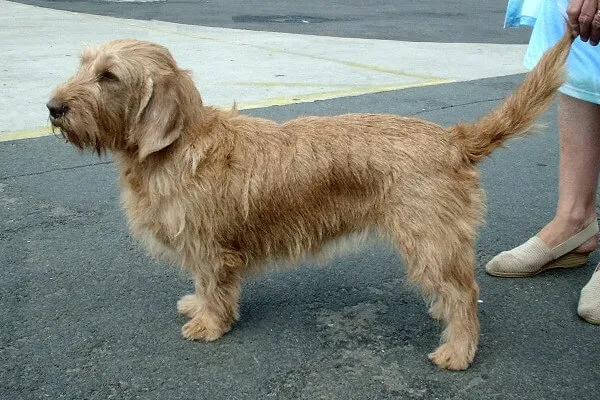
Basset Fauve de Bretagne
Health grade CThe Basset Fauve de Bretagne is a tough, fearless short-legged scent hound—bred to work through the densest thickets of Brittany with an excellent nose and a keen sense for tracking. Beneath his charming, scruffy look lies a tireless hunting professional.
- Height32–38 cm
- Weight12–18 kg
- Life expectancy10–14 yrs
- Puppy price1,200–2,500 €
- Energy4/5
The Essentials at a Glance
The Basset Fauve de Bretagne is a tough, fearless short-legged scent hound—bred to work through the densest thickets of Brittany with an excellent nose and a keen sense for tracking. Beneath his charming, scruffy look lies a tireless hunting professional.
- Health grade C: The Basset Fauve de Bretagne requires eight mandatory health tests, placing it above the average for many other breeds.
- You enjoy intensive scent work like mantrailing or tracking—this dog needs a job for his nose, or he will find one for himself.
- You love nature and can provide a fenced-in property or a very reliable long-line routine for walks in areas rich with wildlife.
- You expect him to have perfect recall the moment he spots a hare—he was bred to independently follow the trail at that exact moment.
Is the Basset Fauve de Bretagne right for you?
At a glance
Basset Fauve de Bretagne overview
The essentials — key facts, traits, and health priorities — before you dive deeper.
Health grade
Relative to other breeds
S
A
B
C
D
E
Very healthyHigher risk
Average — several important tests are expected.
See full health info & tests →
Note: This health overview is AI-assisted and editorially reviewed. It is for orientation only and does not replace veterinary advice.
Lifespan
10–14 yrs
Height
32–38 cm
Weight
12–18 kg
Practical
- Puppy price: 1,200 – 2,500 €
- Coat: Dense, rough coat, short length, no undercoat
- Origin: France
Temperament
Energy
Trainability
Family fit
With kids
Daily life
Care effort
Shedding
Barking
City-friendly
Guard instinct
What matters most
Especially with a Basset Fauve de Bretagne, choosing the right breeder is the single most important decision you'll make. Serious breeders consistently test the parents for inherited conditions, prioritize healthy early socialization, and stay accountable long after handover. A cheap puppy without health screening tends to become the most expensive dog later on.
See HonestDog breeder standards →Colors & coat
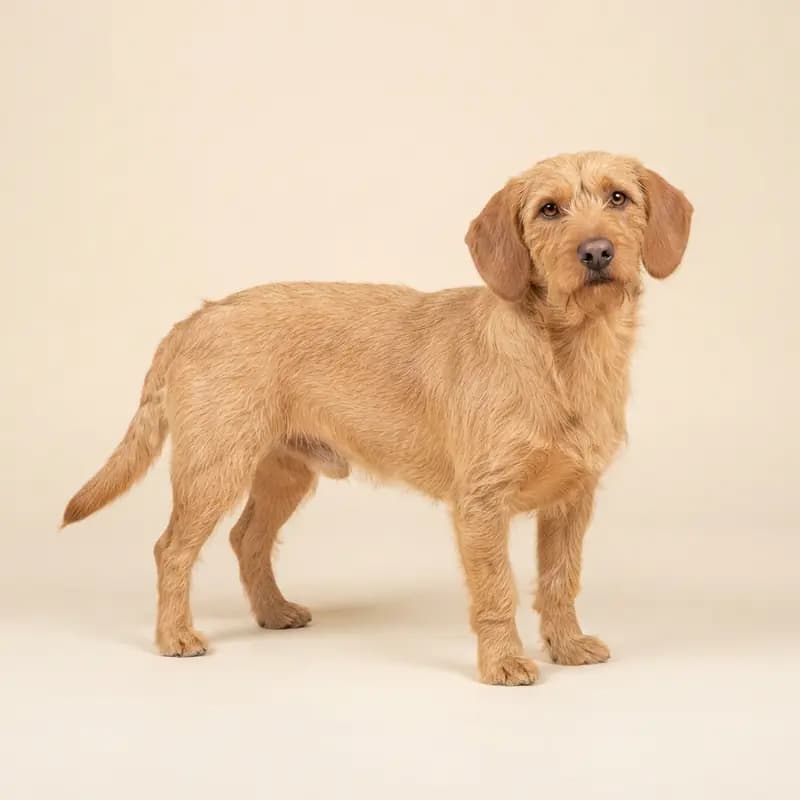
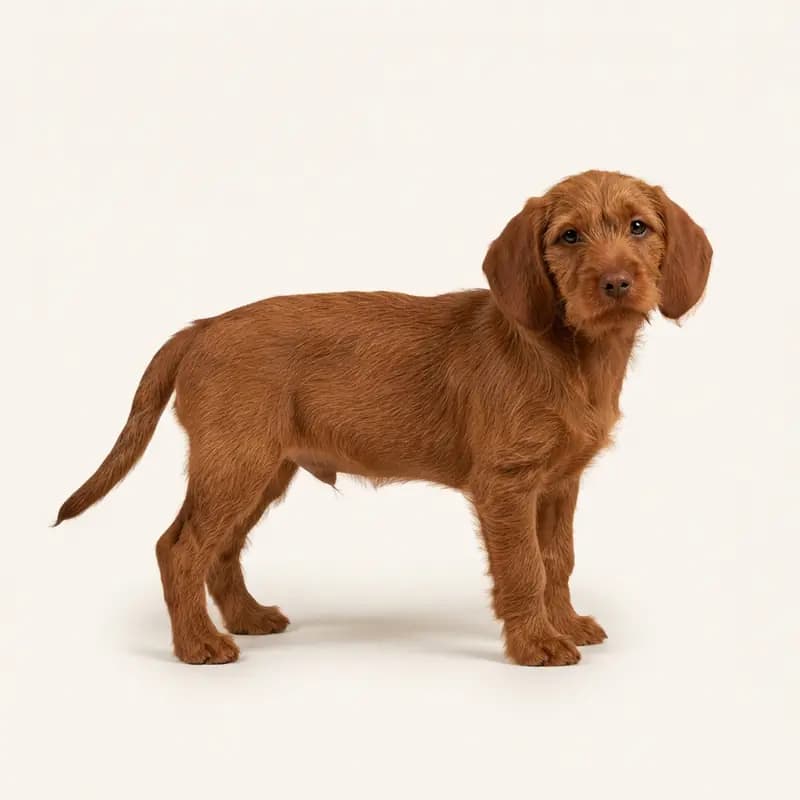
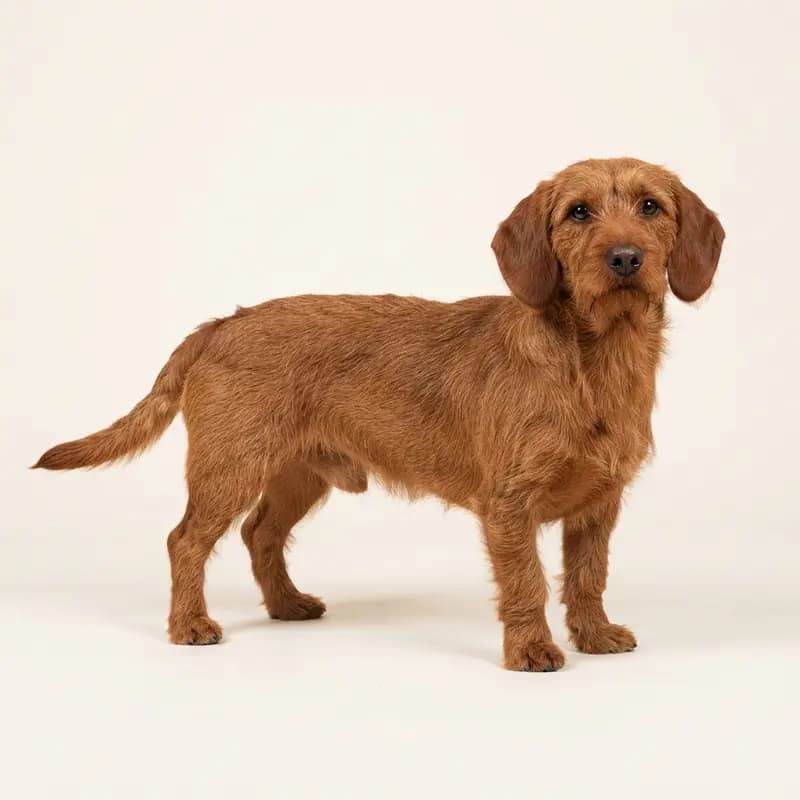
What colors does the Basset Fauve de Bretagne come in?
The coat colors you will see in Basset Fauve de Bretagne litters — including which ones fall outside the breed standard and which carry genetic risk.
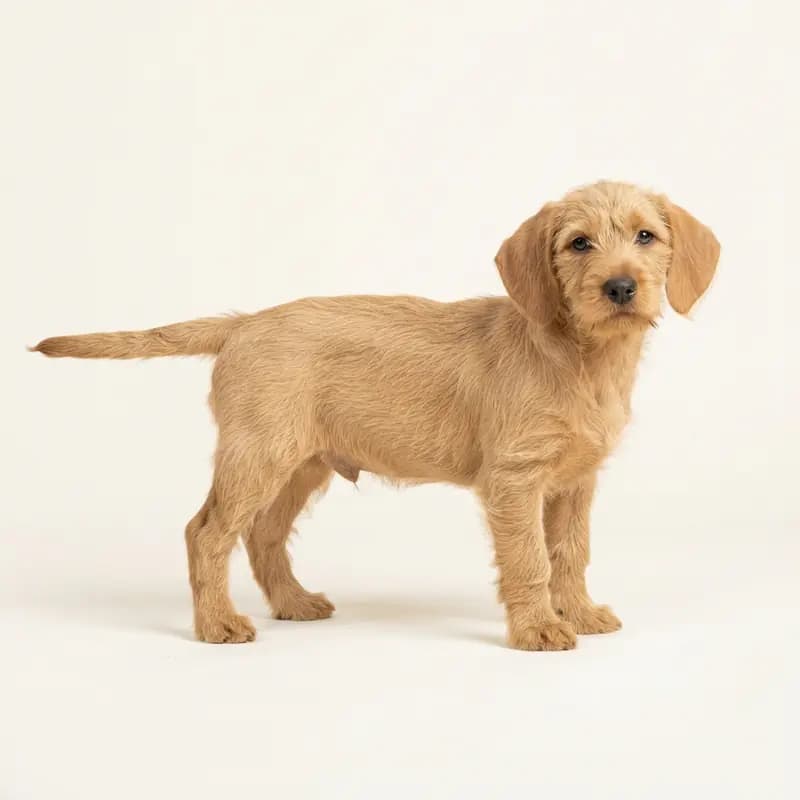
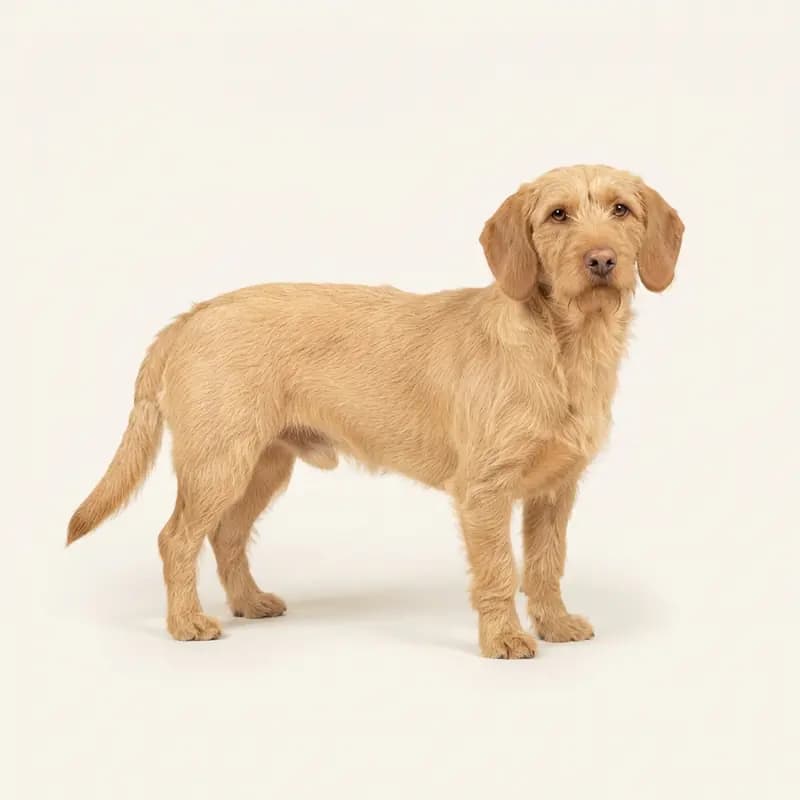
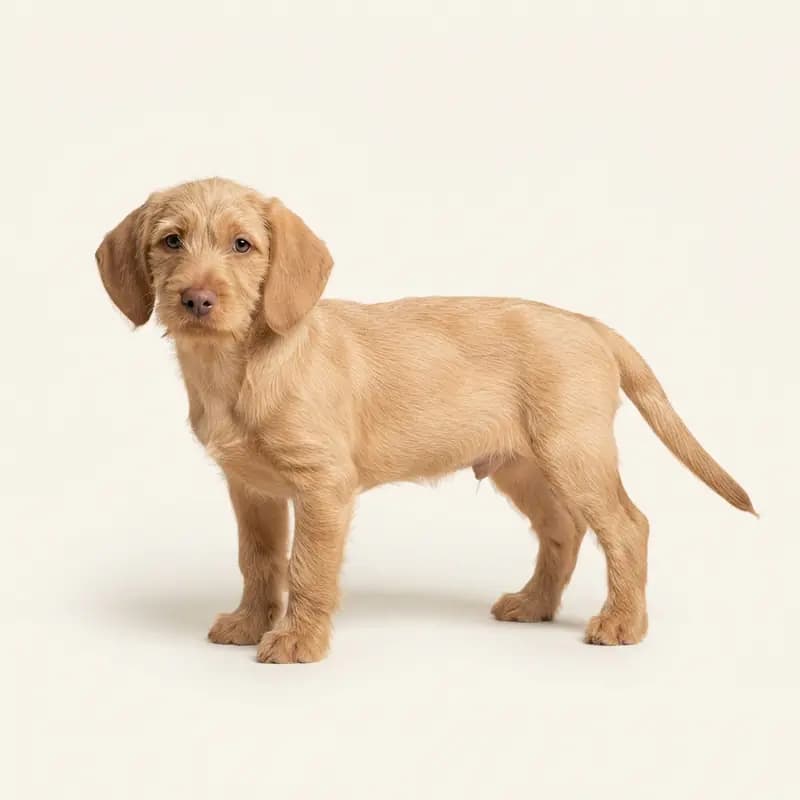
Eye colors
 Brown
Brown
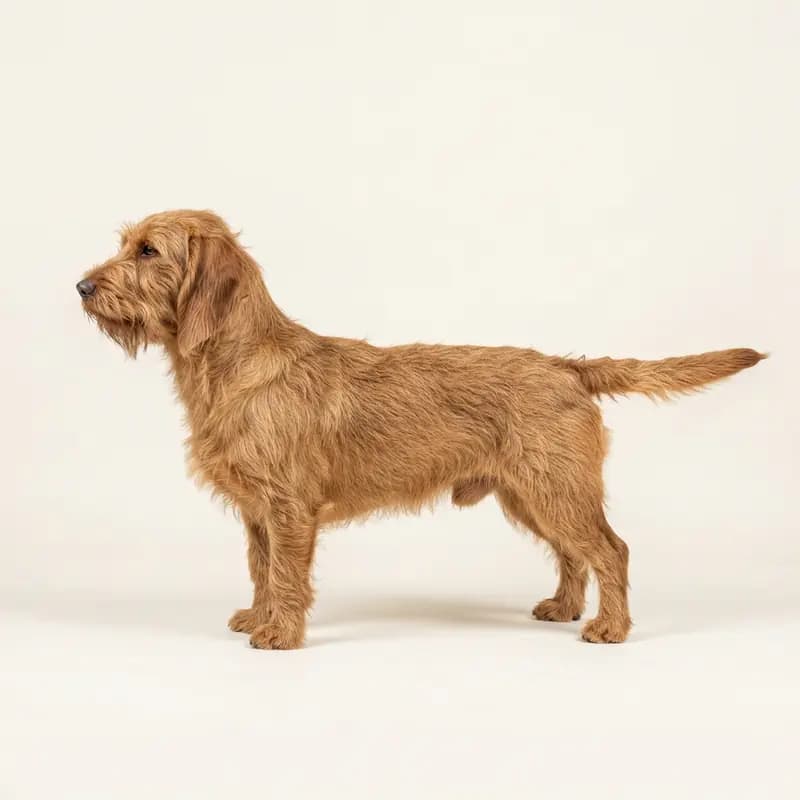
Coat type
 Illustrative image
Wire
 Short
Short
Is the Basset Fauve de Bretagne right for you?
The Basset Fauve de Bretagne is a tough, fearless short-legged scent hound—bred to work through the densest thickets of Brittany with an excellent nose and a keen sense for tracking. Beneath his charming, scruffy look lies a tireless hunting professional.
Perfect for you if:
- You enjoy intensive scent work like mantrailing or tracking—this dog needs a job for his nose, or he will find one for himself.
- You love nature and can provide a fenced-in property or a very reliable long-line routine for walks in areas rich with wildlife.
- You are looking for a cheerful, highly sociable companion who enjoys life in a multi-dog household or with plenty of contact with other dogs.
- You bring a good sense of humor and consistency to lovingly guide his charming, yet breed-typical stubbornness.
Less ideal if:
- You expect him to have perfect recall the moment he spots a hare—he was bred to independently follow the trail at that exact moment.
- You live in an apartment with thin walls—as a true scent hound, he uses his expressive voice when he gets excited.
- You are looking for a companion for fast jogging or cycling—while he has enormous stamina in the undergrowth, he is anatomically not a long-distance runner for asphalt.
- You have to leave him alone for long periods daily, as he is a pack dog who suffers greatly from isolation.
The real vibes check
A Basset Fauve de Bretagne is like an all-terrain mini-tractor with a built-in search radar: when his nose is glued to the ground, his hearing often switches off completely. You won't get an obedient order-follower, but an independent, cheerful nature lover. If you share his passion for the trail and take his stubbornness with a smile, you will find him to be the most loyal buddy for every adventure.
Self-check
Would the Basset Fauve de Bretagne really fit your life?
Answer 6 quick questions about your everyday life and see how well the Basset Fauve de Bretagne fits you — including an honest cost estimate per month, per year, and across the dog's lifetime.
Fit checkCost estimateRisk dice
Takes about 1 minute · free & anonymous
Breed Profile
The Basset Fauve de Bretagne is a small, powerful dog with a lively and intelligent expression. It belongs to FCI Group 6, the scent hounds, bloodhounds and related breeds. Its short legs are surprisingly strong, and its body is compact yet agile. The ears are medium long and drooping, and the tail is often carried cheerfully. A distinctive feature of this breed is their rough, thick coat, which serves to protect them from the elements, especially when roaming through undergrowth, as is typical of their hunting skills. The Basset Fauve de Bretagne has no undercoat, which makes him easy to care for. There is no notable distinction between show and performance lines within the breed.
All measurements in detail
- Height
- 32 - 38 cm (Female), 32 - 38 cm (Male)
- Weight
- 12 - 16 kg (Female), 14 - 18 kg (Male)
- Life Expectancy
- 10 - 14 yrs
- Character
- Lively, Intelligent, Loyal
- Coat
- Dense, rough coat, short length, no undercoat
- Coat Color
- Wild boar colors, golden wheat to red
- Price
- 1200 - 2500 €
Character & Temperament
The Basset Fauve de Bretagne is an extremely lovable breed known for being lively, intelligent and very loyal. They are often people-oriented and form strong bonds with their families. Despite their small size, they are quite energetic and require regular exercise to maintain their cheerful temperament. Their origins as hunting dogs are reflected in their behavior, as they often show a strong interest in scent and tracking game. They have a pronounced nose and are very skilled hunters. This breed's hunting instinct is high, and they are often tireless in pursuing a trail. Their hunting instincts make it necessary to teach them how to operate safely in off-leash areas and when it is time to turn their focus back to their owners. If you have a garden, your Basset Fauve de Bretagne will love sniffing around and exploring in it. He can sometimes be a bit stubborn, especially when he discovers an interesting lead. It's also important to know that this breed has a tendency to bark, especially when excited. This can be minimized through positive training. Because of their social nature and their attachment to family, they often have difficulty staying alone. It's important to teach them that it's okay to be alone and provide them with mental stimulation to avoid separation anxiety. They often enjoy the company of other dogs and can also get along well with cats and other pets with proper socialization. The Basset Fauve de Bretagne is often very playful and enjoys interactive games and activities with his family. His intelligence makes him a quick learner, but it is important to remember that he also has an independent side and can sometimes try to pursue his own agenda. Overall, the Basset Fauve de Bretagne is a happy, loyal and intelligent dog that requires an active and loving family willing to devote to his need for exercise, mental stimulation and companionship. His hunting instincts and lively temperament make him an entertaining but sometimes challenging companion, ideal for people who have an active lifestyle and want to form a strong bond with their pet.
| Trainability Has its own ideas and will test limits. | Strong-willed |
| Watchfulness Occasionally alerts but is fundamentally open. | Low |
| Openness to Strangers Warms up quickly and is generally welcoming. | Friendly |
| Hunting or Herding Drive This drive runs deep — no amount of training eliminates it. | Very strong |
Fun Fact!
Despite their short legs, Basset Fauve de Bretagnes are surprisingly fast and agile when following a scent!
What Awaits You
The Basset Fauve de Bretagne is an intelligent, courageous and determined hunter who can easily adapt to different game species and terrain. He is also an excellent companion dog who is cheerful, intelligent and eager to please.
Housing & Care
The Basset Fauve de Bretagne can be kept both in the city and in the country. It is important that he receives enough exercise and mental stimulation. The Basset Fauve de Bretagne generally gets along well with children, but as with any dog, interactions between small children and dogs should always be supervised. He also gets along well with other dogs and, with proper socialization, can also be kept with cats and other pets.
- Family Friendly
Lives for its family — the born family companion.
Ideal family dog - Child Friendly
Takes boisterous and affectionate children in its stride.
Patient with children - Dog Friendly
Actively enjoys the company of other dogs.
Dog-friendly - City Friendly
City-appropriate with enough exercise and stimulation.
Manageable in cities
Owning a dog is a privilege, but it's also a real responsibility. Before you bring one into your life, be honest with yourself about the commitment it takes.
Training & Education
The Basset Fauve de Bretagne is intelligent and quick to learn, but can also have an independent streak. This sometimes makes it necessary to be creative in training and to motivate the dog with positive reinforcement. The breed has a strong hunting instinct, so training a reliable recall is particularly important. Early socialization and varied training are also crucial. Participation in activities that appeal to his senses, such as mantrailing or tracking, is beneficial for the Basset Fauve de Bretagne. It is important to be careful not to "over-busy" the dog as this can lead to stress. A balance between activity, training and relaxation is crucial. There is a risk that the Basset Fauve de Bretagne will become a ball junkie. It is therefore important to control and limit play with the ball. Promoting frustration tolerance and impulse control through training is also important to promote balanced behavior.
Nutrition & Care
The Basset Fauve de Bretagne's diet should be balanced and nutritious. High-quality dry or wet food that contains all the necessary nutrients is ideal. The breed is prone to weight gain, so it is important to monitor food intake and ensure the dog gets enough exercise. When it comes to grooming, the Basset Fauve de Bretagne is relatively easy to care for. It has a short, rough coat without an undercoat. The coat should be brushed regularly to remove dead hair and promote skin health. This breed sheds moderately and copes well with the climate in Germany.
| Care Level Minimal effort — occasional brushing and bathing. | Low-maintenance |
| Exercise Needs Needs several hours of serious exercise every day. | Very active |
| Shedding Hair everywhere, always — no white clothing survives. | Very heavy |
| Trainability Has its own ideas and will test limits. | Strong-willed |
Our experts are still reviewing this information. Spotted something wrong? Email us at info@honestdog.de.
Health & hereditary diseases
Health
C
Solid, watch carefully
Health grade
The Basset Fauve de Bretagne requires eight mandatory health tests, placing it above the average for many other breeds. In particular, hereditary eye conditions such as primary open-angle glaucoma (POAG), as well as eyelid abnormalities like ectropion and entropion, must be managed through careful selective breeding. When purchasing a puppy, you should also check for jaw anomalies to prevent potential feeding difficulties later in life.
Grade is relative to other breeds — AI-assisted and editorially reviewed.
In daily life this can mean
You should pay attention to a healthy weight and avoid constant stair climbing to protect his long back, as well as schedule regular eye check-ups.
The breeder's role
Reputable breeders focus on a harmonious back line and have the knees, hips, and eyes of the parent animals thoroughly checked to reduce risks in the lineage.
Note: This health overview is AI-assisted and editorially reviewed. It is for orientation only and does not replace veterinary advice.
No Health Tests Available
No specific health tests are currently available for this breed.
Costs & where to find one
How much does a Basset Fauve de Bretagne cost?
A Basset Fauve de Bretagne costs around ~€160 per month (€90 – €310, depending on your setup). The first year adds up to roughly ~€4,660 including purchase, equipment and puppy school; across the dog's life (12 years) it comes to about ~€26,430.
With surgery cover, running costs come to about ~€160 per month — in return, your share of a major operation drops from several thousand euros to around 20 percent.
Per month
~€160
In the first year
~€4,660
Across the dog's life
~€26,430
Purchase from a breeder: €1,200 – €2,500
Estimate at a mid-range setup (suburban, dry food, 1–2 hours of daily exercise), average German prices, as of July 2026.
Calculate your personal costs1-minute self-check with your own answers
Looking for a Basset Fauve de Bretagne?
HonestDog Concierge
No verified Basset Fauve de Bretagne breeders on HonestDog yet
We currently have no breeders for this breed who have passed our verification. Create your short buyer profile: we'll set up your search alert, review a possible source and email you within 28 days.
Appearance, variants & origin
History
The full history
Hailing from Brittany in France, the Basset Fauve de Bretagne is an ancient breed that has existed for centuries. It is believed to have emerged from the larger Griffon Fauve de Bretagne, a breed that was almost extinct. The Basset Fauve de Bretagne was originally used to hunt rabbits and other small game. Its short legs allowed it to roam through dense undergrowth, while its strong nose and sharp mind made it a skilled hunter. The breed was officially recognized by the F"d"ration Cynologique Internationale (FCI) in the 1980s.
Original Use
Bred to hunt rabbits and other small animals, the Basset Fauve de Bretagne is known for its energy and stamina.
Origin
France
Date
1800
Owner experiences
What owners say about the Basset Fauve de Bretagne
Zusammengefasst aus öffentlich geteilten Halter-Erfahrungen
Viele Familien schätzen den Basset Fauve de Bretagne als einen überaus freundlichen, verspielten und anhänglichen Begleiter. Halter berichten übereinstimmend, dass die Hunde sehr menschenbezogen sind und eine enge Bindung zu ihren Besitzern aufbauen. Auch im Umgang mit Kindern und anderen Hunden zeigen sie sich meist sehr sozial und geduldig. Trotz ihrer kurzen Beine sind sie im Haus keineswegs reine Schoßhunde, sondern bringen viel Energie und Lebensfreude mit.
Im Alltag zeigt sich jedoch auch eine Herausforderung: Aufgrund ihrer starken Bindung an die Familie fällt es vielen Vertretern der Rasse schwer, allein zu bleiben. Halter berichten in Foren immer wieder von Trennungsangst, die sich bei Unterforderung oder zu schnellem, ungenügendem Training des Alleinbleibens auch in zerstörerischem Verhalten – wie dem Zerkauen von Möbeln – äußern kann. Sie benötigen daher von Anfang an ein kleinschrittiges Training sowie ausreichend geistige und körperliche Auslastung, um im Haus die rassetypische Gelassenheit zu zeigen.
Zusammengefasst aus öffentlich geteilten Halter-Erfahrungen
In Berichten über die Erziehung des Basset Fauve de Bretagne wird vor allem ein Charakterzug betont: seine enorme Eigenständigkeit gepaart mit einer exzellenten Nase. Viele Besitzer beschreiben ihre Hunde als extrem geruchsfokussiert. Sobald sie eine interessante Spur wittern, schaltet der Gehorsam oft komplett ab. Ein Freilauf ohne Leine ist daher für viele Halter nur in sehr sicheren Bereichen oder nach jahrelangem, intensivem Rückruftraining möglich, da die Hunde dazu neigen, weite Kreise zu ziehen und sich völlig in ihrer Fährtenarbeit zu verlieren.
Erfahrene Halter betonen, dass Druck oder Härte bei dieser Rasse völlig fehl am Platz sind. Der Basset Fauve gilt als ausgesprochen stur und eigensinnig; er hinterfragt Kommandos gern und kooperiert am besten über positive Verstärkung und hochwertige Belohnungen. Wer einen leichtführigen Hund sucht, der sofort pariert, wird mit dieser Rasse oft an seine Grenzen stoßen. Mit Geduld, Konsequenz und spielerischer Fährtenarbeit lässt sich ihr Arbeitseifer jedoch in produktive Bahnen lenken.
Paraphrased from real owner reports
Loading owner stories
FAQ & more
Frequently asked questions about the Basset Fauve de Bretagne
Is a Basset Fauve de Bretagne the right dog for me?
The Basset Fauve de Bretagne is an active dog that needs plenty of exercise and mental stimulation. Research the temperament, grooming needs, and space requirements before deciding.
How long does a Basset Fauve de Bretagne live?
The average life expectancy of a Basset Fauve de Bretagne is 10-14 years. With proper care and regular vet visits, your dog can live a long, healthy life.
How much grooming does a Basset Fauve de Bretagne need?
Basset Fauve de Bretagne grooming requirements include regular brushing, nail trimming, and dental care. HonestDog provides detailed grooming tips for every breed.
Is a Basset Fauve de Bretagne good for families with children?
The Basset Fauve de Bretagne can be a great family dog. Proper training and socialization are key. HonestDog provides family suitability information for every breed.
What colors does the Basset Fauve de Bretagne come in?
The Basset Fauve de Bretagne comes in these colors: Fawn, Wheaten, Red.
Loading related articles
Are you a Basset Fauve de Bretagne breeder?
Showcase your kennel on HonestDog and reach families searching for a responsibly bred Basset Fauve de Bretagne.
Why HonestDog?
What makes HonestDog different from other platforms
Full transparency
We lay out what we have: who the breeder is, how they work, and any health records they've uploaded. So you can judge for yourself.
Responsible breeding, assured
Every breeder on HonestDog has their identity and documents checked before their profile goes live. Health records they upload are shown on the profile, so you can see exactly what has been tested.
Trust and verification
We verify breeders and buyers alike, so every conversation happens on solid ground. It's a new standard of trust in dog breeding.
Less hassle, more time
We've already checked the breeders' documents and gathered the details, so you can skip the endless research and focus on finding the right puppy for your family.
Our Mission

We connect dog lovers with responsible breeders and shelters to ensure every dog finds the perfect home.
Founded by dog enthusiasts, our platform focuses on ethical dog breeding and adoption.
Why HonestDog?
We connect you with vetted breeders and shelters so you can find your — your new companion — with confidence.
Vetted Partners
Only verified breeders and shelters — for a safe start.
Highest Standards
Every animal's health and wellbeing is our top priority.
Guides & Resources
Guides, checklists, and breed profiles — so you can make a well-informed decision.